Subclinical Thyroid Dysfunction in Family Practice: Evidence, Treatment Thresholds, and Counseling for Patient-Requested Testing
Abstract
Background
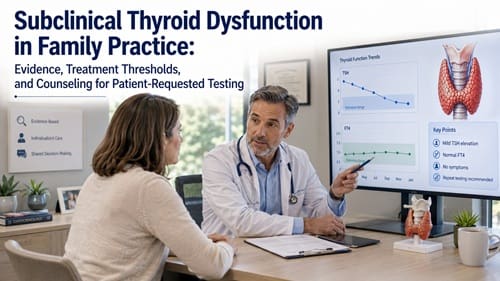
Subclinical thyroid dysfunction is defined by biochemistry rather than symptoms. Subclinical hypothyroidism presents as an elevated thyroid-stimulating hormone (TSH) level with a free thyroxine (FT4) level that remains within the normal reference interval. Conversely, subclinical hyperthyroidism features a suppressed TSH alongside normal circulating thyroid hormones. Importantly, a single abnormal TSH result does not automatically mean a patient has persistent thyroid disease, especially when the deviation is mild.
Objective
This review explores how family physicians can strategically use targeted thyroid testing, confirm whether subclinical dysfunction is truly persistent, interpret common TSH treatment thresholds, and effectively counsel patients who request extensive thyroid panels or medications for borderline lab results.
Key Findings
For asymptomatic, nonpregnant adults, the U.S. Preventive Services Task Force (USPSTF) maintains that there is insufficient evidence to weigh the benefits and harms of routine thyroid screening. However, when clinical suspicion warrants testing, TSH is the best starting point. An elevated TSH should prompt an FT4 check, while a suppressed TSH requires checking both FT4 and T3. Reverse T3 has virtually no role in routine primary care evaluations.
When managing persistent subclinical hypothyroidism, a TSH of 10 mIU/L or higher remains a critical threshold for considering treatment. Yet, normalizing the lab value does not guarantee symptomatic or cardiovascular improvement. In fact, randomized trials in older adults with mild subclinical hypothyroidism show no meaningful improvement in fatigue or quality of life.
On the flip side, persistent subclinical hyperthyroidism with a TSH below 0.1 mIU/L demands closer attention. Guidelines from the American Thyroid Association (ATA) and European societies highlight the risks for older adults and those with cardiovascular disease, osteoporosis, or hyperthyroid symptoms. Observational data link marked TSH suppression to atrial fibrillation and fractures, though randomized evidence proving that treatment prevents these outcomes is still limited.
Conclusion
A mildly abnormal TSH usually requires confirmation, clinical context, and risk stratification rather than an automatic prescription. TSH levels frequently normalize on their own in older adults, while the risk of progression rises if TSH levels climb higher or if thyroid peroxidase (TPO) antibodies are present. Ultimately, treatment decisions must balance the persistence and magnitude of the TSH abnormality, the patient’s age and symptoms, underlying cardiovascular or skeletal risks, and the actual limitations of our current outcome data.
Introduction
Subclinical thyroid dysfunction is a daily reality in family practice. The TSH falls outside the laboratory reference range while the FT4 remains perfectly normal. Yet, this isolated biochemical finding could represent anything from persistent thyroid disease to a transient fluctuation, assay interference, medication effects, recovery from a recent illness, or simply a normal age-related shift in thyroid physiology.
It is crucial to separate screening from diagnostic testing. The USPSTF recommendation against routine screening applies specifically to asymptomatic, nonpregnant adults because the evidence for a net benefit is lacking. That guideline should never discourage you from testing a patient who actually has a clinical indication for it.
Once you have an abnormal result in hand, the question is not just whether the TSH is high or low. You must determine if the abnormality is persistent, if the actual thyroid hormones are still normal, if there is a reversible cause, and if the degree of abnormality poses enough risk to justify medical intervention.
Screening Is Not the Same as Case Finding
The USPSTF continues to give an “I” statement (insufficient evidence) for screening asymptomatic adults. Their May 2024 literature review found no compelling new data to change this stance. They also rightly point out that TSH levels naturally fluctuate, meaning an abnormal screening often requires repeated testing before you can confidently make a diagnosis or start treatment.
NICE guidelines take a more practical case-finding approach. They suggest testing when thyroid disease is genuinely suspected, while cautioning that a single nonspecific symptom is rarely enough to justify it. NICE specifically recommends checking thyroid function in patients with type 1 diabetes, other autoimmune diseases, or new-onset atrial fibrillation.
This distinction is incredibly helpful when patients ask to be tested. Fatigue, weight changes, hair loss, mood swings, constipation, palpitations, and temperature intolerance are all on the classic thyroid symptom list, but they are also incredibly nonspecific. The clinical value of testing goes up remarkably when these symptoms form a coherent pattern, when objective physical signs are present, or when comorbidities raise the pretest probability of actual thyroid disease.
Use the Smallest Test Set That Answers the Clinical Question
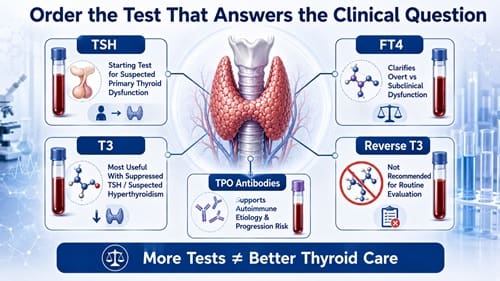
When you suspect primary thyroid dysfunction and have no reason to suspect a pituitary issue, NICE recommends starting with a simple TSH.
If the TSH is high, check the FT4 in the same blood draw. If the TSH is low, check both FT4 and free T3.
An ATA-commissioned review supports this TSH-first approach but adds a helpful laboratory pearl. When you actually need to measure T3, total T3 is generally preferred over free T3 because the free T3 assay is notoriously unreliable. T3 testing is mostly useful when the TSH is suppressed and you suspect T3-predominant thyrotoxicosis. It is rarely helpful for diagnosing hypothyroidism.
You should also avoid ordering reverse T3 in routine panels. The ATA review found zero evidence that reverse T3 helps guide routine thyroid replacement. Its utility is restricted to rare genetic disorders, consumptive hypothyroidism, or complex cases where severe nonthyroidal illness is muddying the waters.
Table 1. Practical Responses to Common Thyroid-Testing Requests
| Patient request | Evidence-based response | Clinical point |
| “Can you check my thyroid?” | Start with TSH when primary dysfunction is suspected. | Order tests to answer a specific clinical question, not just to gather data. |
| “Can you check T3 too?” | T3 is mainly useful when TSH is low or hyperthyroidism is suspected. | Total T3 is generally more reliable than free T3 when a T3 measurement is needed. |
| “Can you check reverse T3?” | Do not routinely order reverse T3. | It does not improve routine diagnosis or guide standard treatment. |
| “Can you check my antibodies?” | Consider TPO antibodies if TSH is high, but do not repeatedly check them. | Antibodies help confirm an autoimmune cause and predict progression, but they do not mandate treatment on their own. |
| “My TSH is barely off. Do I need meds?” | Confirm persistence, check FT4, and evaluate symptoms and risk factors first. | Mild abnormalities often resolve on their own, especially in older adults. |
Before Calling It Persistent Subclinical Thyroid Dysfunction
Repeat an Unexpected Mild Abnormality
Confirming the result is your best defense against overdiagnosis. The USPSTF notes that asymptomatic adults usually need multiple measurements over 3 to 6 months to confirm an abnormal TSH. NICE requires two measurements taken 3 months apart before applying their treatment thresholds for subclinical hypothyroidism. They require the same confirmation for subclinical hyperthyroidism before suggesting specialist referral.
Spontaneous normalization is surprisingly common. In a study of adults aged 65 and older, over 60% of patients with a single elevated TSH returned to normal within a year. Even among those who had two elevated readings spaced 3 months apart, nearly 40% still normalized over the following year. These numbers are a great reminder to pause before labeling a patient with a lifelong condition based on a low-probability screening test.
Ask About Biotin
Biotin is a notorious culprit for interfering with thyroid immunoassays, often creating wildly misleading results. NICE explicitly recommends asking patients about biotin intake. Levothyroxine prescribing information also warns about this interference, advising patients to stop biotin supplements for at least 2 days before bloodwork. This is a vital question because many patients take high-dose biotin in hair, skin, and nail gummies and do not consider them “medications.”
Consider Acute Illness and Medications
Avoid testing thyroid function during an acute illness unless you strongly suspect the thyroid itself is the problem. Acute physiological stress can temporarily skew the results. Similarly, a suppressed TSH requires you to rule out nonthyroidal illness, medication effects, transient thyroiditis, and exogenous thyroid hormone use before diagnosing endogenous subclinical hyperthyroidism.
Age Changes the Meaning of a Mild TSH Elevation
Age deserves explicit consideration when an older adult presents with a modestly elevated TSH and a normal FT4.
A 2026 analysis of over 1,600 community-dwelling adults aged 65 to 84 found that TSH concentrations naturally drift upward with age. The researchers questioned whether applying standard adult reference limits to the elderly leads to overdiagnosis.
While this study is informative, it should not prompt us to abandon treatment thresholds entirely. It was cross-sectional and geographically limited. The real takeaway is that we need to interpret TSH with age in mind. A slightly elevated TSH in an 80-year-old should not automatically be treated with the same urgency as the exact same number in a 30-year-old.
Subclinical Hypothyroidism: Natural History Matters
The trajectory of subclinical hypothyroidism depends heavily on the baseline TSH and the presence of autoantibodies. A 2024 meta-analysis found that patients with a TSH of 10 mIU/L or higher were much more likely to progress to overt hypothyroidism and far less likely to normalize compared to those with a TSH between 4.5 and 9.9 mIU/L. Positive TPO antibodies also predicted a higher risk of progression.
This is why a TSH of 5.2 mIU/L is not clinically equivalent to a persistent TSH of 14 mIU/L, even if the FT4 is normal in both cases. Checking TPO antibodies can provide valuable prognostic context, though NICE advises against repeatedly checking them once the initial etiology is established.
The TSH 10 mIU/L Threshold
A TSH around 10 mIU/L is a major decision point, but it requires nuanced interpretation. NICE advises clinicians to consider levothyroxine for adults whose TSH is 10 mIU/L or higher on two separate occasions 3 months apart. Note the phrasing: consider treatment, do not just automatically prescribe it. The joint AACE/ATA guidelines similarly emphasize individualized care when the TSH is below 10 mIU/L.
The heightened concern at the 10 mIU/L mark is backed by natural history data and observational cardiovascular studies. A massive individual-participant analysis of over 55,000 adults showed that coronary heart disease events and mortality increased as TSH rose, with the clearest signal in those with a TSH between 10 and 19.9 mIU/L. However, remember that this is an observational association. It tells us who is at risk, but it does not definitively prove that giving levothyroxine will prevent those coronary events.
TSH Above the Reference Range but Below 10 mIU/L
When the TSH is persistently elevated but still below 10 mIU/L, treatment should be highly selective.
NICE suggests considering a 6-month trial of levothyroxine for adults under 65 who have symptoms of hypothyroidism and a TSH consistently below 10 mIU/L. Crucially, if the patient’s symptoms do not improve after the TSH normalizes, NICE advises stopping the medication. The symptoms were likely never caused by the thyroid in the first place.
Shared decision-making is vital here. If you start a trial, define the goal upfront. Prescribing a lifelong medication just to fix a slightly abnormal lab number often leads to frustration when the patient’s nonspecific fatigue does not resolve.
What Randomized Trials Tell Us About Symptoms
The landmark TRUST trial followed 737 older adults with persistent subclinical hypothyroidism (mean baseline TSH around 6.4 mIU/L). While levothyroxine successfully lowered their TSH, it did absolutely nothing to improve their hypothyroid symptom scores or tiredness at the one-year mark.
Context is everything. TRUST strongly suggests we should not expect symptomatic miracles in older adults with mild biochemical disease. However, because very few participants in the trial had a TSH over 10 mIU/L, we cannot extrapolate these results to younger, highly symptomatic patients with significantly higher TSH levels. A broader meta-analysis of 21 randomized trials echoed this sentiment, finding that while thyroid hormone fixes the lab value, it rarely improves general quality of life in the average subclinical patient.
What Randomized Evidence Says About Cardiovascular Outcomes
The cardiovascular benefits of treating subclinical hypothyroidism remain murky. A pooled analysis of two randomized trials in older adults found that levothyroxine did not significantly reduce cardiovascular events, new atrial fibrillation, heart failure, or mortality.
Again, a lack of statistical significance in these specific trials does not prove levothyroxine is entirely cardioprotective. The trials were relatively small and focused on mild disease. This is exactly why counseling a patient with a TSH over 10 mIU/L is so challenging. The observational data suggest they are at higher cardiovascular risk, but we lack bulletproof randomized data proving that treatment reverses that specific risk.
Older Adults Require Particular Restraint
Multiple streams of evidence support a conservative approach to mild subclinical hypothyroidism in the elderly:
- TSH frequently normalizes on its own.
- The normal TSH distribution shifts upward with age.
- The largest randomized trials show no symptomatic benefit.
- Pooled data show no clear cardiovascular benefit.
- Over-replacing thyroid hormone carries real cardiovascular and skeletal risks.
For an older adult with a modest TSH elevation, normal FT4, and minimal symptoms, watchful waiting is often the most evidence-based choice.
Subclinical Hyperthyroidism Has a Different Risk Profile
The calculus changes entirely when the TSH is suppressed.
The 2016 ATA guidelines draw a hard line between a TSH below 0.1 mIU/L and milder suppression (0.1 to the lower limit of normal). European guidelines make a similar distinction. This is because observational data show that the risks of atrial fibrillation, heart disease mortality, and fractures climb significantly when the TSH drops below 0.1 mIU/L.
While these observational links are strong, we still lack definitive randomized trials proving that treating subclinical hyperthyroidism prevents these specific outcomes.
ATA Treatment Thresholds for Persistent Subclinical Hyperthyroidism
The strength of the ATA recommendations varies based on the patient’s risk profile.
Persistent TSH Below 0.1 mIU/L
The ATA issues a strong recommendation to treat patients in this category if they are 65 or older, have cardiac risk factors, have heart disease, have osteoporosis, are postmenopausal without bone protection, or have hyperthyroid symptoms. For younger, asymptomatic patients without these risk factors, treatment is a weak recommendation.
Persistent TSH Between 0.1 mIU/L and Normal
The ATA suggests considering treatment for older adults or those with cardiac or skeletal risks (a weak recommendation). Younger, asymptomatic patients can safely be observed.
Table 2. Persistent Subclinical Hyperthyroidism: Treatment Signals
| Clinical setting | TSH <0.1 mIU/L | Low TSH but ≥0.1 mIU/L |
| Age 65 or older | Treat (Strong recommendation) | Consider treatment (Weak recommendation) |
| Heart disease or cardiac risk | Treat | Consider treatment |
| Osteoporosis | Treat | Consider treatment |
| Hyperthyroid symptoms | Treat | Consider treatment |
| Younger, asymptomatic, low risk | Consider treatment (Weak recommendation) | Observe (Weak recommendation) |
Does Treating Subclinical Hyperthyroidism Prevent Atrial Fibrillation?
This remains a frustrating evidence gap. A 2024 randomized trial assigned 144 older adults with subclinical hyperthyroidism to either radioiodine treatment or surveillance. New atrial fibrillation developed in 4 surveillance patients and 1 treated patient, a difference that was not statistically significant.
A post hoc analysis suggested a benefit if the TSH successfully normalized, but post hoc analyses are hypothesis-generating, not definitive. Furthermore, treatment came with a cost: a quarter of the treated patients developed hypothyroidism. A 2025 retrospective cohort study showed a similar trend toward reduced atrial fibrillation with treatment, but the data remain vulnerable to selection bias.
The bottom line? Subclinical hyperthyroidism is clearly associated with atrial fibrillation, but we cannot yet promise patients that treatment will reliably prevent it.
If Levothyroxine Is Chosen
Levothyroxine remains the gold standard for replacement. The goal is appropriate biochemical replacement, not maximal TSH suppression. Over-replacement can trigger arrhythmias and accelerate bone loss, particularly in postmenopausal women. Always start low and go slow in older adults or those with cardiovascular disease.
Remember to check the TSH 6 to 8 weeks after any dose change. Once stable, monitor every 6 to 12 months. Remind patients to take their medication consistently on an empty stomach, 30 to 60 minutes before breakfast, and to separate it by at least 4 hours from iron, calcium, or antacids. Finally, heed the boxed warning: thyroid hormone is not a weight-loss drug and can be dangerous in supraphysiologic doses.

Counseling Patients Who Request Broad Testing
When a patient asks for a massive thyroid panel, start by asking what question they are trying to answer. Many patients believe that more labs equal better care, but current guidelines do not support this.
Explain that different tests serve different purposes. TSH is the screening tool. FT4 tells you if the disease is overt or subclinical. T3 is for hyperthyroidism. TPO antibodies explain the “why” but rarely change immediate management. Reverse T3 is largely unhelpful.
Most importantly, help them understand that a laboratory reference range is not a treatment threshold. A slightly out-of-range TSH might just be their normal, or it might normalize on its own. Treatment should be driven by their overall clinical picture, not just a desire to make a number look perfect.
A Practical Family-Practice Approach
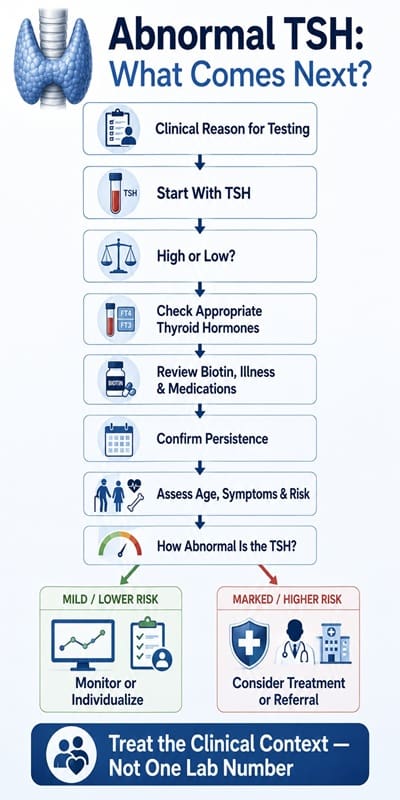
- Establish the Indication: Are you screening an asymptomatic patient, or evaluating specific symptoms, new atrial fibrillation, or an autoimmune condition?
- Start Targeted: Begin with TSH. Add FT4 if it is high. Add FT4 and T3 if it is low.
- Hunt for Confounders: Ask about biotin supplements, recent illnesses, and medications like amiodarone or lithium.
- Confirm Persistence: Do not diagnose lifelong thyroid disease based on one borderline lab. Repeat the test in a few months unless the clinical picture demands immediate action.
- Evaluate an Elevated TSH: Look at the magnitude of the elevation, the patient’s age, symptoms, and cardiovascular risk. A TSH over 10 mIU/L leans toward treatment; a TSH under 10 mIU/L requires a highly individualized approach.
- Evaluate a Suppressed TSH: Assess for atrial fibrillation risk, osteoporosis, and hyperthyroid symptoms. A TSH below 0.1 mIU/L in a high-risk patient strongly warrants treatment or specialist referral.
- Define the Goal: If you do a treatment trial for mild hypothyroidism, agree in advance on what symptom improvement would justify continuing the drug. If the labs normalize but the fatigue persists, stop the medication.
- Do No Harm: Monitor appropriately to avoid iatrogenic hyperthyroidism, which is especially dangerous for the elderly heart and skeleton.
Where Guidelines Differ
Professional guidance does not reach a single conclusion about subclinical hypothyroidism. NICE supports treating a TSH over 10 mIU/L and offers a trial for symptomatic younger patients. The AACE/ATA guidelines emphasize individualization. Meanwhile, a 2019 BMJ Rapid Recommendation strongly advised against treating most subclinical hypothyroidism, citing the lack of symptomatic benefit in trials like TRUST.
The discrepancy comes down to the populations being studied and the outcomes being prioritized. The randomized evidence is excellent at proving that treating mild disease in older adults does not cure fatigue. It is much less definitive when it comes to treating younger patients with a TSH of 15 mIU/L, or preventing long-term cardiovascular events.
Special Populations
- Older Adults: Interpret mild TSH elevations cautiously. The risks of over-treatment often outweigh the benefits of treating mild, asymptomatic disease.
- Cardiovascular Disease: This cuts both ways. Subclinical hyperthyroidism increases the risk of atrial fibrillation, but over-replacing levothyroxine can also trigger it.
- Osteoporosis: Subclinical hyperthyroidism accelerates bone loss, strengthening the argument for treatment. Conversely, over-replacement of levothyroxine does the exact same thing.
- Pregnancy: Pregnancy and preconception care require entirely different, pregnancy-specific reference ranges and thresholds. Do not extrapolate the rules from this article to pregnant patients.
Limitations of the Evidence
The randomized trials for subclinical hypothyroidism heavily skew toward older adults with mild disease. We lack robust trial data for younger patients with higher TSH levels. Furthermore, while observational data link a TSH over 10 mIU/L to coronary events, we cannot definitively say that levothyroxine prevents those events.
Similarly, while we know subclinical hyperthyroidism is linked to fractures and atrial fibrillation, adequately powered randomized trials proving that treatment prevents these outcomes are still lacking. Finally, while age-adjusted TSH ranges make physiological sense, we do not yet have data proving that using them actually improves patient outcomes.
Future Directions
Moving forward, the medical community needs more robust data to guide our most difficult clinical decisions. One of the most pressing research priorities is the need for adequately powered randomized trials focusing on younger patients with persistent, higher-range subclinical hypothyroidism. Most of our current data skew heavily toward older adults with very mild biochemical disease. Future studies must evaluate both cardiovascular endpoints and patient-reported quality of life metrics separately to truly understand the long-term value of medical intervention.
For subclinical hyperthyroidism, the evidence gaps are equally prominent. We desperately need randomized controlled trials designed to determine whether early intervention actually prevents downstream complications like atrial fibrillation, osteoporotic fractures, and cardiovascular mortality. Just as importantly, these trials must carefully weigh those potential long-term benefits against the immediate risks of treatment-induced hypothyroidism.
Finally, the concept of age-adjusted TSH reference ranges makes intuitive physiological sense, and population studies certainly support the idea that TSH naturally drifts upward as we age. However, we still lack prospective data proving that adopting age-specific reference intervals actually improves hard patient outcomes rather than simply changing how we label a normal aging process. Bridging this specific gap will be essential for refining our diagnostic criteria and preventing overmedicalization in geriatric populations.
Conclusion
Subclinical thyroid dysfunction is a biochemical phenotype that requires clinical interpretation, not an automatic reflex to prescribe.
In primary care, the most effective approach is to test for a clear reason, use a logical diagnostic cascade, rule out confounders like biotin, confirm that the abnormality is persistent, and interpret the results through the lens of the patient’s age and risk profile.
For subclinical hypothyroidism, a TSH over 10 mIU/L warrants serious consideration for treatment, but we must accept that fixing the lab value may not fix the patient’s symptoms. For subclinical hyperthyroidism, a TSH below 0.1 mIU/L carries real cardiovascular and skeletal risks, justifying treatment in vulnerable populations even while we wait for perfect randomized data.
Ultimately, when patients ask for broader testing or quick fixes, our value lies in ordering the right test for the right reason, and having the confidence to explain why a slightly abnormal number does not always require a pill.
Clinical Update Disclaimer
This article was clinically reviewed against the cited evidence, professional guidance, and prescribing information available through August 7, 2026. Guidelines, regulatory labeling, safety information, laboratory standards, and clinical evidence may change as new information becomes available. Clinicians should confirm current authoritative guidance and prescribing information before applying the material to an individual patient.
References
- U.S. Preventive Services Task Force. Thyroid Dysfunction: Screening. Final Recommendation Statement. March 24, 2015; literature surveillance August 21, 2024. Accessed August 7, 2026. URL: https://www.uspreventiveservicestaskforce.org/uspstf/
recommendation/thyroid-dysfunction-screening - National Institute for Health and Care Excellence. Thyroid disease: assessment and management. NICE Guideline NG145. Published November 20, 2019; last updated October 12, 2023; last reviewed October 3, 2025. Accessed August 7, 2026. URL: https://www.nice.org.uk/guidance/ng145
- Van Uytfanghe K, Ehrenkranz J, Halsall D, Hoff K, Loh TP, Spencer CA, Köhrle J; ATA Thyroid Function Tests Writing Group. Thyroid Stimulating Hormone and Thyroid Hormones (Triiodothyronine and Thyroxine): An American Thyroid Association-Commissioned Review of Current Clinical and Laboratory Status. Thyroid. 2023;33(9):1013-1028. DOI: 10.1089/thy.2023.0169. PMID: 37655789. URL: https://pubmed.ncbi.nlm.nih.gov/37655789/
- Stott DJ, Rodondi N, Kearney PM, et al. Thyroid Hormone Therapy for Older Adults with Subclinical Hypothyroidism. N Engl J Med. 2017;376(26):2534-2544. DOI: 10.1056/NEJMoa1603825. PMID: 28402245. URL: https://pubmed.ncbi.nlm.nih.gov/28402245/
- Feller M, Snel M, Moutzouri E, et al. Association of Thyroid Hormone Therapy With Quality of Life and Thyroid-Related Symptoms in Patients With Subclinical Hypothyroidism: A Systematic Review and Meta-analysis. JAMA. 2018;320(13):1349-1359. DOI: 10.1001/jama.2018.13770. PMID: 30285179. URL: https://pubmed.ncbi.nlm.nih.gov/30285179/
- Ross DS, Burch HB, Cooper DS, et al. 2016 American Thyroid Association Guidelines for Diagnosis and Management of Hyperthyroidism and Other Causes of Thyrotoxicosis. Thyroid. 2016;26(10):1343-1421. DOI: 10.1089/thy.2016.0229. PMID: 27521067. URL: https://pubmed.ncbi.nlm.nih.gov/27521067/
- Biondi B, Bartalena L, Cooper DS, Hegedüs L, Laurberg P, Kahaly GJ. The 2015 European Thyroid Association Guidelines on Diagnosis and Treatment of Endogenous Subclinical Hyperthyroidism. Eur Thyroid J. 2015;4(3):149-163. DOI: 10.1159/000438750. PMID: 26558232. URL: https://pubmed.ncbi.nlm.nih.gov/26558232/
- Collet TH, Gussekloo J, Bauer DC, et al. Subclinical hyperthyroidism and the risk of coronary heart disease and mortality. Arch Intern Med. 2012;172(10):799-809. DOI: 10.1001/archinternmed.2012.402. PMID: 22529182. URL: https://pubmed.ncbi.nlm.nih.gov/22529182/
- Blum MR, Bauer DC, Collet TH, et al. Subclinical Thyroid Dysfunction and Fracture Risk: A Meta-analysis. JAMA. 2015;313(20):2055-2065. DOI: 10.1001/jama.2015.5161. PMID: 26010634. URL: https://pubmed.ncbi.nlm.nih.gov/26010634/
- van der Spoel E, van Vliet NA, Poortvliet RKE, et al. Incidence and Determinants of Spontaneous Normalization of Subclinical Hypothyroidism in Older Adults. J Clin Endocrinol Metab. 2024;109(3):e1167-e1174. DOI: 10.1210/clinem/dgad623. PMID: 37862463. URL: https://pubmed.ncbi.nlm.nih.gov/37862463/
- Zhang X, Zhang G, Wang S, Jin J, Zhang S, Teng X. The change in thyroid function categories with time in patients with subclinical hypothyroidism: a systematic review and meta-analysis. BMC Endocr Disord. 2024;24(1):224. DOI: 10.1186/s12902-024-01754-7. PMID: 39456045. URL: https://pubmed.ncbi.nlm.nih.gov/39456045/
- Kogai T, Kaga H, Uchida T, et al. Revisiting the TSH range in older adults: associations between subclinical hypothyroidism and geriatric conditions. J Endocr Soc. 2026;10(4):bvag045. DOI: 10.1210/jendso/bvag045. PMID: 41816194. URL: https://pubmed.ncbi.nlm.nih.gov/41816194/
- Garber JR, Cobin RH, Gharib H, et al. Clinical practice guidelines for hypothyroidism in adults: cosponsored by the American Association of Clinical Endocrinologists and the American Thyroid Association. Endocr Pract. 2012;18(6):988-1028. DOI: 10.4158/EP12280.GL. PMID: 23246686. URL: https://pubmed.ncbi.nlm.nih.gov/23246686/
- Jonklaas J, Bianco AC, Bauer AJ, et al. Guidelines for the treatment of hypothyroidism: prepared by the American Thyroid Association Task Force on Thyroid Hormone Replacement. Thyroid. 2014;24(12):1670-1751. DOI: 10.1089/thy.2014.0028. PMID: 25266247. URL: https://pubmed.ncbi.nlm.nih.gov/25266247/
- Rodondi N, den Elzen WPJ, Bauer DC, et al. Subclinical hypothyroidism and the risk of coronary heart disease and mortality. JAMA. 2010;304(12):1365-1374. DOI: 10.1001/jama.2010.1361. PMID: 20858880. URL: https://pubmed.ncbi.nlm.nih.gov/20858880/
- Zijlstra LE, Jukema JW, Westendorp RGJ, et al. Levothyroxine Treatment and Cardiovascular Outcomes in Older People With Subclinical Hypothyroidism: Pooled Individual Results of Two Randomised Controlled Trials. Front Endocrinol (Lausanne). 2021;12:674841. DOI: 10.3389/fendo.2021.674841. PMID: 34093444. URL: https://pubmed.ncbi.nlm.nih.gov/34093444/
- Goichot B, et al. Treatment of subclinical hyperthyroidism in patients older than 50 years: A randomized controlled study. Eur Thyroid J. 2024;13(6):e240121. DOI: 10.1530/ETJ-24-0121. PMID: 39159264. URL: https://pubmed.ncbi.nlm.nih.gov/39159264/
- Jay M, Huan P, Cliffe N, et al. Treatment of Subclinical Hyperthyroidism and Incident Atrial Fibrillation. Clin Endocrinol (Oxf). 2025;102(3):315-323. DOI: 10.1111/cen.15150. PMID: 39400387. URL: https://pubmed.ncbi.nlm.nih.gov/39400387/
- DailyMed. Levothyroxine Sodium Tablets, prescribing information. Current DailyMed listing updated May 20, 2026; prescribing information revised June 2024. Accessed August 7, 2026. URL: https://dailymed.nlm.nih.gov/dailymed/drugInfo.cfm?setid=83854522-f22e-491f-8392-c8b1f9441760
- Bekkering GE, Agoritsas T, Lytvyn L, et al. Thyroid hormones treatment for subclinical hypothyroidism: a clinical practice guideline. BMJ. 2019;365:l2006. DOI: 10.1136/bmj.l2006. PMID: 31088853. URL: https://pubmed.ncbi.nlm.nih.gov/31088853/
Recent Articles


Integrative Perspectives on Cognition, Emotion, and Digital Behavior

Sleep-related:
Longevity/Nutrition & Diet:
Philosophical / Happiness / Social:
Other:
Modern Mind Unveiled
Developed under the direction of David McAuley, Pharm.D., this collection explores what it means to think, feel, and connect in the modern world. Drawing upon decades of clinical experience and digital innovation, Dr. McAuley and the GlobalRPh initiative translate complex scientific ideas into clear, usable insights for clinicians, educators, and students.
The series investigates essential themes–cognitive bias, emotional regulation, digital attention, and meaning-making—revealing how the modern mind adapts to information overload, uncertainty, and constant stimulation.
At its core, the project reflects GlobalRPh’s commitment to advancing evidence-based medical education and clinical decision support. Yet it also moves beyond pharmacotherapy, examining the psychological and behavioral dimensions that shape how healthcare professionals think, learn, and lead.
Through a synthesis of empirical research and philosophical reflection, Modern Mind Unveiled deepens our understanding of both the strengths and vulnerabilities of the human mind. It invites readers to see medicine not merely as a science of intervention, but as a discipline of perception, empathy, and awareness–an approach essential for thoughtful practice in the 21st century.
The Six Core Themes
I. Human Behavior and Cognitive Patterns
Examining the often-unconscious mechanisms that guide human choice-how we navigate uncertainty, balance logic with intuition, and adapt through seemingly irrational behavior.
II. Emotion, Relationships, and Social Dynamics
Investigating the structure of empathy, the psychology of belonging, and the influence of abundance and selectivity on modern social connection.
III. Technology, Media, and the Digital Mind
Analyzing how digital environments reshape cognition, attention, and identity- exploring ideas such as gamification, information overload, and cognitive “nutrition” in online spaces.
IV. Cognitive Bias, Memory, and Decision Architecture
Exploring how memory, prediction, and self-awareness interact in decision-making, and how external systems increasingly serve as extensions of thought.
V. Habits, Health, and Psychological Resilience
Understanding how habits sustain or erode well-being-considering anhedonia, creative rest, and the restoration of mental balance in demanding professional and personal contexts.
VI. Philosophy, Meaning, and the Self
Reflecting on continuity of identity, the pursuit of coherence, and the construction of meaning amid existential and informational noise.
Keywords
Cognitive Science • Behavioral Psychology • Digital Media • Emotional Regulation • Attention • Decision-Making • Empathy • Memory • Bias • Mental Health • Technology and Identity • Human Behavior • Meaning-Making • Social Connection • Modern Mind
Video Section