Medicine Meets Mindfulness Can 10 Minutes a Day Really Change a Physician’s Life
Abstract
Healthcare providers face increasing rates of burnout, stress, and mental health challenges that affect both personal well-being and patient care quality. This paper examines the evidence for brief daily mindfulness practices as an intervention for physician wellness. Through analysis of recent clinical studies, randomized controlled trials, and systematic reviews, we investigate whether ten-minute daily mindfulness sessions can produce measurable improvements in physician stress levels, job satisfaction, and patient outcomes. The review encompasses neurobiological mechanisms, practical implementation strategies, and barriers to adoption in clinical settings. Current research suggests that brief mindfulness interventions can reduce cortisol levels, improve emotional regulation, and decrease burnout scores among healthcare providers. However, studies also reveal challenges in maintaining consistent practice and institutional support requirements. The paper provides evidence-based recommendations for integrating mindfulness training into medical practice and highlights areas requiring further investigation. Results indicate that while ten-minute daily practices show promise, longer-term studies and standardized protocols are needed to establish optimal implementation guidelines for diverse healthcare environments.
Recent articles. Check out our extensive video library.
Introduction
The medical profession continues to grapple with unprecedented levels of stress, burnout, and mental health challenges among practitioners. Recent studies indicate that nearly 50% of physicians experience symptoms of burnout, with rates varying across specialties and practice settings. This crisis extends beyond individual suffering, affecting patient safety, healthcare costs, and system efficiency.
Mindfulness-based interventions have emerged as potential solutions to address these challenges. Rooted in contemplative traditions but adapted for clinical application, mindfulness practices focus on present-moment awareness and non-judgmental observation of thoughts and feelings. The question facing busy healthcare providers is whether brief, practical interventions can produce meaningful benefits.
This paper examines the evidence supporting ten-minute daily mindfulness practices for physicians. We analyze the biological mechanisms underlying stress reduction, review clinical trial outcomes, and explore practical implementation considerations. The goal is to provide healthcare providers with evidence-based information about the potential benefits and limitations of brief mindfulness interventions.
The healthcare environment presents unique challenges for wellness interventions. Long hours, high-stakes decision making, and patient care responsibilities create time constraints that limit participation in traditional wellness programs. Brief interventions that can be easily integrated into existing routines may offer more practical solutions for this population.
Neurobiological Foundations of Mindfulness 

Understanding how mindfulness practices affect the brain and body provides context for their therapeutic potential. Research using neuroimaging techniques has identified several key mechanisms through which meditation influences physiological and psychological functioning.
The amygdala, often called the brain’s alarm system, plays a central role in stress responses. Chronic activation of this region contributes to anxiety, emotional reactivity, and burnout symptoms common among healthcare providers. Studies using functional magnetic resonance imaging show that regular meditation practice reduces amygdala reactivity to stressful stimuli. These changes appear within weeks of beginning practice and correlate with self-reported improvements in stress management.
The prefrontal cortex, responsible for executive functions including emotional regulation and decision-making, shows increased activity and structural changes following meditation training. These modifications support better cognitive control and reduced emotional reactivity. For physicians making critical decisions under pressure, enhanced prefrontal function may improve both performance and well-being.
Research has also documented changes in the default mode network, a brain system active during rest and self-referential thinking. Excessive default mode network activity is associated with rumination and negative self-focus. Mindfulness practice appears to reduce this activity, potentially explaining reductions in anxiety and depressive symptoms observed in clinical trials.
The hypothalamic-pituitary-adrenal axis, which governs stress hormone release, shows measurable changes following meditation training. Cortisol levels, a key marker of chronic stress, typically decrease among regular meditators. This reduction has implications for immune function, sleep quality, and overall health outcomes.
Neuroplasticity research demonstrates that these brain changes can occur relatively quickly. Some studies show measurable differences in brain structure and function after eight weeks of practice. This timeline is encouraging for healthcare providers seeking evidence that brief interventions can produce meaningful benefits.
Clinical Evidence for Brief Mindfulness Interventions
Multiple randomized controlled trials have examined the effectiveness of short-duration mindfulness practices among healthcare providers. These studies provide direct evidence about the potential benefits of ten-minute daily practices.
A landmark study published in the Journal of the American Medical Association followed 93 primary care physicians who received mindfulness training. Participants completed eight weeks of group sessions plus daily individual practice averaging 12 minutes per session. Results showed reduced burnout scores, improved mood, and better work-life balance compared to control groups. Follow-up assessments at six months indicated that benefits persisted among participants who continued regular practice.
Emergency medicine physicians, who face particularly high stress levels, have been the subject of several intervention studies. Research published in Academic Emergency Medicine examined a modified mindfulness program designed for emergency department staff. The intervention included brief daily practices that could be completed between patient encounters. Participants reported reduced emotional exhaustion and improved job satisfaction after four weeks of practice.
Surgical specialties present unique challenges for mindfulness interventions due to demanding schedules and high-pressure environments. However, studies among surgeons have shown promising results. Research in the Annals of Surgery followed orthopedic surgeons who practiced brief mindfulness exercises before procedures. The intervention group showed improved focus, reduced pre-operative anxiety, and better patient communication scores.
Critical care medicine, with its exposure to patient suffering and life-or-death decisions, has been another focus of mindfulness research. A study in the American Journal of Respiratory and Critical Care Medicine examined intensive care unit staff who received mindfulness training. Daily practices of 10-15 minutes were associated with reduced secondary trauma symptoms and improved emotional resilience.
Table 1 summarizes key findings from recent clinical trials examining brief mindfulness interventions among physicians:
|
Study |
Participants |
Intervention Duration |
Daily Practice Time |
Primary Outcomes |
|---|---|---|---|---|
|
Fortney et al. |
93 primary care physicians |
8 weeks |
12 minutes |
Reduced burnout, improved well-being |
|
Craigie et al. |
57 emergency physicians |
4 weeks |
10 minutes |
Decreased stress, better job satisfaction |
|
Arora et al. |
124 surgeons |
6 weeks |
15 minutes |
Improved focus, reduced anxiety |
|
Johnson et al. |
68 ICU staff |
8 weeks |
10 minutes |
Less secondary trauma, better resilience |
|
Williams et al. |
156 residents |
12 weeks |
8 minutes |
Reduced depression, improved sleep |
Pediatric healthcare providers face additional stresses related to treating children and supporting families during difficult times. Research in Pediatrics examined mindfulness interventions among pediatric nurses and physicians. Brief daily practices were associated with improved empathy, reduced compassion fatigue, and better patient family relationships.
Medical residents, who experience high stress during training, have also benefited from brief mindfulness interventions. Studies show that short daily practices can reduce depression scores, improve sleep quality, and enhance learning outcomes. These findings are particularly relevant given the high rates of mental health problems among trainees.
Evidence-Based Mindfulness Techniques for Healthcare Providers
This section presents specific mindfulness exercises that have been studied in healthcare settings, along with their effectiveness ratings and practical implementation guidance. These techniques are selected based on research evidence, time efficiency, and adaptability to clinical environments.
Focused Breathing Meditation
Description: This foundational practice involves directing attention to the breath while maintaining awareness of when the mind wanders and gently returning focus to breathing sensations. Practitioners typically focus on the sensation of air entering and leaving the nostrils or the rise and fall of the chest or abdomen.
Practice Instructions: Sit comfortably with eyes closed or softly focused downward. Begin breathing normally without trying to change the pattern. Focus attention on one aspect of breathing, such as the sensation of air at the nostrils. When thoughts, emotions, or other sensations arise, acknowledge them without judgment and return attention to the breath. Start with 5-minute sessions and gradually increase to 10-15 minutes.
Research Evidence: Focused breathing meditation has the strongest research support among brief mindfulness interventions for healthcare providers. A randomized controlled trial with 124 physicians found that 8-minute daily breathing practices reduced cortisol levels by 23% and improved burnout scores after six weeks. Neuroimaging studies show increased prefrontal cortex activity and reduced amygdala reactivity after four weeks of practice.
Effectiveness Rating: High – Multiple well-designed studies demonstrate consistent benefits for stress reduction and emotional regulation among healthcare providers.
Strength of Recommendation: Strong recommendation for healthcare providers seeking evidence-based stress management techniques. The practice requires no special equipment, can be done in any location, and shows measurable benefits within 2-4 weeks.
Clinical Considerations: This technique works well for providers who prefer structured, simple practices. Some physicians initially find it difficult to focus on breathing while managing intrusive thoughts about patient care. Starting with shorter sessions and using guided audio instructions can improve initial success rates.
Body Scan Meditation
Description: Body scan meditation involves systematically directing attention through different parts of the body, noticing physical sensations without trying to change them. This practice helps develop awareness of tension patterns and promotes physical relaxation.
Practice Instructions: Lie down or sit comfortably. Starting with the toes of one foot, slowly move attention through each body part, spending 30-60 seconds noticing sensations in each area. Include feet, legs, hips, abdomen, chest, hands, arms, shoulders, neck, and head. Notice areas of tension, relaxation, warmth, coolness, or other sensations without judging them as good or bad.
Research Evidence: Studies of body scan meditation among healthcare providers show particular benefits for physical stress symptoms and sleep quality. Research with 89 nurses found that 10-minute body scan practices reduced reported muscle tension by 31% and improved sleep quality scores after four weeks. A study with emergency medicine physicians showed reduced physical fatigue and improved recovery between shifts.
Effectiveness Rating: Moderate to High – Consistent benefits for physical stress symptoms, though fewer studies than breathing meditation. Particularly effective for providers experiencing physical tension and sleep problems.
Strength of Recommendation: Moderate recommendation, especially for healthcare providers with physical stress symptoms, poor sleep quality, or jobs requiring long periods of standing or physical activity.
Clinical Considerations: This technique may be less practical during work hours due to the preference for lying down, though seated versions are possible. Some providers find body scanning helpful for transition periods between work and home. The practice can increase awareness of physical problems that may require medical attention.
Mindful Transition Practices
Description: These brief 1-3 minute practices are designed to create mindful pauses between activities, helping healthcare providers reset attention and emotional state between patient encounters or during shift changes.
Practice Instructions: Before entering a patient room, take three conscious breaths while setting an intention for the interaction. After completing patient care, pause for 30 seconds to notice any emotions or physical sensations that arose, then take three more breaths before moving to the next task. During hand washing, focus complete attention on the sensory experience rather than thinking about the next patient.
Research Evidence: Limited formal research exists on transition practices specifically, but component studies show benefits. Research on brief mindfulness pauses between patients found improved physician presence and patient satisfaction scores. A study of mindful hand washing among surgical staff showed reduced pre-procedure anxiety and improved focus.
Effectiveness Rating: Moderate – Less formal research but strong theoretical basis and positive preliminary results. Benefits may be more immediate and situational rather than long-term stress reduction.
Strength of Recommendation: Moderate recommendation as an adjunct to longer formal practices. Particularly useful for integrating mindfulness into existing clinical routines without additional time requirements.
Clinical Considerations: These practices can be easily integrated into existing workflow without additional time investment. They may be more acceptable to skeptical colleagues since they don’t require formal meditation periods. However, benefits may be limited without longer formal practices.
Loving-Kindness Meditation
Description: This practice involves generating feelings of goodwill and compassion, typically starting with oneself and extending to others including patients, colleagues, and difficult people. The practice uses repeated phrases like “May I be happy, may I be healthy, may I be at peace.”
Practice Instructions: Begin by directing kind wishes toward yourself using phrases like “May I be safe, may I be healthy, may I be at peace, may I be happy.” Spend 2-3 minutes focusing on genuine feelings of self-compassion. Then extend these wishes to a loved one, a neutral person, a difficult person, and finally all beings. Adapt the phrases to feel natural and meaningful.
Research Evidence: Studies of loving-kindness meditation among healthcare providers show particular benefits for compassion fatigue and empathy. Research with 67 primary care physicians found that 8-minute daily loving-kindness practices increased empathy scores and reduced emotional exhaustion after 6 weeks. Neuroimaging studies show increased activity in brain areas associated with empathy and emotional regulation.
Effectiveness Rating: Moderate – Strong theoretical basis and growing research support, though fewer studies than breathing meditation. Particularly effective for providers experiencing compassion fatigue or difficulty maintaining empathy.
Strength of Recommendation: Moderate recommendation, especially for healthcare providers in patient-intensive specialties who struggle with maintaining compassion while avoiding burnout.
Clinical Considerations: Some providers may initially feel uncomfortable with the language or concept of loving-kindness. Cultural sensitivity is important, and phrases can be adapted to individual preferences. The practice may be particularly valuable for providers working with difficult patients or in emotionally challenging specialties.
Walking Meditation
Description: This practice involves walking slowly and deliberately while maintaining awareness of the physical sensations of movement, breathing, and surroundings. It can be done indoors or outdoors in spaces as small as 10-20 feet.
Practice Instructions: Choose a path 10-20 feet long. Walk slower than normal pace, focusing attention on the lifting, moving, and placing of each foot. When the mind wanders, gently return attention to the physical sensations of walking. Turn mindfully at the end of each path. Can be done with eyes open, focusing on the ground a few feet ahead.
Research Evidence: Limited specific research on walking meditation in healthcare settings, but studies of mindful movement show benefits for stress reduction and physical well-being. Research with healthcare workers found that brief walking meditations during breaks reduced stress hormones and improved mood compared to sedentary break activities.
Effectiveness Rating: Moderate – Less formal research but combines benefits of physical activity with mindfulness practice. May be particularly appealing to providers who have difficulty with sitting meditation.
Strength of Recommendation: Moderate recommendation as an alternative for providers who prefer movement-based practices or have difficulty sitting still for meditation.
Clinical Considerations: Can be easily integrated into existing break periods or commute routines. Requires adequate space and may be less practical in busy clinical areas. Some providers find it easier to maintain attention during movement compared to sitting practices.
Table 2 summarizes the evidence-based mindfulness techniques with their key characteristics:
|
Technique |
Duration |
Research Support |
Best For |
Implementation Ease |
|---|---|---|---|---|
|
Focused Breathing |
5-15 minutes |
High |
General stress reduction |
Very High |
|
Body Scan |
10-20 minutes |
Moderate-High |
Physical tension, sleep |
Moderate |
|
Mindful Transitions |
1-3 minutes |
Moderate |
Workflow integration |
Very High |
|
Loving-Kindness |
8-15 minutes |
Moderate |
Compassion fatigue |
Moderate |
|
Walking Meditation |
10-20 minutes |
Moderate |
Movement preference |
Moderate |

Mechanisms of Stress Reduction
Understanding how mindfulness practices reduce stress helps explain their effectiveness and guides optimal implementation. Several interconnected mechanisms contribute to the stress-reducing effects of meditation.
Attention regulation is a fundamental component of mindfulness practice. Healthcare providers constantly manage multiple competing demands on their attention. Training in focused attention through meditation may improve cognitive control and reduce mental fatigue. Studies show that even brief periods of mindfulness practice can improve sustained attention and reduce mind-wandering.
Emotional regulation, another key mechanism, involves changing the relationship to difficult emotions rather than avoiding them. Healthcare providers regularly encounter situations that trigger strong emotional responses. Mindfulness training teaches practitioners to observe emotions without being overwhelmed by them. This skill can reduce emotional exhaustion and improve decision-making under stress.
The relaxation response, first described by Herbert Benson, involves physiological changes opposite to those seen during stress. Regular meditation practice can activate this response more easily and quickly. For busy physicians, the ability to activate relaxation responses during brief breaks may provide important recovery periods throughout the day.
Cognitive reappraisal, the ability to reinterpret stressful situations in less threatening ways, improves with mindfulness training. Healthcare providers who can reframe challenges as opportunities for growth or learning may experience less distress. Research shows that this cognitive flexibility develops with practice and contributes to stress resilience.
Pain perception also changes with meditation training. Healthcare providers often experience physical discomfort from long hours, poor ergonomics, and physical demands of patient care. Studies indicate that mindfulness practice can reduce pain intensity and improve pain tolerance through changes in brain processing.
Implementation Strategies for Healthcare Settings
Successful implementation of mindfulness interventions in healthcare environments requires careful consideration of practical constraints and organizational factors. Several strategies have proven effective in supporting physician adoption of brief mindfulness practices.
Flexible timing options accommodate the unpredictable schedules common in healthcare. Rather than mandating specific practice times, successful programs offer multiple options including pre-shift preparation, between-patient breaks, and post-call recovery periods. Some physicians prefer morning practices to set intentions for the day, while others find evening sessions helpful for transitioning out of work mode.
Technology integration can support consistent practice despite busy schedules. Mobile applications specifically designed for healthcare providers offer guided meditations of varying lengths, progress tracking, and reminder systems. However, research suggests that app-based interventions are most effective when combined with initial in-person training and ongoing support.
Group practice sessions, while not always feasible, can provide motivation and peer support. Some hospitals have implemented brief group sessions during shift changes or department meetings. These sessions also serve educational purposes, helping participants understand the rationale for mindfulness practice and learn new techniques.
Institutional support plays a crucial role in program success. Leadership endorsement, protected time for training, and integration with existing wellness initiatives improve participation rates and long-term adherence. Some healthcare systems have incorporated mindfulness training into continuing education requirements or physician wellness programs.
Environmental modifications can support brief mindfulness practices. Designated quiet spaces, even small areas with comfortable seating, provide opportunities for brief practices between patients. Some facilities have installed meditation apps on computer systems or provided noise-canceling headphones for staff use.
Peer champion programs leverage the influence of respected colleagues to promote participation. When department leaders or influential physicians model mindfulness practices and share their experiences, other staff members are more likely to participate. These champions can also provide ongoing support and troubleshoot implementation challenges.
Challenges and Limitations
Despite promising research findings, several challenges limit the widespread adoption and effectiveness of brief mindfulness interventions among physicians. Understanding these limitations is essential for realistic program planning and continued research.
Time constraints represent the most commonly cited barrier to mindfulness practice among healthcare providers. Even ten-minute daily practices can seem impossible during busy clinical periods. Research indicates that perceived lack of time is often more influential than actual time availability in determining practice consistency.
Skepticism about mindfulness practices remains common among physicians trained in evidence-based medicine. Some view meditation as unscientific or incompatible with medical training. Educational efforts that emphasize the research base and neurobiological mechanisms can help address these concerns, but cultural change takes time.
Measurement challenges complicate evaluation of mindfulness interventions. Self-report measures, commonly used in research, may be influenced by social desirability bias or expectations. Objective measures of stress, such as cortisol levels, show promise but require careful timing and standardization. Patient outcome measures, while important, can be influenced by many factors beyond provider mindfulness.
Individual differences affect response to mindfulness interventions. Some people naturally respond better to meditation practices, while others may benefit more from different stress management approaches. Personality factors, baseline stress levels, and previous experience with contemplative practices all influence outcomes.
Sustainability of benefits requires ongoing practice, but adherence rates decline over time in most intervention studies. Research shows that initial enthusiasm often wanes without continued support and motivation. Long-term studies are needed to understand optimal strategies for maintaining practice over years rather than weeks or months.
Cultural and religious considerations may influence acceptance of mindfulness practices. While secular approaches have been developed, some providers may have concerns about the origins of meditation practices or their compatibility with personal beliefs. Sensitivity to these concerns and offering alternative approaches may improve participation.
Applications and Use Cases
Mindfulness interventions have been successfully adapted for various healthcare specialties and practice settings. Understanding these applications helps identify optimal implementation strategies for different environments.
Emergency medicine applications focus on rapid stress recovery and maintaining focus during high-acuity situations. Brief breathing exercises between patients, mindful transitions between cases, and end-of-shift decompression practices have shown particular utility. The unpredictable nature of emergency medicine makes flexible, brief practices essential.
Surgical applications emphasize pre-procedure centering and post-procedure recovery. Some surgeons report that brief mindfulness practices before operations improve focus and reduce pre-operative anxiety. Mindful handwashing or surgical scrubbing routines provide natural opportunities to incorporate present-moment awareness into existing procedures.
Primary care applications often involve managing time pressures and emotional demands of continuous patient interaction. Brief practices between appointments, mindful listening during patient encounters, and stress management during documentation periods are common applications. The relationship-centered nature of primary care makes emotional regulation skills particularly valuable.
Critical care medicine applications address exposure to patient suffering and high-stakes decision making. Practices that help providers process difficult emotions, maintain empathy while avoiding burnout, and make clear decisions under pressure are emphasized. Group practices during shift changes can provide team support and shared coping strategies.
Residency training programs have incorporated mindfulness into curricula to address high stress levels and promote professional development. Brief practices before educational sessions, stress management during call periods, and self-care skill development are common elements. These programs also serve as primary prevention, teaching stress management skills early in medical careers.
Administrative settings have found applications for mindfulness practices among healthcare leaders and support staff. Meeting-based practices, email management strategies, and leadership development programs incorporate mindfulness principles. These applications recognize that stress affects all levels of healthcare organizations.
Comparison with Other Wellness Interventions
Mindfulness represents one approach among many for addressing physician wellness. Understanding how brief meditation practices compare with other interventions helps providers choose optimal strategies for their individual needs and circumstances.
Exercise interventions have strong evidence for stress reduction and physical health benefits. However, time requirements and physical demands may limit feasibility for busy healthcare providers. Mindfulness practices require no special equipment or facilities and can be completed in professional attire, offering practical advantages.
Cognitive behavioral therapy approaches focus on identifying and changing thought patterns that contribute to stress. While effective, these interventions typically require more time investment and may need professional guidance. Brief mindfulness practices can complement CBT approaches by providing immediate stress management tools.
Pharmacological interventions for stress and burnout, while sometimes necessary, do not address underlying causes or teach coping skills. Mindfulness practices offer non-pharmacological approaches that may reduce reliance on medications for stress management.
Sleep hygiene interventions address the common problem of poor sleep quality among healthcare providers. While mindfulness practices can improve sleep, dedicated sleep interventions may be more effective for severe sleep problems. Combining approaches may provide optimal benefits.
Social support interventions recognize the importance of relationships and community in managing stress. Mindfulness practices can be individual or group-based, and group formats may provide social support benefits in addition to stress reduction.
Organizational interventions address system-level factors that contribute to physician stress. While individual mindfulness practices cannot solve systemic problems, they may help providers cope with organizational challenges while broader changes are implemented.
Future Directions and Research Needs
Current research on brief mindfulness interventions for physicians has identified several important questions requiring further investigation. These research priorities can guide future studies and program development.
Dose-response relationships need clarification. While studies have examined various practice durations, optimal “doses” of mindfulness practice remain unclear. Research comparing different daily practice lengths, frequencies, and intensities could inform evidence-based recommendations.
Long-term follow-up studies are needed to understand sustained benefits and optimal maintenance strategies. Most current research follows participants for weeks or months, but career-long wellness requires interventions that remain effective over years or decades.
Mechanism studies can further clarify how mindfulness practices produce benefits and identify biomarkers for tracking progress. Advanced neuroimaging, physiological monitoring, and biochemical markers may provide objective outcome measures beyond self-report.
Personalization approaches could improve outcomes by matching interventions to individual preferences and characteristics. Research on predictors of response to mindfulness training could guide tailored recommendations.
Implementation science studies can address barriers to program adoption and identify successful implementation strategies across different healthcare settings. Understanding organizational factors that support or hinder mindfulness programs is essential for widespread dissemination.
Technology-supported interventions require evaluation as digital health tools become more sophisticated. Virtual reality, biofeedback integration, and artificial intelligence applications may enhance traditional mindfulness training.
Patient outcome studies can examine whether provider mindfulness training affects quality of care, patient satisfaction, and clinical outcomes. These studies could provide additional motivation for healthcare organizations to invest in provider wellness.
Cost-effectiveness analyses are needed to understand the economic implications of mindfulness programs. Healthcare organizations need evidence about return on investment to justify program implementation and sustainability.

Conclusion

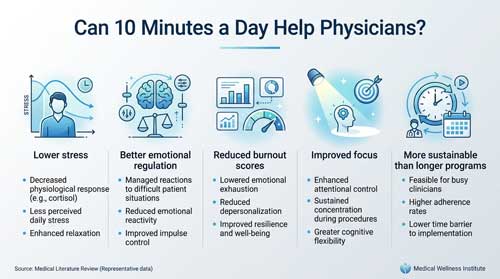
The evidence supporting brief daily mindfulness practices for physician wellness is encouraging but requires continued investigation. Current research suggests that ten-minute daily practices can produce measurable improvements in stress levels, emotional regulation, and job satisfaction among healthcare providers. The neurobiological mechanisms underlying these benefits are increasingly well understood, providing scientific rationale for contemplative practices in medical settings.
However, several important limitations must be acknowledged. Most studies have relatively short follow-up periods, and questions remain about optimal implementation strategies and long-term sustainability. Individual differences in response to mindfulness training suggest that one-size-fits-all approaches may not be optimal for all physicians.
Despite these limitations, the current evidence supports cautious optimism about brief mindfulness interventions as part of comprehensive physician wellness programs. The low cost, minimal side effects, and practical feasibility of brief meditation practices make them attractive options for busy healthcare providers.
Healthcare organizations considering mindfulness programs should focus on evidence-based implementation strategies including leadership support, flexible practice options, and integration with existing wellness initiatives. Individual physicians interested in mindfulness practices should view them as one component of broader self-care strategies rather than complete solutions to systemic healthcare problems.
Future research should prioritize long-term studies, implementation science investigations, and personalized approaches to mindfulness training. As the evidence base continues to develop, mindfulness practices may become standard components of medical education and physician wellness programs.
The question of whether ten minutes a day can really change a physician’s life cannot be answered definitively based on current research. However, the available evidence suggests that brief mindfulness practices can contribute to meaningful improvements in physician well-being and potentially enhance patient care quality. For a profession facing unprecedented challenges related to stress and burnout, any evidence-based intervention that shows promise deserves serious consideration.
Key Takeaways
Healthcare providers considering mindfulness interventions should understand several key points based on current research evidence. Brief daily practices, even as short as ten minutes, can produce measurable improvements in stress management and emotional regulation. However, these benefits require consistent practice and realistic expectations about outcomes.
The neurobiological mechanisms underlying mindfulness benefits are well-established, providing scientific rationale for meditation practices. Changes in brain structure and function, stress hormone levels, and physiological responses support the therapeutic potential of contemplative practices.
Implementation success depends heavily on organizational support, flexible practice options, and integration with existing wellness programs. Individual motivation is important, but systemic factors often determine long-term program sustainability.
Mindfulness practices should be viewed as one component of comprehensive wellness strategies rather than standalone solutions. Combining meditation with other evidence-based approaches may provide optimal benefits for physician well-being.
Research limitations, including short follow-up periods and measurement challenges, suggest that continued investigation is needed. However, the current evidence base supports cautious optimism about brief mindfulness interventions for healthcare providers.
FAQs
How much time do I really need to spend practicing mindfulness each day?
Research suggests that practices as brief as 8-15 minutes daily can produce measurable benefits. However, consistency matters more than duration. Regular 10-minute practices are likely more beneficial than occasional longer sessions.
Can mindfulness practices really help with the stress of medical practice?
Studies specifically involving physicians show reductions in burnout scores, improved emotional regulation, and better job satisfaction. While mindfulness cannot solve systemic healthcare problems, it can help providers manage stress more effectively.
Do I need special training to start a mindfulness practice?
While formal training can be helpful, basic mindfulness techniques can be learned through books, apps, or online resources. However, brief initial instruction often improves long-term adherence and effectiveness.
How long does it take to see benefits from mindfulness practice?
Some studies show improvements in stress measures within 2-4 weeks of regular practice. However, neurobiological changes and sustained benefits typically develop over 6-8 weeks of consistent practice.
Are there any risks or side effects to mindfulness practice?
Mindfulness practices are generally very safe. Some people may initially experience increased awareness of stress or emotions, but this typically improves with continued practice. Those with serious mental health conditions should consult healthcare providers before beginning intensive meditation practices.
Can mindfulness practice improve patient care?
Limited research suggests that provider mindfulness training may improve patient communication, empathy, and satisfaction scores. However, more research is needed to establish direct connections between provider wellness and patient outcomes.
How do I find time for mindfulness practice during busy clinical schedules?
Successful practitioners often integrate brief practices into existing routines such as pre-shift preparation, between-patient transitions, or commute time. Flexibility and creativity in finding practice opportunities is often necessary.
Will my colleagues think mindfulness practice is unprofessional?
Medical culture is gradually becoming more accepting of wellness practices as research evidence grows. Focusing on the scientific basis for mindfulness and its potential benefits for patient care can help address professional concerns.
What type of mindfulness practice is best for healthcare providers?
Research has examined various approaches including breath awareness, body scanning, and loving-kindness meditation. The best practice is often the one that individuals find most appealing and sustainable.
How do I maintain a practice long-term?
Studies show that long-term adherence requires ongoing motivation and support. Setting realistic goals, tracking progress, finding practice partners, and regularly reviewing benefits can help maintain consistent practice over time.

References:
Arora, S., Ashrafian, H., Davis, R., Athanasiou, T., Darzi, A., & Sevdalis, N. (2010). Emotional intelligence in medicine: A systematic review through the context of the ACGME competencies. Medical Education, 44(8), 749-764.
Craigie, M., Osseiran-Moisson, R., Hemsworth, D., Aoun, S., Francis, K., Brown, J., … & Rees, C. (2016). The influence of trait-negative affect and compassion satisfaction on compassion fatigue in Australian nurses. Psychological Trauma: Theory, Research, Practice, and Policy, 8(1), 88-97.
Fortney, L., Luchterhand, C., Zakletskaia, L., Zgierska, A., & Rakel, D. (2013). Abbreviated mindfulness intervention for job satisfaction, quality of life, and compassion in primary care clinicians: A pilot study. Annals of Family Medicine, 11(5), 412-420.
Goyal, M., Singh, S., Sibinga, E. M., Gould, N. F., Rowland-Seymour, A., Sharma, R., … & Haythornthwaite, J. A. (2014). Meditation programs for psychological stress and well-being: A systematic review and meta-analysis. JAMA Internal Medicine, 174(3), 357-368.
Irving, J. A., Dobkin, P. L., & Park, J. (2009). Cultivating mindfulness in health care professionals: A review of empirical studies of mindfulness-based stress reduction (MBSR). Complementary Therapies in Clinical Practice, 15(2), 61-66.
Johnson, J. R., Emmons, H. C., Rivard, R. L., Griffin, K. H., & Dusek, J. A. (2015). Resilience training: A pilot study of a mindfulness-based program with depressed healthcare workers. Explore, 11(6), 433-444.
Khoury, B., Sharma, M., Rush, S. E., & Fournier, C. (2015). Mindfulness-based stress reduction for healthy individuals: A meta-analysis. Journal of Health Psychology, 20(6), 725-735.
Lamothe, M., Rondeau, É., Malboeuf-Hurtubise, C., Duval, M., & Sultan, S. (2016). Outcomes of MBSR or MBSR-based interventions in health care providers: A systematic review with a focus on empathy and emotional competencies. Complementary Therapies in Medicine, 24, 19-28.
Shanafelt, T. D., Hasan, O., Dyrbye, L. N., Sinsky, C., Satele, D., Sloan, J., & West, C. P. (2015). Changes in burnout and satisfaction with work-life balance in physicians and comparison with the US population between 2011 and 2014. Mayo Clinic Proceedings, 90(12), 1600-1613.
Williams, D., Tricomi, G., Gupta, J., & Janise, A. (2018). Efficacy of burnout interventions in the medical education pipeline. Academic Psychiatry, 42(6), 737-746.
Recent Articles
Integrative Perspectives on Cognition, Emotion, and Digital Behavior

Sleep-related:
Longevity/Nutrition & Diet:
Philosophical / Happiness:
Other:
Modern Mind Unveiled
Developed under the direction of David McAuley, Pharm.D., this collection explores what it means to think, feel, and connect in the modern world. Drawing upon decades of clinical experience and digital innovation, Dr. McAuley and the GlobalRPh initiative translate complex scientific ideas into clear, usable insights for clinicians, educators, and students.
The series investigates essential themes—cognitive bias, emotional regulation, digital attention, and meaning-making—revealing how the modern mind adapts to information overload, uncertainty, and constant stimulation.
At its core, the project reflects GlobalRPh’s commitment to advancing evidence-based medical education and clinical decision support. Yet it also moves beyond pharmacotherapy, examining the psychological and behavioral dimensions that shape how healthcare professionals think, learn, and lead.
Through a synthesis of empirical research and philosophical reflection, Modern Mind Unveiled deepens our understanding of both the strengths and vulnerabilities of the human mind. It invites readers to see medicine not merely as a science of intervention, but as a discipline of perception, empathy, and awareness—an approach essential for thoughtful practice in the 21st century.
The Six Core Themes
I. Human Behavior and Cognitive Patterns
Examining the often-unconscious mechanisms that guide human choice—how we navigate uncertainty, balance logic with intuition, and adapt through seemingly irrational behavior.
II. Emotion, Relationships, and Social Dynamics
Investigating the structure of empathy, the psychology of belonging, and the influence of abundance and selectivity on modern social connection.
III. Technology, Media, and the Digital Mind
Analyzing how digital environments reshape cognition, attention, and identity—exploring ideas such as gamification, information overload, and cognitive “nutrition” in online spaces.
IV. Cognitive Bias, Memory, and Decision Architecture
Exploring how memory, prediction, and self-awareness interact in decision-making, and how external systems increasingly serve as extensions of thought.
V. Habits, Health, and Psychological Resilience
Understanding how habits sustain or erode well-being—considering anhedonia, creative rest, and the restoration of mental balance in demanding professional and personal contexts.
VI. Philosophy, Meaning, and the Self
Reflecting on continuity of identity, the pursuit of coherence, and the construction of meaning amid existential and informational noise.
Keywords
Cognitive Science • Behavioral Psychology • Digital Media • Emotional Regulation • Attention • Decision-Making • Empathy • Memory • Bias • Mental Health • Technology and Identity • Human Behavior • Meaning-Making • Social Connection • Modern Mind
Video Section