Ageotypes and Modern Longevity Biomarkers: What Physicians Should Monitor Beyond Telomeres
Key Takeaways
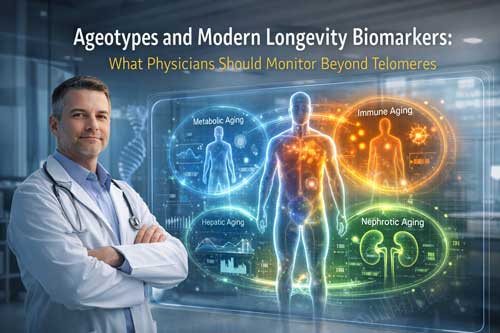
Stanford’s ageotypes framework revolutionizes aging assessment by identifying four distinct aging patterns—metabolic, immune, hepatic, and nephrotic—enabling personalized longevity interventions beyond traditional approaches.
• Telomeres alone are insufficient: Individual variation and tissue-specific differences limit telomere length as a standalone aging marker, requiring multi-biomarker approaches for accurate assessment.
• Four ageotypes guide targeted monitoring: Metabolic agers need glucose/insulin tracking, immune agers require inflammatory markers, hepatic agers benefit from liver function panels, and nephrotic agers need kidney assessments.
• Essential biomarkers include HbA1c, IL-6, cystatin C, and GGT: These markers demonstrate robust age associations and enable early detection of accelerated aging before disease manifestation.
• Longitudinal tracking over two years reveals personal aging patterns: Five measurements within 24 months provide sufficient data to characterize individual aging trajectories and guide interventions.
• Epigenetic clocks complement ageotype assessment: Second-generation clocks like PhenoAge and GrimAge predict health outcomes better than chronological age, enhancing personalized medicine approaches.
This precision framework transforms reactive disease management into proactive longevity medicine, allowing physicians to target specific aging pathways based on individual biological trajectories rather than population averages.
Recent articles. Check out our extensive video library.
Introduction
Life expectancy has roughly doubled in developed countries over the past century, yet healthspan lags far behind. By 2050, the global population aged 60 and above will reach 2.1 billion. Therefore, ageotypes—Stanford researcher Michael Snyder’s framework identifying four distinct aging patterns (metabolic, immune, hepatic, and nephrotic)—offer physicians a personalized approach to longevity assessment. While telomere length alone provides limited insight, integrating ageotypes with multi-marker panels enables clinicians to target the aging process itself rather than individual age-related diseases.
Understanding Ageotypes: Stanford’s Personalized Aging Framework
Michael Snyder’s Ageotypes Discovery at Stanford
Michael Snyder, Professor and Chair of Genetics at Stanford University School of Medicine, challenged the traditional cross-sectional approach to aging research. Rather than comparing old populations to young populations, his team performed the first longitudinal, in-depth global analysis of molecular profiles in individual subjects over time. The study, published in Nature Medicine in January 2020, profiled 43 healthy men and women aged 34 to 68, taking extensive measurements of their molecular biology at least five times over two years [1].
The research team generated 18 million data points from 106 patients through multi-omics assays [2]. They measured 10,343 genes, 306 blood proteins, 722 metabolites, and 6,909 microbes using blood, stool, saliva, and other biological samples [3]. This scale of data collection revealed that individuals age along different pathways and at different rates, patterns previously obscured by population-level studies.
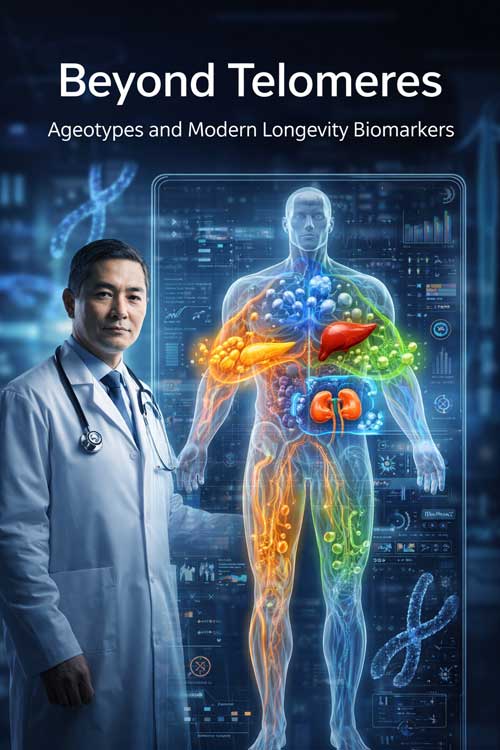
Pathway-enrichment analyzes identified 608 molecules that significantly correlated with age in at least six individuals [1]. These molecules clustered into four major overlapping pathways: immunity, metabolic function, liver dysregulation, and kidney dysregulation. Snyder’s team termed these distinct aging patterns “ageotypes,” reflecting the biological pathways where aging biomarkers showed the most pronounced increases.
The 4 Ageotypes: Metabolic, Immune, Hepatic, and Nephrotic
Metabolic ageotype centers on the body’s capacity to process energy and manage glucose. Individuals with this pattern face elevated risks for diabetes, obesity, and cardiovascular disease. Hemoglobin A1c, a marker of blood sugar control, typically rises in metabolic agers. One participant demonstrated kidney, liver, and metabolic aging patterns simultaneously but showed minimal immune system aging [4].
Immune ageotype focuses on inflammatory markers and immune system function. These individuals generate higher levels of inflammatory molecules as they age, increasing susceptibility to autoimmune diseases and chronic inflammation. The study found approximately 10 molecules that differed significantly between insulin-sensitive and insulin-resistant participants as they aged [1]. Many of these markers involved immune function and inflammation, suggesting that insulin-resistant individuals experience accelerated inflammatory aging.
Hepatic ageotype relates to liver function and detoxification capacity. The liver processes nutrients and filters toxins from the bloodstream. Individuals aging predominantly along this pathway show accelerated liver-related molecular changes, potentially increasing risks for cirrhosis and non-alcoholic fatty liver disease.
Nephrotic ageotype tracks kidney function decline. Kidneys regulate fluid balance, control blood pressure, and filter waste products. One participant (identified as ZNED4XZ) exhibited strong aging patterns in kidney dysfunction pathways but displayed minor changes in other pathways [1]. In contrast, participant ZM7JY3G showed strong patterns in metabolic pathways and kidney dysfunction but not in immune or liver dysregulation [1].
Ageotypes Meaning: Why Individual Aging Patterns Matter
Ageotypes are not mutually exclusive. An individual can age along multiple pathways simultaneously, though one typically predominates. Many participants displayed strong liver, kidney, metabolic, and immune ageotypes concurrently, indicating aging across all four pathways [1]. The Stanford researchers likened this to a car where the entire vehicle ages, but certain parts wear out faster than others [4].
The clinical value lies in the actionable timeframe. Measurements taken over two years provided sufficient data to characterize individual aging patterns, allowing interventions before disease manifestation. Some participants showed decreased ageotype markers when they modified behaviors. Among those exhibiting reduced hemoglobin A1c levels, many had lost weight or altered their diet [1]. Eight out of ten individuals with declining creatinine levels (a kidney function marker) were taking statins, suggesting these medications might improve renal function [4].
Not everyone showed increased markers over time. Fifteen people became biologically younger during the study period [3]. For some, the mechanisms remained unclear despite no obvious behavioral changes, indicating additional factors influence aging trajectories.
How Ageotypes Test Works in Clinical Practice
Determining ageotypes requires longitudinal molecular profiling that remains outside standard clinical practice. The research team estimated that five measurements within two years suffice to characterize how someone ages [4]. Testing protocols track proteins, metabolites, lipids, microbes, and clinical markers through repeated blood, stool, and saliva sampling.
Current ageotype assessment remains research-based rather than commercially available. However, existing metabolic profiling services and medical histories can provide preliminary insights. Blood sugar levels, insulin markers, creatinine measurements, and inflammatory indicators offer clues to predominant aging pathways. Physicians can monitor these clinical markers over time to identify which organ systems show accelerated aging in individual patients.
The framework enables targeted interventions based on personal aging patterns. Metabolic agers might prioritize glucose control and weight management. Immune agers could focus on inflammation reduction. Hepatic agers should minimize alcohol consumption, while nephrotic agers might increase hydration [4]. This precision approach moves beyond one-size-fits-all aging interventions toward personalized longevity medicine.
Why Telomeres Alone Don’t Tell the Complete Aging Story 

Telomere Length Measurement Limitations
Telomere length has been studied extensively as a biomarker of cellular aging, yet its clinical utility faces substantial methodological challenges. Research findings indicate that TL per se allows only a rough estimate of aging rate and can hardly be regarded as a clinically important risk marker for age-related pathologies and mortality [5]. Applications of TL to assess morbidity and mortality risk have produced inconsistent findings, leading to concerns about the utility of TL as a biomarker of aging [4].
The inconsistency stems from multiple sources. Different TL measurement methods yield variable results, complicating cross-study comparisons. Statistical modeling approaches differ widely among investigations. Variations in study populations, covariate selection, and DNA extraction procedures further contribute to discrepant outcomes [4]. Telomere length measurements carry inherent measurement error, including assays such as the Luminex method, which can attenuate correlation strength between TL measurements from different tissue types [4].
Post-mitotic cells, which are mature cells that no longer undergo mitosis, do not experience telomere shortening due to age [5]. Instead, oxidative stress exposure can directly damage telomeres, causing genomic instability independent of cellular division. This reality undermines telomere length as a universal aging marker across all cell types.
Individual Variation and Tissue-Specific Differences
Tissue-specific TL variation presents a critical limitation for physicians relying solely on blood-based measurements. Analysis of over 6,000 tissue samples representing more than 20 distinct tissue types from over 950 individual donors revealed that tissue type alone accounted for 11.5% to 24.3% of variation in measured TL [4][4]. Relative telomere length varied substantially across tissues and was shortest in whole blood and longest in testis [4].
Individual variation adds another layer of complexity. Among all tissues examined, 8.7% of RTL variation was attributable to variability among individuals, increasing to 11.2% when testis was excluded [4]. Age explained only 3.3% of variation in RTL among all tissues and 4.4% excluding testis, whereas BMI, TL-associated SNPs, smoking status, and race and ethnicity each explained less than 1% of variation [4].
Blood-based measurements correlate positively with only 15 out of 23 tissue types studied, with Pearson correlations ranging from 0.15 to 0.37 [4]. Notably, lower correlations emerged between peripherally collected tissues (buccal cells, PBMCs) and surgically collected tissues (bone marrow, spleen), highlighting how collection and processing procedures affect cross-tissue concordance [4].
DNA quality metrics further complicate interpretations. Blood-based tissues demonstrated high DNA integrity, more acceptable A260/280 and A260/230 values, and greater extracted DNA concentrations compared to buccal cells and saliva [4]. Longer average telomere length associated with lower DNA integrity, higher extracted DNA concentrations, and higher A260/230 ratios, particularly for saliva samples [4].
The Need for Multi-Marker Approaches
The heritability of leukocyte TL at baseline reaches approximately 64%, while the heritability of age-dependent LTL attrition rate stands at 28% [5]. Environmental and lifestyle factors throughout the life course modulate TL, including intrauterine events, early life adversity, infection, psycho-emotional stress, nutrition, physical activity, smoking, alcohol consumption, and therapeutic interventions [5].
Other indicators such as certain immune parameters and indices of epigenetic age could be stronger predictors of health status and chronic disease risk [5]. TL remains informative when used along with other markers such as indices of homeostatic dysregulation, frailty index, and epigenetic clocks [5]. This aligns with Stanford’s ageotypes framework, which integrates multiple pathways rather than relying on single biomarkers. Physicians require comprehensive panels tracking metabolic, immune, hepatic, and nephrotic markers to capture individual aging patterns that telomere measurements alone cannot reveal.
Metabolic Ageotype Biomarkers Physicians Should Track
Fasting Glucose and HbA1c: Core Metabolic Indicators
Metabolic ageotype monitoring requires tracking glucose control markers that reveal aging patterns distinct from disease diagnosis. HbA1c levels increase by 0.93 mmol/mol per 10 years of age in longitudinal studies, even after adjusting for glucose tolerance status [6]. This age-related rise occurs independently of glucose levels and insulin resistance, creating diagnostic challenges for physicians relying solely on standard reference ranges [6].
The clinical implications become apparent when comparing age groups. An 80-year-old individual with normal glucose tolerance demonstrates HbA1c levels 3.82 mmol/mol higher than a 30-year-old with identical glucose tolerance [6]. The 97.5th percentiles for HbA1c in nondiabetic individuals vary markedly: 6.0% for those under 40 years compared to 6.6% for individuals aged 70 years and above [6]. Consequently, the specificity of HbA1c-based diagnostic criteria for prediabetes decreases substantially with increasing age [6].
Fasting glucose demonstrates stronger associations with vascular aging than previously recognized. Per 1-mmol/L increment of fasting glucose correlates with higher risk of vascular aging as measured by carotid-femoral pulse wave velocity (OR=1.05) and pulse pressure (OR=1.06) [1]. Similarly, each 1% increment in HbA1c associates with elevated vascular aging risk across multiple parameters (OR=1.06 to 1.12) [1].
Insulin Resistance Markers: HOMA-IR and C-Peptide
HOMA-IR provides quantifiable assessment of insulin resistance through the formula: fasting insulin (µU/ml) × fasting glucose (mmol/L)/22.5 [7]. Diabetic patients demonstrate HOMA-IR values averaging 11.49 compared to 3.95 in non-diabetic controls, with 34.04% of diabetic patients showing severe insulin resistance (HOMA-IR > 10) versus only 5.26% of controls [7].
C-peptide serves as a multi-modal biomarker for metabolic ageotype assessment. Fasting C-peptide correlates strongly with HOMA-IR in both diabetic patients (R=0.652) and control subjects (R=0.500) [7]. Moreover, C-peptide can substitute for insulin in HOMA calculations using modified formulas: HOMA-IR (CP) = 1.5 + fasting blood glucose × fasting C-peptide/2800 [8]. This substitution maintains high correlation with traditional HOMA-IR measurements (r=0.689) while offering greater stability [8].
Normal fasting C-peptide ranges from 0.5 to 2.0 ng/mL. Elevated levels above 2.0 ng/mL indicate pancreatic compensation for insulin resistance, often occurring years before glucose dysregulation becomes apparent [8]. This pattern allows early metabolic ageotype identification when glucose and HbA1c remain within normal ranges.
Lipid Profile: ApoB, LDL-P, and Triglycerides
Apolipoprotein B measurement outperforms LDL cholesterol for metabolic aging assessment. Each atherogenic lipoprotein particle contains exactly one apoB molecule, providing direct particle count rather than cholesterol mass estimates [9]. Meta-analyzes demonstrate apoB as the most potent cardiovascular risk marker, with stronger associations than non-HDL cholesterol or LDL cholesterol [9].
Age correlates positively with VLDL, IDL, and LDL apoB-100 concentrations (r=0.50, 0.62, and 0.69 respectively) in normolipidemic subjects [5]. The age-associated increase in VLDL apoB-100 results from elevated production rates, while LDL apoB-100 increases stem from prolonged residence time in plasma [5]. Plasma apoB values at or above 125 mg/dl associate with increased coronary heart disease risk [9].
Notably, low apoA-I and elevated apoB/apoA-I ratios predict mortality across all age groups, retaining predictive value even in individuals over 80 years when cholesterol measurements lose accuracy [5].
Advanced Glycation End Products (AGEs)
AGEs form through nonenzymatic glycation when proteins, lipids, or nucleotides undergo prolonged glucose exposure. These molecules accumulate in multiple tissues during aging, including articular and skin collagen, skeletal and smooth vascular muscles, and glomerular basement membranes [1]. Key AGE compounds include:
-
Carboxymethyl-lysine (CML) and carboxyethyl-lysine (CEL)
-
Pentosidine (fluorescent AGE)
-
Pyrraline (nonfluorescent AGE)
-
Methylglyoxal-lysine dimer (MOLD)
AGEs alter extracellular matrix properties through intermolecular cross-linking, increasing vascular stiffness and reducing arterial compliance [10]. Receptor for advanced glycation end products (RAGE) activation triggers nuclear factor-κB upregulation, promoting inflammatory cascades [10]. AGEs reduce nitric oxide bioavailability and activity, impairing endothelium-dependent vasodilation [10]. Circulating AGE levels correlate inversely with endothelium-dependent and endothelium-independent vasodilation in type 2 diabetes patients [10], establishing AGEs as functional metabolic ageotype markers beyond static glucose measurements.
Immune Ageotype Markers for Inflammatory Aging
High-Sensitivity CRP and IL-6 Levels
Aging creates a paradoxical state where immunodeficiency coexists with chronic inflammation, increasing susceptibility to infections, reduced vaccination response, and elevated cancer risk [4]. This process, termed inflammaging, manifests through measurable increases in inflammatory markers that predict both functional decline and mortality.
IL-6 and CRP levels increase systematically with age across populations. Studies of Eastern Europeans aged 65 and older demonstrate age-dependent elevation of both markers in successfully aging individuals who maintain cognitive function and daily living independence [11]. Higher IL-6 concentrations associate with mortality risk across all elderly populations, with hazard ratios of 1.163 per pg/mL in successfully aging individuals and 1.063 per pg/mL in those with existing age-related diseases [11].
Elevated midlife IL-6 predicts cognitive decline over subsequent decades. Ten-year decline in reasoning proves greater among participants with high IL-6 compared to those with low levels, with combined cross-sectional and longitudinal effects corresponding to 3.9 years of cognitive aging [12]. Participants with elevated IL-6 demonstrate 1.81 times greater odds of decline in Mini Mental State Examination scores [12]. Correspondingly, CRP elevation associates with poorer physical performance and cognitive function, though IL-6 shows stronger predictive value for neurological outcomes.
GlycA and GlycB: Composite Inflammatory Signals
GlycA and GlycB represent composite nuclear magnetic resonance signals originating from N-acetyl groups on acute-phase glycoproteins. The GlycA signal comprises α1-acid glycoprotein, haptoglobin, α1-antitrypsin, and α1-antichymotrypsin, whereas GlycB primarily reflects N-acetylneuraminic acid residues [13]. These markers offer methodological advantages over traditional inflammatory assessments.
GlycA correlates moderately with hsCRP (r=0.6 consistently across studies), yet demonstrates markedly superior analytical stability [13][13]. Intra-individual variability for hsCRP reaches 29.2% in weekly assessments, whereas GlycA shows intra-individual, intra-assay, and inter-assay coefficients of variation of 4.3%, 1.9%, and 2.6% respectively [13]. This stability proves necessary for longitudinal monitoring of subclinical inflammation in ageotype assessment.
Within-individual GlycA elevations remain stable for up to a decade and predict long-term hospitalization and infection-related mortality [13]. GlycA correlates with inflammatory cytokines including IL-6 and TNF-α [13][13]. GlycB shows moderate correlation with CRP (r=0.4-0.5) and may provide complementary subphenotypic information on inflammatory processes [13]. Both GlycA and GlycB demonstrate independent associations with insulin resistance even after adjusting for demographics, physical activity, and BMI [14].
Cytokine Profiles and T Cell Populations
Immunosenescence affects both innate and adaptive immunity through multiple mechanisms. Monocyte populations shift with age, showing decreased classical CD14++CD16− monocytes and increased CD14+CD16+ intermediate monocytes [4]. Intermediate monocytes produce proinflammatory cytokines including TNFα and IL-6, contributing to chronic low-grade inflammation [4].
T cell compartments undergo substantial remodeling. Naïve CD8+ T cell populations decrease markedly with age, while effector and memory cells accumulate [4]. This shift reflects continuous antigenic stimulation throughout life, creating what researchers term an individual’s immunobiography [4]. The ratio of Type 1 to Type 2 cytokine-producing cells changes in centenarians, showing decreased IFN-γ/IL-4 ratios among CD8+ T cells [6].
Immunosenescence Indicators
Cellular exhaustion markers provide quantifiable assessment of immune aging. CD57 and KLRG1 expression increases with age, particularly in effector and effector memory T cell subpopulations [15]. Natural killer cells demonstrate increased CD56neg populations and elevated CD57 expression in older adults, with decreased CD56bright cells [4][15]. CD56neg cells show reduced functional cytotoxicity and responsiveness.
PD-1 expression marks T cell exhaustion. COVID-19 studies revealed higher frequencies of PD-1+ exhausted cells in both helper and cytotoxic T cells compared to healthy controls [6]. Age-related accumulation of cells expressing senescence markers including CD57, PD-1, Tim-3, NKG2A, and CTLA-4 characterizes the aging immune system [6]. These markers enable physicians to assess immune ageotype progression beyond simple inflammatory cytokine measurements.

Hepatic Ageotype: Liver Function and Metabolic Health
ALT, AST, and GGT: Beyond Basic Liver Panels
Liver enzymes provide predictive information extending far beyond hepatobiliary disease detection. High levels of GGT, ALT, and AST predict disease occurrence and all-cause mortality, reflecting liver injury, fatty liver, and oxidative stress [1]. Variation within normal reference ranges predicts disease outcomes [1], therefore physicians monitoring hepatic ageotype must interpret enzyme trends rather than relying solely on binary normal/abnormal classifications.
Heritability estimates reveal the genetic component underlying individual enzyme variation. For adults, GGT shows heritability between 32-69%, ALT between 22-44%, and AST between 21-40% [1]. Age modifies genetic effects at specific loci. SNPs at the GGT1 locus on chromosome 22 decrease GGT levels in adults yet increase them in adolescents [1]. Additional age heterogeneity occurs for SNPs in the CELF2 gene affecting GGT expression through transcription factor coding [1].
Sex and age create distinct distribution patterns. Men under 45 years demonstrate elevated ALT in 10.1% of healthy individuals despite upper limit definitions implying 5% or lower [16]. Age dependence proves weaker for ALT in women. AST proportions remain stable across male age groups, whereas women show increases around menopause [16].
Higher AST:ALT ratios and elevated GGT levels associate with increased cognitive impairment risk [7]. Lower ALT levels paradoxically link to dementia risk [7], indicating complex relationships between hepatic function and neurological aging that physicians tracking hepatic ageotype should monitor longitudinally.
Fatty Liver Index and Hepatic Steatosis Markers
Fatty Liver Index emerged as a non-invasive hepatic steatosis screening tool calculated from four parameters:
-
Body mass index
-
Waist circumference
-
Triglyceride levels
-
Gamma-glutamyl transferase levels
FLI demonstrates robust diagnostic accuracy for metabolic dysfunction-associated fatty liver disease. Studies using computed tomography validation show AUROC values of 0.776 [8] to 0.791 [17], outperforming individual markers including ALT, GGT, and high-sensitivity CRP [8]. The optimal cut-off value ranges from 29.9 to 30.1 [8][17], with sensitivity and specificity both reaching approximately 71% [8][17].
Age influences FLI performance. The index achieves highest AUROC values of 0.849 in populations aged 41-50 years, with declining performance after age 50 [17]. This age-related variation requires physicians to adjust interpretation based on patient demographics when assessing hepatic ageotype progression.
Bile Acid Metabolism and Detoxification Capacity
Bile acids function as signaling molecules enabling inter-organ communication from liver through intestine to virtually any organ [9]. Aging fundamentally alters bile acid metabolism through multiple mechanisms. BA levels decline with age [9], while the profile shifts toward increased 12α-hydroxylated bile acids, raising hydrophobicity and metabolic risk [5].
Receptor-mediated signaling deteriorates during aging. Farnesoid X receptor and Takeda G protein-coupled receptor 5 signaling decline with age, impairing metabolic homeostasis [5]. These receptors regulate glucose metabolism, lipid metabolism, inflammation, and energy homeostasis [5][18].
Specific bile acids demonstrate protective effects. Lithocholic acid shows anti-aging properties, with LCA derivatives enriched in centenarians [9]. Ursodeoxycholic acid protects against neurodegenerative disorders [9][18]. Targeting bile acid pathways through pharmacological FXR and TGR5 modulation or microbiota-directed therapies offers strategies to mitigate aging-related metabolic decline [5][18], positioning bile acid assessment as an emerging component of comprehensive hepatic ageotype monitoring.
Nephrotic Ageotype: Kidney Function Assessment
eGFR and Cystatin C for Accurate Filtration Rate
Kidney function assessment through creatinine-based eGFR faces methodological limitations that compromise nephrotic ageotype monitoring. Creatinine levels depend on muscle mass, diet, and muscle metabolism, creating artifacts in older adults with sarcopenia [19]. After age 65, nephron loss and functional decline reduce normal eGFR values even in healthy kidneys, with average values declining from 116 mL/min/1.73m² at ages 20-29 to 75 mL/min/1.73m² after age 70 [19].
Cystatin C eliminates muscle mass confounding. This protein marker demonstrates independence from dietary protein and skeletal muscle quantity [10]. Each standard deviation increment in serum cystatin C associates with faster frailty progression (β = 0.050 SD/y in the Health and Retirement Study cohort and β = 0.051 SD/y in the China Health and Retirement Longitudinal Study) [10]. Correspondingly, eGFRcys shows inverse associations with frailty trajectories (β = -0.058 SD/y and β = -0.056 SD/y respectively) [10].
Combined creatinine-cystatin C measurements (eGFRcr-cys) provide superior outcome prediction. Swedish data from 82,154 patients aged 65 and older revealed that eGFRcr-cys reclassified 31.2% of older adults, predominantly to more severe categories [20]. At an eGFR of 60 versus 80 mL/min/1.73m², eGFRcr-cys demonstrated 2.6-fold higher kidney failure risk compared to 1.4-fold using eGFRcr alone [20].
Urine Albumin-to-Creatinine Ratio
UACR quantifies albumin leakage into urine, detecting kidney damage before filtration rate declines. Normal UACR remains below 30 mg/g [21]. Values exceeding this threshold indicate kidney disease even when eGFR exceeds 60 mL/min/1.73m² [21].
Mortality risk increases linearly with UACR elevation. Community population studies demonstrate that individuals with high-normal UACR (10-30 mg/g) show 1.289 times higher all-cause mortality compared to those with UACR below 10 mg/g [22]. Those with UACR exceeding 30 mg/g demonstrate 1.394 times higher mortality risk [22]. Each 10-unit UACR increase correlates with 2.6% elevated odds of cognitive impairment [23].
Uric Acid and Renal Metabolic Stress
Uric acid serves as the final oxidation product of purine metabolism, with two-thirds renally excreted [24]. Elevated levels predict chronic kidney disease development independent of baseline renal function. Serum uric acid levels ≥8 mg/dL confer relative risks of 2.91 in men and 10.39 in women for developing elevated creatinine within two years [11]. Prospective cohorts demonstrate that baseline hyperuricemia predicts worsening renal function across 8.5 years, independent of diabetes, hypertension, and other risk factors [11].
Epigenetic Clocks: Measuring Biological vs Chronological Age
DNA Methylation-Based Age Calculators
DNA methylation patterns shift systematically with age, enabling algorithmic age estimation through analysis of cytosine-phospho-guanine sites. Epigenetic clocks measure these changes at specific CpG locations highly correlated with calendar age [12]. The discrepancy between DNA methylation age and chronological age generates epigenetic age acceleration (EAA), a biological aging measure where positive residuals indicate accelerated aging and negative residuals suggest deceleration [12].
Epigenetic age calculators employ elastic net regression algorithms trained on methylation data from donors across age ranges [13]. These models screen hundreds of potential CpG sites, selecting those demonstrating strongest age correlation [14]. Resulting mathematical formulas accept individual methylation data as input, outputting predicted biological age distinct from years lived [14].
Horvath, PhenoAge, and GrimAge Clocks
First-generation clocks focus on chronological age prediction. Horvath’s pan-tissue clock uses 353 CpGs across 51 tissue types [13], while Hannum’s blood-specific model employs 71 CpG sites [25]. The Bernabeu clock demonstrates highest chronological age correlation at r=0.96 [12].
Second-generation clocks prioritize health outcome prediction. PhenoAge incorporates 513 CpGs trained on composite phenotypic age derived from nine clinical biomarkers including albumin, creatinine, glucose, and C-reactive protein [25][13]. GrimAge employs 1030 CpGs predicting DNA methylation surrogates of seven plasma proteins plus smoking exposure [25][13]. GrimAge v2 enhances mortality prediction through refined CpG predictors and additional protein surrogates [13].
Third-generation DunedinPACE quantifies aging pace rather than cumulative age, measuring multi-organ system deterioration rates [6]. Second-generation clocks consistently outperform first-generation models in predicting lifespan and healthspan [12]. GrimAge demonstrates strongest disease associations with hazard ratios of 1.54 per standard deviation age acceleration [6], predicting mortality with 81% hazard increase per SD of GrimAgeAA [25].
Clinical Applications and Interpretation Guidelines
Epigenetic clocks currently remain restricted to research purposes, lacking standardized ranges for individual clinical diagnosis [14]. Interpretation requires adjusting for chronological age, biological sex, cell composition via Houseman estimates, and technical covariates [13]. Smoking and lifestyle exposures particularly influence GrimAge readings [13].
Accelerated aging across second-generation clocks associates with increased morbidity rates and biomarker deterioration indicating higher mortality risk [12]. Accordingly, integrating epigenetic age assessment with Stanford’s ageotypes framework enables comprehensive biological aging evaluation, complementing metabolic, immune, hepatic, and nephrotic pathway monitoring for personalized longevity interventions.
Building an Integrated Ageotype Monitoring Panel
Essential First-Line Biomarkers for All Patients
Constructing an ageotype monitoring panel requires prioritizing markers demonstrating robust age associations across populations. Longitudinal studies identified glycosylated hemoglobin and interleukin-6 as markers showing greatest age-related increases [26]. Specifically, HbA1c rose 8-13% over six-year periods [26], while IL-6 increased systematically among aging cohorts [26]. A consensus panel established 14 essential biomarkers including GDF-15, DNA methylation clocks, and grip strength [27].
Advanced Markers Based on Individual Ageotype
Stanford’s framework profiled 106 individuals quarterly for up to four years, identifying 184 molecules correlating with age after adjusting for BMI and sex [28]. Stricter statistical thresholds narrowed this to 87 validated markers [3]. Proteomic analyzes revealed 651 age-associated proteins, with 76-protein signatures predicting mortality and multimorbidity accumulation [29].
Testing Frequency and Longitudinal Tracking
Five measurements within two years provide adequate characterization of personal aging patterns [4]. Quarterly sampling enables detection of trajectory changes before disease manifestation [28].
Interpreting Combined Results for Personalized Interventions
Individuals demonstrating metabolic ageotype acceleration require glucose control optimization. Immune agers benefit from inflammation reduction strategies. Hepatic and nephrotic agers demand organ-specific interventions targeting identified dysfunction pathways [3].

Conclusion

Stanford’s ageotypes framework fundamentally shifts aging assessment from population averages to individual patterns. Telomere length measurements alone provide insufficient clinical guidance. Physicians require multi-marker panels tracking metabolic, immune, hepatic, and nephrotic pathways alongside epigenetic clocks.
Essential monitoring elements include: • Glucose control and insulin resistance markers • Inflammatory cytokines and immunosenescence indicators
• Liver enzymes and bile acid profiles • Kidney function via cystatin C and UACR
Longitudinal tracking over two years identifies predominant aging pathways before disease manifestation. This precision approach enables targeted interventions based on personal biological trajectories rather than chronological age, transforming reactive disease management into proactive longevity medicine.
Frequently Asked Questions:
FAQs
Q1. Can drinking coffee affect biological aging markers? Research indicates that moderate coffee consumption of up to four cups daily correlates with longer telomeres, which are protective caps on chromosomes. Those consuming three to four cups per day showed telomere lengths comparable to individuals approximately five years younger biologically than non-coffee drinkers, suggesting potential anti-aging benefits.
Q2. What lifestyle factors accelerate the aging process most significantly? Several modifiable habits contribute to accelerated aging, including sedentary behavior, consumption of ultra-processed foods, and excessive screen time. Chronic stress particularly impacts aging by weakening immune function and triggering inflammatory pathways. Maintaining adequate hydration is also essential for preserving cognitive function and overall cellular health.
Q3. What are the primary biological hallmarks that define aging? Scientists have identified nine fundamental hallmarks of aging: genomic instability, telomere shortening, epigenetic modifications, loss of protein homeostasis, dysregulated nutrient sensing, mitochondrial dysfunction, cellular senescence, stem cell depletion, and altered cell-to-cell communication. These interconnected processes collectively drive age-related decline across organ systems.
Q4. Why do different people age at different rates even at the same chronological age? Individual aging patterns vary because people age along different biological pathways. Stanford’s ageotypes research identified four distinct aging patterns—metabolic, immune, hepatic, and nephrotic—that reflect which organ systems experience accelerated decline. Genetic factors, lifestyle choices, environmental exposures, and stress levels all contribute to these personalized aging trajectories.
Q5. What biomarkers provide the most accurate assessment of biological versus chronological age? Beyond telomere length alone, comprehensive aging assessment requires multiple markers including epigenetic clocks (DNA methylation patterns), inflammatory markers like IL-6 and high-sensitivity CRP, metabolic indicators such as HbA1c and insulin resistance measures, and organ-specific markers for liver and kidney function. Longitudinal tracking of these combined biomarkers over time provides the most accurate picture of individual biological aging.
References:
- van Beek, J. H. D. A., et al. (2013). The genetic architecture of liver enzyme levels: GGT, ALT and AST. Behavior Genetics, 43(4), 329–339. https://doi.org/10.1007/s10519-013-9593-y
- Chakravarthy, H. (2020, March 5). Ageotypes: When age is no longer just one number. Stanford Diabetes Research Center. https://sdrc.stanford.edu/featured-news/2020/3/5/ageotypes-when-age-is-no-longer-just-one-number-1
- Begley, S. (2020, January 13). Our body systems age at different rates, study finds, pointing to personalized care to extend healthy life. STAT. https://www.statnews.com/2020/01/13/ageotypes-scientists-bring-personalized-medicine-to-biology-of-aging/
- Foresight Institute. (n.d.). Monitoring personal health and ageotypes using big data. https://foresight.org/resource/michael-snyder-stanford-university-monitoring-personal-health-and-ageotypes-using-big-data/
- Sun, J., Zhang, S., Jin, L., & Huang, W. (2026). Bile acid signaling, metabolism, and aging. Liver Research. https://doi.org/10.1016/j.livres.2026.02.002
- Mavrommatis, C., Belsky, D. W., Ying, K., et al. (2025). An unbiased comparison of 14 epigenetic clocks in relation to 174 incident disease outcomes. Nature Communications, 16(1), 11164. https://doi.org/10.1038/s41467-025-66106-y
- Zhong, Y., & Li, L. (2025). Association between liver biomarkers and risk of cognitive impairment and dementia: A systematic review and meta-analysis. Pakistan Journal of Medical Sciences, 41(7), 2122–2132. https://doi.org/10.12669/pjms.41.7.12321
- Han, A. L. (2022). Validation of fatty liver index as a marker for metabolic dysfunction-associated fatty liver disease. Diabetology & Metabolic Syndrome, 14(1), 44. https://doi.org/10.1186/s13098-022-00811-2
- Jin, L., Shi, L., & Huang, W. (2024). The role of bile acids in human aging. Medical Review, 4(2), 154–157. https://doi.org/10.1515/mr-2024-0003
- Li, C., Ma, Y., Yang, C., et al. (2022). Association of cystatin C kidney function measures with long-term deficit-accumulation frailty trajectories and physical function decline. JAMA Network Open, 5(9), e2234208. https://doi.org/10.1001/jamanetworkopen.2022.34208
- Giordano, C., Karasik, O., King-Morris, K., & Asmar, A. (2015). Uric acid as a marker of kidney disease: Review of the current literature. Disease Markers, 2015, Article 382918. https://doi.org/10.1155/2015/382918
- Kim, D. J., Kang, J. H., Kim, J.-W., Kim, S., Lee, Y. K., Cheon, M. J., & Lee, B.-C. (2024). Assessing the utility of epigenetic clocks for health prediction in South Korean. Frontiers in Aging, 5, 1493406. https://doi.org/10.3389/fragi.2024.1493406
- Levitt, B., Aiello, A. E., Kelly, A., Martin, C. L., Gaydosh, L., & Harris, K. M. (2025). Wave V epigenetic clocks user guide. Add Health, Carolina Population Center. https://doi.org/10.17615/05w9-7i15
- CD Genomics. (n.d.). Epigenetic clocks 101: Biological vs chronological age in aging research. https://www.cd-genomics.com/epigenetics/resource-epigenetic-clocks-overview.html
- Rodríguez, I. J., & Parra-López, C. A. (2025). Markers of immunosenescence in CMV seropositive healthy elderly adults. Frontiers in Aging, 5, 1436346. https://doi.org/10.3389/fragi.2024.1436346
- Petroff, D., Bätz, O., Jedrysiak, K., Kramer, J., Berg, T., & Wiegand, J. (2021). Age dependence of liver enzymes: An analysis of over 1,300,000 consecutive blood samples. Clinical Gastroenterology and Hepatology. https://doi.org/10.1016/j.cgh.2021.01.039
- Han, A. L., & Lee, H. K. (2022). Comparison of the diagnostic performance of steatosis indices for discrimination of CT-diagnosed metabolic dysfunction-associated fatty liver disease. Metabolites, 12(7), 664. https://doi.org/10.3390/metabo12070664
- Li, X.-J., Fang, C., Zhao, R.-H., Zou, L., Miao, H., & Zhao, Y.-Y. (2024). Bile acid metabolism in health and ageing-related diseases. Biochemical Pharmacology, 225, 116313. https://doi.org/10.1016/j.bcp.2024.116313
- National Kidney Foundation. (n.d.). Estimated GFR (eGFR) test: Kidney function levels, stages, and what to do next. https://www.kidney.org/kidney-topics/estimated-glomerular-filtration-rate-egfr
- Renal & Urology News. (n.d.). Creatinine-cystatin C eGFR more accurately predicts outcomes in older patients with CKD. https://www.renalandurologynews.com/news/creatinine-cystatin-c-egfr-more-accurately-predicts-outcomes-in-older-patients-with-ckd/
- National Kidney Foundation. (n.d.). Urine albumin-creatinine ratio (uACR). https://www.kidney.org/kidney-failure-risk-factor-urine-albumin-creatinine-ratio-uacr
- Zhang, A., et al. (2022). The relationship between urinary albumin to creatinine ratio and all-cause mortality in the elderly population in the Chinese community: A 10-year follow-up study. BMC Nephrology, 23, Article 2. https://doi.org/10.1186/s12882-021-02644-7
- Teng, Y., Zhang, J., Yang, B., Luo, Q., Xue, Y., & Zhang, M. (2025). Elevated urine albumin-to-creatinine ratio as a risk factor for cognitive impairment in older adults: A cross-sectional analysis of NHANES data. PLOS ONE, 20(5), e0321519. https://doi.org/10.1371/journal.pone.0321519
- Mendoza Carrera, F., Vázquez Rivera, G. E., Leal Cortés, C. A., Rizo De la Torre, L. del C., Parra Michel, R., Orozco Sandoval, R., & Pérez Coria, M. (2024). Uric acid correlates with serum levels of mineral bone metabolism and inflammation biomarkers in patients with stage 3a–5 chronic kidney disease. Medicina, 60(12), 2081. https://doi.org/10.3390/medicina60122081
- McCrory, C., et al. (2021). GrimAge outperforms other epigenetic clocks in the prediction of age-related clinical phenotypes and all-cause mortality. The Journals of Gerontology: Series A, 76(5), 741–749. https://doi.org/10.1093/gerona/glaa286
- Glei, D. A., Goldman, N., Lin, Y.-H., & Weinstein, M. (2011). Age-related changes in biomarkers: Longitudinal data from a population-based sample. Research on Aging, 33(3), 312–326. https://doi.org/10.1177/0164027511399105
- Rapamycin Longevity News. (n.d.). An expert consensus statement: The essential biomarkers of aging. https://www.rapamycin.news/t/an-expert-consensus-statement-the-essential-biomarkers-of-aging/22735
- Ahadi, S., Zhou, W., Schüssler-Fiorenza Rose, S. M., et al. (2020). Personal aging markers and ageotypes revealed by deep longitudinal profiling. Nature Medicine, 26(1), 83–90. https://doi.org/10.1038/s41591-019-0719-5
- Tanaka, T., Basisty, N., Fantoni, G., Candia, J., Moore, A. Z., Biancotto, A., Schilling, B., Bandinelli, S., & Ferrucci, L. (2020). Plasma proteomic biomarker signature of age predicts health and life span. eLife, 9, e61073. https://doi.org/10.7554/eLife.61073
Recent Articles
Integrative Perspectives on Cognition, Emotion, and Digital Behavior

Sleep-related:
Longevity/Nutrition & Diet:
Philosophical / Happiness:
Other:
Modern Mind Unveiled
Developed under the direction of David McAuley, Pharm.D., this collection explores what it means to think, feel, and connect in the modern world. Drawing upon decades of clinical experience and digital innovation, Dr. McAuley and the GlobalRPh initiative translate complex scientific ideas into clear, usable insights for clinicians, educators, and students.
The series investigates essential themes—cognitive bias, emotional regulation, digital attention, and meaning-making—revealing how the modern mind adapts to information overload, uncertainty, and constant stimulation.
At its core, the project reflects GlobalRPh’s commitment to advancing evidence-based medical education and clinical decision support. Yet it also moves beyond pharmacotherapy, examining the psychological and behavioral dimensions that shape how healthcare professionals think, learn, and lead.
Through a synthesis of empirical research and philosophical reflection, Modern Mind Unveiled deepens our understanding of both the strengths and vulnerabilities of the human mind. It invites readers to see medicine not merely as a science of intervention, but as a discipline of perception, empathy, and awareness—an approach essential for thoughtful practice in the 21st century.
The Six Core Themes
I. Human Behavior and Cognitive Patterns
Examining the often-unconscious mechanisms that guide human choice—how we navigate uncertainty, balance logic with intuition, and adapt through seemingly irrational behavior.
II. Emotion, Relationships, and Social Dynamics
Investigating the structure of empathy, the psychology of belonging, and the influence of abundance and selectivity on modern social connection.
III. Technology, Media, and the Digital Mind
Analyzing how digital environments reshape cognition, attention, and identity—exploring ideas such as gamification, information overload, and cognitive “nutrition” in online spaces.
IV. Cognitive Bias, Memory, and Decision Architecture
Exploring how memory, prediction, and self-awareness interact in decision-making, and how external systems increasingly serve as extensions of thought.
V. Habits, Health, and Psychological Resilience
Understanding how habits sustain or erode well-being—considering anhedonia, creative rest, and the restoration of mental balance in demanding professional and personal contexts.
VI. Philosophy, Meaning, and the Self
Reflecting on continuity of identity, the pursuit of coherence, and the construction of meaning amid existential and informational noise.
Keywords
Cognitive Science • Behavioral Psychology • Digital Media • Emotional Regulation • Attention • Decision-Making • Empathy • Memory • Bias • Mental Health • Technology and Identity • Human Behavior • Meaning-Making • Social Connection • Modern Mind
Video Section