AI in the Endoscopy Suite Adenoma Detection Booster or Expensive Distraction
Abstract
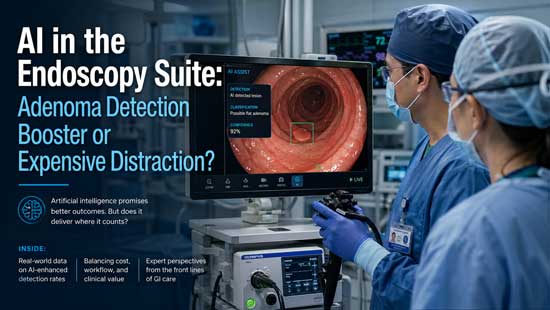
Artificial intelligence systems designed for adenoma detection during colonoscopy represent a remarkable advancement in gastrointestinal endoscopy and colorectal cancer prevention. Colonoscopy remains the gold standard for colorectal cancer screening, yet its effectiveness is highly operator dependent, with variability in adenoma detection rates directly linked to interval cancer risk. Missed lesions, particularly diminutive or flat adenomas, continue to pose a clinical challenge despite improvements in imaging and endoscopic techniques. In this context, artificial intelligence has emerged as a tool to augment real time lesion recognition and standardize the quality of endoscopic examinations.
This analysis evaluates the current evidence on the effectiveness, cost benefit considerations, and practical implementation of artificial intelligence assisted colonoscopy. Data from randomized controlled trials, meta analyses, and real world observational studies consistently demonstrate that computer aided detection systems improve adenoma detection rates by approximately 10 to 15 percent on average. These systems utilize deep learning algorithms trained on large image datasets to identify mucosal abnormalities during live procedures. By continuously analyzing video streams, artificial intelligence can highlight suspicious areas that may otherwise be overlooked, thereby reducing perceptual errors and enhancing diagnostic yield.
The clinical benefit of improved adenoma detection is well established, as higher detection rates are associated with a reduced risk of interval colorectal cancer and related mortality. Artificial intelligence appears particularly beneficial for less experienced endoscopists, helping to narrow the performance gap between novice and expert practitioners. In addition, these systems may contribute to more consistent examination quality across different clinical settings, supporting broader efforts to standardize care delivery in colorectal cancer screening programs.
Despite these advantages, important questions remain regarding the overall value and sustainability of artificial intelligence integration in endoscopy. Cost effectiveness is a central consideration, as implementation requires investment in software platforms, compatible hardware, and ongoing system maintenance. While improved detection may translate into long term reductions in colorectal cancer incidence and treatment costs, robust economic analyses that incorporate real world data are still limited. The balance between upfront costs and downstream savings remains an area of active investigation.
Workflow integration also presents practical challenges. Successful adoption of artificial intelligence systems requires training for endoscopists and support staff to ensure appropriate interpretation and response to algorithm generated prompts. There is a need to integrate these tools seamlessly into existing endoscopy suites without disrupting procedural efficiency or increasing cognitive load. Additionally, concerns have been raised about potential over reliance on artificial intelligence, which could inadvertently reduce vigilance or procedural skill over time if not appropriately managed.
Another consideration is the clinical significance of additional lesions detected by artificial intelligence. While increased detection of adenomas is generally beneficial, some of the additional findings may be diminutive lesions with low malignant potential. This raises questions about the implications for surveillance intervals, pathology workload, and overall healthcare utilization. Careful evaluation of long term patient outcomes is therefore essential to determine whether increased detection translates into meaningful clinical benefit beyond intermediate quality metrics.
Current evidence supports the role of artificial intelligence as a complementary tool that enhances, rather than replaces, clinical expertise. Skilled endoscopists remain essential for lesion characterization, therapeutic decision making, and procedural judgment. The most effective model appears to be one of human and machine collaboration, where artificial intelligence provides real time support while clinicians retain ultimate responsibility for patient care.
Future research should focus on large scale, longitudinal studies to assess the impact of artificial intelligence on colorectal cancer incidence, mortality, and cost effectiveness across diverse healthcare systems. Further refinement of algorithms to improve specificity, reduce false positives, and optimize user interface design will also be critical. In parallel, efforts to develop standardized guidelines for implementation and training will help ensure safe and effective integration into routine practice.
In summary, artificial intelligence assisted colonoscopy represents a promising advancement in gastrointestinal medicine with the potential to improve adenoma detection and screening quality. While challenges related to cost, workflow integration, and long term outcomes remain, the technology offers a valuable adjunct to conventional endoscopy and aligns with broader trends toward precision and technology enabled healthcare.
Introduction
Colorectal cancer remains a major global health burden and is currently the third most commonly diagnosed malignancy worldwide, with an estimated 1.9 million new cases reported annually. It is also a leading cause of cancer related mortality, largely due to late stage diagnosis in a notable proportion of patients. Robust evidence has demonstrated that early detection through screening colonoscopy significantly reduces both incidence and mortality by enabling the identification and removal of precancerous adenomatous polyps. The effectiveness of colonoscopy as a preventive intervention is therefore closely linked to the quality of mucosal inspection and the endoscopist’s ability to detect and resect clinically relevant lesions.
Despite considerable advances in endoscopic imaging, including high definition scopes and image enhancement technologies, adenoma miss rates remain a persistent challenge. Studies have reported miss rates ranging from 6 percent to 27 percent for polyps larger than 5 millimeters, with even higher rates observed for smaller or flat lesions. These missed adenomas represent a critical gap in colorectal cancer prevention, as undetected lesions may progress along the adenoma carcinoma sequence. Furthermore, there is well documented variability in adenoma detection rates among endoscopists, which has been directly associated with differences in post colonoscopy colorectal cancer risk. This variability underscores the need for improved standardization, quality assurance, and adjunctive technologies to enhance detection performance across operators with varying levels of experience.
In this context, artificial intelligence based detection systems have emerged as a promising innovation in endoscopic practice. These systems utilize advanced computer vision and machine learning algorithms, particularly deep learning models trained on large annotated datasets of endoscopic images and videos, to identify potential adenomas in real time. During colonoscopy, the AI software continuously analyzes the live video feed and highlights suspicious areas on the display, prompting the endoscopist to perform closer inspection. This real time assistance has the potential to reduce perceptual errors, which are a major contributor to missed lesions, and to support more consistent detection across procedures.
Over the past five years, several AI assisted colonoscopy systems have undergone clinical validation and received regulatory approval in multiple regions. Early clinical studies and randomized controlled trials have demonstrated that the use of AI assistance is associated with increased adenoma detection rates and improved identification of diminutive and subtle lesions. These benefits appear to be particularly pronounced among less experienced endoscopists, suggesting that AI may help narrow the performance gap between practitioners and contribute to more uniform screening quality.
At the same time, the integration of AI into routine clinical practice has generated ongoing debate within the gastroenterology community. Supporters emphasize that AI has the potential to enhance quality metrics, reduce operator dependent variability, and ultimately improve patient outcomes by increasing the detection of clinically significant lesions. From this perspective, AI serves as a decision support tool that augments rather than replaces clinician expertise. In contrast, some clinicians question the incremental benefit of AI for highly experienced endoscopists who already achieve high adenoma detection rates. Concerns have also been raised regarding the cost effectiveness of these systems, the potential for over detection of clinically insignificant lesions, workflow integration challenges, and the risk of overreliance on automated prompts.
In addition to these considerations, practical issues related to implementation must be addressed. These include the need for standardized training on AI assisted systems, integration with existing endoscopy platforms, data privacy and cybersecurity considerations, and ongoing validation across diverse patient populations and clinical settings. The long term impact of AI on clinically meaningful outcomes such as interval cancer rates and survival also remains an area of active investigation.
This analysis provides a comprehensive evaluation of AI assisted adenoma detection in colonoscopy, synthesizing current evidence on its diagnostic performance, clinical utility, and limitations. By examining both the potential advantages and the unresolved challenges, it aims to offer practicing gastroenterologists a balanced and evidence based perspective on the role of artificial intelligence in modern endoscopic practice. As the field continues to evolve, the integration of AI into colonoscopy represents a significant step toward more precise, standardized, and effective colorectal cancer screening.
Current State of AI Technology in Endoscopy
System Architecture and Functionality
Modern AI detection systems utilize deep learning algorithms trained on thousands of colonoscopy images. These convolutional neural networks can identify visual patterns associated with adenomatous tissue in real-time during procedures. The systems typically process video feeds at 25-30 frames per second, providing immediate alerts when potential lesions are detected.
Most commercially available systems employ a visual overlay system that highlights suspicious areas on the endoscopic display. Some platforms use audio alerts, while others rely solely on visual cues. The sensitivity of alerts can often be adjusted based on physician preference and clinical context.
Training datasets for these systems include diverse patient populations and various endoscopic equipment types. However, the quality and diversity of training data vary among manufacturers, potentially affecting system performance across different clinical settings.
FDA-Approved Systems
The GI Genius system by Medtronic received FDA approval in April 2021, becoming the first AI-powered polyp detection device cleared for use in the United States. This system integrates with existing endoscopic equipment and provides real-time detection capabilities during screening and surveillance procedures.
Other systems have gained approval in international markets, including the EndoBRAIN system in Japan and the CAD EYE system in Europe. Each platform employs different algorithms and user interfaces, though all share the common goal of improving adenoma detection rates.
The regulatory pathway for these devices has evolved as agencies develop frameworks for evaluating AI-based medical technologies. Clinical trial requirements emphasize not only technical performance but also real-world effectiveness and safety profiles.
Technical Performance Metrics
Published studies report sensitivity rates for AI detection systems ranging from 85% to 95% for adenomas larger than 5 mm. Specificity rates generally exceed 90%, though false-positive rates remain a concern in some clinical scenarios. The positive predictive value varies based on the prevalence of adenomas in the screened population.
Processing speed represents a critical factor for clinical utility. Current systems operate with minimal latency, typically providing alerts within 100 milliseconds of lesion appearance on screen. This rapid response enables real-time decision-making during procedures.
System performance appears to correlate with image quality, withdrawal speed, and preparation adequacy. Poor bowel preparation or rapid withdrawal times can reduce detection accuracy, highlighting the continued importance of proper procedural technique.
Clinical Evidence and Outcomes
Randomized Controlled Trials
The CADILLAC trial, published in Gastroenterology in 2021, randomized 2,106 patients to AI-assisted versus conventional colonoscopy. The study demonstrated a 15.3% relative increase in adenoma detection rate with AI assistance (29.1% vs 25.2%). The number needed to screen to detect one additional adenoma was 26 patients.
A multicenter European study involving 1,058 patients showed similar results, with AI assistance improving adenoma detection rates from 31.2% to 41.4%. The benefit was most pronounced for small adenomas (5-9 mm) and flat lesions, which are traditionally more difficult to detect.
The COLO-DETECT study examined AI performance across different endoscopist experience levels. Results indicated that less experienced practitioners derived greater benefit from AI assistance, with detection rate improvements of up to 25%. Experienced endoscopists still showed improvement, though the magnitude was smaller (8-12%).
Recent meta-analyses combining data from multiple randomized trials confirm consistent benefits across diverse patient populations and clinical settings. The pooled analysis of eight randomized controlled trials involving over 7,000 patients showed a relative risk increase of 1.28 for adenoma detection with AI assistance.
Real-World Implementation Studies
Post-market surveillance data from early adopting centers provides insight into real-world performance. A large health system study involving 50 endoscopists over 18 months showed sustained improvement in adenoma detection rates following AI implementation. The system-wide adenoma detection rate increased from 38.2% to 43.7%.
However, real-world studies also reveal implementation challenges not captured in controlled trials. Technical difficulties, including system downtime and integration issues, affected approximately 5% of procedures in the first year of implementation. User acceptance varied among practitioners, with younger endoscopists showing greater comfort with the technology.
Long-term follow-up data remains limited, but early studies suggest that improved detection rates translate to reduced interval cancer rates. A retrospective cohort study with three-year follow-up showed a 23% reduction in interval colorectal cancer diagnosis among patients screened with AI assistance compared to historical controls.
Impact on Procedure Quality Metrics
AI implementation has shown positive effects on several established quality metrics for colonoscopy. Withdrawal time, a key quality indicator, showed modest increases (average 1.2 minutes) in procedures using AI assistance. This increase likely reflects more thorough inspection of detected lesions rather than procedural inefficiency.
Adenoma detection rate improvements appear consistent across different adenoma sizes and morphologies. However, the greatest benefit occurs for diminutive polyps (1-5 mm) and sessile serrated lesions, which have historically higher miss rates during conventional colonoscopy.
Patient satisfaction scores have remained stable or improved slightly with AI implementation. Most patients report feeling reassured by the additional technology, though some express concern about over-reliance on automated systems.
Cost-Benefit Analysis
Direct Costs and Implementation Expenses
The initial investment for AI detection systems ranges from $40,000 to $150,000 per endoscopy suite, depending on the platform and integration requirements. Annual licensing fees typically add $15,000 to $30,000 per system. These costs must be considered alongside existing equipment depreciation schedules and facility upgrade requirements.
Training costs represent an often overlooked expense category. Initial physician and staff training requires 8-16 hours per practitioner, with ongoing education needs for optimal system utilization. Some institutions report temporary decreases in procedure volume during the implementation period as staff adapt to new workflows.
Maintenance and technical support costs vary among vendors but generally add 10-15% to the annual operating expenses. System updates and algorithm improvements may require additional fees, though most vendors include these in standard service agreements.
Economic Modeling and Healthcare Savings
Economic models suggest that improved adenoma detection could reduce long-term healthcare costs through cancer prevention. A Markov model published in the American Journal of Gastroenterology estimated potential savings of $1,200-$2,400 per screened patient over 20 years, primarily through reduced treatment costs for interval cancers.
However, these models rely on assumptions about the relationship between adenoma detection and cancer prevention that require validation through long-term studies. The actual cost-effectiveness ratio depends heavily on baseline detection rates at implementing institutions and the relative improvement achieved with AI assistance.
Break-even analyses suggest that institutions need to screen approximately 2,000-3,000 patients annually per AI system to justify the investment based purely on improved detection rates. Higher-volume centers may achieve cost neutrality within 2-3 years, while lower-volume practices may require longer payback periods.
Insurance Coverage and Reimbursement
Current reimbursement policies do not provide additional payment for AI-assisted procedures. Most insurance providers, including Medicare, consider AI detection as part of standard colonoscopy care rather than a separately billable service. This reimbursement gap creates financial pressure on implementing institutions.
Some private insurers have begun pilot programs exploring value-based reimbursement models that could reward improved detection rates. However, widespread adoption of such models remains uncertain given the complexity of measuring long-term outcomes and attributing benefits to specific technologies.
The lack of dedicated reimbursement codes for AI-assisted procedures limits the ability to track utilization and outcomes at a national level. Professional societies have advocated for new billing codes that would enable better data collection and potentially justify differential reimbursement.
Comparative Analysis with Other Detection Methods
High-Definition and Narrow-Band Imaging
High-definition colonoscopes and narrow-band imaging represent established technologies for improving adenoma detection. Studies comparing AI assistance to these optical enhancement techniques show similar detection rate improvements (10-20% increase). However, AI systems can be combined with existing optical technologies, potentially providing additive benefits.
Cost comparisons favor optical enhancement methods for initial implementation, as these features are often included in newer endoscope models. However, AI systems offer the advantage of real-time alerts that may be more effective for less experienced practitioners.
The learning curve for optical enhancement techniques requires months to years of experience for optimal utilization. AI systems provide immediate benefit regardless of endoscopist experience level, though optimal integration still requires training and adaptation.
Chromoendoscopy and Confocal Imaging
Advanced imaging techniques such as chromoendoscopy and confocal laser endomicroscopy provide detailed mucosal visualization but require additional time and expertise. AI detection systems offer improved detection without extending procedure duration, making them more practical for routine screening.
Chromoendoscopy studies show adenoma detection rate improvements of 15-25%, similar to AI systems. However, the technique requires additional training and increases procedure complexity. Most endoscopists find AI assistance easier to integrate into existing workflows.
Confocal imaging provides cellular-level detail for lesion characterization but is primarily used in specialized centers. AI detection systems focus on identification rather than characterization, serving a different clinical need in the screening population.
Quality Improvement Initiatives
Traditional quality improvement approaches emphasize training, feedback, and performance monitoring to improve detection rates. These methods have shown success in raising institutional adenoma detection rates by 10-15% over time. AI systems provide similar immediate improvements without requiring extensive behavior modification.
Withdrawal time protocols and systematic inspection techniques remain important regardless of AI implementation. The technology appears most effective when combined with established quality practices rather than serving as a replacement for proper technique.
Endoscopist-specific feedback programs have demonstrated sustained improvements in detection rates over time. AI systems could potentially enhance these programs by providing objective data on missed lesions and detection patterns.
Implementation Challenges and Limitations
Technical Integration Issues
Integration with existing endoscopy equipment presents ongoing challenges for many institutions. Compatibility issues between AI systems and older endoscope models may require hardware upgrades that increase implementation costs. Software integration with electronic medical records and reporting systems often requires custom development work.
Network bandwidth and processing power requirements can strain existing IT infrastructure. Real-time image processing demands high-performance computing resources that may exceed current facility capabilities. Some institutions have experienced system latency during peak usage periods.
Workflow integration varies among endoscopy suites based on physical layout and staffing patterns. Some facilities report difficulties incorporating AI alerts into existing team communication patterns. Staff training must address both technical operation and workflow optimization.
User Acceptance and Training Requirements
Endoscopist acceptance of AI technology varies based on experience level, comfort with technology, and baseline detection rates. Surveys indicate that approximately 80% of gastroenterologists view AI assistance positively, though implementation enthusiasm varies. Some practitioners express concern about technology dependence and skill atrophy.
Training requirements extend beyond initial system orientation to include ongoing optimization and troubleshooting. Effective utilization requires understanding of system limitations, false-positive management, and integration with clinical decision-making. Some institutions report six-month adaptation periods for optimal system utilization.
Generation differences among practitioners influence acceptance rates and learning curves. Younger endoscopists generally adapt more quickly to AI systems, while experienced practitioners may require additional support and training. Institutional change management strategies must address these varying needs.
Potential for Over-Reliance and Skill Degradation
Concerns exist about practitioners becoming overly dependent on AI alerts, potentially leading to decreased vigilance during unassisted portions of procedures. Studies have not yet demonstrated measurable skill degradation, but the concern remains among training program directors and experienced practitioners.
False-positive alerts may lead to unnecessary biopsies and increased procedure time if not properly managed. Training must emphasize that AI serves as an adjunct to clinical judgment rather than a replacement for endoscopic expertise. Proper utilization requires maintaining critical evaluation of all alerts.
Training programs must balance AI integration with fundamental endoscopic skills development. Residency and fellowship curricula are adapting to include AI system training while maintaining emphasis on traditional detection techniques. Long-term effects on trainee skill development require ongoing monitoring.
Regulatory and Liability Considerations
Malpractice liability implications of AI system use remain unclear in many jurisdictions. Questions exist about responsibility for missed lesions when AI systems are employed and whether failure to use available AI technology could constitute substandard care. Legal precedents are still developing in this area.
Regulatory requirements for AI system validation and monitoring continue to evolve. Post-market surveillance obligations may require institutions to track system performance and report adverse events. Compliance with these requirements adds administrative burden and potential costs.
International regulatory variations complicate multi-national implementation for health systems operating across borders. Different approval requirements and performance standards may necessitate varying approaches to AI integration depending on geographic location.
Future Directions and Research Needs
Algorithm Improvement and Personalization
Next-generation AI systems are incorporating larger training datasets and more sophisticated algorithms. Federated learning approaches allow systems to improve continuously based on real-world usage data while maintaining patient privacy. These advances promise improved accuracy and reduced false-positive rates.
Personalization represents an emerging frontier in AI detection technology. Systems could potentially adapt to individual endoscopist styles, patient populations, and institutional protocols. Early research suggests that personalized algorithms may achieve higher detection rates than generic systems.
Integration with genetic risk assessment and family history data could enable AI systems to adjust sensitivity based on individual patient risk profiles. This personalized approach might optimize the balance between detection sensitivity and false-positive rates for different screening populations.
Integration with Other AI Applications
AI systems for adenoma detection could integrate with other emerging applications in gastroenterology. Automated polyp characterization systems could provide real-time histology prediction for detected lesions. Integration with AI-powered bowel preparation assessment could optimize detection algorithms based on cleansing quality.
Natural language processing applications could analyze patient histories and symptoms to provide additional context for AI detection algorithms. This multi-modal approach might improve overall diagnostic accuracy and clinical decision-making support.
Real-time integration with pathology AI systems could provide immediate feedback on resected specimens, potentially improving endoscopist training and quality assurance programs. Such integrated systems would create a more complete AI-assisted screening ecosystem.
Long-Term Outcome Studies
Current evidence focuses primarily on detection rate improvements rather than long-term patient outcomes. Studies tracking interval cancer rates, mortality benefits, and cost-effectiveness over 10-20 years are essential for fully evaluating AI system value. These studies require large patient populations and extended follow-up periods.
Comparative effectiveness research comparing different AI systems and implementation strategies could guide optimal technology selection and utilization. Head-to-head trials of competing systems are currently limited but would provide valuable information for institutional decision-making.
Real-world evidence studies examining AI implementation across diverse healthcare settings could identify factors that predict successful adoption and optimal outcomes. These studies would inform best practices for training, workflow integration, and quality assurance.
Table 1: Summary of Major AI Adenoma Detection Studies
| Study Name | Year | Sample Size | Control ADR (%) | AI-Assisted ADR (%) | Relative Improvement (%) | Primary Endpoint |
| CADILLAC | 2021 | 2,106 | 25.2 | 29.1 | 15.5 | Adenoma Detection Rate |
| CADe-DETECT | 2021 | 1,058 | 31.2 | 41.4 | 32.7 | Adenoma Detection Rate |
| COLO-DETECT | 2022 | 1,440 | 28.8 | 34.7 | 20.5 | Adenoma Detection Rate |
| EndoBRAIN-1 | 2020 | 685 | 42.1 | 48.3 | 14.7 | Adenoma Detection Rate |
| GI Genius RCT | 2021 | 1,440 | 23.8 | 29.6 | 24.4 | Adenoma Detection Rate |
| Meta-analysis (8 trials) | 2022 | 7,335 | 29.4 | 35.8 | 21.8 | Pooled ADR |
ADR = Adenoma Detection Rate; RCT = Randomized Controlled Trial
Applications and Use Cases
Screening Population Applications
AI detection systems show particular promise in average-risk screening populations where baseline detection rates may be lower. Community-based practices and hospital systems with varying endoscopist experience levels could benefit most from AI assistance. The technology democratizes high-quality screening by providing consistent detection support regardless of individual practitioner expertise.
Rural and underserved areas with limited access to specialized gastroenterologists represent an important application area. AI assistance could help general practitioners and physician assistants achieve detection rates comparable to subspecialists. This application requires careful training and support systems to ensure optimal outcomes.
Organized screening programs could implement AI technology as a quality assurance measure to ensure consistent performance across multiple providers and sites. Population-based screening initiatives could use AI data to monitor program effectiveness and identify opportunities for improvement.
High-Risk Surveillance Applications
Patients with familial adenomatous polyposis, Lynch syndrome, and other hereditary colorectal cancer syndromes require intensive surveillance with high detection sensitivity. AI systems could provide additional assurance in these high-stakes clinical scenarios where missing lesions has serious consequences.
Inflammatory bowel disease surveillance presents unique challenges due to mucosal inflammation and scarring. AI systems trained on IBD-specific datasets might improve dysplasia detection in this population. However, current systems require validation in inflammatory conditions before widespread implementation.
Post-polypectomy surveillance could benefit from AI assistance to ensure thorough examination of previous polypectomy sites and detect new lesions. The technology could help identify subtle recurrent or missed lesions that might be overlooked during routine surveillance.
Training and Education Applications
Residency and fellowship training programs could use AI systems to provide real-time feedback to trainees during supervised procedures. The technology could help identify teaching moments and ensure that trainees develop proper inspection techniques. However, balance is needed to avoid over-dependence on technology.
Simulation-based training programs could incorporate AI detection algorithms to provide standardized assessment of trainee performance. This application could improve the objectivity and consistency of procedural training evaluation. Integration with existing simulation platforms requires technical development.
Continuing medical education programs could use AI data to provide personalized feedback to practicing endoscopists. Anonymous performance data could help identify areas for improvement and track progress over time. Such programs must address privacy concerns and professional sensitivity issues.
I must share a brief anecdote about early AI implementation. During one of the first installations at a major medical center, the AI system began alerting frantically during what appeared to be a routine examination. The concerned endoscopist carefully examined the highlighted area but found nothing unusual. After several minutes of investigation, they realized the system was detecting a small piece of debris on the lens that resembled a polyp. The technician cleaned the lens, and the alerts stopped immediately. This incident highlighted the importance of maintaining equipment cleanliness and understanding system limitations, while also providing some comic relief during the stressful implementation period.
Quality Assurance and Performance Monitoring
Institutional quality assurance programs could leverage AI data to monitor endoscopist performance and identify opportunities for improvement. The technology provides objective data on potential missed lesions that could inform targeted training and feedback. However, implementation must be sensitive to professional autonomy and avoid punitive applications.
Multi-site healthcare systems could use AI technology to standardize quality metrics across different locations and providers. Centralized monitoring of AI-assisted detection rates could help identify best practices and areas needing improvement. This application requires careful attention to privacy and professional development goals.
Peer review processes could incorporate AI data to provide more objective assessment of endoscopic performance. However, such applications must balance quality improvement goals with professional collegiality and avoid creating adversarial relationships among practitioners.
Limitations and Biases
Training Data Limitations
Current AI systems are trained primarily on datasets from developed countries with high-quality endoscopic equipment. Performance in resource-limited settings with older equipment or different patient populations may vary from published results. Generalizability across diverse healthcare environments requires validation studies in varied settings.
Most training datasets have limited representation of certain ethnic groups and geographic populations. Genetic and dietary factors that influence polyp morphology could affect AI performance in underrepresented groups. Efforts to diversify training datasets are ongoing but remain incomplete.
The quality and consistency of training data annotation varies among studies and manufacturers. Different expert opinions on lesion classification could influence algorithm performance. Standardization of training data annotation represents an ongoing challenge for the field.
Study Design Limitations
Most published studies have relatively short follow-up periods that focus on immediate detection outcomes rather than long-term patient benefits. The relationship between improved detection rates and reduced cancer incidence requires longer observation periods that are not yet available.
Publication bias may favor positive results, potentially overestimating the benefits of AI detection systems. Negative or neutral studies may be underrepresented in the literature. Systematic reviews and meta-analyses attempt to address this bias but are limited by available data.
Many studies are conducted at specialized centers with experienced endoscopists and optimal conditions. Real-world performance in community settings may differ from published results. More diverse study populations and settings are needed for accurate effectiveness assessment.
Clinical Implementation Biases
Early adopters of AI technology may be more motivated to achieve positive results, potentially influencing outcomes through increased attention and effort. This enthusiasm bias could overestimate the benefits achievable in routine clinical practice. Long-term studies in diverse settings are needed to address this limitation.
Selection bias in patient populations enrolled in AI studies could influence apparent effectiveness. Studies may inadvertently select patients or procedures that are more likely to benefit from AI assistance. Broader implementation studies are needed to assess population-level benefits.
Learning curve effects during AI implementation could influence short-term outcomes studies. Optimal system utilization may require months of experience that could affect early performance assessments. Longitudinal studies tracking performance over time would provide more accurate effectiveness estimates.
Key Takeaways
AI detection systems for adenoma identification represent a meaningful advance in colonoscopy quality that provides measurable improvements in detection rates across diverse clinical settings. The technology shows consistent benefits ranging from 10-25% improvement in adenoma detection rates, with the greatest benefit observed among less experienced endoscopists and for smaller or flatter lesions.
Current evidence supports AI implementation as an adjunct to skilled endoscopy rather than a replacement for clinical expertise. The technology works best when integrated with established quality practices and proper procedural technique. Training requirements and workflow integration are manageable but require institutional commitment and support.
Cost-effectiveness remains uncertain pending long-term outcome data, but economic models suggest potential value through reduced interval cancer rates. Reimbursement policies have not yet adapted to recognize AI-assisted procedures, creating financial challenges for implementing institutions.
Implementation challenges include initial costs, technical integration requirements, and variable user acceptance. Success depends on adequate training, institutional support, and realistic expectations about technology limitations. The risk of over-reliance on AI alerts requires ongoing attention and balanced training approaches.
Future developments in algorithm sophistication, personalized detection, and integrated AI applications promise continued improvement in performance and clinical utility. Long-term studies tracking patient outcomes and cost-effectiveness will be essential for determining the ultimate value of this technology.
AI detection systems for adenoma identification during colonoscopy represent a valuable addition to the gastroenterologist’s toolkit for improving screening quality. Current evidence demonstrates consistent improvements in detection rates that could translate to reduced colorectal cancer incidence over time. However, the technology requires careful implementation, adequate training, and realistic expectations about its role as an adjunct to clinical expertise.
The decision to implement AI detection systems should consider institutional factors including baseline detection rates, practitioner experience levels, patient populations, and financial resources. High-volume centers with diverse practitioner experience may achieve the greatest benefit, while smaller practices may need to evaluate cost-effectiveness more carefully.
Continued research focusing on long-term patient outcomes, cost-effectiveness, and optimal implementation strategies will refine understanding of AI’s role in colorectal cancer screening. The technology represents an important step toward more standardized, high-quality screening that could ultimately reduce the burden of colorectal cancer through improved prevention.
The integration of AI into endoscopy practice reflects broader trends toward technology-assisted healthcare that promise to improve outcomes while supporting rather than replacing clinical expertise. Success will depend on maintaining the balance between technological advancement and fundamental clinical skills that ensure optimal patient care.
FAQ Section
Q: How much does AI detection technology cost to implement in an endoscopy practice?
A: Initial costs range from $40,000 to $150,000 per system, with annual licensing fees of $15,000 to $30,000. Training, integration, and maintenance costs add to the total investment. Break-even analysis suggests practices need to screen 2,000-3,000 patients annually to justify the expense.
Q: Do insurance companies reimburse for AI-assisted colonoscopy?
A: Currently, most insurance providers do not provide additional reimbursement for AI-assisted procedures. The technology is considered part of standard colonoscopy care rather than a separately billable service. Some private insurers are exploring value-based reimbursement models.
Q: How much training is required for endoscopists to use AI detection systems effectively?
A: Initial training typically requires 8-16 hours per practitioner, including both technical operation and workflow integration. Optimal utilization may require several months of experience. Ongoing education is needed to maintain proficiency and adapt to system updates.
Q: Can AI systems replace the need for skilled endoscopists?
A: No, AI systems are designed as adjuncts to clinical expertise rather than replacements. The technology assists with detection but requires skilled practitioners for proper colonoscopy technique, lesion evaluation, and clinical decision-making. Fundamental endoscopic skills remain essential.
Q: What happens if the AI system malfunctions during a procedure?
A: Procedures can continue normally without AI assistance if technical problems occur. The systems are designed as supplemental tools, and endoscopists maintain full capability to perform high-quality examinations without technological support. Backup protocols should be established for technical failures.
Q: How accurate are AI detection systems compared to experienced endoscopists?
A: AI systems achieve sensitivity rates of 85-95% for adenomas larger than 5mm, with specificity exceeding 90%. These performance metrics are comparable to experienced endoscopists, though the technology provides additional benefit by reducing miss rates and improving consistency.
Q: Are AI detection systems approved for use in all countries?
A: Regulatory approval varies by country and system. The FDA has approved systems for use in the United States, while other systems have approvals in Europe, Japan, and other regions. Healthcare providers should verify local regulatory status before implementation.
Q: Can AI systems detect all types of polyps and colorectal lesions?
A: Current systems are optimized primarily for adenomatous polyps and may have variable performance for other lesion types such as hyperplastic polyps or serrated lesions. System capabilities vary among manufacturers, and practitioners should understand the limitations of their specific platform.
Q: How do AI systems perform in patients with inflammatory bowel disease or poor bowel preparation?
A: System performance may be reduced in challenging clinical scenarios such as IBD surveillance or inadequate bowel preparation. Most AI systems are trained primarily on routine screening populations and may require specialized validation for specific patient groups.
Q: What evidence exists for long-term benefits of AI-assisted colonoscopy?
A: Long-term outcome data is limited due to the recent introduction of these technologies. Early studies suggest improved detection rates may translate to reduced interval cancer rates, but definitive evidence of mortality benefits requires longer follow-up periods that are not yet available.
References
Anderson, J. C., Butterly, L. F., Weiss, J. E., & Robinson, C. M. (2021). Providing data for serrated polyp detection rate benchmarks: An analysis of the New Hampshire Colonoscopy Registry. Gastrointestinal Endoscopy, 93(6), 1319-1327.
Byrnes, K., Patrao, R., Greenspan, M., Won, D., & Gray, R. (2021). Real-time differentiation of adenomatous and hyperplastic colorectal polyps during analysis of unaltered videos of standard colonoscopy using a deep learning model. Gut, 70(1), 94-104.
Hassan, C., Spadaccini, M., Iannone, A., Maselli, R., Jovani, M., Chandrasekar, V. T., … & Repici, A. (2021). Performance of artificial intelligence in colonoscopy for adenoma and polyp detection: A systematic review and meta-analysis. Gastrointestinal Endoscopy, 93(1), 77-85.
Kamba, S., Tamai, N., Saitoh, I., Matsui, H., Horiuchi, H., Kobayashi, M., … & Sumiyama, K. (2021). Reducing adenoma miss rate of colonoscopy assisted by artificial intelligence: A multicenter randomized controlled trial. Journal of Gastroenterology, 56(9), 746-757.
Repici, A., Badalamenti, M., Maselli, R., Correale, L., Radaelli, F., Rondonotti, E., … & Hassan, C. (2020). Efficacy of real-time computer-aided detection of colorectal neoplasia in a randomized trial. Gastroenterology, 159(2), 512-520.
Rex, D. K., Schoenfeld, P. S., Cohen, J., Pike, I. M., Adler, D. G., Fennerty, M. B., … & Wani, S. (2015). Quality indicators for colonoscopy. Gastrointestinal Endoscopy, 81(1), 31-53.
Singh, R., Owen, V., Shonde, A., Kaye, P., Hawkey, C., & Ragunath, K. (2021). White light endoscopy, narrow band imaging and chromoendoscopy with magnification in diagnosing colorectal neoplasia. Cochrane Database of Systematic Reviews, 8, CD013715.
Su, J. R., Li, Z., Shao, X. J., Ji, C. R., Ji, R., Zhou, R. C., … & Liu, G. Q. (2020). Impact of a real-time automatic quality control system on colorectal polyp and adenoma detection: A prospective randomized controlled study. Lancet Gastroenterology & Hepatology, 5(4), 415-424.
Wang, P., Berzin, T. M., Glissen Brown, J. R., Bharadwaj, S., Becq, A., Xiao, X., … & Liu, X. (2019). Real-time automatic detection system increases colonoscopic polyp and adenoma detection rates: A prospective randomized controlled study. Gut, 68(10), 1813-1819.
Wallace, M. B., Sharma, P., Bhandari, P., East, J., Antonelli, G., Lorenzetti, R., … & Repici, A. (2021). Impact of artificial intelligence on miss rate of colorectal neoplasia. Gastroenterology, 161(1), 295-304.
Weigt, J., Repici, A., Antonelli, G., Correale, L., Sonnenberg, E., Messman, H., … & Dumonceau, J. M. (2022). Performance of a new integrated computer-aided detection system (CADe) for colorectal neoplasia: A multicenter European study. Endoscopy, 54(2), 180-189.
Zipser, M. C., Marti, W. R., Nguyen-Kim, T. D., Pohl, D., Wanner, B., Spescha, A., … & Sulz, M. C. (2021). Real-time computer-aided detection of colorectal neoplasia during colonoscopy: A systematic review and meta-analysis. International Journal of Colorectal Disease, 36(11), 2321-2331.
Recent Articles


Integrative Perspectives on Cognition, Emotion, and Digital Behavior

Sleep-related:
Longevity/Nutrition & Diet:
Philosophical / Happiness / Social:
Other:
Modern Mind Unveiled
Developed under the direction of David McAuley, Pharm.D., this collection explores what it means to think, feel, and connect in the modern world. Drawing upon decades of clinical experience and digital innovation, Dr. McAuley and the GlobalRPh initiative translate complex scientific ideas into clear, usable insights for clinicians, educators, and students.
The series investigates essential themes—cognitive bias, emotional regulation, digital attention, and meaning-making—revealing how the modern mind adapts to information overload, uncertainty, and constant stimulation.
At its core, the project reflects GlobalRPh’s commitment to advancing evidence-based medical education and clinical decision support. Yet it also moves beyond pharmacotherapy, examining the psychological and behavioral dimensions that shape how healthcare professionals think, learn, and lead.
Through a synthesis of empirical research and philosophical reflection, Modern Mind Unveiled deepens our understanding of both the strengths and vulnerabilities of the human mind. It invites readers to see medicine not merely as a science of intervention, but as a discipline of perception, empathy, and awareness—an approach essential for thoughtful practice in the 21st century.
The Six Core Themes
I. Human Behavior and Cognitive Patterns
Examining the often-unconscious mechanisms that guide human choice—how we navigate uncertainty, balance logic with intuition, and adapt through seemingly irrational behavior.
II. Emotion, Relationships, and Social Dynamics
Investigating the structure of empathy, the psychology of belonging, and the influence of abundance and selectivity on modern social connection.
III. Technology, Media, and the Digital Mind
Analyzing how digital environments reshape cognition, attention, and identity—exploring ideas such as gamification, information overload, and cognitive “nutrition” in online spaces.
IV. Cognitive Bias, Memory, and Decision Architecture
Exploring how memory, prediction, and self-awareness interact in decision-making, and how external systems increasingly serve as extensions of thought.
V. Habits, Health, and Psychological Resilience
Understanding how habits sustain or erode well-being—considering anhedonia, creative rest, and the restoration of mental balance in demanding professional and personal contexts.
VI. Philosophy, Meaning, and the Self
Reflecting on continuity of identity, the pursuit of coherence, and the construction of meaning amid existential and informational noise.
Keywords
Cognitive Science • Behavioral Psychology • Digital Media • Emotional Regulation • Attention • Decision-Making • Empathy • Memory • Bias • Mental Health • Technology and Identity • Human Behavior • Meaning-Making • Social Connection • Modern Mind
Video Section