Contemporary Lipid Management in Family Practice: Risk Stratification, Coronary Artery Calcium, and Shared Decision-Making for Statin Therapy
Abstract
Purpose: This paper examines current approaches to lipid management in family practice, focusing on risk stratification methods, the role of coronary artery calcium scoring, and implementation of shared decision-making processes for statin therapy initiation.
Methodology: Review of recent clinical guidelines, randomized controlled trials, and observational studies, with emphasis on American College of Cardiology/American Heart Association guidelines and primary care implementation strategies.
Main Findings: Risk stratification tools have evolved beyond traditional Framingham scoring to include pooled cohort equations and coronary artery calcium measurements. Coronary artery calcium scoring provides additional risk refinement, particularly for intermediate-risk patients. Shared decision-making improves patient adherence and satisfaction while maintaining clinical outcomes. Current evidence supports personalized approaches to statin therapy based on individual risk profiles and patient preferences.
Keywords: lipid management, statin therapy, risk stratification, coronary artery calcium, shared decision-making, primary prevention
Introduction
Cardiovascular disease remains the leading cause of mortality in developed nations, with dyslipidemia serving as a modifiable risk factor present in approximately 40% of adults. Family physicians encounter lipid management decisions daily, yet the landscape of cholesterol treatment has transformed substantially over the past decade. Traditional approaches based solely on LDL cholesterol targets have given way to more nuanced strategies incorporating absolute cardiovascular risk assessment, advanced imaging markers, and patient-centered care principles.
The evolution from treat-to-target paradigms to risk-based treatment represents a fundamental shift in clinical practice. This change reflects growing recognition that lipid disorders exist within a complex web of cardiovascular risk factors, genetic predispositions, and patient-specific considerations. Modern lipid management requires family physicians to navigate multiple risk assessment tools, interpret emerging biomarkers, and engage patients in meaningful discussions about treatment options.
Recent guidelines from major cardiovascular societies have introduced new concepts that challenge traditional practice patterns. The integration of coronary artery calcium scoring into routine risk assessment, emphasis on shared decision-making processes, and recognition of heterogeneous treatment responses have created both opportunities and challenges for primary care practitioners. These developments occur against a backdrop of rising healthcare costs, growing patient awareness, and demands for personalized medicine.
Family physicians must balance evidence-based recommendations with practical implementation considerations. Time constraints, resource limitations, and varying patient populations create real-world challenges that differ from controlled clinical trial environments. Understanding these dynamics is essential for translating research findings into effective clinical practice.
Current Risk Stratification Methods
Traditional Risk Assessment Tools
The Framingham Risk Score, developed from longitudinal data collected over several decades, provided the foundation for cardiovascular risk assessment in primary care settings. This tool estimates 10-year coronary heart disease risk based on age, sex, total cholesterol, HDL cholesterol, smoking status, and blood pressure measurements. While widely adopted and validated across diverse populations, the Framingham equations demonstrate limitations when applied to contemporary patient populations with different baseline risk profiles and treatment patterns.
Family physicians have long relied on Framingham-based calculations due to their simplicity and extensive validation. The tool requires only routinely collected clinical data, making it practical for busy primary care environments. However, research has revealed systematic underestimation of risk in certain demographic groups, particularly women, younger patients, and individuals with family histories of premature cardiovascular disease.
The Reynolds Risk Score attempted to address some Framingham limitations by incorporating C-reactive protein levels and parental history of myocardial infarction. This modification improved risk prediction accuracy, particularly among women and individuals classified as intermediate risk by traditional scoring systems. However, the requirement for high-sensitivity C-reactive protein testing created implementation barriers in some practice settings.
Pooled Cohort Equations
The 2013 ACC/AHA Cholesterol Guidelines introduced the Pooled Cohort Equations as the preferred risk assessment tool for primary prevention decisions. These equations are derived from four major epidemiological studies: the Atherosclerosis Risk in Communities Study, the Cardiovascular Health Study, the Coronary Artery Risk Development in Young Adults Study, and the Framingham Original and Offspring Studies. The pooled approach aimed to create more representative risk estimates by incorporating data from diverse population groups.
Pooled Cohort Equations calculate 10-year atherosclerotic cardiovascular disease (ASCVD) risk, which includes coronary death, nonfatal myocardial infarction, and fatal or nonfatal stroke. This broader endpoint definition better reflects the full spectrum of atherosclerotic disease relevant to primary care practice. The equations provide separate calculations for white and African American men and women, acknowledging racial differences in cardiovascular risk patterns.
External validation studies have produced mixed results regarding the accuracy of the Pooled Cohort Equation. Some analyses suggest overestimation of risk in contemporary populations, while others demonstrate acceptable calibration. Geographic variations in validation performance highlight the importance of understanding local population characteristics when applying these tools.
Recent updates to risk calculators have incorporated additional variables to improve accuracy. The inclusion of social determinants of health, such as zip-code-based socioeconomic indicators, aims to account for environmental and social factors that influence cardiovascular outcomes. However, implementation of these enhanced calculators requires additional data collection that may not be routinely available in all practice settings.
Novel Risk Markers
Advances in laboratory medicine have introduced multiple novel biomarkers for cardiovascular risk assessment. High-sensitivity C-reactive protein, lipoprotein(a), apolipoprotein B, and advanced lipid particle analysis offer potential improvements in risk stratification accuracy. However, the clinical utility of these markers varies considerably, and cost-effectiveness analyses have produced conflicting results.
Lipoprotein(a) measurement has gained particular attention due to its genetic determination and independence from traditional risk factors. Elevated lipoprotein(a) levels, present in approximately 20% of the population, confer increased cardiovascular risk that persists despite optimal management of traditional risk factors. Family physicians increasingly encounter requests for lipoprotein(a) testing, particularly from patients with family histories of premature cardiovascular disease.
Genetic risk scores based on polygenic analysis represent an emerging frontier in personalized risk assessment. These scores incorporate multiple genetic variants associated with coronary artery disease risk, potentially identifying high-risk individuals despite favorable traditional risk factor profiles. However, current genetic risk scores demonstrate variable performance across different ethnic groups, and clinical implementation guidelines remain under development.
Coronary Artery Calcium Scoring
Scientific Foundation
Coronary artery calcium (CAC) refers to calcified atherosclerotic plaque within coronary arteries, detectable on non-contrast cardiac computed tomography. The Agatston score, developed in the 1990s, provides a standardized method for quantifying coronary calcium burden. Extensive research has demonstrated strong associations between CAC scores and future cardiovascular events, with the calcium score providing prognostic information beyond traditional risk factors.
The Multi-Ethnic Study of Atherosclerosis (MESA) provided foundational evidence for CAC scoring in diverse populations. This large prospective cohort study demonstrated that CAC scores improved risk prediction across racial and ethnic groups, with zero calcium scores identifying individuals at very low risk despite other risk factors. The study also established age-, sex-, and ethnicity-specific percentile distributions of calcium scores, enabling more refined risk interpretation.
CAC scoring demonstrates particular value for intermediate-risk patients, where treatment decisions are most challenging. For individuals with 10-year ASCVD risk estimates between 7.5% and 20%, calcium scores can reclassify risk sufficiently to influence treatment recommendations. This reclassification capacity has made CAC scoring an attractive tool for shared decision-making processes.
Clinical Implementation
The 2018 AHA/ACC/Multisociety Cholesterol Guidelines included CAC scoring as a risk-enhancing factor for treatment decision-making. The guidelines recommend considering CAC measurement when treatment decisions remain uncertain after initial risk assessment and clinician-patient discussion. This endorsement represented a major shift toward incorporating advanced imaging into routine primary prevention strategies.
Practical implementation of CAC scoring requires consideration of multiple factors. Patient selection criteria must balance potential benefits against radiation exposure, cost, and downstream testing implications. Current recommendations focus on adults aged 40-75 years with intermediate risk estimates who are not already candidates for statin therapy based on other indications.
Interpretation of CAC scores requires an understanding of age and sex-specific norms. A calcium score of 100 may represent different risk levels for a 45-year-old woman versus a 65-year-old man. Percentile-based interpretations often provide more clinically relevant information than absolute scores. Family physicians must also communicate the meaning of calcium scores to patients in understandable terms.
The absence of coronary calcium (CAC score = 0) identifies individuals at very low risk, potentially supporting decisions to defer statin therapy despite elevated traditional risk scores. Conversely, high calcium scores (>300 or at the 75th percentile for age and sex) suggest an increased risk that may warrant more aggressive treatment. Intermediate calcium scores require integration with other clinical factors for optimal decision-making.
Limitations and Considerations
CAC scoring has several important limitations that family physicians must understand. The test involves ionizing radiation exposure, typically 1-3 mSv per scan, equivalent to 3-8 months of background radiation. While this exposure level is relatively low, it requires consideration in younger patients and those requiring repeat studies.
Cost represents another implementation barrier, as many insurance plans do not cover CAC scoring for asymptomatic screening. Out-of-pocket costs typically range from $100 to $ 400, creating potential disparities in access based on socioeconomic status. Family physicians must consider these financial implications when recommending CAC testing.
Incidental findings on cardiac CT scans create additional considerations. Studies report incidental pulmonary nodules in 10-15% of CAC scans, potentially leading to additional testing and patient anxiety. Clear communication about this possibility should be part of pre-test counseling.
The temporal stability of CAC scores varies among individuals. While calcium scores generally increase over time, the rate of progression varies by age, risk factors, and treatment interventions. The appropriate interval for repeat CAC scanning, if any, remains uncertain for most clinical scenarios.
Shared Decision-Making Framework
Theoretical Foundation
Shared decision-making is a collaborative process in which clinicians and patients work together to make healthcare decisions that align with patients’ values, preferences, and circumstances. This approach acknowledges that optimal medical decisions often involve trade-offs between benefits and risks, which patients may weigh differently depending on their individual priorities and life situations.
The Institute of Medicine identified shared decision-making as a core component of patient-centered care, particularly for preference-sensitive decisions where multiple reasonable treatment options exist. Statin therapy for primary prevention exemplifies such decisions, as the benefits and risks may be viewed differently by different patients even with identical clinical profiles.
Research in decision science has identified several factors that influence how patients process risk information and make treatment decisions. These include numerical literacy, risk perception, personal experience with disease, cultural background, and trust in healthcare providers. Understanding these factors helps family physicians tailor their communication approaches to individual patients.
Implementation in Lipid Management
Effective shared decision-making for statin therapy requires presenting risk information in formats that patients can understand and use. Simple frequency formats (e.g., “10 out of 100 people like you will have a heart attack in the next 10 years”) often work better than percentages or relative risk reductions. Visual aids, such as icon arrays or bar charts, can improve risk comprehension.
The concept of “number needed to treat” provides another useful communication tool. For a patient with 15% 10-year ASCVD risk, statin therapy might reduce this risk to 11%, meaning approximately 25 patients need treatment to prevent one cardiovascular event. This information helps patients understand both the potential benefit and the likelihood that they personally may not benefit from treatment.
Patient decision aids have been developed to support statin decision-making. These tools typically include risk assessment, treatment options, outcome probabilities, and values clarification exercises. Studies demonstrate that decision aids improve patient knowledge, reduce decisional conflict, and increase satisfaction with treatment decisions without adversely affecting clinical outcomes.
Time constraints in primary care settings create challenges for implementing ideal shared decision-making processes. Efficient approaches might include pre-visit risk assessment, delegating initial education to other team members, or dedicated follow-up visits for treatment decisions. Some practices have successfully implemented group visits for patients facing similar treatment decisions.
Communication Strategies
Effective risk communication requires attention to both content and delivery methods. Patients vary in their preferred information formats, with some preferring detailed numerical data while others respond better to qualitative descriptions. Assessing patient preferences for information detail and format can improve communication effectiveness.
Framing effects influence how patients interpret risk information. Presenting the same information as either benefits (e.g., “reduces heart attack risk by 25%”) or absolute numbers (e.g., “prevents 1 heart attack per 40 treated patients”) can lead to different treatment preferences. Using multiple framing approaches may provide the most balanced perspective.
Cultural competency in risk communication requires understanding how different communities perceive and discuss health risks. Some cultures emphasize family decision-making rather than individual autonomy, while others may have specific beliefs about medication use or disease causation. Family physicians should adapt their communication approaches accordingly.
The timing of decision-making discussions can influence outcomes. Patients may need time to process risk information and discuss options with family members. Offering multiple touchpoints for questions and decision refinement often improves satisfaction and adherence compared to single-visit decision-making processes.
| Risk Communication Strategy | Advantages | Limitations | Best Use Cases |
| Absolute risk percentages | Precise, standardized | It may be difficult to interpret | Patients are comfortable with numbers |
| Frequency formats (X out of 100) | More intuitive than percentages | Still requires numerical processing | General patient education |
| Visual aids (icon arrays) | Improves comprehension | Time-intensive to explain | Complex risk scenarios |
| Number needed to treat | Shows treatment efficiency | May seem impersonal | Hesitant patients |
| Analogies and comparisons | Makes abstract risks concrete | May introduce bias | Patients preferring qualitative information |
Evidence-Based Statin Therapy
Primary Prevention Evidence
The evidence base for statin therapy in primary prevention has evolved through multiple large-scale randomized controlled trials. The Heart Protection Study, WOSCOPS, AFCAPS/TexCAPS, and JUPITER trials established the foundation for primary prevention recommendations. More recent trials, including HOPE-3 and STAREE, have refined the understanding of statin benefits and risks in specific populations.
Meta-analyses of primary prevention trials consistently demonstrate relative risk reductions of approximately 20-25% for major cardiovascular events. However, absolute risk reductions vary substantially based on baseline risk. For low-risk individuals (5% 10-year risk), statin therapy might prevent 1-2 events per 100 treated patients over 10 years. For higher-risk patients (20% 10-year risk), the number of prevented events increases to 4-5 per 100 treated patients.
The Cholesterol Treatment Trialists’ Collaboration provides the most extensive analysis of statin efficacy data, incorporating individual patient data from over 170,000 participants. This analysis demonstrates consistent relative risk reductions across diverse patient subgroups, including men and women, different age groups, and various baseline cholesterol levels. The magnitude of benefit correlates with absolute risk and LDL cholesterol reduction achieved.
Recent attention has focused on statin benefits in older adults, where evidence was previously limited. The STAREE trial, specifically designed for healthy adults over 70, demonstrated cardiovascular benefits similar to those observed in younger populations. However, competing risks from non-cardiovascular causes become more prominent with advancing age, potentially affecting the overall benefit-risk balance.
Safety Profile
Statin safety has been extensively studied through both clinical trials and post-marketing surveillance. The most common adverse effects include muscle-related symptoms, occurring in approximately 10-15% of patients in clinical practice, though rates in randomized trials are typically lower. Most muscle symptoms are mild and resolve with dose reduction or statin discontinuation.
Serious muscle toxicity, including rhabdomyolysis, occurs rarely (less than 1 per 10,000 treated patients annually). Risk factors for muscle toxicity include advanced age, multiple medications, kidney or liver disease, and hypothyroidism. Drug interactions, particularly with certain antifungals, antibiotics, and immunosuppressive agents, can increase muscle toxicity risk.
Hepatotoxicity represents another rare but serious adverse effect. Routine liver enzyme monitoring is no longer recommended due to the low incidence of clinically relevant hepatic injury. However, patients should be advised to report symptoms suggestive of liver dysfunction, such as unusual fatigue, loss of appetite, or abdominal pain.
The relationship between statin therapy and diabetes mellitus has received considerable attention. Meta-analyses suggest a small increase in diabetes risk, with approximately 1 additional case per 1000 treated patients over 4 years. This risk appears concentrated among individuals with pre-existing diabetes risk factors. The cardiovascular benefits of statin therapy generally outweigh the risk of diabetes for most patients.
Cognitive effects of statin therapy have been debated, with some observational studies suggesting associations with memory problems. However, randomized controlled trials have not demonstrated clinically meaningful cognitive impairment. The FDA requires statin labels to include information about potential cognitive effects, but discontinuation is rarely necessary for this indication.
A humorous anecdote illustrates the importance of clear patient communication about statin effects: A 62-year-old patient called the office in distress, reporting that his new cholesterol medication was causing his legs to turn purple. After considerable discussion and an urgent office visit, it was discovered that he had been taking his wife’s medication – a purple-colored iron supplement – instead of his white statin tablets. This case highlights the value of medication reconciliation and clear labeling, though, fortunately, it resulted in nothing more than temporary embarrassment and a good laugh for the office staff.
Personalized Treatment Approaches
Statin intolerance affects approximately 10-20% of patients, creating challenges for optimal cardiovascular risk management. True statin intolerance, confirmed through systematic rechallenge protocols, is less common than initially reported symptoms might suggest. Many patients who report statin-related symptoms can successfully use alternative statins or modified dosing regimens.
For patients with confirmed statin intolerance, several management strategies exist. Lower-dose statin therapy, alternate-day dosing, or switching to different statin molecules may improve tolerability while maintaining clinical benefits. Coenzyme Q10 supplementation has been suggested for muscle symptoms, though evidence for efficacy remains limited.
Non-statin therapies provide alternatives for statin-intolerant patients or those requiring additional LDL cholesterol reduction. Ezetimibe reduces cholesterol absorption and provides modest LDL reductions (15-20%) with minimal adverse effects. PCSK9 inhibitors offer potent LDL reduction (50-60%) but require injection administration and have substantial cost implications.
Genetic factors influence both statin efficacy and the risk of toxicity. Polymorphisms in genes involved in statin metabolism, such as SLCO1B1, can increase the risk of myopathy. However, routine genetic testing before statin initiation is not currently recommended due to limited clinical utility and cost considerations.
Clinical Applications and Use Cases
Case-Based Scenarios
Case 1: Intermediate Risk Patient
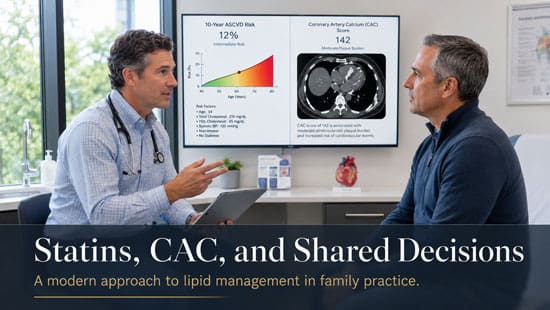
A 58-year-old male attorney presents for routine care. He has hypertension controlled with lisinopril, no diabetes, and is a former smoker who quit 5 years ago. Laboratory results show total cholesterol 240 mg/dL, LDL 165 mg/dL, HDL 42 mg/dL, and triglycerides 180 mg/dL. His calculated 10-year ASCVD risk is 12%, placing him in the intermediate risk category.
This scenario illustrates the complexity of intermediate-risk decision-making. Traditional approaches might focus solely on LDL cholesterol levels and risk calculations. However, contemporary management would incorporate shared decision-making and potentially coronary artery calcium scoring. The patient’s professional status and health consciousness may influence his treatment preferences and likelihood of adherence.
Risk-enhancing factors to consider include components of metabolic syndrome (low HDL, elevated triglycerides, hypertension), family history, and, if available, inflammatory markers. The patient’s former smoking history represents a positive factor, demonstrating the ability to modify lifestyle behaviors. Coronary artery calcium scoring could provide additional risk stratification information to guide treatment decisions.
Case 2: Elderly Patient Considerations
A 72-year-old retired teacher presents for an annual examination. She has well-controlled diabetes with metformin, mild osteoarthritis, and lives independently. Her LDL cholesterol is 145 mg/dL, and she has never used statin therapy. She expresses concerns about medication burden and potential interactions with her arthritis treatments.
This case highlights the complexity of statin decisions in older adults. While diabetes provides a strong indication for statin therapy, patient preferences and competing health priorities require careful consideration. The patient’s concerns about medication burden represent legitimate factors in treatment planning.
Discussing the absolute benefits of statin therapy becomes particularly important in this age group. For a 72-year-old with diabetes, statin therapy might prevent 3-4 cardiovascular events per 100 treated patients over 5 years. However, competing risks from other conditions and the patient’s overall health trajectory should influence the decision-making process.
Shared decision-making for this patient would explore her values regarding medication use, her understanding of cardiovascular risk, and her goals for remaining healthy in the years ahead. Starting with a low-dose statin and monitoring tolerability might represent a reasonable compromise.
Practice Implementation Strategies
Implementing modern lipid management approaches requires systematic practice changes beyond individual physician knowledge. Electronic health record modifications can support risk calculation, decision aid integration, and tracking of patient discussions. Clinical decision support tools can prompt appropriate risk assessments and flag patients who might benefit from statin therapy discussions.
Team-based care models can improve lipid management efficiency and quality. Pharmacists, nurse practitioners, and certified diabetes educators can participate in risk assessment, patient education, and follow-up monitoring. This approach allows physicians to focus on complex decision-making while ensuring patients receive appropriate education and support.
Quality improvement initiatives can track practice-level performance in lipid management. Metrics might include percentage of eligible patients with calculated risk scores, documentation of shared decision-making discussions, and adherence to guideline recommendations. Regular review of these metrics can identify opportunities for improvement and track progress over time.
Patient engagement strategies enhance the effectiveness of lipid management programs. Pre-visit questionnaires can assess patients’ concerns and preferences, enabling a more focused discussion. Patient portals can provide access to risk calculators and educational materials, enabling patients to prepare for treatment discussions.

Comparative Analysis with Alternative Approaches
International Guideline Variations
Lipid management recommendations vary among international guidelines, reflecting different interpretations of available evidence and healthcare system considerations. European Society of Cardiology guidelines emphasize LDL cholesterol targets more strongly than American guidelines, recommending specific treatment goals based on risk categories.
The European approach advocates for LDL cholesterol levels below 70 mg/dL for very high-risk patients and below 55 mg/dL for those with established cardiovascular disease. This target-based strategy contrasts with American guidelines that focus more on statin intensity and risk-based treatment decisions rather than specific cholesterol goals.
Canadian guidelines incorporate elements of both American and European approaches, emphasizing risk assessment while also providing LDL cholesterol targets for certain patient groups. The Canadian framework gives particular attention to shared decision-making and patient preferences in treatment planning.
These international variations reflect legitimate differences in healthcare delivery systems, patient populations, and clinical practice patterns. Family physicians should understand these differences when caring for patients who may have received care in different healthcare systems or when reviewing literature from international sources.
Alternative Risk Assessment Methods
Beyond traditional calculators, several alternative approaches to cardiovascular risk assessment have emerged. Imaging-based strategies, including carotid intima-media thickness and ankle-brachial index measurements, provide direct evidence of atherosclerotic disease. However, these methods require specialized equipment and training that may not be available in all primary care settings.
Functional assessments, such as cardiopulmonary exercise testing, offer insights into cardiovascular fitness and risk. While not practical for routine screening, these approaches might be useful for selected patients, particularly those with discordant risk estimates from different assessment methods.
Machine learning algorithms represent an emerging frontier in risk prediction. These approaches can incorporate more variables and identify complex interactions that traditional calculators might miss. However, current machine learning models often lack the transparency and interpretability needed for clinical decision-making.
The proliferation of risk assessment options creates both opportunities and challenges for family physicians. While additional tools may improve risk prediction accuracy, the complexity of choosing among multiple approaches can complicate clinical decision-making. Understanding the strengths and limitations of different methods helps guide appropriate selection.
Challenges and Limitations
Implementation Barriers
Time constraints represent the most commonly cited barrier to implementing optimal lipid management in primary care settings. Comprehensive risk assessment, shared decision-making discussions, and patient education require substantial time investments that may conflict with productivity pressures and appointment scheduling realities.
Resource limitations affect the availability of advanced risk assessment tools. Coronary artery calcium scoring requires access to cardiac CT scanners and trained personnel. Many rural and underserved areas lack these resources, creating disparities in risk assessment capabilities.
Health information technology systems often lack integration of risk calculators, decision aids, and patient education materials. Physicians may need to use multiple separate systems or manual calculations, reducing efficiency and potentially decreasing implementation consistency.
Patient factors also create implementation challenges. Health literacy levels vary substantially across patient populations, affecting the ability to engage in shared decision-making. Language barriers, cultural differences, and socioeconomic constraints can complicate risk communication and treatment adherence.
Evidence Gaps
Despite extensive research, several important evidence gaps remain in lipid management. The optimal approach to statin-intolerant patients lacks definitive guidance, with most recommendations based on expert opinion rather than randomized trial data. Long-term safety data for newer non-statin therapies are still accumulating.
The role of triglyceride-lowering therapy in cardiovascular prevention remains uncertain. Recent trials of omega-3 fatty acids and fibrates have produced mixed results, leaving questions about optimal management of patients with elevated triglycerides despite controlled LDL cholesterol levels.
Age-related considerations in statin therapy need further investigation. While recent trials have expanded the evidence base for older adults, questions remain about optimal treatment approaches for patients aged 80 or older or those with limited life expectancy due to other conditions.
Disparities and Equity Considerations
Cardiovascular disease burden and lipid management quality demonstrate persistent disparities across racial, ethnic, and socioeconomic groups. These disparities result from complex interactions between social determinants of health, healthcare access, and clinical factors.
Risk assessment tools demonstrate variable performance across different demographic groups. Pooled Cohort Equations include race-specific calculations, but validation studies suggest ongoing accuracy concerns for some populations. The lack of representation in clinical trials for certain groups limits the generalizability of treatment recommendations.
Access to advanced lipid management tools, including coronary artery calcium scoring and newer lipid-lowering medications, varies by insurance coverage and geographic location. These disparities may exacerbate existing inequalities in cardiovascular outcomes.
Cultural factors influence patient attitudes toward medication use, risk perception, and healthcare engagement. Family physicians must consider these factors when implementing shared decision-making approaches and developing treatment plans.
Future Directions and Research
Emerging Technologies
Artificial intelligence applications in lipid management show promise for improving risk prediction and clinical decision support. Machine learning algorithms can analyze complex datasets to identify patterns that are not apparent to traditional statistical methods. However, implementation challenges include transparency of algorithms, bias detection, and integration with existing clinical workflows.
Wearable technology and remote monitoring devices offer opportunities for continuous cardiovascular risk assessment. Heart rate variability, physical activity patterns, and sleep quality metrics from consumer devices may provide additional risk-stratification information. However, the clinical utility of these data sources requires further validation.
Genetic testing capabilities continue to expand, with polygenic risk scores becoming more sophisticated and potentially more clinically useful. As costs decrease and accuracy improves, genetic information might become a routine component of cardiovascular risk assessment.
Telemedicine platforms create new opportunities for lipid management, particularly for follow-up visits and patient education. Remote consultations might improve access to specialized lipid clinics and enable more frequent monitoring without requiring in-person visits.
Research Priorities
Several research priorities could advance lipid management in family practice. Studies comparing different shared decision-making approaches would help identify the most effective and efficient methods for primary care settings. Research on implementation strategies could guide the adoption of evidence-based lipid management protocols.
Long-term outcomes research for modern lipid management approaches is needed. While short-term efficacy has been established, questions remain about optimal treatment duration, monitoring strategies, and long-term safety profiles of newer therapies.
Health economics research could inform policy decisions about coverage for advanced risk assessment tools and newer medications. Cost-effectiveness analyses that consider real-world implementation costs and patient outcomes would support evidence-based coverage decisions.
Personalized medicine approaches require validation in diverse patient populations. Research on biomarkers, genetic factors, and clinical characteristics that predict treatment response could enable more targeted selection of therapies.
Modern lipid management in family practice requires integration of multiple evidence-based approaches with practical implementation considerations. Risk stratification has evolved beyond simple cholesterol measurements to include sophisticated tools that account for multiple cardiovascular risk factors and patient-specific characteristics.
Coronary artery calcium scoring provides valuable additional risk information, particularly for intermediate-risk patients where treatment decisions are most challenging. However, implementation requires careful patient selection and consideration of costs, radiation exposure, and potential incidental findings.
Shared decision-making represents a fundamental shift toward patient-centered care that acknowledges the preference-sensitive nature of many lipid management decisions. Effective implementation requires attention to risk communication methods, patient education, and practice workflow modifications.
Statin therapy remains the cornerstone of lipid management for most patients, with extensive evidence supporting efficacy and safety. However, personalized approaches that consider patient preferences, tolerability, and individual risk factors optimize outcomes.
Family physicians must balance evidence-based recommendations with practical constraints, including time limitations, resource availability, and patient factors. Successful implementation often requires team-based approaches and systematic practice modifications rather than relying solely on individual physician knowledge and skills.
Ongoing research continues to refine optimal approaches to lipid management, with emerging technologies and treatment options creating new opportunities for personalized care. Staying current with evolving evidence while maintaining focus on proven interventions represents an ongoing challenge for primary care practitioners.

Frequently Asked Questions
Q: How often should coronary artery calcium scoring be repeated?
A: Current evidence does not support routine repeat CAC scoring. For patients with zero calcium scores, repeat testing might be considered after 10-15 years if risk factors have changed substantially. For patients with detectable calcium, the role of repeat testing remains unclear, as progression rates vary widely among individuals. Most experts recommend focusing on risk factor modification rather than repeat imaging.
Q: What should I do when risk calculators give different results for the same patient?
A: Different risk calculators use varying methodologies and populations, leading to different estimates. Focus on the calculator recommended by current guidelines (Pooled Cohort Equations in the US) while considering the patient’s specific characteristics. When estimates differ substantially, additional risk stratification tools, such as CAC scoring or shared decision-making discussions, become particularly valuable.
Q: How do I handle patients who refuse statin therapy despite clear indications?
A: Respect patient autonomy while ensuring informed decision-making. Explore the reasons for refusal, address specific concerns, and provide education about risks and benefits. Consider alternative approaches such as lifestyle modifications, non-statin medications, or gradual introduction of low-dose statins. Document discussions thoroughly and offer periodic reassessment of the decision.
Q: Are there specific populations where current risk calculators are less accurate?
A: Risk calculators demonstrate reduced accuracy in several populations, including young adults, very elderly patients, and certain ethnic groups underrepresented in derivation studies. Patients with chronic inflammatory conditions, kidney disease, or HIV may also have different risk profiles than calculator predictions suggest. Clinical judgment and additional risk markers become more important in these situations.
Q: What’s the best approach for patients with statin-associated muscle symptoms?
A: First, determine whether symptoms are truly statin-related through careful history and temporal association. Consider drug interactions, hypothyroidism, or other causes. For confirmed statin intolerance, options include switching to a different statin, reducing the dose, alternate-day dosing, or non-statin alternatives. Coenzyme Q10 supplementation may help some patients, though evidence is limited.
Q: How do I incorporate family history into risk assessment when calculators don’t include this information?
A: Family history of premature cardiovascular disease (men <55 years, women <65 years) represents a risk-enhancing factor that should influence treatment decisions. While not directly incorporated into Pooled Cohort Equations, strong family history may support statin therapy for patients with intermediate risk estimates. Consider this factor during shared decision-making discussions.
Q: What laboratory monitoring is required for patients on statin therapy?
A: Current guidelines recommend baseline lipid panel and hepatic transaminases before starting statins. Follow-up lipid testing at 4-12 weeks helps assess response and adherence. Routine liver enzyme monitoring is not recommended due to low rates of clinically meaningful hepatotoxicity. Obtain transaminases only if patients develop symptoms suggestive of hepatic dysfunction.
Q: How should I approach lipid management in patients over 75 years old?
A: For patients over 75 without established cardiovascular disease, treatment decisions should incorporate life expectancy, functional status, competing health priorities, and patient preferences. Shared decision-making becomes particularly important, as absolute benefits may be smaller and competing risks greater. For patients already on statins with good tolerance, continuation is generally recommended.
References
American College of Cardiology/American Heart Association Task Force on Clinical Practice Guidelines. (2019). 2018 AHA/ACC/AACVPR/AAPA/ABC/ACPM/ADA/AGS/APhA/ASPC/NLA/PCNA Guideline on the Management of Blood Cholesterol. Journal of the American College of Cardiology, 73(24), e285-e350.
Arnett, D. K., Blumenthal, R. S., Albert, M. A., Buroker, A. B., Goldberger, Z. D., Hahn, E. J., … & Ziaeian, B. (2019). 2019 ACC/AHA Guideline on the Primary Prevention of Cardiovascular Disease. Circulation, 140(11), e596-e646.
Budoff, M. J., Young, R., Burke, G., Jeffrey Carr, J., Detrano, R. C., Folsom, A. R., … & Wong, N. D. (2018). Ten-year association of coronary artery calcium with atherosclerotic cardiovascular disease (ASCVD) events: the multi-ethnic study of atherosclerosis (MESA). European Heart Journal, 39(25), 2401-2408.
Collins, R., Reith, C., Emberson, J., Armitage, J., Baigent, C., Blackwell, L., … & Peto, R. (2016). Interpretation of the evidence for the efficacy and safety of statin therapy. The Lancet, 388(10059), 2532-2561.
Grundy, S. M., Stone, N. J., Bailey, A. L., Beam, C., Birtcher, K. K., Blumenthal, R. S., … & Yeboah, J. (2019). 2018 AHA/ACC/AACVPR/AAPA/ABC/ACPM/ADA/AGS/APhA/ASPC/NLA/PCNA guideline on the management of blood cholesterol: a report of the American College of Cardiology/American Heart Association Task Force on Clinical Practice Guidelines. Circulation, 139(25), e1082-e1143.
Hlatky, M. A., Greenland, P., Arnett, D. K., Ballantyne, C. M., Criqui, M. H., Elkind, M. S., … & Robinson, J. G. (2009). Criteria for evaluation of novel markers of cardiovascular risk: a scientific statement from the American Heart Association. Circulation, 119(17), 2408-2416.
Lloyd-Jones, D. M., Braun, L. T., Ndumele, C. E., Smith Jr, S. C., Sperling, L. S., Virani, S. S., & Blumenthal, R. S. (2019). Use of risk assessment tools to guide decision-making in the primary prevention of atherosclerotic cardiovascular disease: a special report from the American Heart Association and American College of Cardiology. Circulation, 139(25), e1162-e1177.
Mortensen, M. B., Dzaye, O., Steffensen, F. H., Bøtker, H. E., Jensen, J. M., Rønnow Sand, N. P., … & Blaha, M. J. (2020). Impact of plaque burden versus stenosis on ischemic events in patients with coronary atherosclerosis. Journal of the American College of Cardiology, 76(24), 2803-2813.
Newman, C. B., Preiss, D., Tobert, J. A., Jacobson, T. A., Page, R. L., Goldstein, L. B., … & Duell, P. B. (2019). Statin safety and associated adverse events: a scientific statement from the American Heart Association. Arteriosclerosis, Thrombosis, and Vascular Biology, 39(2), e38-e81.
Pencina, M. J., Navar-Boggan, A. M., D’Agostino Sr, R. B., Williams, K., Neely, B., Sniderman, A. D., & Peterson, E. D. (2014). Application of new cholesterol guidelines to a population-based sample. New England Journal of Medicine, 370(15), 1422-1431.
Ridker, P. M., Lonn, E., Paynter, N. P., Glynn, R., & Yusuf, S. (2017). Primary prevention with statin therapy in the elderly: new meta-analyses from the contemporary JUPITER and HOPE-3 randomized trials. Circulation, 135(20), 1979-1981.
Silverman, M. G., Ference, B. A., Im, K., Wiviott, S. D., Giugliano, R. P., Grundy, S. M., … & Sabatine, M. S. (2016). Association between lowering LDL-C and cardiovascular risk reduction among different therapeutic interventions: a systematic review and meta-analysis. JAMA, 316(12), 1289-1297.
Stone, N. J., Robinson, J. G., Lichtenstein, A. H., Bairey Merz, C. N., Blum, C. B., Eckel, R. H., … & Wilson, P. W. (2014). 2013 ACC/AHA guideline on the treatment of blood cholesterol to reduce atherosclerotic cardiovascular risk in adults: a report of the American College of Cardiology/American Heart Association Task Force on Practice Guidelines. Journal of the American College of Cardiology, 63(25 Part B), 2889-2934.
Virani, S. S., Alonso, A., Benjamin, E. J., Bittencourt, M. S., Callaway, C. W., Carson, A. P., … & Heard, D. G. (2020). Heart disease and stroke statistics—2020 update: a report from the American Heart Association. Circulation, 141(9), e139-e596.
Yeboah, J., Young, R., McClelland, R. L., Delaney, J. C., Polonsky, T. S., Dawood, F. Z., … & Burke, G. L. (2016). Utility of nontraditional risk markers in atherosclerotic cardiovascular disease risk assessment. Journal of the American College of Cardiology, 67(2), 139-147.
Recent Articles


Integrative Perspectives on Cognition, Emotion, and Digital Behavior

Sleep-related:
Longevity/Nutrition & Diet:
Philosophical / Happiness / Social:
Other:
Modern Mind Unveiled
Developed under the direction of David McAuley, Pharm.D., this collection explores what it means to think, feel, and connect in the modern world. Drawing upon decades of clinical experience and digital innovation, Dr. McAuley and the GlobalRPh initiative translate complex scientific ideas into clear, usable insights for clinicians, educators, and students.
The series investigates essential themes—cognitive bias, emotional regulation, digital attention, and meaning-making—revealing how the modern mind adapts to information overload, uncertainty, and constant stimulation.
At its core, the project reflects GlobalRPh’s commitment to advancing evidence-based medical education and clinical decision support. Yet it also moves beyond pharmacotherapy, examining the psychological and behavioral dimensions that shape how healthcare professionals think, learn, and lead.
Through a synthesis of empirical research and philosophical reflection, Modern Mind Unveiled deepens our understanding of both the strengths and vulnerabilities of the human mind. It invites readers to see medicine not merely as a science of intervention, but as a discipline of perception, empathy, and awareness—an approach essential for thoughtful practice in the 21st century.
The Six Core Themes
I. Human Behavior and Cognitive Patterns
Examining the often-unconscious mechanisms that guide human choice—how we navigate uncertainty, balance logic with intuition, and adapt through seemingly irrational behavior.
II. Emotion, Relationships, and Social Dynamics
Investigating the structure of empathy, the psychology of belonging, and the influence of abundance and selectivity on modern social connection.
III. Technology, Media, and the Digital Mind
Analyzing how digital environments reshape cognition, attention, and identity—exploring ideas such as gamification, information overload, and cognitive “nutrition” in online spaces.
IV. Cognitive Bias, Memory, and Decision Architecture
Exploring how memory, prediction, and self-awareness interact in decision-making, and how external systems increasingly serve as extensions of thought.
V. Habits, Health, and Psychological Resilience
Understanding how habits sustain or erode well-being—considering anhedonia, creative rest, and the restoration of mental balance in demanding professional and personal contexts.
VI. Philosophy, Meaning, and the Self
Reflecting on continuity of identity, the pursuit of coherence, and the construction of meaning amid existential and informational noise.
Keywords
Cognitive Science • Behavioral Psychology • Digital Media • Emotional Regulation • Attention • Decision-Making • Empathy • Memory • Bias • Mental Health • Technology and Identity • Human Behavior • Meaning-Making • Social Connection • Modern Mind
Video Section