The Vitamin D Debate: From Universal Supplement to Precision Therapy

Abstract
Vitamin D supplementation has evolved from a simple solution to rickets into one of medicine’s most debated therapeutic interventions. This paper examines the current evidence surrounding vitamin D’s role in health and disease, moving beyond the traditional “one-size-fits-all” approach toward personalized treatment strategies. We analyze recent research on vitamin D’s mechanisms, optimal dosing strategies, and clinical applications across diverse patient populations. The review synthesizes findings from randomized controlled trials, observational studies, and mechanistic research published between 2020 and 2024. Key findings indicate that vitamin D’s benefits extend beyond bone health, with emerging evidence supporting roles in immune function, cardiovascular health, and cancer prevention. However, responses to supplementation vary considerably among individuals, depending on genetic factors, baseline vitamin D status, body composition, and concurrent medical conditions. The paper proposes a precision medicine approach to vitamin D therapy, incorporating individual risk factors and biomarkers to optimize treatment outcomes. Current evidence suggests that blanket supplementation recommendations may be insufficient, and future clinical practice should embrace individualized dosing strategies based on patient-specific characteristics and therapeutic goals.
Introduction
The story of vitamin D research reads like a medical detective novel, complete with false leads, breakthrough discoveries, and ongoing mysteries. What began as a quest to understand rickets has transformed into a complex investigation of how this hormone-like vitamin influences virtually every organ system. Today’s clinicians face a paradox: while vitamin D deficiency remains prevalent worldwide, the optimal approach to supplementation remains hotly debated.
The traditional view of vitamin D as primarily a bone health nutrient has expanded dramatically over the past two decades. Vitamin D receptors are present throughout the human body, from immune cells to cardiac muscle, suggesting functions beyond calcium homeostasis. This discovery sparked thousands of studies investigating vitamin D’s role in conditions ranging from respiratory infections to depression.
Yet despite this research explosion, clinical practice remains fragmented. Some physicians prescribe vitamin D liberally, citing its safety profile and potential benefits. Others remain skeptical, citing mixed results from randomized trials and concerns about overtreatment. Meanwhile, patients navigate conflicting information from medical sources, supplement manufacturers, and wellness advocates.
The purpose of this paper is to provide practicing physicians with an evidence-based framework for vitamin D therapy that moves beyond universal recommendations toward individualized treatment strategies. We examine the latest research on vitamin D metabolism, clinical applications, and factors influencing treatment response. The goal is not to provide another set of general guidelines, but rather to equip clinicians with tools for precision vitamin D therapy tailored to individual patient needs.
Vitamin D Metabolism and Physiology
Understanding vitamin D’s complex metabolism is essential for rational therapeutic decision-making. Unlike traditional vitamins, vitamin D functions as a prohormone that undergoes multiple conversion steps before achieving biological activity. This process begins with either cutaneous synthesis from 7-dehydrocholesterol or dietary absorption of vitamin D2 (ergocalciferol) or D3 (cholecalciferol).
The initial conversion occurs in the liver, where 25-hydroxylase enzymes produce 25-hydroxyvitamin D [25(OH)D], the major circulating form and standard biomarker for vitamin D status. This metabolite has a relatively long half-life of 2-3 weeks, making it an ideal indicator of overall vitamin D stores. However, 25(OH)D itself lacks biological activity and requires further conversion to the active hormone 1,25-dihydroxyvitamin D [1,25(OH)2D] by 1-alpha-hydroxylase enzymes.
Recent research has revealed the complexity of this activation system. While the kidneys contain the primary 1-alpha-hydroxylase activity for endocrine functions, many tissues possess local conversion capability. This extrarenal production allows tissues to generate active vitamin D independently of systemic hormone levels, explaining why adequate 25(OH)D concentrations are necessary even when circulating 1,25(OH)2D levels appear normal.
The vitamin D receptor (VDR) mediates most of vitamin D’s biological effects through genomic mechanisms involving direct DNA binding and gene transcription regulation. However, some actions occur through non-genomic pathways that remain incompletely understood. VDR expression varies among tissues and individuals, contributing to the heterogeneous response to vitamin D supplementation observed in clinical practice.
Degradation of vitamin D metabolites occurs primarily through 24-hydroxylase enzymes that initiate the catabolic pathway. The balance between activation and degradation enzymes determines tissue-level vitamin D activity, and this balance can be influenced by factors such as inflammation, genetic polymorphisms, and concurrent medications.

Current Evidence on Health Outcomes
Skeletal Health
The relationship between vitamin D and bone health remains the most established clinical application. Vitamin D facilitates calcium absorption in the intestine and supports bone mineralization through multiple mechanisms. Deficiency leads to secondary hyperparathyroidism, increased bone turnover, and elevated fracture risk.
Meta-analyses consistently demonstrate that vitamin D supplementation reduces fracture risk in older adults, particularly when combined with calcium. The effect appears most pronounced in individuals with baseline deficiency and in institutional settings with high deficiency rates. However, the optimal dosing strategy remains debated, with some studies suggesting that intermittent high-dose regimens may be less effective or potentially harmful compared to daily dosing.
Recent trials have challenged assumptions about universal supplementation for fracture prevention. The Women’s Health Initiative study found no reduction in fractures with vitamin D3 400 IU plus calcium in postmenopausal women, while the VITAL trial showed no benefit of vitamin D3 2000 IU daily for fracture prevention in generally healthy adults. These findings highlight the importance of targeting supplementation to individuals most likely to benefit.
Immune Function and Respiratory Health
Vitamin D’s immunomodulatory properties have gained attention, particularly following the COVID-19 pandemic. The vitamin D receptor is expressed on most immune cells, and 1,25(OH)2D influences both innate and adaptive immunity. Laboratory studies demonstrate that vitamin D metabolites enhance antimicrobial peptide production, modulate inflammatory responses, and support regulatory T-cell function.
Observational studies consistently link vitamin D deficiency with increased susceptibility to respiratory tract infections. Several randomized trials have shown that vitamin D supplementation reduces acute respiratory infection rates, with the greatest benefits observed in individuals with baseline deficiency receiving daily or weekly dosing.
The COVID-19 pandemic intensified interest in vitamin D’s antiviral properties. While observational studies suggested associations between vitamin D status and COVID-19 severity, randomized trials of vitamin D supplementation for COVID-19 treatment have yielded mixed results. Some studies found reduced disease severity or hospital length of stay, while others showed no benefit. The heterogeneous findings likely reflect differences in study populations, timing of intervention, and dosing strategies.
Cardiovascular Disease
The relationship between vitamin D and cardiovascular health exemplifies the complexity of vitamin D research. Observational studies consistently demonstrate inverse associations between 25(OH)D levels and cardiovascular disease risk. Proposed mechanisms include effects on blood pressure regulation, endothelial function, inflammation, and cardiac muscle function.
However, randomized trials of vitamin D supplementation have generally failed to demonstrate cardiovascular benefits. The VITAL trial, which randomized over 25,000 participants to vitamin D3 2000 IU daily or placebo, found no reduction in major cardiovascular events over 5.3 years of follow-up. Similarly, other large trials have shown neutral results for cardiovascular endpoints.
The disconnect between observational and interventional studies may reflect residual confounding in observational research, where vitamin D status serves as a marker of overall health rather than a causal factor. Alternatively, null results across trials might indicate that current supplementation strategies are inadequate to achieve cardiovascular benefits, either due to insufficient dosing, inappropriate target populations, or suboptimal timing of the intervention.
Cancer Prevention
Laboratory evidence strongly supports vitamin D’s anticancer properties through mechanisms including cell cycle regulation, apoptosis induction, and angiogenesis inhibition. Ecological studies showing inverse correlations between solar ultraviolet radiation exposure and cancer mortality rates initially suggested protective effects of vitamin D synthesis.
Observational studies have generally supported associations between higher vitamin D status and reduced cancer risk, particularly for colorectal cancer. However, randomized trials have provided more modest evidence of benefit. The VITAL trial found a borderline reduction in cancer mortality with vitamin D supplementation, while other trials have shown mixed results for cancer incidence.
Recent post-hoc analyses suggest that vitamin D’s anticancer effects may be most apparent in specific populations or cancer types. For example, some studies indicate greater benefits in individuals with normal body weight, older adults, and those with specific genetic variants that affect vitamin D metabolism.
Factors Influencing Vitamin D Requirements
Genetic Variation
Genetic polymorphisms affecting vitamin D metabolism and signaling pathways contribute substantially to inter-individual variation in vitamin D requirements. Single-nucleotide polymorphisms in genes encoding vitamin D-binding protein, 25-hydroxylase enzymes, 1-alpha-hydroxylase, 24-hydroxylase, and the vitamin D receptor all influence vitamin D status and response to supplementation.
The vitamin D binding protein polymorphisms are particularly relevant clinically because they affect both the transport and bioavailability of vitamin D metabolites. Individuals with certain variants may require higher supplementation doses to achieve equivalent circulating 25(OH)D levels. However, genetic testing for vitamin D-related polymorphisms is not yet routinely available or standardized for clinical use.
Recent research has begun to explore polygenic risk scores that combine information from multiple genetic variants to predict vitamin D supplementation response. While promising, these approaches require further validation before clinical implementation.
Body Composition and Obesity
Obesity represents one of the most important factors influencing vitamin D requirements. Vitamin D is fat-soluble and can be sequestered in adipose tissue, reducing bioavailability. Studies consistently demonstrate that obese individuals require 2-3 times higher vitamin D doses than normal-weight individuals to achieve equivalent 25(OH)D levels.
The relationship between body weight and vitamin D extends beyond simple sequestration. Obesity is associated with altered vitamin D metabolism, including reduced 25-hydroxylase activity and increased 24-hydroxylase expression. These changes may contribute to the increased vitamin D requirements observed in obese populations.
Weight loss can improve vitamin D status through multiple mechanisms, including the release of sequestered vitamin D from adipose tissue and improved metabolic efficiency. Bariatric surgery patients represent a special population requiring careful vitamin D monitoring and often lifelong supplementation due to malabsorption.
Age and Physiological State
Vitamin D metabolism and requirements change across the lifespan. Older adults have reduced cutaneous vitamin D synthesis capacity, decreased dietary absorption efficiency, and often limited sun exposure. These factors combine to increase the risk of deficiency and potentially increase supplementation requirements.
Pregnancy and lactation are physiological states characterized by altered vitamin D metabolism. Maternal vitamin D status influences fetal development and neonatal vitamin D stores. Current recommendations suggest higher vitamin D intakes during pregnancy, but optimal dosing strategies remain debated.
Adolescence is another critical period, marked by rapid skeletal growth and development. Peak bone mass accrual during adolescence may be influenced by vitamin D status, with potential implications for lifelong bone health.
| Population | Baseline 25(OH)D Target (ng/mL) | Typical Daily Dose Range (IU) | Special Considerations |
| Healthy Adults | 30-50 | 1000-2000 | Seasonal variation, sun exposure |
| Older Adults (>65) | 30-50 | 1500-2000 | Fall risk, medication interactions |
| Obese Individuals | 30-50 | 2000-4000 | Weight-based dosing, longer time to target |
| Pregnancy | 30-50 | 1000-2000 | Fetal development, safety considerations |
| Chronic Kidney Disease | 30-50 | Variable | Altered metabolism, specialist consultation |
| Malabsorption Syndromes | 30-50 | 2000-6000 | Higher doses, monitoring required |
Precision Medicine Approaches to Vitamin D Therapy
Risk Stratification
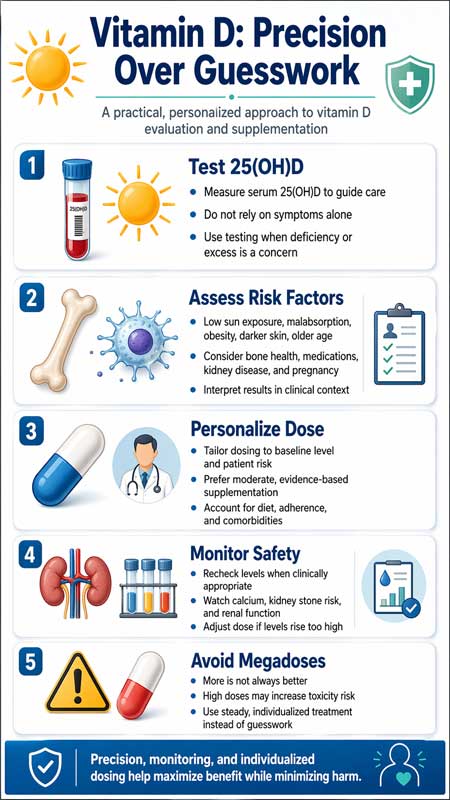
The move toward precision vitamin D therapy begins with careful risk stratification. Patients at highest risk for deficiency and most likely to benefit from supplementation include those with limited sun exposure, dark skin pigmentation, malabsorption disorders, chronic kidney disease, and certain medications that interfere with vitamin D metabolism.
Clinical assessment should include evaluation of dietary vitamin D intake, sun exposure patterns, skin pigmentation, body mass index, and medical conditions affecting absorption or metabolism. Seasonal variation in vitamin D status should also be considered, particularly in higher latitudes where winter deficiency is common even among those with adequate summer levels.
Laboratory assessment typically involves measuring serum 25(OH)D, though interpretation requires understanding assay variability and population-specific reference ranges. Some experts advocate for additional testing, such as parathyroid hormone levels, particularly in patients with bone disease or suspected vitamin D resistance.
Individualized Dosing Strategies
Traditional vitamin D dosing has relied on population-based recommendations that fail to account for individual variation. Precision approaches involve calculating initial doses based on body weight, baseline vitamin D status, and target levels, then monitoring and adjusting doses.
Several dosing calculators have been developed to estimate individual vitamin D requirements based on factors such as body weight, baseline 25(OH)D level, and desired target level. While these tools provide a starting point, clinical judgment and follow-up monitoring remain essential given the numerous factors that affect vitamin D metabolism.
Response monitoring typically involves measuring 25(OH)D levels after 8-12 weeks of supplementation, allowing time for steady-state levels to be achieved. Dose adjustments can then be made based on the achieved level and clinical response.
Biomarker-Guided Therapy
Beyond basic 25(OH)D measurement, additional biomarkers may help guide vitamin D therapy. Parathyroid hormone levels provide insight into functional vitamin D adequacy, as secondary hyperparathyroidism suggests insufficient vitamin D activity regardless of 25(OH)D levels.
Free 25(OH)D levels, which account for variations in the D vitamin D-binding protein, may provide a more accurate assessment of vitamin D bioavailability in some populations. However, free 25(OH)D assays are not widely available and require further validation.
Genetic testing for vitamin D-related polymorphisms holds promise for personalizing vitamin D therapy but is not yet ready for routine clinical use. As genetic testing becomes more accessible and interpretation tools improve, pharmacogenomic approaches to vitamin D therapy may become practical.

Clinical Applications and Use Cases
Osteoporosis Prevention and Treatment
In patients with osteoporosis or high fracture risk, vitamin D supplementation forms part of a comprehensive bone health strategy. The optimal approach involves ensuring adequate vitamin D status (typically 25(OH)D >30 ng/mL), providing appropriate calcium intake, and considering additional anti-fracture medications when indicated.
For patients with established osteoporosis, vitamin D adequacy is essential for optimal response to bisphosphonates and other bone-active medications. Some evidence suggests that vitamin D deficiency may reduce the efficacy of these treatments, and correcting deficiency is a priority before initiating osteoporosis therapy.
Dosing strategies for bone health typically target 25(OH)D levels of 30-50 ng/mL, though some bone specialists advocate for higher targets in patients with severe osteoporosis or recurrent fractures. Daily dosing is generally preferred over intermittent high-dose regimens based on safety and efficacy data.
Immune System Support
For patients with recurrent respiratory infections or immune dysfunction, vitamin D supplementation may provide adjunctive benefits. The evidence is strongest for preventing acute respiratory tract infections in individuals with baseline deficiency.
Dosing for immune support typically follows general vitamin D adequacy recommendations, with most studies showing benefits at 25(OH)D levels of 30-40 ng/mL. Higher doses have not consistently shown additional immune benefits and may carry increased risks.
Patient selection is important, as the benefits appear most pronounced in those with baseline deficiency. Routine vitamin D supplementation for immune support in vitamin D-sufficient individuals lacks strong evidence and is not recommended.
Special Populations
Certain patient populations require specialized approaches to vitamin D therapy due to altered metabolism, increased requirements, or safety considerations.
Patients with chronic kidney disease have impaired 1-alpha-hydroxylase activity, potentially requiring active vitamin D analogs rather than cholecalciferol or ergocalciferol. Management of these patients typically involves consultation with nephrology or endocrinology due to the complexity of mineral metabolism disorders.
Individuals with malabsorption syndromes may require higher doses of vitamin D, alternative formulations, or parenteral administration. These patients need careful monitoring due to unpredictable absorption and potential for both deficiency and toxicity.
Patients taking medications that interfere with vitamin D metabolism, such as glucocorticoids, anticonvulsants, or certain weight-loss medications, may require dose adjustments and more frequent monitoring.
Safety Considerations and Monitoring
Vitamin D Toxicity
While vitamin D toxicity is rare, it can occur with excessive supplementation and result in serious complications, including hypercalcemia, kidney stones, and renal dysfunction. Toxicity typically occurs only with sustained intake of very high doses (>10,000 IU daily for months) or single massive doses.
The clinical presentation of vitamin D toxicity includes nausea, vomiting, weakness, and kidney problems. Laboratory findings include elevated serum calcium, suppressed parathyroid hormone, and often very high 25(OH)D levels (>150 ng/mL).
Prevention of toxicity involves appropriate dosing, patient education, and monitoring in high-risk situations. Patients should be counseled to avoid taking multiple vitamin D-containing supplements simultaneously and to inform healthcare providers of all supplements used.
Drug Interactions
Several medications can affect vitamin D metabolism or be affected by vitamin D supplementation. Glucocorticoids increase vitamin D requirements by accelerating metabolism and reducing calcium absorption. Thiazide diuretics may increase the risk of hypercalcemia when combined with vitamin D supplements.
Anticonvulsants such as phenytoin and carbamazepine can induce vitamin D metabolism, potentially requiring higher vitamin D supplementation. Conversely, vitamin D may enhance the absorption of certain medications, including some antibiotics and cardiac glycosides.
Monitoring Strategies
Appropriate monitoring involves both laboratory assessment and clinical evaluation. Laboratory monitoring typically includes serum 25(OH)D, calcium, and sometimes parathyroid hormone levels. The frequency of monitoring depends on the clinical situation, with more frequent assessment needed in high-risk patients or those receiving high doses.
Clinical monitoring involves assessment for signs and symptoms of both deficiency and toxicity. Patients should be educated about potential symptoms and advised when to seek medical attention.
Future Directions and Research Needs
Emerging Research Areas
Current vitamin D research is exploring several promising directions that may inform future clinical practice. These include investigating vitamin D’s role in autoimmune diseases, mental health, and aging-related conditions.
The relationship between vitamin D and autoimmune diseases remains an active area of research. Some studies suggest that vitamin D supplementation may reduce the risk of developing autoimmune conditions or modify disease activity in established cases. However, more research is needed to establish optimal dosing strategies and identify patients most likely to benefit.
Mental health represents another emerging application, with observational studies linking vitamin D deficiency to depression and cognitive decline. While some small trials have suggested benefits of vitamin D supplementation for mood disorders, larger studies are needed to establish efficacy and optimal treatment approaches.
Technological Advances
Advances in technology may enable more personalized approaches to vitamin D therapy. Genetic testing for vitamin D-related polymorphisms is becoming more accessible and may eventually guide individualized dosing strategies.
Wearable devices that monitor sun exposure and estimate vitamin D synthesis could help optimize the balance between supplementation and natural production. These technologies might be particularly valuable for individuals with variable sun exposure patterns.
Point-of-care testing for vitamin D status could enable real-time dose adjustments and improve patient engagement with vitamin D therapy. Several rapid testing devices are under development that could make vitamin D monitoring more convenient and accessible.
Research Methodology Improvements
Future vitamin D research needs to address methodological limitations that have complicated the interpretation of existing studies. These include standardizing vitamin D assays, better characterizing baseline vitamin D status, and accounting for genetic factors that influence vitamin D metabolism.
Study design improvements might include adaptive trial designs that allow dose adjustments based on achieved vitamin D levels, rather than using fixed doses regardless of response. Such approaches could better reflect real-world clinical practice and potentially demonstrate benefits that fixed-dose studies might miss.
Challenges and Limitations
Methodological Issues in Vitamin D Research
The vitamin D research literature is complicated by several methodological challenges that affect interpretation and clinical application. Variation in vitamin D assays has been a persistent problem, with different laboratory methods yielding different results for the same sample. Efforts to standardize assays have improved this situation, but clinicians must still be aware of potential variability when interpreting results.
Many vitamin D studies have used fixed doses without accounting for baseline vitamin D status or individual factors that affect requirements. This approach may obscure benefits in some populations while overestimating effects in others. Future research should incorporate more sophisticated dosing strategies that account for individual variation.
The definition of vitamin D deficiency and optimal levels remains debated, with different organizations recommending different target ranges. This lack of consensus makes it difficult to compare studies and develop consistent clinical recommendations.
Clinical Implementation Challenges
Translating vitamin D research into clinical practice faces several practical obstacles. Cost considerations may limit access to vitamin D testing and supplementation, particularly in resource-limited settings. Insurance coverage for vitamin D testing varies and may influence clinical decision-making.
Patient adherence to vitamin D supplementation can be challenging, particularly with daily dosing regimens. Some patients prefer intermittent dosing, but the safety and efficacy of various regimens remain to be studied.
Education for healthcare providers about vitamin D remains inconsistent, with surveys showing wide variation in knowledge and prescribing practices among physicians. Continuing medical education efforts should emphasize evidence-based approaches to vitamin D therapy.
Limitations of Current Evidence
Despite thousands of published studies, important gaps remain in our understanding of vitamin D. Most randomized trials have been conducted in generally healthy populations, limiting generalizability to patients with specific diseases or conditions.
The optimal duration of vitamin D supplementation is unclear for most indications. While some studies have followed patients for several years, longer-term data on safety and efficacy are limited. This is particularly important given that vitamin D supplementation is often recommended as a long-term intervention.
Dose-response relationships for vitamin D remain poorly characterized for most health outcomes. While some studies suggest threshold effects at certain 25(OH)D levels, others indicate linear relationships. A better understanding of dose-response relationships is needed to optimize therapy.
During my residency, I encountered a patient who had been taking what he called his “daily vitamin D megadose” – 50,000 IU every day for six months after reading online that “more is better.” He came to the emergency department with kidney stones and severe fatigue. His 25(OH)D level was over 200 ng/mL, and his calcium was dangerously elevated. After explaining that vitamin D can indeed be toxic in excessive amounts, he looked sheepish and said, “I guess I should have read the fine print instead of just the testimonials.” This case taught me the importance of patient education about appropriate dosing and the risks of self-medication with high-dose supplements. It also highlighted how online health information, while sometimes helpful, can lead patients astray when not properly vetted or understood.
The evolution of vitamin D from a simple rickets prevention strategy to a complex therapeutic intervention reflects our growing understanding of this hormone’s diverse biological functions. Current evidence supports vitamin D’s importance for skeletal health, immune function, and potentially other health outcomes, but also highlights the limitations of universal supplementation approaches.
The path forward lies in precision medicine strategies that account for individual factors affecting vitamin D requirements and response to therapy. These approaches should consider genetic variation, body composition, medical conditions, concurrent medications, and specific therapeutic goals. Rather than relying on population-based recommendations, clinicians should develop individualized treatment plans based on patient-specific risk factors and biomarkers.
Successful implementation of precision vitamin D therapy requires improved diagnostic tools, a better understanding of dose-response relationships, and enhanced healthcare provider education. As our knowledge advances and new technologies become available, vitamin D therapy will likely become increasingly personalized and effective.
The vitamin D debate is far from settled, but the direction is clear: moving beyond one-size-fits-all approaches toward individualized strategies that maximize benefits while minimizing risks. This evolution represents not just a change in vitamin D therapy, but a broader shift toward precision medicine that promises to improve patient outcomes across many areas of healthcare.
Key Takeaways
The most important clinical insights from current vitamin D research include recognition that individual variation in vitamin D requirements is substantial and must be considered in treatment planning. Genetic factors, body composition, and medical conditions all influence vitamin D metabolism and the response to supplementation, making personalized approaches more effective than universal recommendations.
Laboratory assessment should guide vitamin D therapy, with 25(OH)D levels serving as the primary biomarker for adequacy. Target levels of 30-50 ng/mL are appropriate for most patients, though specific populations may benefit from higher or lower targets based on their clinical circumstances.
Safety considerations remain important despite vitamin D’s generally favorable risk profile. Toxicity, while rare, can occur with excessive supplementation and requires prompt recognition and treatment. Drug interactions and monitoring strategies should be incorporated into clinical management plans.
Patient education represents a critical component of successful vitamin D therapy. Patients should understand the rationale for supplementation, appropriate dosing strategies, and potential risks of both deficiency and excess. This education helps ensure adherence and prevents complications from inappropriate self-medication.
Frequently Asked Questions
What is the optimal vitamin D level for most patients?
Current evidence supports maintaining 25(OH)D levels between 30 and 50 ng/mL for most adults. This range appears to optimize bone health, immune function, and other vitamin D-dependent processes while minimizing risks of both deficiency and excess. Some experts advocate for higher levels in specific populations, but evidence for additional benefits above 50 ng/mL is limited.
How long does it take to correct a vitamin D deficiency?
The time required to correct vitamin D deficiency depends on the severity of the deficiency, the supplementation dose, and individual factors that affect absorption and metabolism. With appropriate dosing, most patients achieve adequate levels within 8-12 weeks. However, obese individuals and those with malabsorption may require longer treatment periods and higher doses.
Is vitamin D2 or D3 better for supplementation?
Vitamin D3 (cholecalciferol) is generally preferred over vitamin D2 (ergocalciferol) based on evidence showing superior bioavailability and more sustained increases in 25(OH)D levels. However, vitamin D2 can be effective when vitamin D3 is unavailable or not tolerated. The choice between formulations is less important than ensuring adequate dosing and monitoring.
Can you get enough vitamin D from sun exposure alone?
Sun exposure can provide adequate vitamin D for some individuals, but this depends on factors including latitude, season, skin pigmentation, age, and sun protection practices. Many people, particularly those in northern climates or with limited sun exposure, require dietary sources or supplementation to maintain adequate vitamin D status year-round.
Are there any foods that provide adequate vitamin D?
Few foods naturally contain substantial amounts of vitamin D. Fatty fish, egg yolks from pasture-raised chickens, and UV-exposed mushrooms provide some vitamin D, but most people cannot obtain adequate amounts from diet alone. Fortified foods such as milk, cereals, and plant-based milk alternatives can contribute to vitamin D intake but typically require supplementation to achieve optimal levels.
How do I know if I’m taking too much vitamin D?
Signs of vitamin D toxicity include nausea, vomiting, weakness, frequent urination, and kidney problems. These symptoms typically occur only with sustained intake of very high doses (>10,000 IU daily for months). Laboratory monitoring can detect early signs of toxicity, such as elevated calcium levels and suppressed parathyroid hormone, before symptoms develop.
Should I stop taking vitamin D supplements during the summer months?
This depends on individual factors, including sun exposure patterns, skin pigmentation, and baseline vitamin D status. Some individuals may maintain adequate levels through sun exposure during summer months, while others require year-round supplementation. Laboratory monitoring can help determine whether seasonal adjustments to supplementation are appropriate.
Can vitamin D supplements interact with my medications?
Vitamin D can interact with several medications. It may enhance calcium absorption and increase the risk of hypercalcemia when combined with thiazide diuretics or calcium supplements. Some medications, such as glucocorticoids and anticonvulsants, can increase vitamin D requirements. Patients should discuss potential interactions with their healthcare providers and pharmacists.
Is it better to take vitamin D daily or weekly?
Daily dosing is generally preferred, based on evidence showing better efficacy and safety than intermittent high-dose regimens. However, weekly dosing may be appropriate for patients who have difficulty with daily adherence. Monthly or less frequent dosing is generally not recommended except in specific clinical situations under medical supervision.
Do I need to take vitamin D with food?
Vitamin D is fat-soluble, and absorption is enhanced when taken with dietary fat. Taking vitamin D supplements with meals containing some fat can improve bioavailability. However, the clinical importance of this effect is modest, and the timing relative to meals is less important than consistent daily intake.
References
Autier, P., Mullie, P., Macacu, A., Dragomir, M., Boniol, M., Coppens, K., Pizot, C., & Boniol, M. (2017). Effect of vitamin D supplementation on non-skeletal disorders: A systematic review of meta-analyses and randomised trials. Lancet Diabetes & Endocrinology, 5(12), 986-1004.
Bouillon, R., Marcocci, C., Carmeliet, G., Bikle, D., White, J. H., Dawson-Hughes, B., Lips, P., Munns, C. F., Lazaretti-Castro, M., Giustina, A., & Bilezikian, J. (2019). Skeletal and non-skeletal actions of vitamin D: Current evidence and outstanding questions. Endocrine Reviews, 40(4), 1109-1151.
Charoenngam, N., & Holick, M. F. (2020). Immunologic effects of vitamin D on human health and disease. Nutrients, 12(7), 2097.
Cheng, L., Li, J., He, L., Gong, Y., Wang, Y., Liu, Y., & Zhou, H. (2022). Vitamin D deficiency and COVID-19: A systematic review and meta-analysis. American Journal of Tropical Medicine and Hygiene, 106(4), 1204-1215.
Crowe, F. L., Jolly, K., MacArthur, C., Manaseki-Holland, S., Gittoes, N., Hewison, M., Scragg, R., & Nirantharakumar, K. (2023). Trends in the incidence of testing for vitamin D deficiency in primary care in the UK: A retrospective analysis of The Health Improvement Network (THIN) primary care database. BMJ Open, 13(3), e068299.
Dawson-Hughes, B., Staten, M. A., Knowler, W. C., Nelson, J., Vickery, E. M., LeBlanc, E. S., Neff, L. M., Park, J., & Pittas, A. G. (2020). Intratrial exposure to vitamin D and new-onset diabetes among adults with prediabetes: A secondary analysis from the vitamin D and type 2 diabetes (D2d) study. Diabetes Care, 43(12), 2916-2922.
Galior, K., Grebe, S., & Singh, R. (2018). Development of vitamin D toxicity from overcorrection of vitamin D deficiency: A review of case reports. Nutrients, 10(8), 953.
Heaney, R. P., & Holick, M. F. (2011). Why the IOM recommendations for vitamin D are deficient. Journal of Bone and Mineral Research, 26(3), 455-457.
Heath, A. K., Kim, I. Y., Hodge, A. M., English, D. R., & Muller, D. C. (2019). Vitamin D status and mortality: A systematic review of observational studies. International Journal of Environmental Research and Public Health, 16(3), 383.
Holick, M. F., Binkley, N. C., Bischoff-Ferrari, H. A., Gordon, C. M., Hanley, D. A., Heaney, R. P., Murad, M. H., & Weaver, C. M. (2011). Evaluation, treatment, and prevention of vitamin D deficiency: An Endocrine Society clinical practice guideline. Journal of Clinical Endocrinology & Metabolism, 96(7), 1911-1930.
Institute of Medicine. (2011). Dietary reference intakes for calcium and vitamin D. National Academies Press.
Jolliffe, D. A., Camargo Jr, C. A., Sluyter, J. D., Aglipay, M., Aloia, J. F., Ganmaa, D., Bergman, P., Bischoff-Ferrari, H. A., Borzutzky, A., Damsgaard, C. T., Dubnov-Raz, G., Esposito, S., Gilham, C., Ginde, A. A., Golan-Tripto, I., Goodall, E. C., Grant, C. C., Griffiths, C. J., Hibbs, A. M., … Martineau, A. R. (2021). Vitamin D supplementation to prevent acute respiratory infections: A systematic review and meta-analysis of aggregate data from randomised controlled trials. Lancet Diabetes & Endocrinology, 9(5), 276-292.
LeBlanc, E. S., Zakher, B., Daeges, M., Pappas, M., & Chou, R. (2015). Screening for vitamin D deficiency: A systematic review for the US Preventive Services Task Force. Annals of Internal Medicine, 162(2), 109-122.
Manson, J. E., Cook, N. R., Lee, I. M., Christen, W., Bassuk, S. S., Mora, S., Gibson, H., Albert, C. M., Gordon, D., Copeland, T., D’Agostino, D., Friedenberg, G., Ridge, C., Bubes, V., Giovannucci, E. L., Willett, W. C., & Buring, J. E. (2019). Marine n-3 fatty acids and prevention of cardiovascular disease and cancer. New England Journal of Medicine, 380(1), 23-32.
Martineau, A. R., Jolliffe, D. A., Hooper, R. L., Greenberg, L., Aloia, J. F., Bergman, P., Dubnov-Raz, G., Esposito, S., Ganmaa, D., Ginde, A. A., Goodall, E. C., Grant, C. C., Griffiths, C. J., Janssens, W., Laaksi, I., Manaseki-Holland, S., Mauger, D., Murdoch, D. R., Neale, R., … Camargo Jr, C. A. (2017). Vitamin D supplementation to prevent acute respiratory tract infections: Systematic review and meta-analysis of individual participant data. BMJ, 356, i6583.
Pludowski, P., Takacs, I., Boyanov, M., Belaya, Z., Diaconu, C. C., Mokhort, T., Zherdova, N., Rasa, I., Payer, J., Pilz, S., Trummer, C., Schwetz, V., Hibler, E., Verkauskiene, R., Smajic, J., Kužma, M., Taskova, M., Tyurina, K., Binkley, N., & Marcinowska-Suchowierska, E. (2022). Vitamin D supplementation guidelines for the general population and groups at risk of vitamin D deficiency in Poland—Recommendations of the Polish Society of Pediatric Endocrinology and Diabetes and the Expert Panel With Participation of National Specialist Consultants and Representatives of Scientific Societies—2018 update. Frontiers in Endocrinology, 9, 246.
Reid, I. R., Bolland, M. J., & Grey, A. (2014). Effects of vitamin D supplements on bone mineral density: A systematic review and meta-analysis. Lancet, 383(9912), 146-155.
Ross, A. C., Manson, J. E., Abrams, S. A., Aloia, J. F., Brannon, P. M., Clinton, S. K., Durazo-Arvizu, R. A., Gallagher, J. C., Gallo, R. L., Jones, G., Kovacs, C. S., Mayne, S. T., Rosen, C. J., & Shapses, S. A. (2011). The 2011 report on dietary reference intakes for calcium and vitamin D from the Institute of Medicine: What clinicians need to know. Journal of Clinical Endocrinology & Metabolism, 96(1), 53-58.
Scragg, R., Stewart, A. W., Waayer, D., Lawes, C. M., Toop, L., Sluyter, J., Murphy, J., Khaw, K. T., & Camargo Jr, C. A. (2017). Effect of monthly high-dose vitamin D supplementation on cardiovascular disease in the vitamin D assessment study: A randomized clinical trial. JAMA Cardiology, 2(6), 608-616.
Singh, G., & Bonham, A. J. (2014). A predictive equation to guide vitamin D replacement dose in patients. Journal of the American Board of Family Medicine, 27(4), 495-509.
Tripkovic, L., Lambert, H., Hart, K., Smith, C. P., Bucca, G., Penson, S., Chope, G., Hyppönen, E., Berry, J., Vieth, R., & Lanham-New, S. (2012). Comparison of vitamin D2 and vitamin D3 supplementation in raising serum 25-hydroxyvitamin D status: A systematic review and meta-analysis. American Journal of Clinical Nutrition, 95(6), 1357-1364.
Zittermann, A., Ernst, J. B., Prokop, S., Fuchs, U., Dreier, J., Kuhn, J., Knabbe, C., Berthold, H. K., Gouni-Berthold, I., Gummert, J. F., & Börgermann, J. (2020). Effect of vitamin D on all-cause mortality in heart failure (EVITA): A 3-year randomized clinical trial with 4000 IU vitamin D daily. European Heart Journal, 41(18), 1735-1743.
Recent Articles


Integrative Perspectives on Cognition, Emotion, and Digital Behavior

Sleep-related:
Longevity/Nutrition & Diet:
Philosophical / Happiness / Social:
Other:
Video Section