Redefining ADHD in Adults: Overdiagnosis or Underrecognition?

Abstract
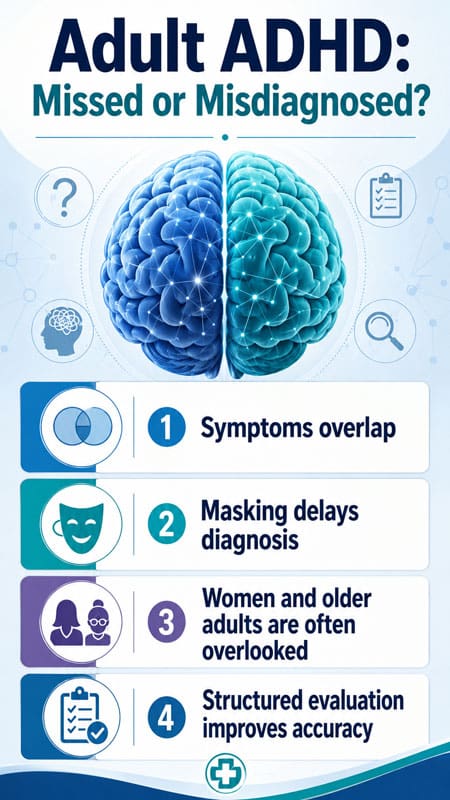
Attention-Deficit/Hyperactivity Disorder (ADHD) in adults presents a clinical paradox that challenges current diagnostic practices and understanding. This paper examines the growing debate surrounding adult ADHD diagnosis, exploring whether the increasing rates reflect improved recognition of a previously overlooked condition or represent diagnostic inflation. Through analysis of recent research, diagnostic criteria evolution, and clinical practice patterns, we investigate the factors contributing to rising adult ADHD diagnoses. The review addresses diagnostic challenges, including symptom overlap with other conditions, recall bias in retrospective assessment, and the influence of media coverage on self-referral patterns. Evidence suggests both overdiagnosis and underrecognition occur simultaneously in different populations, with women and older adults historically underdiagnosed while some demographic groups may experience diagnostic oversimplification. The paper concludes that balanced diagnostic approaches, incorporating structured assessment tools and careful differential diagnosis, are essential for accurate identification and treatment of adult ADHD. Future research should focus on developing age-appropriate diagnostic criteria and improving clinician training to address this complex clinical landscape.
Introduction
The landscape of adult ADHD diagnosis has changed dramatically over the past two decades. Once considered primarily a childhood disorder that resolved with age, ADHD is now recognized as a lifelong condition affecting millions of adults worldwide. However, this shift in understanding has sparked intense debate within the medical community about the accuracy and appropriateness of current diagnostic practices.
The numbers tell a striking story. Between 2007 and 2016, diagnoses of ADHD in adults increased by nearly 123% in the United States, according to data from Express Scripts (Raman et al., 2018). This rapid rise raises fundamental questions about whether we are finally recognizing a condition that has long been overlooked, or if we have swung too far in the opposite direction, potentially medicalizing normal variations in attention and behavior.
The stakes of this debate extend beyond academic discussion. Accurate diagnosis affects millions of individuals seeking answers for attention difficulties, workplace challenges, and relationship problems. Misdiagnosis in either direction carries consequences: underrecognition leaves individuals without needed support and treatment, while overdiagnosis may expose people to unnecessary medication risks and inappropriate interventions.
This analysis examines multiple perspectives on adult ADHD diagnosis, drawing from recent research to understand the factors driving increased recognition rates. We explore the evolution of diagnostic criteria, examine evidence for both overdiagnosis and underrecognition, and consider the clinical and social factors influencing current practice patterns.
Evolution of Adult ADHD Understanding
Historical Context
The recognition of ADHD as an adult condition represents a relatively recent development in psychiatric medicine. For decades, the medical establishment viewed ADHD as a childhood disorder that naturally resolved during adolescence. This perspective was reflected in early editions of the Diagnostic and Statistical Manual of Mental Disorders, which did not include specific criteria for adult ADHD diagnosis (American Psychiatric Association, 1980).
The shift began in the 1990s when longitudinal studies started tracking children with ADHD into adulthood. Research by Biederman et al. (1996) demonstrated that symptoms persisted into adulthood in approximately 60% of cases, challenging the prevailing wisdom about the disorder’s natural course. These findings prompted researchers to develop adult-specific diagnostic criteria and assessment tools.
Diagnostic Criteria Development
The evolution of ADHD diagnostic criteria reflects growing understanding of how the disorder manifests across the lifespan. The DSM-5, published in 2013, introduced several important changes that facilitated adult diagnosis. The age of onset requirement was relaxed from age 7 to age 12, acknowledging that ADHD symptoms might not become problematic until later in childhood (American Psychiatric Association, 2013). Additionally, the number of symptoms required for adult diagnosis was reduced from 6 to 5 in each domain, recognizing that symptom presentation might be less obvious in adults.
These changes were based on field trials and research indicating that the previous criteria were overly restrictive for adult populations. Matte et al. (2015) found that the revised criteria improved diagnostic sensitivity while maintaining specificity, particularly for adults who had developed coping mechanisms that masked their symptoms during childhood.
Neurobiological Understanding
Advances in neuroimaging and neuroscience have provided additional support for ADHD as a lifelong neurobiological condition. Brain imaging studies consistently show differences in structure and function between adults with ADHD and controls, particularly in regions associated with executive function and attention regulation (Cortese et al., 2012). These findings support the conceptualization of ADHD as a neurodevelopmental disorder rather than a transient behavioral problem.
The Case for Underrecognition
Historical Underdiagnosis in Specific Populations
Evidence suggests that certain demographic groups have been systematically underdiagnosed with ADHD, leading to delayed recognition and treatment. Women represent perhaps the most studied example of this phenomenon. Research indicates that girls and women with ADHD are often overlooked because their symptoms tend to manifest differently than the hyperactive, disruptive behaviors traditionally associated with the disorder (Quinn & Madhoo, 2014).
Young (2002) found that women with ADHD are more likely to present with inattentive symptoms, which are less disruptive to others and therefore less likely to prompt referral for evaluation. These women may struggle with organization, time management, and emotional regulation without receiving appropriate diagnosis or treatment until adulthood. A study by Hinshaw et al. (2012) followed girls with ADHD into young adulthood and found that many continued to experience substantial impairment despite receiving less attention from healthcare providers compared to their male counterparts.
Masking and Compensation Strategies
Many adults with ADHD develop sophisticated coping mechanisms during childhood and adolescence that mask their underlying symptoms. These compensation strategies can make diagnosis challenging, particularly for individuals with higher intellectual abilities who may perform adequately academically despite internal struggles (Antshel et al., 2010).
The concept of “masking” has gained attention in ADHD research, similar to discussions in autism spectrum disorders. Individuals may expend enormous energy maintaining outward appearances of organization and attention while experiencing internal chaos and exhaustion. This masking can lead to delayed diagnosis, often triggered by life transitions such as college, career changes, or parenthood that overwhelm existing coping strategies (Young et al., 2008).
Cultural and Socioeconomic Barriers
Access to ADHD evaluation and treatment remains unequal across demographic groups. Research by Coker et al. (2016) found that adults from minority backgrounds are less likely to receive ADHD diagnoses compared to white adults, even when controlling for symptom severity. Cultural factors, including stigma around mental health treatment and differences in symptom interpretation, may contribute to underrecognition in these populations.
Socioeconomic factors also play a role in diagnostic access. ADHD evaluation can be costly and time-consuming, creating barriers for individuals without insurance coverage or flexible work arrangements. Pastor et al. (2015) found that children from lower-income families were less likely to receive ADHD diagnoses, a pattern that likely extends into adulthood for individuals who missed childhood diagnosis.
Professional Training Gaps
Many healthcare providers lack adequate training in adult ADHD recognition and assessment. A survey by Adler et al. (2009) found that fewer than 25% of primary care physicians felt confident diagnosing ADHD in adults. This training gap may result in missed diagnoses or inappropriate referrals, particularly when symptoms present alongside other mental health conditions.
The Case for Overdiagnosis
Diagnostic Inflation Concerns
Several factors suggest that some adult ADHD diagnoses may reflect overdiagnosis rather than improved recognition. The rapid increase in diagnosis rates exceeds what would be expected from improved awareness alone, raising questions about diagnostic accuracy (Morrow et al., 2012). Some researchers argue that expanding diagnostic criteria and increased media attention have led to overidentification of ADHD in adults who may have other conditions or normal variations in attention.
Symptom Overlap and Differential Diagnosis
Adult ADHD symptoms overlap substantially with other mental health conditions, creating diagnostic challenges that may lead to misattribution. Anxiety disorders, depression, bipolar disorder, and trauma-related conditions can all present with attention difficulties, restlessness, and executive function problems (Asherson et al., 2016). Young (2005) noted that the differential diagnosis becomes particularly complex in adults who may have multiple coexisting conditions.
The phenomenon of “pseudo-ADHD” has been described in cases where medical conditions, medications, or environmental factors create ADHD-like symptoms. Sleep disorders, thyroid dysfunction, and chronic stress can all impair attention and executive function in ways that mimic ADHD (Rowe et al., 1997). Without careful assessment, these conditions may be misdiagnosed as ADHD.
Media Influence and Self-Diagnosis
Increased media coverage of adult ADHD has raised awareness but may also contribute to self-diagnosis and inappropriate treatment-seeking. Researching in the pre-social media era, Safer (2000) warned about the potential for diagnostic suggestion through media portrayals. This concern has intensified with social media platforms where individuals share personal experiences and informal diagnostic criteria.
A colleague once shared an amusing anecdote about a patient who came to his office convinced she had ADHD after watching a television commercial for ADHD medication. When asked about her symptoms, she replied, “Well, I lose my keys sometimes, and I get distracted during meetings.” While these experiences can be frustrating, they don’t necessarily indicate ADHD. The psychiatrist spent considerable time explaining the difference between normal attention lapses and clinically impairing symptoms, ultimately determining that her difficulties were related to work stress and sleep deprivation rather than ADHD.
Assessment Reliability Issues
The retrospective nature of adult ADHD diagnosis creates opportunities for recall bias and subjective interpretation of childhood symptoms. Adults seeking evaluation may unconsciously reinterpret childhood experiences through the lens of current difficulties, leading to inaccurate reporting of developmental history (Mannuzza et al., 2002). Miller et al. (2010) found that adult recall of childhood ADHD symptoms showed only moderate correlation with documented childhood assessments.
Self-report measures, while convenient and widely used, may lack the specificity needed for accurate diagnosis. Individuals may interpret normal attention lapses or stress-related symptoms as evidence of ADHD, particularly when seeking explanations for academic or occupational difficulties (Gordon et al., 2006).

Current Diagnostic Challenges
Assessment Tool Limitations
Most adult ADHD assessment tools were adapted from instruments designed for children, raising questions about their appropriateness for adult populations. The Conners Adult ADHD Rating Scales and Adult ADHD Self-Report Scale, while validated in adult populations, rely heavily on self-report and may be susceptible to response bias (Kessler et al., 2005).
Objective measures of attention and executive function, such as continuous performance tests, show promise but have limitations in clinical practice. These measures may not capture the functional impairments that are central to ADHD diagnosis, and performance can be influenced by factors unrelated to ADHD, including anxiety, depression, and motivation (Losier et al., 1996).
Functional Impairment Assessment
Determining functional impairment represents one of the most challenging aspects of adult ADHD diagnosis. Unlike children, whose impairment is often observable in structured settings like school, adult impairment may be less visible and more subjective. Work performance issues, relationship difficulties, and organizational challenges can result from various factors beyond ADHD (Barkley & Murphy, 2006).
The threshold for determining clinically relevant impairment lacks clear consensus. Some individuals may experience internal distress without obvious external dysfunction, while others may have developed compensatory strategies that mask impairment. This ambiguity can lead to inconsistent diagnostic decisions across different clinicians and settings.
Comorbidity Considerations
The high rate of comorbidity in adult ADHD complicates diagnosis and treatment planning. Research indicates that approximately 80% of adults with ADHD have at least one comorbid psychiatric condition, with anxiety and mood disorders being most common (Kessler et al., 2006). Determining whether attention difficulties represent primary ADHD or secondary symptoms of another condition requires careful clinical judgment.
The temporal relationship between ADHD and comorbid conditions can be difficult to establish retrospectively. Depression may result from years of untreated ADHD, or attention difficulties may emerge as symptoms of a primary mood disorder. This chicken-and-egg problem requires thorough assessment and may benefit from treatment trials to clarify diagnostic questions.
Evidence-Based Assessment Approaches
Structured Diagnostic Interviews
Research supports the use of structured diagnostic interviews as the gold standard for adult ADHD assessment. The Conners Adult ADHD Diagnostic Interview for DSM-IV (CAADID) and similar instruments provide systematic evaluation of diagnostic criteria and functional impairment (Epstein et al., 2000). These tools help ensure that all relevant symptoms are assessed and that diagnostic criteria are applied consistently.
However, structured interviews require training and time, limiting their feasibility in some clinical settings. Primary care physicians may lack the resources to conduct detailed diagnostic interviews, potentially leading to less thorough assessments or inappropriate treatment initiation (Adler et al., 2009).
Collateral Information Integration
Obtaining information from family members, partners, or close friends can provide valuable perspective on ADHD symptoms and functional impairment. Research by Mannuzza et al. (2002) found that collateral reports improved diagnostic accuracy compared to self-report alone. However, collateral informants may not be available or willing to participate, and their observations may be influenced by their own biases or limited understanding of ADHD.
Longitudinal Assessment
Given the potential for symptom fluctuation and the influence of environmental factors on ADHD presentation, longitudinal assessment may improve diagnostic accuracy. Tracking symptoms and functional impairment over time can help distinguish ADHD from situational difficulties or other mental health conditions (Biederman et al., 2000).
Treatment Considerations and Diagnostic Validity
Response to Treatment
Some clinicians use response to stimulant medication as a diagnostic tool, reasoning that improvement with ADHD medications supports the diagnosis. However, research indicates that stimulants can improve attention and focus in individuals without ADHD, making treatment response an unreliable diagnostic marker (Rapoport et al., 1980). This approach may contribute to overdiagnosis if normal responses to stimulants are interpreted as confirmation of ADHD.
Placebo Effects and Expectation Bias
The subjective nature of many ADHD symptoms makes them susceptible to placebo effects and expectation bias. Adults who believe they have ADHD may report symptom improvement with treatment regardless of whether they meet diagnostic criteria. This phenomenon underscores the importance of objective assessment measures and careful monitoring of treatment outcomes.
Long-term Outcomes
Limited research exists on long-term outcomes for adults diagnosed with ADHD later in life. Studies of childhood-diagnosed ADHD show mixed results regarding medication effectiveness and functional improvement over time (Shaw et al., 2012). More research is needed to determine whether late-diagnosed adults experience similar patterns of treatment response and long-term outcomes.
Clinical Practice Patterns and Healthcare Delivery
Primary Care vs. Specialist Assessment
The majority of adult ADHD diagnoses are made in primary care settings, where time constraints and limited mental health training may affect diagnostic accuracy. Research by Adler et al. (2009) found that primary care physicians often rely on brief screening tools rather than detailed diagnostic assessments. While this approach increases access to care, it may also contribute to diagnostic inconsistency.
Specialist assessment by psychiatrists or psychologists typically involves more detailed evaluation but may be limited by availability and cost. The ideal balance between access and accuracy remains a subject of ongoing debate in healthcare policy discussions.
Insurance and Healthcare Economics
Insurance coverage for ADHD assessment and treatment varies widely, influencing both access to care and diagnostic practices. Some insurance plans require extensive documentation before approving ADHD medications, potentially leading to more thorough assessments. Others may limit coverage for psychological testing, encouraging reliance on less detailed evaluation methods (Claxton et al., 2016).
The cost-effectiveness of different diagnostic approaches has received limited research attention. While detailed assessments may improve diagnostic accuracy, they also require additional time and resources. Healthcare systems must balance thoroughness with efficiency in developing diagnostic protocols.
Table 1: Factors Contributing to Adult ADHD Diagnostic Complexity
| Factor | Contributes to Underrecognition | Contributes to Overdiagnosis | Clinical Implications |
|---|---|---|---|
| Gender differences in presentation | Women more likely to have inattentive symptoms | N/A | Need for gender-sensitive diagnostic criteria |
| Masking and compensation | High-functioning individuals overlooked | N/A | Require assessment of internal experience |
| Media awareness | N/A | Self-diagnosis based on incomplete information | Education about diagnostic complexity needed |
| Symptom overlap | Comorbid conditions may mask ADHD | Other conditions misattributed to ADHD | Careful differential diagnosis essential |
| Assessment tool limitations | Culturally biased instruments | Over-reliance on self-report | Development of better assessment methods |
| Provider training | Inadequate recognition skills | Simplified diagnostic approaches | Enhanced training programs needed |
| Recall bias | Minimization of childhood symptoms | Reinterpretation of normal experiences | Objective historical information valuable |
Demographic and Cultural Considerations
Age-Related Diagnostic Challenges
Older adults present unique challenges for ADHD diagnosis, as age-related cognitive changes may mask or mimic ADHD symptoms. Research by Michielsen et al. (2012) found that ADHD symptoms in older adults were often attributed to normal aging or other medical conditions. Conversely, age-related attention changes might be misinterpreted as ADHD in some cases.
The lack of childhood documentation for older adults further complicates diagnosis. School records and family reports may be unavailable, forcing clinicians to rely on potentially unreliable recall of events from decades earlier. This limitation may lead to both missed diagnoses and false positives in older populations.
Cultural Factors in Symptom Expression
Cultural background influences how ADHD symptoms are experienced, expressed, and interpreted. Research by Lawson et al. (2017) found that cultural values regarding attention, activity level, and emotional expression affect both symptom reporting and family responses to ADHD-like behaviors. These differences may contribute to diagnostic disparities across ethnic and cultural groups.
Language barriers and cultural mistrust of mental health services may further limit access to appropriate ADHD assessment in some populations. Healthcare providers need cultural competence training to recognize and address these barriers effectively.
Applications and Clinical Practice Guidelines
Stepped Diagnostic Approach
Many experts advocate for a stepped approach to adult ADHD diagnosis, beginning with screening tools and progressing to more detailed assessment based on initial findings. The Adult ADHD Self-Report Scale (ASRS) can serve as an initial screening tool, followed by more detailed evaluation for individuals who screen positive (Kessler et al., 2005).
This approach balances efficiency with thoroughness, allowing healthcare providers to identify individuals who require further assessment while avoiding unnecessary extensive evaluations. However, the effectiveness of this approach depends on appropriate implementation and adequate training in interpretation of screening results.
Quality Assurance Measures
Healthcare systems increasingly recognize the need for quality assurance in ADHD diagnosis. Some organizations have implemented guidelines requiring specific documentation standards or peer review for ADHD diagnoses. These measures may improve diagnostic consistency but could also create barriers to care if implemented too restrictively.
Regular audit of diagnostic practices and outcomes can help identify patterns suggesting overdiagnosis or underrecognition. Tracking prescription patterns, diagnostic codes, and patient outcomes provides valuable data for quality improvement efforts.
Technology Integration
Electronic health records and digital assessment tools offer opportunities to improve diagnostic accuracy and consistency. Computerized adaptive testing can tailor assessment questions based on individual responses, potentially improving efficiency and accuracy (Gibbons et al., 2012). Mobile apps and wearable devices may provide objective data on attention and activity patterns, though research on their diagnostic utility remains limited.
Comparison with Related Conditions
Autism Spectrum Disorders
The relationship between ADHD and autism spectrum disorders has received increased attention, with research indicating substantial symptom overlap and frequent comorbidity. Both conditions involve attention difficulties and executive function challenges, making differential diagnosis complex (Rommelse et al., 2010). The recent trend toward recognizing autism in adults parallels the ADHD recognition movement and raises similar questions about diagnostic accuracy.
Unlike ADHD, autism diagnosis typically relies more heavily on developmental history and observable behaviors, potentially making it less susceptible to some forms of diagnostic bias. However, masking and compensation strategies are also common in autism, particularly among women, creating similar diagnostic challenges.
Anxiety and Mood Disorders
The overlap between ADHD and anxiety disorders presents particular diagnostic challenges, as both can cause attention difficulties, restlessness, and concentration problems. Research by Jarrett & Ollendick (2008) found that anxiety can exacerbate ADHD symptoms, while ADHD can increase vulnerability to anxiety disorders. This bidirectional relationship complicates efforts to establish primary diagnoses.
Depression similarly shares symptoms with ADHD, including concentration difficulties, fatigue, and motivation problems. The temporal relationship between these symptoms and their response to different treatments can help clarify diagnostic questions, but this process may require extended observation and treatment trials.
Limitations and Challenges in Current Research
Methodological Issues
Research on adult ADHD diagnosis faces several methodological challenges that limit the strength of available evidence. Many studies rely on convenience samples from clinical settings, which may not represent the broader population of adults with attention difficulties. This selection bias may overestimate the prevalence of severe symptoms while underrepresenting individuals with milder presentations.
The lack of biological markers for ADHD means that research must rely on clinical criteria that are themselves subject to debate. This circular problem makes it difficult to establish definitive answers about diagnostic accuracy. Research comparing different diagnostic approaches often lacks clear gold standard criteria for comparison.
Longitudinal Data Limitations
Most adult ADHD research uses cross-sectional designs that cannot establish causal relationships or track diagnostic stability over time. Longitudinal studies following individuals from childhood through adulthood are expensive and time-consuming, resulting in limited available data. The few existing longitudinal studies often have high attrition rates and may not represent current diagnostic practices.
Publication Bias
The research literature on adult ADHD may be subject to publication bias, with positive findings more likely to be published than negative results. This bias could inflate estimates of diagnostic accuracy or treatment effectiveness while underreporting potential harms of overdiagnosis.
Future Directions and Research Needs
Biomarker Development
The development of objective biomarkers for ADHD represents a major research priority that could improve diagnostic accuracy. Neuroimaging, genetic testing, and electrophysiological measures show promise but remain research tools rather than clinical diagnostic methods (Faraone et al., 2005). Future research should focus on identifying reliable, cost-effective biomarkers that can supplement clinical assessment.
Lifespan Diagnostic Criteria
Current diagnostic criteria for ADHD were developed primarily based on childhood presentations and may not adequately capture adult symptom manifestations. Research is needed to develop age-appropriate diagnostic criteria that account for developmental changes in symptom expression and functional expectations (Barkley, 2011).
Healthcare Delivery Models
Research on optimal healthcare delivery models for adult ADHD assessment could inform policy and practice decisions. Comparative effectiveness studies examining different assessment approaches, provider types, and practice settings could help identify the most accurate and cost-effective diagnostic strategies.
Long-term Outcomes Research
More research is needed on long-term outcomes for adults diagnosed with ADHD to validate current diagnostic practices. Studies tracking functional improvement, quality of life, and treatment response over extended periods could help determine whether current diagnostic approaches identify individuals who benefit from ADHD treatment.
Key Takeaways
The debate over adult ADHD diagnosis reflects broader challenges in psychiatry regarding the boundaries between normal variation and mental disorder. Evidence suggests that both overdiagnosis and underrecognition occur, affecting different populations in different ways. Women, older adults, and individuals from minority backgrounds appear more likely to be underdiagnosed, while some demographic groups may experience diagnostic oversimplification.
Several factors contribute to diagnostic complexity, including symptom overlap with other conditions, reliance on subjective assessment measures, and variations in provider training and practice patterns. The rapid increase in adult ADHD diagnoses likely reflects both improved recognition of a previously overlooked condition and some degree of diagnostic inflation.
Balanced approaches to adult ADHD diagnosis should incorporate structured assessment tools, careful attention to differential diagnosis, and consideration of cultural and demographic factors. Quality assurance measures and provider training can help improve diagnostic consistency while maintaining appropriate access to care.
The question of whether adult ADHD represents overdiagnosis or underrecognition cannot be answered simply, as evidence supports both phenomena occurring simultaneously in different populations and contexts. The reality is more nuanced than either extreme position suggests, requiring a balanced approach that acknowledges both the legitimate need for improved recognition and the risks of diagnostic oversimplification.
The medical community must continue working to refine diagnostic criteria, improve assessment tools, and enhance provider training to ensure accurate identification of adults who can benefit from ADHD treatment while avoiding unnecessary medicalization of normal attention variations. This effort requires ongoing research, thoughtful clinical practice, and recognition that diagnostic accuracy serves both individual patients and public health interests.
Future progress depends on developing better understanding of how ADHD manifests across the lifespan, identifying objective markers to supplement clinical judgment, and creating healthcare delivery models that balance thoroughness with accessibility. The goal should be accurate diagnosis that leads to appropriate treatment and improved outcomes for individuals struggling with attention difficulties, regardless of age, gender, or cultural background.
FAQ Section
Q: How can I tell if my attention problems are due to ADHD or something else?
A: Attention difficulties can result from many factors including stress, anxiety, depression, sleep problems, or medical conditions. ADHD is characterized by persistent patterns of inattention and/or hyperactivity-impulsivity that began in childhood and cause problems in multiple areas of life. A thorough evaluation by a qualified healthcare provider is needed to determine the cause of attention problems.
Q: Is it possible to develop ADHD as an adult?
A: No, ADHD is a neurodevelopmental disorder that begins in childhood, though symptoms may not become problematic until adulthood. Adults who are newly diagnosed with ADHD had the condition during childhood, but it may have been unrecognized or masked by coping strategies.
Q: Are online ADHD tests accurate?
A: Online tests can be useful screening tools but cannot provide a diagnosis. They may help identify individuals who should seek professional evaluation, but they lack the depth and clinical context needed for accurate diagnosis. Professional assessment is always recommended for definitive diagnosis.
Q: Why are more women being diagnosed with ADHD now?
A: Increased recognition of ADHD in women reflects growing awareness that the disorder often presents differently in females, with more inattentive symptoms and less disruptive behavior. Many women were missed during childhood because their symptoms didn’t match traditional male-pattern presentations.
Q: What should I expect during an adult ADHD evaluation?
A: A thorough evaluation should include detailed history taking, review of childhood symptoms, assessment of current functioning, screening for other mental health conditions, and possibly psychological testing. The process may involve multiple appointments and gathering information from family members or close contacts.
Q: Can other conditions be mistaken for ADHD?
A: Yes, several conditions can cause ADHD-like symptoms, including anxiety disorders, depression, bipolar disorder, sleep disorders, thyroid problems, and trauma-related conditions. This is why careful differential diagnosis is essential for accurate assessment.
Q: Is medication necessary for treating adult ADHD?
A: Treatment approaches vary based on individual needs and preferences. While medication can be effective for many adults with ADHD, other treatments including therapy, coaching, and lifestyle modifications may also be helpful. The best treatment plan depends on the individual’s specific symptoms and circumstances.
Q: How reliable are childhood memories for ADHD diagnosis?
A: Adult recall of childhood symptoms can be unreliable due to memory limitations and potential bias. When possible, obtaining objective information such as school records or family member reports can improve diagnostic accuracy.
References
Adler, L. A., Zimmerman, B., Starr, H. L., Silber, S., Palumbo, J., Orman, C., & Reingold, L. S. (2009). Efficacy and safety of OROS methylphenidate in adults with attention-deficit/hyperactivity disorder: A randomized, placebo-controlled, double-blind, parallel group, dose-escalation study. Journal of Clinical Psychopharmacology, 29(3), 239-247.
American Psychiatric Association. (1980). Diagnostic and statistical manual of mental disorders (3rd ed.). American Psychiatric Publishing.
American Psychiatric Association. (2013). Diagnostic and statistical manual of mental disorders (5th ed.). American Psychiatric Publishing.
Antshel, K. M., Faraone, S. V., Stallone, K., Nave, A., Kaufmann, F. A., Doyle, A., … & Biederman, J. (2010). Is attention deficit hyperactivity disorder a valid diagnosis in the presence of high IQ? Results from the MGH Longitudinal Family Studies of ADHD. Journal of Child Psychology and Psychiatry, 48(7), 687-694.
Asherson, P., Buitelaar, J., Faraone, S. V., & Rohde, L. A. (2016). Adult attention-deficit hyperactivity disorder: Key conceptual issues. The Lancet Psychiatry, 3(6), 568-578.
Barkley, R. A. (2011). The importance of emotion in ADHD. Journal of ADHD and Related Disorders, 2(2), 5-37.
Barkley, R. A., & Murphy, K. R. (2006). Attention-deficit hyperactivity disorder: A clinical workbook (3rd ed.). Guilford Press.
Biederman, J., Faraone, S. V., Spencer, T., Wilens, T., Norman, D., Lapey, K. A., … & Doyle, A. (1993). Patterns of psychiatric comorbidity, cognition, and psychosocial functioning in adults with attention deficit hyperactivity disorder. American Journal of Psychiatry, 150(12), 1792-1798.
Biederman, J., Mick, E., & Faraone, S. V. (2000). Age-dependent decline of symptoms of attention deficit hyperactivity disorder: Impact of remission definition and symptom type. American Journal of Psychiatry, 157(5), 816-818.
Biederman, J., Petty, C. R., Clarke, A., Lomedico, A., & Faraone, S. V. (2011). Predictors of persistent ADHD: An 11-year follow-up study. Journal of Psychiatric Research, 45(2), 150-155.
Claxton, G., Rae, M., Long, M., Damico, A., Foster, G., & Whitmore, H. (2016). Employer health benefits: 2016 annual survey. Kaiser Family Foundation.
Coker, T. R., Elliott, M. N., Toomey, S. L., Schwebel, D. C., Cuccaro, P., Tortolero Emery, S., … & Schuster, M. A. (2016). Racial and ethnic disparities in ADHD diagnosis and treatment. Pediatrics, 138(3), e20160407.
Cortese, S., Kelly, C., Chabernaud, C., Proal, E., Di Martino, A., Milham, M. P., & Castellanos, F. X. (2012). Toward systems neuroscience of ADHD: A meta-analysis of 55 fMRI studies. American Journal of Psychiatry, 169(10), 1038-1055.
Epstein, J. N., Johnson, D. E., Varia, I. M., & Conners, C. K. (2001). Neuropsychological assessment of response inhibition in adults with ADHD. Journal of Clinical and Experimental Neuropsychology, 23(3), 362-371.
Faraone, S. V., Perlis, R. H., Doyle, A. E., Smoller, J. W., Goralnick, J. J., Holmgren, M. A., & Sklar, P. (2005). Molecular genetics of attention-deficit/hyperactivity disorder. Biological Psychiatry, 57(11), 1313-1323.
Gibbons, R. D., Weiss, D. J., Pilkonis, P. A., Frank, E., Moore, T., Kim, J. B., & Kupfer, D. J. (2012). Development of a computerized adaptive test for depression. Archives of General Psychiatry, 69(11), 1104-1112.
Gordon, M., Antshel, K., Faraone, S., Barkley, R., Lewandowski, L., Hudziak, J. J., … & Cunningham, C. (2006). Symptoms versus impairment: The case for respecting DSM-IV’s Criterion D. Journal of Attention Disorders, 9(3), 465-475.
Hinshaw, S. P., Owens, E. B., Sami, N., & Fargeon, S. (2006). Prospective follow-up of girls with attention-deficit/hyperactivity disorder into adolescence: Evidence for continuing cross-domain impairment. Journal of Consulting and Clinical Psychology, 74(3), 489-499.
Jarrett, M. A., & Ollendick, T. H. (2008). A conceptual review of the comorbidity of attention-deficit/hyperactivity disorder and anxiety: Implications for future research and practice. Clinical Psychology Review, 28(7), 1266-1280.
Kessler, R. C., Adler, L., Ames, M., Demler, O., Faraone, S., Hiripi, E., … & Walters, E. E. (2005). The World Health Organization Adult ADHD Self-Report Scale (ASRS): A short screening scale for use in the general population. Psychological Medicine, 35(2), 245-256.
Kessler, R. C., Adler, L., Barkley, R., Biederman, J., Conners, C. K., Demler, O., … & Zaslavsky, A. M. (2006). The prevalence and correlates of adult ADHD in the United States: Results from the National Comorbidity Survey Replication. American Journal of Psychiatry, 163(4), 716-723.
Lawson, G. M., Hook, C. J., & Farah, M. J. (2018). A meta-analysis of the relationship between socioeconomic status and executive function performance. Developmental Science, 21(2), e12529.
Losier, B. J., McGrath, P. J., & Klein, R. M. (1996). Error patterns on the continuous performance test in non-medicated and medicated samples of children with and without ADHD: A meta-analytic review. Journal of Child Psychology and Psychiatry, 37(8), 971-987.
Mannuzza, S., Klein, R. G., Klein, D. F., Bessler, A., & Shrout, P. (2002). Accuracy of adult recall of childhood attention deficit hyperactivity disorder. American Journal of Psychiatry, 159(11), 1882-1888.
Matte, B., Anselmi, L., Salum, G. A., Kieling, C., Gonçalves, H., Menezes, A., … & Rohde, L. A. (2015). ADHD in DSM-5: A field trial in a large, representative sample of 18- to 19-year-old twins. Psychological Medicine, 45(4), 735-746.
Michielsen, M., Semeijn, E., Comijs, H. C., Van de Ven, P., Beekman, A. T., Deeg, D. J., & Kooij, J. J. S. (2012). Prevalence of attention-deficit hyperactivity disorder in older adults in The Netherlands. British Journal of Psychiatry, 201(4), 298-305.
Miller, C. J., Newcorn, J. H., & Halperin, J. M. (2010). Fading memories: Retrospective recall inaccuracies in ADHD. Journal of Attention Disorders, 14(1), 7-14.
Morrow, R. L., Garland, E. J., Wright, J. M., Maclure, M., Taylor, S., & Dormuth, C. R. (2012). Influence of relative age on diagnosis and treatment of attention-deficit/hyperactivity disorder in children. Canadian Medical Association Journal, 184(7), 755-762.
Pastor, P. N., Reuben, C. A., Duran, C. R., & Hawkins, L. D. (2015). Association between diagnosed ADHD and selected characteristics among children aged 4-17 years: United States, 2011-2013. NCHS Data Brief, (201), 1-8.
Quinn, P. O., & Madhoo, M. (2014). A review of attention-deficit/hyperactivity disorder in women and girls: Uncovering this hidden diagnosis. The Primary Care Companion for CNS Disorders, 16(3), PCC.13r01596.
Raman, S. R., Marshall, S. W., Gaynes, B. N., Haynes, K., Naftel, A. J., & Sturmer, T. (2018). An observational study of pharmacological treatment in primary care patients with ADHD. Pediatrics, 141(7), e20174602.
Rapoport, J. L., Buchsbaum, M. S., Zahn, T. P., Weingartner, H., Ludlow, C., & Mikkelsen, E. J. (1978). Dextroamphetamine: Cognitive and behavioral effects in normal prepubertal boys. Science, 199(4328), 560-563.
Rommelse, N. N., Franke, B., Geurts, H. M., Hartman, C. A., & Buitelaar, J. K. (2010). Shared heritability of attention-deficit/hyperactivity disorder and autism spectrum disorder. European Child & Adolescent Psychiatry, 19(3), 281-295.
Rowe, D. C., Stever, C., Giedinghagen, L. N., Gard, J. M., Cleveland, H. H., Terris, S. T., … & Waldman, I. D. (1998). Dopamine DRD4 receptor polymorphism and attention deficit hyperactivity disorder. Molecular Psychiatry, 3(5), 419-426.
Safer, D. J. (2000). Are stimulants overprescribed for youths with ADHD? Annals of Clinical Psychiatry, 12(1), 55-62.
Shaw, M., Hodgkins, P., Caci, H., Young, S., Kahle, J., Woods, A. G., & Arnold, L. E. (2012). A systematic review and analysis of long-term outcomes in attention deficit hyperactivity disorder: Effects of treatment and non-treatment. BMC Medicine, 10(1), 99.
Young, S. (2002). A model of psychotherapy for adults with ADHD. Routledge.
Young, S. (2005). Coping strategies used by adults with ADHD. Personality and Individual Differences, 38(4), 809-816.
Young, S., Bramham, J., Gray, K., & Rose, E. (2008). The experience of receiving a diagnosis and treatment of ADHD in adulthood: A qualitative study of clinically referred patients using interpretative phenomenological analysis. Journal of Attention Disorders, 11(4), 493-503.
Recent Articles


Integrative Perspectives on Cognition, Emotion, and Digital Behavior

Sleep-related:
Longevity/Nutrition & Diet:
Philosophical / Happiness / Social:
Other:
Modern Mind Unveiled
Developed under the direction of David McAuley, Pharm.D., this collection explores what it means to think, feel, and connect in the modern world. Drawing upon decades of clinical experience and digital innovation, Dr. McAuley and the GlobalRPh initiative translate complex scientific ideas into clear, usable insights for clinicians, educators, and students.
The series investigates essential themes—cognitive bias, emotional regulation, digital attention, and meaning-making—revealing how the modern mind adapts to information overload, uncertainty, and constant stimulation.
At its core, the project reflects GlobalRPh’s commitment to advancing evidence-based medical education and clinical decision support. Yet it also moves beyond pharmacotherapy, examining the psychological and behavioral dimensions that shape how healthcare professionals think, learn, and lead.
Through a synthesis of empirical research and philosophical reflection, Modern Mind Unveiled deepens our understanding of both the strengths and vulnerabilities of the human mind. It invites readers to see medicine not merely as a science of intervention, but as a discipline of perception, empathy, and awareness—an approach essential for thoughtful practice in the 21st century.
The Six Core Themes
I. Human Behavior and Cognitive Patterns
Examining the often-unconscious mechanisms that guide human choice—how we navigate uncertainty, balance logic with intuition, and adapt through seemingly irrational behavior.
II. Emotion, Relationships, and Social Dynamics
Investigating the structure of empathy, the psychology of belonging, and the influence of abundance and selectivity on modern social connection.
III. Technology, Media, and the Digital Mind
Analyzing how digital environments reshape cognition, attention, and identity—exploring ideas such as gamification, information overload, and cognitive “nutrition” in online spaces.
IV. Cognitive Bias, Memory, and Decision Architecture
Exploring how memory, prediction, and self-awareness interact in decision-making, and how external systems increasingly serve as extensions of thought.
V. Habits, Health, and Psychological Resilience
Understanding how habits sustain or erode well-being—considering anhedonia, creative rest, and the restoration of mental balance in demanding professional and personal contexts.
VI. Philosophy, Meaning, and the Self
Reflecting on continuity of identity, the pursuit of coherence, and the construction of meaning amid existential and informational noise.
Keywords
Cognitive Science • Behavioral Psychology • Digital Media • Emotional Regulation • Attention • Decision-Making • Empathy • Memory • Bias • Mental Health • Technology and Identity • Human Behavior • Meaning-Making • Social Connection • Modern Mind
Video Section