
Evidence-based clinical review
Perioperative Antibiotic Prophylaxis in 2026 Shorter, Narrower, Smarter, and Still Controversial

Abstract
Background
Perioperative antibiotic prophylaxis prevents surgical site infection only when the right drug reaches the operative field at the right concentration and is stopped before prophylaxis becomes unnecessary treatment. Current guidance increasingly favors procedure-specific selection, reliable preincision delivery, correct dosing and redosing, and discontinuation at incision closure for most clean and clean-contaminated operations.[1-5]
Current Evidence
A systematic review found no conclusive benefit from postoperative continuation, particularly when contemporary prophylaxis practices were followed. Longer exposure has been associated with acute kidney injury and Clostridioides difficile infection.[6,7] A 2026 multicenter study also found that wrong agent selection and missed intraoperative redosing were common and associated with higher surgical site infection risk, although the observational design does not prove causation.[8]
Persistent Controversies
The general closure-stop rule is not applied identically in every specialty. Arthroplasty retains an older 24-hour practice norm despite newer low-certainty evidence that has not shown a clear advantage for multiple doses. Cardiac quality measures permit discontinuation within 48 hours but do not require 48 hours of therapy. Cesarean evidence has shifted as preincision regimens have improved.[15-21]
Clinical Takeaway
In 2026, the safest shorthand is not simply “one dose.” It is the shortest procedure-appropriate regimen that preserves adequate spectrum, timing, dose, intraoperative redosing, and any well-defined specialty exception.
Scope of This Review
This article addresses adult perioperative prophylaxis for acute-care and ambulatory surgery, with selected obstetric evidence where it clarifies modern practice. It does not address dental or infective endocarditis prophylaxis, recurrent urinary tract infection prophylaxis, opportunistic infection prophylaxis, chronic suppressive therapy, or treatment of an established infection. Dirty operations, infected tissue, perforation, or uncontrolled contamination may require therapeutic antibiotics rather than a prolonged prophylaxis label.

Why the 2026 Answer Is Harder Than Simply Saying “One Dose Only”
The major change in perioperative thinking is not that every operation now receives exactly one dose. It is that prophylaxis is being treated as a tightly controlled process rather than an open-ended postoperative habit. The 2026 French multidisciplinary guideline used specialty-specific tables and formal evidence grading, reflecting how strongly the optimal regimen depends on the procedure, expected organisms, implant, route of contamination, and local practice environment.[1]
In the United States, the detailed ASHP/SIS/SHEA/IDSA guideline remains the most familiar operational backbone for agent selection, administration windows, weight-based dosing, and redosing.[2] At the time of this review, the joint update was still listed as in development, with an estimated fourth-quarter 2026 publication.[3] That creates an awkward but manageable situation: clinicians must use the established framework while checking newer CDC, SHEA, specialty, trial, and institutional guidance for areas that have evolved.[4,5]
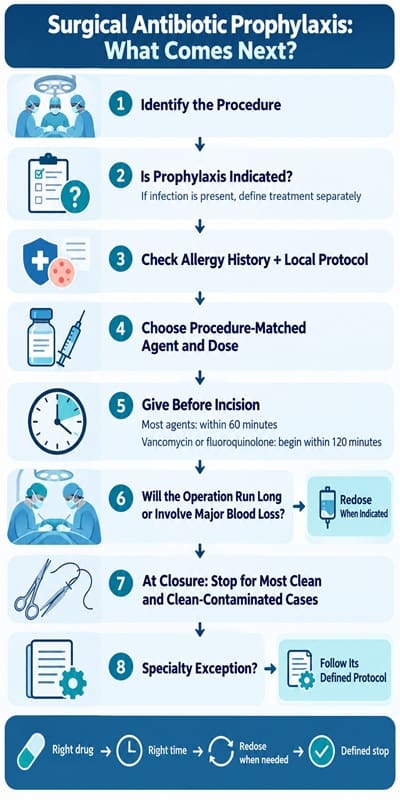
Table 1. The 2026 Default Operating Rules
| Decision | Default approach | Important qualification |
|---|---|---|
| Is prophylaxis indicated? | Use it only for procedures in which evidence or specialty guidance supports benefit. | If infection is already present, define a treatment plan rather than extending a prophylaxis order. |
| Which agent? | Choose the narrowest regimen that reliably covers expected procedure-specific flora. | Narrower can still require combination or dual-route prophylaxis, especially in colorectal surgery. |
| When? | Administer most agents within 60 minutes before incision; begin vancomycin or a fluoroquinolone within 120 minutes when used.[2] | The goal is adequate tissue concentration at incision, not merely an order entered before transport. |
| How much? | Use the procedure and agent-specific dose, including protocolized weight adjustments.[2] | Do not extrapolate one drug’s obesity adjustment to every antibiotic. |
| Redose? | Redose when the operation exceeds the recommended interval or when major blood loss makes inadequate exposure likely.[2,8] | A “single-dose protocol” still requires intraoperative redosing when indicated. |
| When to stop? | Stop at incision closure for most clean and clean-contaminated operations.[4-6] | Use a longer specialty-defined course only when current evidence or policy clearly supports it. |
| What about a drain? | Do not continue prophylaxis solely because a drain remains in place.[4,5,22,23] | A drain-related concern should trigger assessment for infection, not automatic prophylaxis extension. |
Shorter: Incision Closure Is the Default Stopping Point, Not an Afterthought
For most clean and clean-contaminated operations, the strongest cross-specialty stewardship rule is to discontinue prophylactic antibiotics when the incision is closed. CDC guidance explicitly recommends no additional doses after closure even when a drain is present, and the 2022 SSI prevention compendium reaches the same practical conclusion.[4,5]
The evidence does not support the common reassurance that “one more day cannot hurt.” A meta-analysis of 52 randomized trials found no conclusive SSI benefit from postoperative continuation and no benefit in trials that followed contemporary best practices for agent selection, timing, and redosing.[6] In a large observational cohort, each additional day of prophylaxis was associated with greater risk of acute kidney injury and C. difficile infection without an observed reduction in SSI.[7]
The practical implication is specific. A postoperative fever, leukocytosis, contaminated field, unexpected perforation, devitalized tissue, or purulence should not be managed by quietly extending a prophylaxis order. Those findings require diagnostic reassessment and, when infection is suspected, an explicit therapeutic regimen with an indication, source-control plan, dose, duration, and review point.
Narrower: Match the Operation, Not the Anxiety
Narrow-spectrum prophylaxis is not synonymous with the fewest drugs or the least microbiologic coverage. It means avoiding organisms and exposure that the operation does not require while covering the organisms that actually threaten the surgical site. Cefazolin remains a common first-line agent for many clean operations because it covers methicillin-susceptible staphylococci well without the ecological cost of broader regimens.[2,5]
Colorectal surgery shows why the slogan can be misleading. Effective prophylaxis must address both aerobic gram-negative organisms and anaerobes, and randomized evidence supports adding oral antibiotics to intravenous prophylaxis within a modern bowel-preparation pathway.[13] A 2026 network meta-analysis likewise found that regimen class matters across colorectal trials.[14] In this setting, smarter and narrower means complete procedure-matched coverage, not reflex monotherapy.
Vancomycin is another frequent source of overreach. It should not be added simply because an implant is present or because MRSA exists somewhere in the hospital. In a randomized trial of arthroplasty patients without known MRSA colonization, adding vancomycin to cefazolin did not reduce SSI overall and increased hypersensitivity reactions.[12] When vancomycin is appropriate for documented colonization or a defined local indication, it generally should not replace standard cefazolin coverage for methicillin-susceptible staphylococci when a beta-lactam can be used.[5,12]
Smarter: Execution Often Matters More Than Escalation
Timing, Dose, and Redosing Are One Clinical Decision
Most prophylactic antibiotics should be administered within 60 minutes before incision. Vancomycin and fluoroquinolones require longer infusion windows and should be started within 120 minutes before incision.[2] These windows are not administrative targets. They are pharmacologic requirements intended to ensure adequate tissue concentration at the time of bacterial inoculation.
Cefazolin 2 g, with 3 g commonly recommended at a body weight of 120 kg or more, and intraoperative redosing every 4 hours is a familiar U.S. example.[2] It is an example, not a universal template. Every agent has its own dose and redosing interval, and major blood loss or an unusually long operation can require redosing even when the initial dose was perfect.
A 2026 analysis of 119,236 noncardiac operations at 37 institutions found nonadherence to at least one guideline metric in 26.1% of cases. Wrong agent choice occurred in 13.3%, weight-dose nonadherence in 9.0%, timing nonadherence in 3.0%, and redosing nonadherence in 4.8%. Any nonadherence was associated with an adjusted relative risk of SSI of 1.34; wrong choice and missed redosing were the strongest individual associations. Because the study was observational, these estimates should guide quality improvement rather than be interpreted as proof that correcting any one metric will produce the same effect size.[8]
A Penicillin-Allergy Label Should Trigger a Structured History, Not Automatic Clindamycin
Cefazolin has a side chain that is dissimilar to penicillins and can be used in many patients who report a penicillin allergy, including many with remote or immediate-type histories, when a structured algorithm excludes clinically important contraindications.[9] Severe delayed beta-lactam reactions such as Stevens-Johnson syndrome, toxic epidermal necrolysis, drug reaction with eosinophilia and systemic symptoms, or organ injury require a different plan. A known cefazolin or relevant cephalosporin allergy also changes the decision.
A 2025 health-system intervention increased cefazolin use from 73% to 83% among surgical encounters with a penicillin-allergy label while reducing clindamycin and gentamicin use. No severe reactions were documented in patients treated according to the algorithm.[10] The lesson is not that allergy never matters. It is that an unverified label should not automatically force a less effective or more toxic substitute.
MRSA Prevention Should Be Targeted, Not Universal
For selected high-risk operations, particularly cardiothoracic, orthopedic, and neurosurgical procedures, current CDC implementation guidance supports protocolized S. aureus decolonization with an intranasal antistaphylococcal agent or antiseptic plus chlorhexidine.[11] Screening strategy, product, timing, and whether prophylaxis is modified for a carrier should follow the current specialty and institutional pathway. Universal extra systemic coverage is not a substitute for a defined decolonization and prophylaxis plan.
Still Controversial: Where the Closure Rule Meets Specialty Practice
Table 2. A Practical Controversy Map
| Setting | Why it remains debated | 2026 working interpretation | Practical action |
| Primary joint arthroplasty | Older specialty practice favors 24 hours, while general SSI guidance favors stopping at closure.[4,15] | A 2025 randomized-trial network meta-analysis found no clear added benefit from multiple doses, but certainty was very low.[16] | Follow the current arthroplasty protocol and do not extend beyond its defined duration without a separate indication. |
| Cardiac surgery | STS performance measurement defines success as discontinuation within 48 hours.[17] | The measure permits a maximum window; it does not prove that 48 hours is necessary for every patient. | Use the current cardiac surgery pathway and record the intended stop time. |
| Cesarean delivery | Benefits of adjunctive and postoperative regimens depend on labor, membrane status, obesity, and the baseline preincision regimen.[18-21] | Modern preincision cefazolin plus azithromycin can make automatic postoperative extension unnecessary in the studied high-risk population.[19,21] | Use the current obstetric protocol rather than importing general-surgery rules. |
| Closed suction drains | Surgeons may fear that the drain acts as an ongoing portal for infection. | Randomized and meta-analytic spine data do not show SSI benefit from continuing antibiotics until drain removal.[22,23] | Do not use drain presence alone as the indication. |
| Obesity dosing | Guidelines often use weight thresholds, but pharmacokinetic evidence differs by drug.[2,24] | Agent-specific dosing is appropriate; universal escalation across all prophylactic antibiotics is not evidence based. | Use the current drug-specific protocol and avoid extrapolation. |
Arthroplasty: A Real Evidence Gap, Not Permission for Indefinite Therapy
The American Association of Hip and Knee Surgeons publicly opposed applying the CDC closure-only recommendation to total joint arthroplasty and supported 24 hours of postoperative prophylaxis in its 2018 position.[15] That position has influenced practice, but it predates the latest evidence synthesis. The 2025 network meta-analysis of randomized trials in primary total hip arthroplasty found no clear evidence that multiple doses were superior to a single dose, with very low certainty and wide confidence intervals.[16]
The balanced 2026 conclusion is neither that 24 hours is proven necessary nor that every implant operation must immediately adopt closure-only dosing. Institutions should align with current orthopedic and infection-prevention governance, define the selected duration explicitly, and avoid extending prophylaxis beyond that protocol without a separate therapeutic indication.
Cardiac Surgery: Within 48 Hours Does Not Mean for 48 Hours
The current Society of Thoracic Surgeons performance measure counts patients whose prophylactic antibiotics are discontinued within 48 hours after surgery end time.[17] This is commonly misread as a recommendation to continue antibiotics for two postoperative days. It is better understood as an outer performance boundary. A cardiac service may choose a shorter regimen through its current protocol, but a clinician should not independently reinterpret the metric without the specialty pathway.
Cesarean Delivery: The Baseline Regimen Changes the Value of Extension
In nonelective cesarean delivery during labor or after membrane rupture, adjunctive preincision azithromycin added to standard prophylaxis substantially reduced post-cesarean infection in a large randomized trial.[19] A separate 2017 trial in women with obesity found that 48 hours of postoperative oral cephalexin plus metronidazole reduced SSI after the then-standard preoperative regimen.[20]
The newer trial asked a different question. In women with obesity and ruptured membranes who had already received preincision cefazolin plus azithromycin, automatic postoperative cephalexin plus metronidazole did not significantly reduce infectious complications.[21] This is a useful stewardship lesson: a postoperative regimen that once appeared beneficial may add little after the preincision regimen improves. The finding should not be generalized beyond the studied population, but it argues against routine extension by habit.
Drains: A Device Is Not an Antibiotic Indication
A prospective randomized spine study found no SSI reduction when prophylaxis was continued for the duration of drain placement rather than stopped after 24 hours.[22] A later meta-analysis likewise found no reduction in deep, superficial, or overall SSI and noted concern for selection of resistant organisms.[23] Together with CDC and SHEA guidance, these data make drain presence alone a poor reason to continue systemic prophylaxis.[4,5]
Obesity: Use the Drug-Specific Protocol
Weight-based cefazolin dosing is embedded in U.S. perioperative protocols, including the common 3 g threshold at 120 kg or more.[2] A 2025 pharmacokinetic and pharmacodynamic review found that evidence for obesity-related adjustment is heterogeneous and often insufficient across other prophylactic agents.[24] The safest response is not to abandon current thresholds or to escalate every agent. It is to follow the current agent-specific protocol, update it when the guideline changes, and avoid assuming that one drug’s rule applies to another.
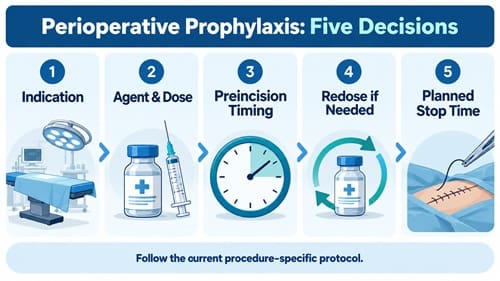
A Five-Point Perioperative Antibiotic Checklist
- Name the procedure, wound class, implant status, and whether the patient already has an infection requiring treatment.
- Verify the allergy history, prior cultures, MRSA or S. aureus status when relevant, recent antibiotics, and the current institutional procedure pathway.
- Select the procedure-matched agent and dose. Confirm that alternatives preserve the needed spectrum rather than merely avoiding a reported allergy.
- Document the planned administration window and the intraoperative redosing trigger before incision. Assign responsibility for redosing in prolonged cases.
- Enter the stop time at the start of the case. At closure, stop prophylaxis unless a current specialty protocol defines a limited exception or new findings justify a separate treatment plan.
Common Failure Modes That Stewardship Programs Should Measure
- Prophylaxis ordered for a procedure in which benefit is not established.
- A penicillin-allergy label automatically converted to clindamycin or vancomycin without a structured history.
- Vancomycin used alone when methicillin-susceptible staphylococcal coverage is still required.
- The initial dose is timely, but a long operation receives no redose.
- Postoperative doses continue because a drain, implant, or intensive care unit stay makes the team uncomfortable.
- Antibiotics are prescribed at discharge “just in case” without a documented infection or specialty indication.
- Unexpected contamination is managed by extending prophylaxis rather than defining diagnosis, source control, and treatment duration.
Where the Evidence Remains Thin and What Is Needed Next
Many procedure-specific trials are too small to establish noninferiority for rare deep or implant infections. Older studies used antibiotics, resistance patterns, surgical techniques, and SSI definitions that differ from current care. Obesity dosing is often supported by pharmacokinetic targets rather than clinical outcomes. Decolonization strategies differ in whether they screen, treat carriers, or treat all high-risk patients. Specialty exceptions can therefore persist even when the general stewardship direction is clear.
The anticipated joint U.S. guideline update is especially important because clinicians currently combine a detailed 2013 dosing framework with newer CDC and SHEA duration guidance and rapidly evolving specialty evidence.[2-5] Until the update is published and implemented, institutions should maintain a single procedure-specific protocol that reconciles these sources rather than leaving duration and spectrum to individual preference.
Conclusion: The Goal Is the Least Antibiotic Exposure That Preserves Reliable Protection
Perioperative antibiotic prophylaxis in 2026 should usually be shorter, but not simplistic; narrower, but not incomplete; and smarter, because execution matters as much as the drug selected. The default for most clean and clean-contaminated operations is correct preincision prophylaxis, appropriate redosing, and discontinuation at closure. The remaining controversies are real, but they are bounded. Arthroplasty, cardiac surgery, cesarean delivery, obesity dosing, and selected colonization pathways require current specialty protocols, not open-ended antibiotics. The goal is not fewer antibiotics at any cost. It is the least antibiotic exposure that preserves reliable protection for the operation actually being performed.
Clinical Update Disclaimer
This article reflects literature and guidance reviewed through August 20, 2026. Perioperative prophylaxis recommendations, drug labeling, resistance patterns, safety information, and specialty guidance may change. Clinicians should confirm current national, specialty, institutional, formulary, allergy, dosing, and local microbiology guidance before applying any regimen.
References
- Garnier M, Gauzit R, Leone M; French Expert Group on Surgical Procedural Antibioprophylaxis on behalf of SFAR and SPILF. Guidelines on Antibiotic Prophylaxis in Surgery 2024. Anaesth Crit Care Pain Med. 2026 Jan 31:101749. Online ahead of print. DOI. PubMed.
- Bratzler DW, Dellinger EP, Olsen KM, Perl TM, Auwaerter PG, Bolon MK, et al. Clinical practice guidelines for antimicrobial prophylaxis in surgery. Am J Health Syst Pharm. 2013;70(3):195-283. DOI. PubMed.
- Infectious Diseases Society of America. Antimicrobial Prophylaxis in Surgery. Joint guideline status page. Guideline listed as in development, with estimated publication in the fourth quarter of 2026. Accessed August 20, 2026. Official source.
- Berrios-Torres SI, Umscheid CA, Bratzler DW, Leas B, Stone EC, Kelz RR, et al. Centers for Disease Control and Prevention Guideline for the Prevention of Surgical Site Infection, 2017. JAMA Surg. 2017;152(8):784-791. DOI. PubMed.
- Calderwood MS, Anderson DJ, Bratzler DW, Dellinger EP, Garcia-Houchins S, Maragakis LL, et al. Strategies to prevent surgical site infections in acute-care hospitals: 2022 Update. Infect Control Hosp Epidemiol. 2023;44(5):695-720. DOI. PubMed. PMCID: PMC10867741.
- de Jonge SW, Boldingh QJJ, Solomkin JS, Dellinger EP, Egger M, Salanti G, et al. Effect of postoperative continuation of antibiotic prophylaxis on the incidence of surgical site infection: a systematic review and meta-analysis. Lancet Infect Dis. 2020;20(10):1182-1192. DOI. PubMed.
- Branch-Elliman W, O’Brien W, Strymish J, Itani K, Wyatt C, Gupta K. Association of Duration and Type of Surgical Prophylaxis With Antimicrobial-Associated Adverse Events. JAMA Surg. 2019;154(7):590-598. DOI. PubMed. PMCID: PMC6487902.
- Bardia A, Lin HM, Zhao X, Michel G, Wai M, Fisher C, et al. Guideline Adherence of Perioperative Antibiotics and Surgical Site Infections in Noncardiac Surgery. JAMA Netw Open. 2026;9(2):e2559349. DOI. PubMed. PMCID: PMC12917684.
- Khan DA, Banerji A, Blumenthal KG, Phillips EJ, Solensky R, White AA, et al. Drug allergy: A 2022 practice parameter update. J Allergy Clin Immunol. 2022;150(6):1333-1393. DOI. PubMed.
- Belmont AP, et al. Improving cefazolin administration for surgical prophylaxis in reported penicillin allergy: A retrospective study of a health system intervention. J Allergy Clin Immunol Glob. 2025;4(1):100377. DOI. PubMed. PMCID: PMC11742594.
- Centers for Disease Control and Prevention. Strategies to Prevent Hospital-onset Staphylococcus aureus Bloodstream Infections in Acute Care Facilities. Section on high-risk surgery decolonization. Accessed August 20, 2026. Official source.
- Peel TN, Astbury S, Cheng AC, et al. Trial of Vancomycin and Cefazolin as Surgical Prophylaxis in Arthroplasty. N Engl J Med. 2023;389(16):1488-1498. DOI. PubMed.
- Woodfield JC, et al. Strategies for Antibiotic Administration for Bowel Preparation Among Patients Undergoing Elective Colorectal Surgery: A Network Meta-analysis. JAMA Surg. 2022;157(1):34-41. DOI. PubMed. PMCID: PMC8529526.
- Motaghi S, Karam SG, Mulazzani F, et al. Antibiotic Prophylaxis Strategies and Surgical Site Infections in Colorectal Surgery: A Systematic Review and Network Meta-Analysis. JAMA Netw Open. 2026;9(2):e2560095. DOI. PubMed. PMCID: PMC12921537.
- Yates AJ Jr; AAHKS Evidence-Based Medicine Committee. Postoperative prophylactic antibiotics in total joint arthroplasty. Arthroplast Today. 2018;4(1):130-131. DOI. PubMed. PMCID: PMC5859629.
- Abedi AA, Svensson JM, Pedersen AB, Varnum C, Nielsen SM, Laigaard JH, et al. Comparative effectiveness of antibiotic prophylaxis for preventing serious adverse events after primary total hip arthroplasty: a systematic review and network meta-analysis of randomized trials. Acta Orthop. 2025;96:640-649. DOI. PubMed. PMCID: PMC12362941.
- Society of Thoracic Surgeons. Performance Measure Descriptions: Duration of Antibiotic Prophylaxis for Cardiac Surgery Patients. Accessed August 20, 2026. Official source.
- American College of Obstetricians and Gynecologists. ACOG Practice Bulletin No. 199: Use of Prophylactic Antibiotics in Labor and Delivery. Obstet Gynecol. 2018;132(3):e103-e119. DOI. PubMed.
- Tita ATN, Szychowski JM, Boggess K, Saade G, Longo S, Clark E, et al. Adjunctive Azithromycin Prophylaxis for Cesarean Delivery. N Engl J Med. 2016;375(13):1231-1241. DOI. PubMed.
- Valent AM, DeArmond C, Houston JM, Reddy S, Masters HR, Gold A, et al. Effect of Post-Cesarean Delivery Oral Cephalexin and Metronidazole on Surgical Site Infection Among Obese Women: A Randomized Clinical Trial. JAMA. 2017;318(11):1026-1034. DOI. PubMed. PMCID: PMC5818802.
- Saad AF, et al. Prophylactic Oral Cephalexin and Metronidazole Compared With Placebo After Cesarean Delivery to Reduce Infection Complications in Women With Obesity: A Randomized Controlled Trial. Obstet Gynecol. 2025;146(1):113-120. DOI. PubMed.
- Takemoto RC, Lonner B, Andres T, Park J, Ricart-Hoffiz P, Bendo J, et al. Appropriateness of Twenty-four-Hour Antibiotic Prophylaxis After Spinal Surgery in Which a Drain Is Utilized: A Prospective Randomized Study. J Bone Joint Surg Am. 2015;97(12):979-986. DOI. PubMed.
- Pivazyan G, et al. Utility of prolonged prophylactic systemic antibiotics for wound drains in posterior spine surgery: a systematic review and meta-analysis. J Neurosurg Spine. 2023;38(5):585-594. DOI. PubMed.
- Nothofer S, et al. Surgical Antibiotic Prophylaxis Dosing in Adult Patients with Obesity: A Comprehensive Review of Pharmacokinetic and Pharmacodynamic Data. Anesthesiology. 2025;142(5):929-948. DOI. PubMed.
Recent Articles


Integrative Perspectives on Cognition, Emotion, and Digital Behavior

Sleep-related:
Longevity/Nutrition & Diet:
Philosophical / Happiness / Social:
Other:
Modern Mind Unveiled
Developed under the direction of David McAuley, Pharm.D., this collection explores what it means to think, feel, and connect in the modern world. Drawing upon decades of clinical experience and digital innovation, Dr. McAuley and the GlobalRPh initiative translate complex scientific ideas into clear, usable insights for clinicians, educators, and students.
The series investigates essential themes–cognitive bias, emotional regulation, digital attention, and meaning-making—revealing how the modern mind adapts to information overload, uncertainty, and constant stimulation.
At its core, the project reflects GlobalRPh’s commitment to advancing evidence-based medical education and clinical decision support. Yet it also moves beyond pharmacotherapy, examining the psychological and behavioral dimensions that shape how healthcare professionals think, learn, and lead.
Through a synthesis of empirical research and philosophical reflection, Modern Mind Unveiled deepens our understanding of both the strengths and vulnerabilities of the human mind. It invites readers to see medicine not merely as a science of intervention, but as a discipline of perception, empathy, and awareness–an approach essential for thoughtful practice in the 21st century.
The Six Core Themes
I. Human Behavior and Cognitive Patterns
Examining the often-unconscious mechanisms that guide human choice-how we navigate uncertainty, balance logic with intuition, and adapt through seemingly irrational behavior.
II. Emotion, Relationships, and Social Dynamics
Investigating the structure of empathy, the psychology of belonging, and the influence of abundance and selectivity on modern social connection.
III. Technology, Media, and the Digital Mind
Analyzing how digital environments reshape cognition, attention, and identity- exploring ideas such as gamification, information overload, and cognitive “nutrition” in online spaces.
IV. Cognitive Bias, Memory, and Decision Architecture
Exploring how memory, prediction, and self-awareness interact in decision-making, and how external systems increasingly serve as extensions of thought.
V. Habits, Health, and Psychological Resilience
Understanding how habits sustain or erode well-being-considering anhedonia, creative rest, and the restoration of mental balance in demanding professional and personal contexts.
VI. Philosophy, Meaning, and the Self
Reflecting on continuity of identity, the pursuit of coherence, and the construction of meaning amid existential and informational noise.
Keywords
Cognitive Science • Behavioral Psychology • Digital Media • Emotional Regulation • Attention • Decision-Making • Empathy • Memory • Bias • Mental Health • Technology and Identity • Human Behavior • Meaning-Making • Social Connection • Modern Mind
Video Section