Brain–Computer Interfaces: From Locked-In Syndrome to Restoring Movement
Abstract
Brain-computer interfaces (BCIs) represent a rapidly evolving field that directly connects the human brain to external devices. This technology shows promise for treating neurological conditions, particularly locked-in syndrome and motor impairments resulting from spinal cord injuries, stroke, and neurodegenerative diseases. This paper examines current BCI technologies, their clinical applications, and therapeutic outcomes based on recent evidence. The analysis covers invasive and non-invasive BCI systems, their mechanisms of action, and clinical trials demonstrating efficacy in restoring communication and movement. While BCIs offer hope for patients with severe motor disabilities, challenges remain in signal stability, device longevity, and patient selection. Future developments may expand applications to broader patient populations and improve long-term outcomes. This review provides physicians with current knowledge needed to understand BCI technology and counsel patients about treatment options.
Introduction
The human brain generates electrical signals that control movement, communication, and cognitive processes. When neurological injury or disease disrupts these pathways, patients may lose the ability to move or communicate despite intact cognitive function. Brain-computer interfaces offer a direct pathway from brain signals to external devices, potentially bypassing damaged neural circuits.
Locked-in syndrome represents one of the most challenging conditions in neurology. Patients retain full consciousness and cognitive ability but cannot move or speak due to brainstem lesions affecting motor pathways. Similarly, spinal cord injuries, amyotrophic lateral sclerosis (ALS), and stroke can severely affect motor function while preserving brain areas that generate movement intentions.
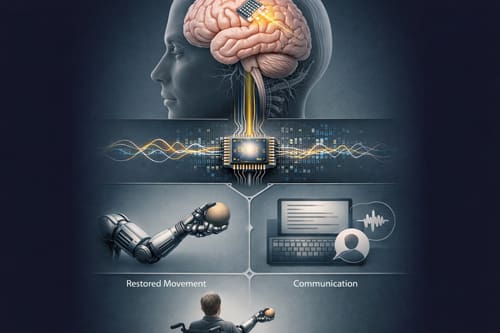
BCIs detect neural signals associated with intended movements or communication attempts. These signals are processed and translated into commands that control external devices such as computer cursors, robotic arms, or communication systems. The technology has progressed from laboratory demonstrations to clinical trials and, in some cases, FDA-approved treatments.
This paper examines BCI technology from a clinical perspective, focusing on applications for patients with locked-in syndrome and for movement restoration. The discussion includes current evidence, patient selection criteria, outcomes data, and future directions relevant to clinical practice.
Neural Signal Acquisition and Processing
Brain-computer interfaces rely on detecting and interpreting neural signals that correlate with intended actions. The brain generates these signals through coordinated activity of neurons in motor cortical areas. When a person intends to move, specific patterns of neural firing occur, even if the movement cannot be executed due to damage to downstream pathways.
Invasive BCI Systems
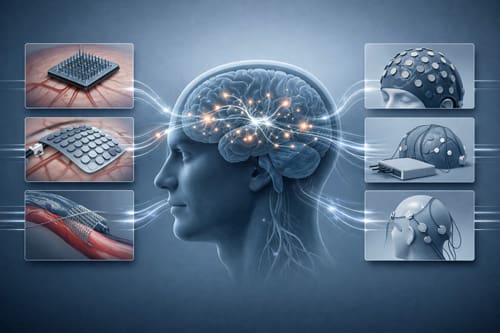
Invasive BCIs use electrodes placed directly on or within brain tissue to record neural activity. Microelectrode arrays inserted into the motor cortex can detect action potentials from individual neurons or small groups of neurons. These signals provide high spatial and temporal resolution but require surgical implantation.
The most common invasive approach uses microelectrode arrays containing 96 to 128 electrodes arranged in a grid pattern. Surgeons implant these arrays in the motor cortex areas that normally control arm and hand movements. The electrodes record neural activity at frequencies up to several thousand samples per second.
Electrocorticography (ECoG) represents another invasive approach. ECoG electrodes are placed on the brain surface rather than penetrating tissue. While ECoG provides lower spatial resolution than microelectrodes, it offers greater temporal stability and reduced risk of tissue damage.
Non-Invasive BCI Systems
Non-invasive BCIs record brain signals through the skull using techniques such as electroencephalography (EEG) or functional near-infrared spectroscopy (fNIRS). EEG detects electrical activity via scalp electrodes, while fNIRS measures changes in blood flow associated with neural activity.
EEG-based BCIs typically focus on specific frequency bands or event-related potentials that correlate with movement intentions. The P300 response, which occurs when a person attends to a specific stimulus, forms the basis for many communication BCIs. Sensorimotor rhythms in the 8-30 Hz range change when people imagine movements and can control cursor movement or device selection.
Non-invasive systems offer advantages in safety and ease of use but provide lower signal quality due to skull attenuation and interference from other neural activity. Signal processing algorithms must extract relevant information from noisier data compared to invasive recordings.
Signal Processing and Machine Learning
Raw neural signals require extensive processing to extract movement intentions or communication commands. Signal processing typically involves filtering to remove noise, feature extraction to identify relevant signal characteristics, and classification algorithms to translate features into device commands.
Machine learning plays a central role in BCI systems. Algorithms learn to recognize patterns in neural signals that correspond to specific intentions. Most systems use supervised learning, in which patients perform training tasks while the system records the associated neural patterns. The system then applies these learned patterns to decode intentions during actual use.
Modern BCIs employ various machine learning approaches, including linear discriminant analysis, support vector machines, and deep learning networks. Deep learning methods show particular promise for handling complex, high-dimensional neural data but require large training datasets.
Adaptive algorithms adjust to changes in neural signals over time. Signal quality may degrade due to electrode movement, tissue response, or changes in neural patterns. Adaptive systems can maintain performance by continuously updating their decoding models as they are used.
Clinical Applications in Locked-In Syndrome 

Locked-in syndrome affects approximately 1 in 1,000,000 people annually, most commonly resulting from brainstem strokes affecting the ventral pons. Patients retain consciousness and cognitive function but cannot move or speak due to disruption of corticospinal and corticobulbar pathways. Eye movements may be preserved, providing limited communication ability.
Traditional communication methods for locked-in patients rely on eye movements or blinks to spell words or select options. While functional, these methods are slow and require significant effort. BCIs offer the potential for more natural and efficient communication by directly accessing intended speech or typing commands.
Communication BCIs for Locked-In Patients
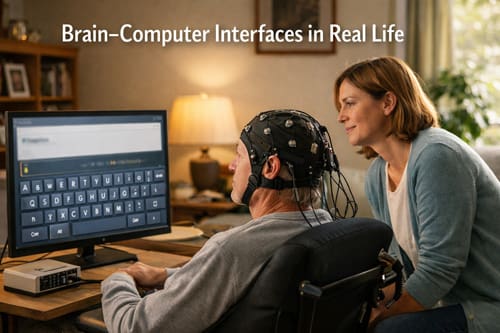
Several BCI approaches have shown success in locked-in syndrome. P300-based systems present arrays of letters or symbols that flash in sequence. When the desired letter flashes, it elicits a P300 response, which the BCI detects. Patients can spell words by selecting letters sequentially.
More recently, researchers have developed BCIs that decode intended speech directly from neural signals. These systems record from speech motor areas while patients attempt to speak or imagine speaking. Advanced signal processing and machine learning algorithms translate neural patterns into text or synthesized speech.
A landmark study published in 2021 demonstrated real-time decoding of attempted handwriting in a patient with tetraplegia. The participant imagined writing letters while researchers recorded neural signals from the motor cortex. The system achieved typing speeds of 40 characters per minute with 94% accuracy, substantially faster than existing BCI communication methods.
Clinical Outcomes and Patient Reports
Patients using communication BCIs report improvements in quality of life and sense of autonomy. The ability to communicate more efficiently reduces frustration and allows greater participation in medical decisions and social interactions. Family members also report benefits from improved communication ability.
However, current systems require significant setup time and technical support. Patients must complete training sessions to achieve optimal performance, and system calibration is needed for each use session. These requirements limit practical daily use for many patients.
Long-term studies of implanted BCI systems show mixed results regarding signal stability. Some patients maintain good performance for several years, while others experience gradual signal degradation. Factors affecting longevity include electrode design, implantation technique, and individual patient characteristics.
Movement Restoration Applications
BCIs for movement restoration aim to bypass damaged neural pathways by directly controlling external devices or stimulating preserved motor function. Applications range from cursor control for computer interaction to control of robotic limbs and functional electrical stimulation systems.
Cursor and Computer Control
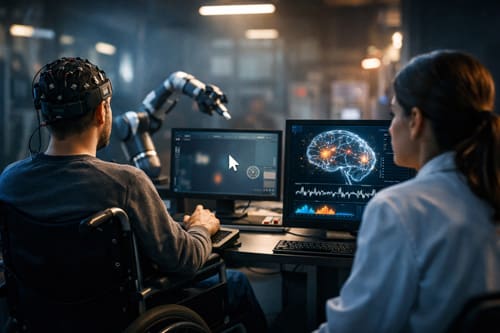
Computer cursor control represents one of the most successful BCI applications. Patients can navigate computer interfaces, browse the internet, and control smart home devices using intended arm movements decoded from neural signals. Multiple studies have demonstrated reliable cursor control in patients with spinal cord injuries and neurodegenerative diseases.
The BrainGate clinical trial has provided extensive data on cursor control performance. Participants achieved click accuracies exceeding 90% and cursor velocities approaching those of unimpaired individuals using joysticks. Performance improvements occurred with practice, and some participants maintained good control for several years.
Cursor control BCIs enable patients to operate communication devices, environmental controls, and entertainment systems independently. This capability can reduce dependence on caregivers and improve the quality of life for patients with severe motor impairments.
Robotic Arm Control
Controlling robotic arms via BCIs is a more complex application that requires coordinating multiple degrees of freedom. Early studies demonstrated basic reaching movements, while recent work has achieved dexterous manipulation tasks, including grasping and moving objects.
The complexity of natural arm movements poses challenges for BCI control. Normal reaching involves coordinated movement of the shoulder, elbow, wrist, and hand joints. BCI systems must decode intended movements for multiple joints simultaneously and translate these intentions into smooth, coordinated robotic movements.
Recent advances include shared-control approaches in which the BCI provides high-level commands while automated systems handle low-level control details. For example, a user might specify a target location while the robotic system automatically plans a trajectory and adjusts it to avoid obstacles.
Functional Electrical Stimulation
Functional electrical stimulation (FES) uses electrical pulses to directly activate paralyzed muscles. When combined with BCIs, FES systems can restore some natural movement by stimulating the patient’s own muscles based on decoded movement intentions.
BCI-FES systems have demonstrated restoration of reaching and grasping movements in patients with spinal cord injuries. Participants can pick up and manipulate objects using their own reanimated arms and hands. While movements are typically slower and less precise than normal, they provide functional benefit for daily activities.
The Cleveland FES Center has developed implantable FES systems that restore hand and arm function in patients with spinal cord injury. When combined with BCI control, these systems enable more intuitive operation based on movement intentions rather than manual switches or other control interfaces.
Patient Selection and Evaluation
Appropriate patient selection is critical for BCI success. Candidates must have preserved motor cortex areas that generate the neural signals required for BCI operation. Additionally, patients need sufficient cognitive function to learn to use a BCI and motivation to complete training requirements.
Neurological Criteria
Ideal BCI candidates have motor impairments due to spinal cord injury, brainstem stroke, or neurodegenerative diseases that spare motor cortical areas. Neuroimaging studies can assess motor cortex integrity and help predict BCI performance potential.
Patients with complete spinal cord injuries often retain good motor cortex function and can generate strong BCI signals when attempting movements. In contrast, cortical strokes may damage the areas needed for BCI operation, making these patients less suitable candidates.
The timing of BCI implantation relative to injury onset should be considered. Very early implantation may be complicated by brain swelling and ongoing pathological processes. However, waiting too long may allow motor cortical areas to atrophy from disuse, potentially reducing BCI performance.
Cognitive and Psychological Factors
BCI use requires sustained attention, working memory, and learning ability. Patients must understand training procedures and maintain motivation through potentially frustrating learning periods. Cognitive screening helps identify patients likely to succeed with BCI training.
Psychological factors also influence BCI outcomes. Patients with realistic expectations and strong motivation typically achieve better results than those expecting immediate restoration of normal function. Depression and anxiety can interfere with learning and system use.
Family support plays an important role in the success of BCI. Training and daily use often require assistance from caregivers, particularly during initial learning phases. Family commitment to supporting BCI use affects long-term outcomes.
Medical Considerations
Candidates must be medically stable and able to tolerate surgical procedures for invasive BCI systems. Anticoagulation therapy, bleeding disorders, and active infections represent contraindications to implantation.
Ongoing medical care requirements must be considered. Patients with progressive diseases may experience declining BCI performance over time. Regular follow-up visits are needed to maintain and optimize the system.
The risk-benefit ratio varies among patient populations. Young, healthy individuals with traumatic spinal cord injuries may accept higher risks for potential functional gains. Less invasive approaches may better serve older patients or those with multiple medical conditions.
Current Clinical Trials and Evidence
Multiple clinical trials are evaluating the safety and efficacy of BCI across different patient populations and applications. The FDA has approved several investigational device exemptions for BCI trials, and some systems have received breakthrough device designation to expedite development.
BrainGate Clinical Trial
The BrainGate trial represents the longest-running invasive BCI study. Since 2006, researchers have implanted microelectrode arrays in over 20 participants with spinal cord injuries, ALS, and brainstem strokes. The trial has demonstrated sustained BCI performance for up to 8 years in some participants.
Key findings from BrainGate include reliable cursor control, robotic arm operation, and communication applications. Participants achieved typing speeds up to 40 characters per minute and successfully controlled robotic arms to perform reaching and grasping tasks. The study has also provided valuable safety data on long-term implant outcomes.
Recent BrainGate publications have demonstrated wireless BCI operation, eliminating the need for percutaneous connectors that pose infection risks. Participants used wireless systems for extended periods without performance degradation compared to wired connections.
Stentrode Clinical Trial
The Stentrode system uses a different approach, placing electrodes within blood vessels adjacent to motor cortex areas. This method avoids opening the skull while still providing access to brain signals. Early clinical results show successful cursor control and typing applications.
The minimally invasive nature of Stentrode implantation may appeal to patients reluctant to undergo craniotomy. However, signal quality is lower than that of direct cortical recordings, potentially limiting applications to simpler control tasks.
Communication BCI Trials
Several trials focus specifically on communication applications for locked-in syndrome and ALS patients. These studies evaluate different approaches, including P300 systems, imagined speech decoding, and handwriting-based communication.
Results demonstrate that communication BCIs can achieve clinically meaningful improvements in communication speed and accuracy. However, setup requirements and technical complexity remain barriers to widespread clinical adoption.
Technology Comparison and Analysis
Different BCI approaches offer distinct advantages and limitations. The choice of technology depends on patient characteristics, intended applications, and acceptable risk levels.
| BCI Type | Signal Quality | Invasiveness | Stability | Applications |
| Microelectrode Arrays | Excellent | High | Variable | Precise motor control, communication |
| ECoG | Good | Moderate | Good | Motor control, communication |
| Stentrode | Moderate | Low | Good | Basic cursor control, communication |
| EEG | Poor | None | Poor | Limited control, communication |
Performance Comparisons
Invasive systems consistently outperform non-invasive approaches in terms of information transfer rates and control precision. Microelectrode arrays provide the highest performance but require the most invasive surgical procedures.
Non-invasive systems offer safety advantages but achieve lower performance levels. EEG-based BCIs typically achieve information transfer rates of 10-25 bits per minute compared to 100+ bits per minute for invasive systems.
The performance gap between invasive and non-invasive systems has narrowed over time due to improved signal processing algorithms. However, invasive systems retain advantages for applications that require precise, rapid control.
Safety Profiles
Surgical risks for BCI implantation include infection, bleeding, and seizures. Long-term risks include electrode degradation, tissue scarring, and device malfunction. Reported serious adverse event rates are generally low but require careful monitoring.
Non-invasive systems avoid surgical risks but may cause skin irritation or discomfort from electrode placement. Patient compliance may be better with non-invasive approaches due to ease of use.
The risk-benefit calculation depends on patient factors and intended use. Patients with limited life expectancy may prefer non-invasive approaches, while those expecting long-term use may accept surgical risks for better performance.
Challenges and Limitations
Despite progress in BCI technology, several challenges limit clinical adoption and patient outcomes. These limitations require ongoing research and development efforts.
Signal Stability and Longevity
Electrode performance typically degrades over time due to tissue reactions, device failure, or electrode movement. Signal quality may remain stable for months to years, but eventually requires system replacement or adjustment.
The foreign-body response to implanted electrodes can lead to scar tissue that can interfere with signal recording. Research into biocompatible materials and electrode coatings aims to minimize these reactions.
Individual variation in tissue response makes it difficult to predict long-term performance for specific patients. Some individuals maintain good signals for many years, while others experience rapid degradation.
Technical Complexity
Current BCI systems require significant technical expertise for operation and maintenance. Daily setup procedures, signal calibration, and troubleshooting limit practical use for many patients.
User interfaces need improvement to make systems more accessible to patients and caregivers. Simplified setup procedures and automated calibration could expand the patient population able to benefit from BCI technology.
Technical support requirements pose challenges for clinical implementation. Healthcare systems must develop expertise in BCI technology or rely on manufacturer support for patient care.
Cost and Accessibility
BCI systems involve substantial costs for devices, surgical procedures, and ongoing support. Insurance coverage is limited, making treatment inaccessible for many potential patients.
The specialized nature of BCI treatment limits availability to major medical centers with appropriate expertise. Rural patients may have difficulty accessing these services.
Cost-effectiveness analyses are needed to guide coverage decisions and resource allocation. The high costs of BCI systems must be weighed against potential benefits in quality of life and reduced care requirements.
Patient Expectations
Unrealistic expectations about BCI capabilities can lead to disappointment and discontinuation of treatment. Patients may expect immediate restoration of normal function rather than the limited capabilities current systems provide.
Media coverage sometimes exaggerates BCI achievements, creating false expectations. Healthcare providers must carefully counsel patients about realistic outcomes and limitations.
The learning curve for BCI use can be frustrating for patients expecting immediate results. Adequate preparation and support during training phases improve outcomes and satisfaction.
Future Directions and Emerging Technologies
BCI technology continues to evolve rapidly, with new approaches showing promise for overcoming current limitations. Future developments may expand applications and improve outcomes for broader patient populations.
Advanced Signal Processing
Advances in artificial intelligence and machine learning offer potential for improved signal decoding and system adaptation. Deep learning algorithms can identify complex patterns in neural data that traditional methods miss.
Real-time adaptation capabilities could maintain performance as electrode signals change over time. Systems that continuously learn and adjust may provide more stable long-term function.
Multi-modal approaches combining different types of neural signals may improve robustness and performance. Systems using both electrical and optical neural recording could provide redundancy and enhanced capabilities.
Bidirectional BCIs
Future systems may provide sensory feedback to users in addition to motor output. Stimulating sensory cortical areas could restore touch sensation, complementing motor control applications.
Bidirectional BCIs could create closed-loop systems where sensory feedback improves motor control performance. Users could feel objects they manipulated with robotic hands or receive feedback about the cursor’s position.
Early research in sensory stimulation shows promise for creating artificial touch sensations. Integration with motor BCIs could provide more natural and effective prosthetic control.
Wireless and Miniaturized Systems
Fully implantable wireless systems eliminate infection risks associated with percutaneous connectors. Recent demonstrations show wireless BCIs can achieve performance comparable to wired systems.
Miniaturization efforts aim to create systems small enough for outpatient implantation procedures. Reduced device size could expand patient acceptance and clinical adoption.
Wireless power transfer and data communication remove the need for transcutaneous connections. These systems could operate indefinitely without external access to implanted components.
Broader Clinical Applications
Research is expanding BCI applications beyond motor control to include treatment of depression, epilepsy, and cognitive disorders. These applications could reach much larger patient populations.
Restoring multiple functions with a single BCI system may provide greater patient benefit. Combined communication, motor control, and environmental control capabilities could significantly improve independence.
Preventive applications might use BCI technology to detect early signs of neurological conditions or monitor treatment responses. Early intervention based on BCI signals could improve long-term outcomes.
Clinical Implementation Considerations
Healthcare systems planning to offer BCI treatments must address multiple implementation challenges. Success requires coordinated efforts across multiple specialties and support services.
Multidisciplinary Team Requirements
BCI programs require teams including neurologists, neurosurgeons, rehabilitation specialists, biomedical engineers, and specialized technicians. Each discipline contributes essential expertise for patient evaluation, surgical procedures, and ongoing care.
Training programs must be developed to ensure team members understand BCI technology and patient care requirements. Regular education updates are needed as technology evolves.
Communication protocols among team members ensure coordinated care and optimal outcomes. Regular team meetings and standardized procedures help maintain quality and consistency.
Infrastructure Needs
BCI programs require specialized facilities, including operating rooms equipped for neural recording, signal-processing laboratories, and rehabilitation areas for training. Significant capital investment may be needed to establish these capabilities.
Information technology infrastructure must support data storage, analysis, and security requirements. Patient neural data requires secure handling and storage in compliance with privacy regulations.
Technical support capabilities are essential for system maintenance and troubleshooting. In-house expertise or vendor support agreements ensure patients receive timely assistance when problems occur.
Regulatory and Ethical Considerations
BCI treatments must comply with FDA regulations for investigational and approved devices. Institutional review boards must evaluate research protocols and patient safety measures.
Ethical considerations include informed consent processes, risk-benefit assessment, and equitable access to treatment. Patients must understand that current BCI technology is experimental.
Privacy and security of neural data raise unique ethical concerns. Policies must address data ownership, sharing, and protection while enabling research advancement.
Patient Education and Counseling
Effective patient education is crucial for BCI success. Patients must understand the limitations of technology, the training requirements, and realistic outcome expectations.
Pre-Implantation Counseling
Detailed discussions should cover surgical risks, expected outcomes, and alternative treatments to BCI. Patients need time to consider decisions and discuss options with family members.
Information about training requirements and time commitments helps patients prepare for the treatment process. Many patients underestimate the effort required to achieve functional BCI use.
Financial considerations, including insurance coverage, out-of-pocket costs, and ongoing expenses, should be addressed early in the decision process.
Training and Support
Structured training programs help patients learn to use BCI systematically. Regular practice sessions with feedback improve performance and build confidence.
Family member involvement in training ensures adequate support for home use. Caregivers often assist with system setup and troubleshooting.
Ongoing support through follow-up visits, telephone consultations, and technical assistance maintains long-term success and patient satisfaction.
Conclusion

Brain-computer interfaces represent a promising therapeutic approach for patients with severe motor impairments and communication disorders. Current technology can provide meaningful functional improvements for carefully selected patients, particularly those with spinal cord injuries, locked-in syndrome, and certain neurodegenerative conditions.
The evidence base for BCI efficacy continues to grow through ongoing clinical trials. Invasive systems demonstrate superior performance compared to non-invasive approaches but involve greater risks and complexity. Patient selection, training, and ongoing support are critical factors determining treatment success.
While current BCI systems provide valuable benefits for some patients, limitations in signal stability, technical complexity, and cost restrict widespread clinical adoption. Future developments in signal processing, device design, and surgical techniques may address these limitations and expand applications to broader patient populations.
Healthcare providers should stay informed about BCI developments as the technology transitions from research to clinical practice. Understanding current capabilities and limitations enables appropriate patient counseling and referrals when indicated.
The field requires continued collaboration between researchers, clinicians, industry partners, and regulatory agencies to advance BCI technology while ensuring patient safety and equitable access to treatment. Success in these efforts could provide life-changing benefits for patients with devastating neurological conditions.
Key Takeaways
Brain-computer interfaces offer direct connections between brain signals and external devices, bypassing damaged neural pathways. Current applications include communication aids for patients with locked-in syndrome and movement control for patients with spinal cord injury. Invasive systems provide better performance than non-invasive approaches but require surgical implantation. Patient selection should consider neurological status, cognitive function, and realistic expectations. Training and ongoing support are essential for successful BCI use. Technical complexity and cost currently limit widespread clinical adoption. Future developments may expand applications and improve outcomes for broader patient populations.
Frequently Asked Questions:
What patients are good candidates for brain-computer interfaces?
The best candidates have motor impairments due to spinal cord injuries, brainstem strokes, or ALS with preserved motor cortex function. Patients need adequate cognitive ability, motivation for training, and realistic expectations about outcomes. Complete spinal cord injury patients often achieve good results because their motor cortex remains intact.
How long do BCI implants last?
Implant longevity varies widely among patients. Some maintain good performance for 5-8 years while others experience signal degradation within months. Factors affecting longevity include electrode design, surgical technique, and individual tissue responses. Most patients eventually require electrode replacement or system updates.
Does insurance cover brain-computer interfaces?
Coverage is currently limited because most BCI systems remain investigational. Some clinical trials provide treatment at no cost to participants. As systems receive FDA approval, insurance coverage may expand. Patients should work with their healthcare teams to explore coverage options and financial assistance programs.
What are the risks of BCI surgery?
Surgical risks include infection (2-5% of cases), bleeding, seizures, and anesthetic complications. Long-term risks involve electrode degradation, tissue scarring, and device malfunction. Serious complications are uncommon, but patients must understand these risks when considering treatment.
How much training is required to use a BCI system?
Training requirements vary by system complexity and patient factors. Most patients need several weeks of training sessions lasting 1-2 hours each. Some achieve basic proficiency within days, while others require months of practice. Ongoing practice is usually needed to maintain optimal performance.
Can BCIs restore normal movement?
Current BCIs cannot restore normal movement quality or speed. Robotic arm control typically operates much more slowly than natural movement and requires conscious effort. FES systems may restore some natural movement, but with limited strength and coordination. Users must adjust expectations accordingly.
What is the difference between invasive and non-invasive BCIs?
Invasive systems use electrodes placed on or in the brain, providing high-quality signals but requiring surgery. Non-invasive systems use external sensors, such as EEG, avoiding surgery but at the expense of lower performance. The choice depends on patient risk tolerance and functional goals.
Do BCIs work for stroke patients?
BCI success in stroke patients depends on the location and extent of brain damage. Patients with brainstem strokes and intact motor cortex may be good candidates. Those with motor cortex damage are less likely to benefit. Careful neuroimaging evaluation helps determine candidacy.
References:
Aflalo, T., Kellis, S., Klaes, C., Lee, B., Shi, Y., Pejsa, K., … & Andersen, R. A. (2015). Decoding motor imagery from the posterior parietal cortex of a tetraplegic human. Science, 348(6237), 906-910.
Bouton, C. E., Shaikhouni, A., Annetta, N. V., Bockbrader, M. A., Friedenberg, D. A., Nielson, D. M., … & Rezai, A. R. (2016). Restoring cortical control of functional movement in a human with quadriplegia. Nature, 533(7602), 247-250.
Collinger, J. L., Wodlinger, B., Downey, J. E., Wang, W., Tyler-Kabara, E. C., Weber, D. J., … & Schwartz, A. B. (2013). High-performance neuroprosthetic control by an individual with tetraplegia. The Lancet, 381(9866), 557-564.
Hochberg, L. R., Bacher, D., Jarosiewicz, B., Masse, N. Y., Simeral, J. D., Vogel, J., … & Donoghue, J. P. (2012). Reach and grasp by people with tetraplegia using a neurally controlled robotic arm. Nature, 485(7398), 372-375.
Jarosiewicz, B., Sarma, A. A., Bacher, D., Masse, N. Y., Simeral, J. D., Sorice, B., … & Hochberg, L. R. (2013). Virtual typing by people with tetraplegia using a self-calibrating intracortical brain-computer interface. Science Translational Medicine, 5(208), 208ra147.
Moses, D. A., Metzger, S. L., Liu, J. R., Anumanchipalli, G. K., Makin, J. G., Sun, P. F., … & Chang, E. F. (2021). Neuroprosthesis for decoding speech in a paralyzed person with anarthria. New England Journal of Medicine, 385(3), 217-227.
Oxley, T. J., Opie, N. L., John, S. E., Rind, G. S., Ronayne, S. M., Wheeler, T. L., … & O’Brien, T. J. (2016). Minimally invasive endovascular stent-electrode recording array for high-fidelity, chronic neural recordings. Nature Biotechnology, 34(3), 320-327.
Pandarinath, C., Nuyujukian, P., Blabe, C. H., Sorice, B. L., Saab, J., Willett, F. R., … & Henderson, J. M. (2017). High performance communication by people with paralysis using an intracortical brain-computer interface. eLife, 6, e18554.
Simeral, J. D., Kim, S. P., Black, M. J., Donoghue, J. P., & Hochberg, L. R. (2011). Neural control of cursor trajectory and click by a human with tetraplegia 1000 days after implant of an intracortical microelectrode array. Journal of Neural Engineering, 8(2), 025027.
Willett, F. R., Avansino, D. T., Hochberg, L. R., Henderson, J. M., & Shenoy, K. V. (2021). High-performance brain-to-text communication via handwriting. Nature, 593(7858), 249-254.
Young, D., Willett, F., Memberg, W. D., Murphy, B., Rezai, A., Walter, B., … & Ajiboye, A. B. (2019). Closed-loop cortical control of virtual reach and posture using cartesian and joint velocity commands. Journal of Neural Engineering, 16(2), 026011.
Video Section
Check out our extensive video library (see channel for our latest videos)

Recent Articles