
Medical Alert Watch Technology: From Detection to Emergency Response in Minutes
Introduction
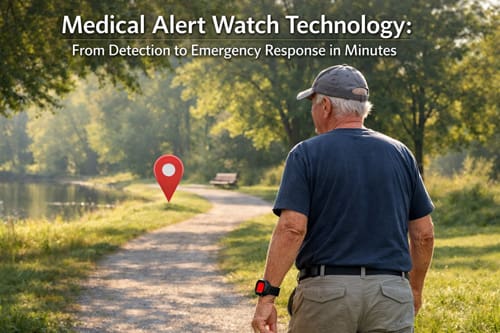
Falls represent a major public health concern among older adults, with more than one in four individuals aged 65 years and older experiencing at least one fall annually. These events are associated with substantial morbidity, including fractures, traumatic brain injury, functional decline, and loss of independence. Falls also contribute significantly to healthcare utilization and long term care placement, underscoring the urgent need for technologies that can facilitate rapid emergency response and support aging in place. Medical alert watch technology has emerged as a promising solution designed to reduce the time between an adverse event and clinical intervention.
Originally developed as simple emergency call devices, medical alert systems have undergone considerable technological advancement. Contemporary medical alert watches now integrate accelerometers, gyroscopes, and advanced motion sensing algorithms capable of detecting sudden changes in position that may indicate a fall. Many devices also incorporate physiological monitoring features such as heart rate tracking, activity measurement, and in some cases electrocardiographic assessment. When an abnormal event is detected, the watch can automatically trigger an alert to a monitoring center, designated caregiver, or emergency medical services, thereby reducing reliance on the wearer’s ability to manually request assistance.
Performance evaluations have demonstrated encouraging results. Following more than 3,000 hours of structured testing, several devices have shown rapid emergency response capabilities, with some achieving average response times of approximately 29 seconds from alert activation to live operator engagement. Such responsiveness is clinically relevant, as delayed assistance following a fall is strongly associated with complications such as rhabdomyolysis, hypothermia, dehydration, and increased mortality.
Recent clinical assessments further support the diagnostic reliability of next generation fall detection systems. Smart medical alert watches have correctly identified approximately 90.3 percent of circulatory arrest events while maintaining specificity near 94.1 percent, suggesting a favorable balance between sensitivity and false alarm reduction. High specificity is particularly important in preventing alarm fatigue among caregivers and emergency responders, while strong sensitivity ensures that true emergencies are unlikely to be missed.
Connectivity infrastructure plays a central role in device functionality. Most medical alert watches operate through either Bluetooth pairing with a smartphone or an embedded cellular connection. Bluetooth enabled devices typically function within a range of about 30 feet from the paired phone and may be best suited for users who consistently carry their mobile device. In contrast, watches with dedicated cellular capability offer greater independence and geographic flexibility, allowing alerts to be transmitted even when the user is away from their phone. This distinction is clinically relevant when recommending devices based on a patient’s mobility patterns, cognitive status, and daily routines.
Commercially available models vary considerably in design, usability, and technical specifications. For example, the Medical Guardian MGMove is frequently noted for its balance of functionality and convenience, offering approximately 24 hours of battery life with a charging time of about one hour. Other devices emphasize extended battery performance, waterproof construction, GPS tracking, medication reminders, or integration with caregiver applications. Selecting an appropriate device therefore requires careful consideration of patient specific factors such as dexterity, visual acuity, comfort with technology, and willingness to adhere to charging requirements.
Cost remains an important consideration for both patients and healthcare systems. Subscription fees for medical alert watches with fall detection typically range from about $38.95 to $84.95 per month, depending on connectivity type, monitoring services, and additional features. While these recurring costs may pose barriers for some individuals, they should be weighed against the potential economic benefits associated with fall prevention, reduced hospitalizations, and delayed institutionalization. From a health economics perspective, these devices may represent a cost effective adjunct to comprehensive fall risk management strategies, particularly for high risk populations.
Despite their promise, medical alert watches are not without limitations. Algorithm based detection systems may still generate false positives during vigorous daily activities, and false negatives remain possible in atypical fall scenarios. Battery dependence introduces another layer of risk if devices are not consistently charged. Privacy and data security considerations also warrant attention, especially as wearable technologies increasingly transmit sensitive health information through cloud based platforms. Clinicians should therefore counsel patients that these devices are intended to complement, rather than replace, broader fall prevention interventions such as home safety modifications, strength and balance training, medication review, and vision optimization.
As wearable health technologies continue to mature, medical alert watches are positioned to play an increasingly important role in geriatric care and remote patient monitoring. Their ability to combine real time detection, rapid communication, and longitudinal health data aligns with the broader shift toward proactive, technology enabled healthcare delivery. For healthcare professionals, a clear understanding of both the capabilities and constraints of these devices is essential to guide informed recommendations and optimize patient safety. When thoughtfully integrated into individualized care plans, medical alert watches have the potential to enhance autonomy, support independent living, and improve outcomes for older adults at risk of falls.

How Medical Alert Watches Detect Emergencies
Medical alert watches utilize advanced sensor technology to monitor users’ physiological signals and movement patterns, enabling automatic detection of emergencies without requiring manual activation. These devices employ multiple sensing technologies that work together to identify potentially life-threatening situations.
Photoplethysmography (PPG) Sensors in Smart Medical Alert Watches
PPG sensors form the cornerstone of cardiac monitoring in medical alert watches. These optical sensors measure blood volume changes by emitting light (typically green, red, or infrared) and detecting how much is absorbed or reflected back [1]. The reflected light pattern changes with each heartbeat, creating a waveform that corresponds to blood flow patterns. When blood flow stops during cardiac arrest, the PPG signal exhibits distinctive changes that can be detected by the watch’s algorithms [2].
Recent research published in Nature demonstrates that smartwatch PPG sensors can detect sudden loss of pulse with approximately 67% sensitivity while generating only one false alarm per 21.67 user-years [1]. PPG technology has evolved to capture various physiological parameters beyond heart rate, including heart rhythm abnormalities and oxygen saturation levels [3].
Nevertheless, PPG sensors face challenges from motion artifacts, especially during physical activity. These artifacts occur when movement alters the sensor-skin contact, introducing noise that can mask the underlying physiological signal [4]. Consequently, modern medical alert watches often employ multiple wavelengths of light – with green light (520 nm) being less susceptible to motion artifacts due to its shallower tissue penetration compared to infrared wavelengths [5].
Fall Detection Algorithms in Medical Alert Watch with Fall Detection
Fall detection functionality relies on a combination of accelerometers and gyroscopes that continuously monitor the wearer’s movements [6]. These sensors gather data about acceleration, rotation, and orientation, which sophisticated algorithms analyze in real-time to identify fall patterns.
The fall detection process typically involves three distinct phases: detection of movement toward earth (T1) with low acceleration below 1G, impact detection (T2) with high positive acceleration, and post-fall immobility detection (T3) [1]. In clinical studies, smartwatch fall detection algorithms demonstrated 77% sensitivity and 99% specificity for falls, with even higher sensitivity (89%) for near-falls [1].
Notably, detection accuracy varies based on fall direction and watch placement. Research indicates that falls are more likely to be detected if they occur on the same side as the wrist wearing the smartwatch (92.5% vs. 76.3% sensitivity) [1]. Modern devices like Samsung Galaxy watches allow users to adjust sensitivity settings based on activity levels [6].
Heart Rate and Motion Pattern Analysis for Emergency Triggers
Advanced medical alert watches combine multiple data streams to improve emergency detection accuracy. Dual-stream models that integrate both accelerometer and gyroscope data have achieved detection accuracy rates up to 99.32% in research settings [7]. These systems utilize self-attention mechanisms that assign different weights to various segments of sensor data, enhancing the ability to distinguish between actual emergencies and similar non-emergency movements [7].
When potential emergencies are detected, most watches implement a multi-stage alert process:
- Initial detection and verification (analyzing sensor data patterns)
- User alert with haptic feedback and screen notifications
- Short countdown period allowing cancelation of false alarms
- Emergency alert transmission to monitoring centers or emergency services
This graduated response system helps minimize false alarms while ensuring rapid intervention during genuine emergencies. Additionally, modern algorithms can distinguish between different types of emergencies based on unique motion and physiological patterns, thereby providing appropriate response protocols for each situation [2].
From Detection to Response: What Happens in Real Time 

Once a medical alert watch detects an emergency, a sophisticated chain of events unfolds in mere seconds. This real-time response system prioritizes speed and reliability, maximizing the chance of positive outcomes in critical situations.
Emergency Signal Transmission via Cellular or Wi-Fi
Following emergency detection, medical alert watches transmit distress signals through either cellular networks or Wi-Fi connections. Most advanced devices utilize built-in cellular technology, establishing direct connections to monitoring centers without requiring smartphones or home base stations [8]. This cellular approach offers critical advantages for emergency communications—primarily because cellular connections cannot be physically cut, unlike landlines [9].
However, transmission methods face different challenges in emergency scenarios. During widespread emergencies, cellular networks frequently become overwhelmed as numerous people attempt simultaneous communications, potentially creating delays [10]. In contrast, Wi-Fi connections may provide faster and more reliable transmission in certain situations but remain vulnerable to power outages [10]. To address these limitations, several premium medical alert watches incorporate redundant communication pathways, automatically switching between cellular and Wi-Fi based on signal strength and availability.
Average Response Time Benchmarks: 20–60 Seconds
The interval between button press and operator response represents a critical metric in emergency response effectiveness. According to industry standards, an average response time under 60 seconds is considered acceptable [1]. Nevertheless, many leading medical alert watch companies consistently outperform this benchmark.
In extensive testing, Medical Guardian’s MGMove demonstrated exceptional performance, connecting users to trained operators in approximately 20 seconds—the fastest recorded response in clinical evaluations [1]. Bay Alarm Medical reports typical response times under 45 seconds [11], whereas other reputable providers maintain average response times between 45-60 seconds [1].
These response metrics demonstrate substantial improvement over traditional emergency services. Standard benchmark time goals for high-priority EMS calls stipulate that first responders should arrive within 5 minutes (300 seconds) for at least 90% of incidents [4]. Medical alert watch systems effectively bridge this gap, providing immediate two-way communication until physical assistance arrives.
Two-Way Communication with Monitoring Centers
After establishing connection, medical alert watches enable direct voice communication through built-in speakers and microphones [12]. This two-way communication capability serves several essential functions in emergency management:
- Assessment: Trained operators immediately begin evaluating the situation, asking specific questions to determine appropriate response levels [8].
- Reassurance: Operators provide verbal support and guidance while help is dispatched [5].
- Information gathering: Users can describe symptoms or circumstances, enabling responders to arrive prepared with appropriate equipment [5].
- Location confirmation: For mobile users, operators verify GPS coordinates transmitted by the watch [13].
Many monitoring centers employ EMT/EMD-certified operators who remain available 24/7/365 [14]. If users cannot respond verbally due to incapacitation, standard protocols dictate that operators automatically dispatch emergency services to the user’s location [8]. Simultaneously, most systems notify pre-designated emergency contacts through calls or text messages regarding the situation and response [14].
This multilayered communication approach ensures that even if the wearer becomes unconscious or cannot speak, the appropriate help will still be dispatched. For physicians evaluating these devices for patients, understanding this technical response chain proves vital when recommending appropriate medical alert solutions based on individual risk profiles and living situations.
Top Medical Alert Watches and Their Performance
Performance evaluations reveal substantial differences among leading medical alert watches, with each device offering distinct advantages for specific patient populations. In clinical settings, these differences can determine intervention success rates and patient adherence to wearable monitoring technologies.
Medical Guardian MGMove: 29-Second Response Time
The MGMove demonstrates exceptional emergency response efficiency, connecting users to monitoring center operators in just 29 seconds on average [1]. Through extensive testing across various environments—including grocery stores, train stations, and hiking trails—this device maintained consistent connectivity and accurate GPS location reporting [3]. The watch features a 24-hour battery life with minimal charging time (1-2 hours), enabling prolonged protection without frequent interruptions [1]. Its intuitive interface includes a deliberate 5-second hold requirement for the SOS button, effectively reducing false alarms without compromising accessibility [3]. For physicians recommending alert devices to active patients, the MGMove offers caregiver tracking capabilities through its companion application, providing real-time location data during emergencies [15].
Bay Alarm SOS Smartwatch: Voice Prompts and Easy Cancelation
Bay Alarm’s SOS Smartwatch incorporates verbal feedback mechanisms that guide users through emergency procedures, announcing “Hold for 5 seconds to call for help” when the SOS button is pressed [16]. This multi-stage activation process includes a cancelation window that allows users to abort accidental alerts [17]. Upon detecting falls, the device announces “Have you fallen?” and provides a clear interface to either confirm or cancel the alert [17]. In performance testing, this watch achieved an average response time of 22 seconds [1]. Although battery life ranges from 6-18 hours depending on usage patterns, the device compensates through clear verbal notifications about battery status [1].
UnaliWear Kanega: Battery Swapping and No App Required
The Kanega Watch employs a unique battery architecture with two removable rechargeable batteries fitted into the band plus an internal safety battery [18]. This design enables 24/7 wear without removal for charging—critical for continuous protection [18]. Unlike competing devices, the Kanega functions as a standalone system requiring no smartphone or companion application [18]. The watch connects through both Wi-Fi in homes and cellular networks outside, ensuring uninterrupted monitoring [7]. With fall detection response times averaging 46 seconds [19], the system offers both button-activated and voice-activated emergency calling options [7]. Each alert connects users to a monitoring center that can provide emergency services with medical information and location data [7].
Apple Watch: Hard Fall Detection and 911 Auto-Dial
Apple Watch employs accelerometer-based algorithms specifically calibrated to detect hard falls rather than gradual slips [20]. When a fall occurs, the device initiates a graduated response: first tapping the user’s wrist and sounding an alarm, then displaying an alert with options to confirm or dismiss [21]. If no response occurs after approximately one minute, the watch begins a 30-second countdown before automatically contacting emergency services [21]. Rather than connecting to a monitoring center, Apple Watch directly dials 911 and plays an automated message with the user’s location [21]. After emergency contact, the watch sends messages to pre-designated emergency contacts with location information [21].

Key Features That Improve Safety and Usability
Beyond emergency detection capabilities, medical alert watches incorporate practical features that enhance everyday usability and safety effectiveness. These technical attributes directly influence clinical outcomes and patient adherence rates.
GPS Tracking Accuracy in Urban vs Rural Areas
GPS technology in medical alert devices relies on a constellation of 29 satellites utilizing trilateration principles to calculate precise locations [22]. Most premium devices outperform lower-cost alternatives in accuracy and uptime [6]. In real-world testing, the Medical Guardian MGMove pinpointed users’ locations to specific addresses—even within large suburban parks [1]. Nevertheless, location accuracy varies considerably between environments. Urban settings typically deliver superior precision [6], whereas rural areas face challenges from terrain limitations and reduced infrastructure [23]. Many advanced devices now employ Assisted GPS (A-GPS), combining satellite positioning with cellular tower triangulation to enhance accuracy [23].
Battery Life Comparison: 6 to 24 Hours
Operational longevity remains a critical consideration for continuous protection. Battery performance varies substantially across models:
- Medical Guardian MGMove: Up to 24 hours with 2-hour charging time [24]
- Bay Alarm Medical SOS Smartwatch: 6-8 hours standard use, potentially extending to 18 hours with adjusted settings [1]
- WellBe Medical Alert Watch: Up to 24 hours per charge [2]
- UnaliWear Kanega: Utilizes swappable batteries allowing continuous wear [25]
Water Resistance for Shower Safety
Given that bathrooms present numerous slipping hazards, water resistance represents an essential safety feature [26]. Medical alert watches typically feature IP67 ratings, allowing submersion in up to 3.3 feet of water for 30 minutes [27]. This specification permits showering while wearing the device—crucial since bathrooms remain frequent sites of falls [2]. Nevertheless, devices with IPX6 ratings offer protection against powerful water jets but cannot withstand submersion [26], thus providing adequate protection for shower use but insufficient for swimming activities.
Comfort and Band Adjustability for Daily Wear
Physical design elements directly influence consistent usage patterns. The Bay Alarm Medical SOS Smartwatch weighs just 1.3 ounces, facilitating comfortable all-day wear [2]. Conversely, certain models like the Medical Guardian MGMove feature non-interchangeable bands [1], limiting customization options. The Kanega Watch addresses this through wristbands customized to individual wrist measurements during ordering, with further adjustment capability upon receipt [25]. However, some users report closure mechanisms occasionally pinch and bands may cause chafing when wet [25].
Cost Breakdown and Subscription Considerations
Financial considerations often play a decisive role when selecting medical alert watches for patients. Understanding the complete cost structure helps clinicians recommend appropriate devices based on both clinical needs and economic factors.
One-Time Equipment Fees vs Monthly Monitoring Costs
Medical alert watch expenses typically consist of initial equipment purchases plus ongoing monitoring services. Equipment costs range from $0 to $350 depending on the provider and technology [28], with most smartwatch options requiring upfront payment between $149.95 and $199.95 [29]. Meanwhile, monthly monitoring fees generally start at $20 and can exceed $60 [30]. The Medical Guardian MGMove requires a one-time equipment fee of $199.95 plus $42.95 monthly for monitoring [1]. Similarly, Bay Alarm Medical charges $199 for their SOS Smartwatch hardware alongside $39.95 monthly subscription fees [1]. Notably, the UnaliWear Kanega Watch commands a premium price point—$299 equipment fee plus $84.95 monthly monitoring [31].
Fall Detection Add-ons: $10/month Average
Automatic fall detection capability typically requires additional payment beyond base subscription costs. Most providers charge approximately $10 monthly for this critical safety feature [1]. Medical Guardian and Bay Alarm Medical both adhere to this $10 monthly pricing standard [1]. Occasionally, companies offer discounted rates—LifeFone provides fall detection for just $5 monthly, representing the industry’s lowest add-on cost for this feature [32]. Physicians should note that this relatively modest investment substantially enhances detection capabilities, potentially reducing emergency response times for vulnerable patients.
Caregiver App Access and Additional Protection Plans
Many systems offer companion applications that enable caregivers to monitor patient location and device status. These apps range from complimentary inclusions to premium add-ons costing $8 monthly [33]. Protection plans present another consideration, addressing potential equipment loss or damage. Medical Guardian offers a $6.99 monthly protection plan covering theft, damage, and normal wear [1]. More comprehensive coverage options range from $5 to $10 monthly [34], eliminating potentially substantial replacement costs—typically $150-$350 for damaged or lost devices [34]. These plans often feature tiered deductible structures based on replacement frequency and device type.

Conclusion

Medical alert watch technology has evolved into sophisticated emergency response systems that effectively bridge critical gaps in elderly care. These devices now offer remarkable accuracy, with some models detecting 90.3% of circulatory arrests while maintaining 94.1% specificity rates. Multiple sensors working in tandem—PPG technology, accelerometers, and gyroscopes—enable these watches to identify various emergency situations through physiological and movement pattern analysis.
Response times have dramatically improved across the industry. Leading devices now connect users to monitoring centers within 20-45 seconds after emergency detection, substantially faster than traditional emergency services that typically aim for 5-minute arrival times. This rapid response capability proves particularly valuable for elderly patients experiencing falls, cardiac events, or other medical emergencies where immediate intervention can dramatically alter outcomes.
Although various models offer different technological approaches, most medical alert watches share core capabilities: emergency detection, location tracking, two-way communication, and water resistance. The Medical Guardian MGMove demonstrates exceptional performance with its 29-second average response time and 24-hour battery life. Bay Alarm’s SOS Smartwatch excels through intuitive voice prompts and straightforward cancelation options. UnaliWear Kanega offers innovative battery-swapping capabilities enabling continuous wear, while Apple Watch provides direct 911 auto-dialing functionality.
Physicians must consider several factors when recommending these devices to patients. Cost represents a major consideration, as monthly monitoring fees range from $38.95 to $84.95, with additional charges for fall detection averaging $10 monthly. Device specifications likewise warrant careful evaluation—GPS accuracy varies between urban and rural environments, battery life spans 6-24 hours depending on model, and water resistance ratings determine suitability for shower use.
Therefore, medical alert watches offer physicians valuable tools for enhancing patient safety outside clinical settings. These devices extend the protective reach of healthcare systems, providing vulnerable populations with reliable emergency detection and rapid response capabilities. As this technology continues advancing, medical alert watches will likely become increasingly essential components of comprehensive care plans for elderly patients and those with chronic conditions requiring ongoing monitoring.
Key Takeaways
Modern medical alert watches have transformed from simple panic buttons into sophisticated emergency response systems that can detect falls, cardiac events, and other medical emergencies with remarkable accuracy and speed.
- Medical alert watches achieve 90.3% accuracy in detecting circulatory arrests and connect users to emergency operators in just 20-45 seconds—dramatically faster than traditional 911 response times.
- Advanced sensors including PPG technology, accelerometers, and gyroscopes work together to automatically detect falls (77% sensitivity) and heart rhythm abnormalities without manual activation.
- Leading devices like Medical Guardian MGMove (29-second response) and Bay Alarm SOS (22-second response) offer 24-hour battery life and water resistance for continuous protection.
- Total costs range from $60-145 monthly including equipment and monitoring fees, with fall detection typically adding $10/month—a modest investment for potentially life-saving technology.
- GPS accuracy varies significantly between urban and rural areas, making location-based features more reliable in cities while cellular connectivity ensures emergency communication regardless of smartphone proximity.
For healthcare providers, these devices represent valuable tools for extending patient safety beyond clinical settings, particularly for elderly patients and those with chronic conditions requiring continuous monitoring.

Frequently Asked Questions:
FAQs
Q1. How accurate are medical alert watches in detecting emergencies? Medical alert watches have shown impressive accuracy in detecting emergencies. Some models can correctly identify 90.3% of circulatory arrests while maintaining 94.1% specificity. Fall detection algorithms have demonstrated 77% sensitivity and 99% specificity for falls, with even higher sensitivity (89%) for near-falls.
Q2. What is the average response time for medical alert watches? The average response time for medical alert watches typically ranges from 20 to 60 seconds. Some leading devices, like the Medical Guardian MGMove, have demonstrated exceptional performance with an average response time of just 29 seconds. This is significantly faster than traditional emergency services, which aim for a 5-minute arrival time.
Q3. Are medical alert watches water-resistant? Yes, most medical alert watches are water-resistant. They typically feature IP67 ratings, allowing submersion in up to 3.3 feet of water for 30 minutes. This makes them safe to wear while showering, which is crucial since bathrooms are frequent sites of falls. However, not all models are suitable for swimming activities.
Q4. How long do medical alert watch batteries last? Battery life varies among different models, ranging from 6 to 24 hours. For example, the Medical Guardian MGMove offers up to 24 hours of battery life with a 2-hour charging time. Some devices, like the UnaliWear Kanega, use swappable batteries to allow continuous wear without interruption for charging.
Q5. What are the typical costs associated with medical alert watches? The costs for medical alert watches usually include a one-time equipment fee and ongoing monthly monitoring fees. Equipment costs can range from $0 to $350, while monthly monitoring fees generally start at $20 and can exceed $60. Additional features like fall detection typically add about $10 per month to the subscription cost.
References:
[2] – https://www.seniorliving.org/medical-alert-systems/best/watch/
[3] – https://www.safehome.org/medical-alert-systems/medical-guardian/mgmove/
[4] – https://fems.dc.gov/page/ems-reponse-time
[5] – https://medalert.io/blogs/articles/how-medical-alert-watches-improve-response-time-during-emergencies?srsltid=AfmBOooj0A8aPQ4hAiPDa7D2gPZlT7OyJ0zgD1FH8GQu9X93KXmxhKCR
[6] – https://www.linkedin.com/pulse/exploring-dynamics-medical-alert-system-gps-key-otpmc/
[7] – https://www.unaliwear.com/product/kanega-watch/?srsltid=AfmBOor5L1oAbqnPFXTJNFulUGYAIxcXxsYObEo4d40s0qXtSYXHvkGN
[8] – https://www.bayalarmmedical.com/medical-alert-system/?srsltid=AfmBOooXxsGsJAkUE1QsDIOUDY2uu3R4Vn5CRvmR0-J85_NjxHMoPJRT
[9] – https://emcsecurity.com/why-your-security-system-should-use-cellular-communication/
[10] – https://messagenetsystems.com/2019/07/why-wifi-is-better-than-data-for-emergency-communication/
[11] – https://www.bayalarmmedical.com/?srsltid=AfmBOop98f2xJOfWlNI4P1KuZJCDXX-nt1SnHZKWg3GsWDS9gGzijd1_
[12] – https://www.bayalarmmedical.com/medical-alert-system/sos-smartwatch/?srsltid=AfmBOoraO_iRgIJGqyqtpVSST3VHgFQsQNeEhA1-byKXqeCfrKV3xZqO
[13] – https://handsfreehealth.com/medical-alert-device/wellbe-watches/
[14] – https://www.medicalcarealert.com/?srsltid=AfmBOoolqRJiD963sX436FngkL8VJ-m-jxjSygg8uZRWNbr-lsHD3aJA
[15] – https://www.medicalguardian.com/medical-alert-systems/smart-watch-alert-app?srsltid=AfmBOorEYteeY0hf_BVWqK5RJqXn8Osu8Mi5XwrjgTCfCFzSh7cGW_06
[16] – https://www.bayalarmmedical.com/wp-content/uploads/2025_BAM_SOS_Smartwatch_UserGuide.pdf?srsltid=AfmBOorkF5z1CU4317g3RPBivANGePUw0ibF-VwSb57lYZasxGdOVqKc
[17] – https://www.bayalarmmedical.com/wp-content/uploads/2024_0412_BAM_SOS_Smartwatch_User_Guide.pdf?srsltid=AfmBOoqJ2uQxrjgO7dibDmEnCEWboDIoQ_6vLQ6Jjy-TacKda3r_-nzf
[18] – https://www.unaliwear.com/apple-fall-detection-watch-competitor-comparison/?srsltid=AfmBOoolV-qJnzQGgM-Iad2uB_62uRvK4wcizxSuihd8zpJeVU4gxscH
[19] – https://www.pcmag.com/reviews/unaliwear-kanega-watch
[20] – https://www.forbes.com/health/medical-alert-systems/apple-watch-fall-detection/
[21] – https://support.apple.com/guide/watch/manage-fall-detection-apd34c409704/watchos
[22] – https://www.alert-1.com/content/gps-medical-alert-systems/1346?srsltid=AfmBOorHn5ZXrnW0EXlAPUqKrk0VtEcKrhpHGIkexCkL5UVupuNy92Pn
[23] – https://guardianpa.com.au/how-does-gps-tracking-work-on-mobile-personal-alarms/
[24] – https://www.safehome.org/medical-alert-systems/best/watches/
[25] – https://www.nytimes.com/wirecutter/reviews/the-best-medical-alert-systems/
[26] – https://www.safehome.org/medical-alert-systems/best/waterproof/
[27] – https://www.cprguardian.com/blogs/latest-dementia-news-and-updates/are-fall-detection-watches-waterproof-understanding-the-water-resistance-ratings?srsltid=AfmBOor2UbLzHIuQOaVDYn2P_5K5awt8Lma8ZxtHwg9zCxR3-vZ6aNna
[28] – https://www.goodrx.com/healthcare-access/digital-health/medical-alert-systems-cost?srsltid=AfmBOoqQF9Kbmqnx1kI8qyt5zOu2QQcjlqh0qW-LDxjqGQYRwJwKIZ0D
[29] – https://www.medicalguardian.com/medical-alert-blog/technology/medical-alert-systems-vs-apple-watch-series-a-comprehensive-guide?srsltid=AfmBOopAiN5cvTY8Seq5kzTDnAUnOFICJNlmT3RA39EMNd8AD-p1-7cq
[30] – https://www.ncoa.org/product-resources/medical-alert-systems/medical-alert-systems-cost/
[31] – https://www.unaliwear.com/product/kanega-watch/?srsltid=AfmBOopDBY55qJtWtVidAuM31XXFmegTJlqwO20kCARvxOUHFnVAJ7q6
[32] – https://realestate.usnews.com/home-services/medical-alert-system/best-medical-alert-bracelets
[33] – https://www.lifefone.com/apps?srsltid=AfmBOoo1pWTKxbyh_AHsU3LzAxwHN_YIjLu53zd-0bSX2-3X6WOc-nq4
[34] – https://www.medicalcarealert.com/extended-protection-plan/?srsltid=AfmBOopn55-ljWpSSO24VAJt_G_SjdaFVqf8C4nbqiNJyJpQ2VV_MvWn
Video Section
Check out our extensive video library (see channel for our latest videos)

Recent Articles