
Factor 11a Inhibitors vs DOACs: The New Standard in Anticoagulation Therapy?
Introduction
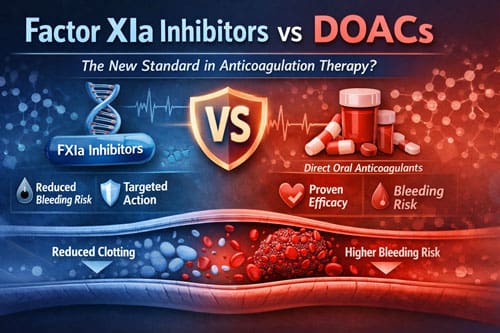
Venous thromboembolism (VTE) affects nearly 900,000 people annually in the United States, with an estimated 60,000-100,000 individuals dying from related complications. Factor 11a inhibitors represent a promising new frontier in anticoagulation therapy, potentially addressing the limitations of direct oral anticoagulants (DOACs) while offering an improved safety profile.
Atrial fibrillation (AF), the most common sustained cardiac arrhythmia, has seen its global prevalence rise dramatically from 33.5 million in 2010 to over 59 million in 2019. Currently, approximately 10.5 million US adults and more than 50 million people worldwide live with AF, a condition that substantially elevates the risk of stroke and systemic embolism. Factor XI inhibitors and factor XIa inhibitors have emerged as compelling alternatives to traditional anticoagulants. This interest stems from a fundamental observation: reduced levels of factor XI protect against thrombosis without markedly increasing the risk of spontaneous bleeding. Indeed, factor XI or XIa inhibition has garnered attention due to protection against thrombotic events and a minimal bleeding tendency observed in factor XI-deficient individuals.
Recent phase II trials have yielded encouraging outcomes for factor 11a inhibitors, indicating a reduced bleeding risk compared to traditional anticoagulants. However, the variability in findings and limited efficacy data necessitate cautious interpretation until insights from phase III trials are available. Although one meta-analysis revealed that factor XIa inhibitors demonstrated superior safety regarding bleeding complications compared to DOACs, it also indicated a higher risk of stroke or systemic embolism. This duality underscores the complexity of establishing a new standard in anticoagulation therapy.
This article examines the current limitations of DOACs, explores the physiological rationale behind factor XIa inhibition, evaluates available clinical evidence, and discusses the potential future role of factor 11a inhibitors in anticoagulation management across various patient populations.
Current Limitations of DOACs in Anticoagulation
Despite the widespread adoption of direct oral anticoagulants (DOACs) in clinical practice, several limitations continue to challenge their use in diverse patient populations. These constraints have stimulated interest in alternative anticoagulation strategies, including factor 11a inhibitors.
Bleeding Risk in Gastrointestinal and Intracranial Sites
DOACs present a complex profile regarding bleeding risk at critical anatomical sites. Gastrointestinal bleeding (GIB) remains a substantial concern, with estimated rates of 0.4% to 0.7% per year [1]. The mechanisms through which DOACs contribute to GI bleeding vary—direct factor Xa inhibitors may exert topical effects on GI tissues due to incomplete absorption, whereas the prodrug dabigatran (with only 6% oral bioavailability) can undergo intraluminal activation during passage through the GI tract [2].
Clinical trials have demonstrated variable bleeding risks among different DOACs. In the RE-LY trial, higher doses of dabigatran (150 mg twice daily) showed an increased risk of bleeding compared to warfarin (1.51% versus 1.02% per year) [3]. Similarly, the ROCKET-AF trial showed significantly higher rates of major GI bleeding with rivaroxaban 20 mg compared with warfarin (2.00% versus 1.24% per year) [3]. Edoxaban 60 mg once daily in the ENGAGE AF-TIMI 48 trial also increased the risk of GI bleeding compared with warfarin [3]. Notably, apixaban appears to be the only DOAC to demonstrate a major GI bleeding rate comparable to that of warfarin in the ARISTOTLE trial (0.76% versus 0.86% per year) [3].
Intracranial hemorrhage (ICH), though less frequent, carries a graver prognosis. Patients receiving oral anticoagulants face a seven-fold to ten-fold higher risk of ICH compared to the general population, with mortality rates ranging from 40% to 65% within 30-90 days [2]. Despite this risk, DOACs generally demonstrate lower ICH rates than vitamin K antagonists, which constitutes one of their primary advantages [4].
Monitoring Challenges with Warfarin and Heparin
Traditional anticoagulants present significant monitoring burdens that DOACs were designed to overcome. Nevertheless, monitoring limitations persist across the anticoagulant spectrum.
Warfarin requires continuous International Normalized Ratio (INR) monitoring with a narrow therapeutic target range, typically 2-3 for most indications [5]. This necessity stems from warfarin’s unpredictable dose-response relationship and numerous food-drug interactions, creating a substantial burden for patients and healthcare systems.
Similarly, unfractionated heparin demands frequent activated partial thromboplastin time (aPTT) monitoring due to its dose-response variability [5]. Among patients receiving unfractionated heparin, 54% experience at least one prolonged infusion interruption, and 23% have 2 or more interruptions—leading to erratic anticoagulation control [5].
For DOACs, the paradigm of “no monitoring required” creates a different challenge—difficulty in assessing drug levels during emergencies. Without readily available, validated assays for DOAC levels in most clinical laboratories, clinicians face uncertainty when managing bleeding complications or preparing patients for urgent procedures [5].
Drug–Drug Interactions and Reversal Agent Gaps
Drug interactions represent a substantial challenge for DOAC therapy. Most DOAC interactions involve medications mediated by the cytochrome P450 enzyme (CYP450) and/or the transporter permeability glycoprotein (P-gp) [6]. Since many patients taking DOACs concurrently use more than five other medications, the likelihood of clinically relevant drug-drug interactions increases significantly [6].
Specific interactions require careful consideration. Amiodarone can elevate levels of dabigatran and rivaroxaban, particularly in patients with reduced renal function [6]. Dronedarone significantly increases dabigatran levels, especially in those with moderate-severe renal dysfunction, necessitating dosage adjustments [6]. Furthermore, diltiazem and verapamil can markedly elevate dabigatran drug levels, requiring avoidance in patients with moderate-severe renal dysfunction [6].
Additionally, the limited availability of specific reversal agents presents a critical gap in DOAC therapy. Currently, only two FDA-approved specific reversal agents exist: idarucizumab for dabigatran and andexanet alfa for factor Xa inhibitors [7]. In their absence, clinicians must rely on nonspecific hemostatic agents, such as prothrombin complex concentrate (PCC), which may carry thrombotic risks [2]. This reversal agent gap becomes particularly concerning in patients requiring urgent procedures or experiencing major bleeding events [2].
These limitations highlight the need for anticoagulants with improved safety profiles, such as factor 11a inhibitors, which may address these shortcomings through their unique mechanism of action.
Why Factor XIa Inhibitors Are a Promising Alternative 

Clinical observations in individuals with factor XI (FXI) deficiency provide compelling evidence for targeting this pathway in anticoagulation therapy. Unlike other coagulation factor deficiencies, FXI inhibition offers a unique opportunity to prevent thrombosis without substantially compromising normal hemostatic function.
FXI Deficiency and Low Bleeding Phenotype
Hemophilia C, the congenital deficiency of FXI (factor 11a), presents a distinct clinical picture that differs fundamentally from other bleeding disorders. Rather than experiencing spontaneous hemorrhages, affected individuals typically demonstrate bleeding only after trauma or surgery, primarily in tissues with high fibrinolytic activity [8]. This pattern suggests that FXI plays a role in consolidating clots rather than initiating hemostasis [4].
The prevalence of FXI deficiency varies across populations, reaching approximately 8% among Ashkenazi Jews [9]. Consequently, this makes it one of the most common genetic disorders within this population. Intriguingly, even patients with severe FXI deficiency rarely experience unprovoked bleeding episodes [10].
Most remarkably, individuals with FXI deficiency seldom suffer life-threatening hemorrhages in critical locations. Spontaneous intracranial, joint, muscle, or serious gastrointestinal bleeding—hallmarks of other coagulation disorders—remain extremely rare [4]. Instead, bleeding typically affects the oral cavity, nasal passages, and urogenital tract following injury [8]. This limited bleeding phenotype stands in stark contrast to deficiencies in other coagulation factors, offering a biological blueprint for safer anticoagulation.
Role of FXI in Thrombosis vs Hemostasis
The coagulation cascade involves intricate pathways that serve distinct physiological purposes. FXI functions at a critical junction between pathological thrombosis and normal hemostasis. In most arterial and venous thrombotic events, FXI is activated by thrombin produced through the tissue factor pathway [4]. Subsequently, FXI functionally operates as a bidirectional intersection between thrombin generation and contact activation of coagulation.
In pathological thrombosis, FXI mediates the amplification phase necessary for thrombus growth within vessels [4]. Conversely, in normal hemostasis, excessive tissue factor (as with significant vessel wall injury) leads to thrombin generation without substantial involvement of the contact pathway [11]. This distinction explains why FXI deficiency primarily affects specific tissues rather than causing systemic bleeding tendencies.
Epidemiological evidence consistently demonstrates that individuals with FXI deficiency experience approximately 50% reduced odds of arterial thromboembolic events and nearly 75% reduced odds of venous thromboembolism compared to those with normal FXI activity [11]. Furthermore, thrombotic events increase substantially in the presence of elevated FXI levels [4], confirming its role in pathological clot formation.
Potential to Decouple Efficacy from Bleeding
The unique properties of FXI make it an ideal target for “uncoupling” antithrombotic efficacy from bleeding risk. Animal studies demonstrate this principle convincingly—FXI-deficient mice show relatively short bleeding times following tail tip removal, yet require more than twice the ferric chloride concentration to induce arterial thrombosis compared to wild-type counterparts [11].
Preclinical investigations reveal that blocking FXI can markedly reduce thrombotic events while causing minimal hemorrhage [12]. For instance, abelacimab (a monoclonal antibody binding both FXI and FXIa) demonstrated impressive outcomes in a Phase 2 trial, with virtually eliminated bleeding (0–2% across abelacimab arms versus 0% with enoxaparin) [12].
The substantial protection against thrombosis with minimal impact on hemostasis stems from FXI’s specific role in thrombin amplification rather than initial clot formation [5]. As a result, inhibiting factor 11a allows for normal formation of the initial hemostatic plug while preventing excessive clot propagation. This selective action preserves the essential hemostatic functions while reducing pathological thrombosis [5].
The most compelling evidence comes from clinical studies showing that even complete pharmacological inhibition of FXIa maintains a favorable safety profile [5]. A meta-analysis revealed that FXIa inhibitors significantly decreased the risk of major bleeding (RR 0.47, 95% CI: 0.33-0.66) with no substantial change in systemic embolism or thromboembolism rates [5], demonstrating their potential to transform anticoagulation therapy through selective pathway inhibition.

Classes of Factor XIa Inhibitors in Development
Researchers have developed three fundamentally different approaches to targeting factor 11a (FXIa) based on distinct pharmacological principles, each offering unique advantages for specific clinical scenarios. These emerging therapeutic classes represent tailored solutions designed to optimize the safety-efficacy balance in anticoagulation therapy.
Small Molecule Inhibitors: Milvexian and Asundexian
Milvexian and asundexian represent the newest class of oral small-molecule agents that selectively and reversibly inhibit the active site of FXIa. Both compounds share similar pharmacokinetic profiles yet differ in subtle aspects of administration. Milvexian reaches maximum plasma concentration within 2-4 hours with a half-life of 12-15 hours, necessitating twice-daily dosing [13]. In contrast, asundexian achieves peak concentrations between 1.5 and 4 hours post-administration, with a slightly longer half-life of 14-18 hours, allowing once-daily administration [6].
Clinical trials have demonstrated promising results for both agents. In the AXIOMATIC-TKR trial, higher doses of milvexian (200-300 mg) showed equivalent or superior efficacy to enoxaparin for venous thromboembolism prevention following knee arthroplasty, with numerically lower major or clinically relevant non-major bleeding rates (3% vs 8% for 300 mg) [3]. Likewise, asundexian has been evaluated in the PACIFIC-AF study, which compared its safety profile with apixaban in patients with atrial fibrillation [14].
Beyond their oral bioavailability, these small molecules offer precise dosing flexibility and rapid onset of action, making them appropriate for both acute interventions and chronic therapy regimens [13].
Monoclonal Antibodies: Abelacimab and Osocimab
Monoclonal antibodies targeting factor XI employ mechanisms different from those of small molecules. Abelacimab binds to the catalytic domain of FXI, effectively locking it in an inactive zymogen conformation and preventing activation by both factor XIIa and thrombin [15]. Osocimab, on the other hand, binds adjacent to the active site of FXIa, thereby inhibiting its ability to activate factor IX [6].
These antibodies demonstrate remarkably extended half-lives—approximately 20-30 days for abelacimab and 30-44 days for osocimab [6]. This pharmacokinetic property enables single intravenous dosing for extended protection, potentially improving treatment adherence. For instance, a single 150 mg dose of abelacimab proved substantially more effective than enoxaparin for venous thromboembolism prevention after knee arthroplasty (4% vs 22% VTE occurrence) [3]. Similarly, preoperative osocimab demonstrated superior efficacy compared to enoxaparin (11.3% vs 26.3% VTE occurrence) [3].
Considering their administration route, antibodies may be preferable for perioperative settings or situations requiring guaranteed compliance with minimal bleeding risk [3].
Antisense Oligonucleotides: IONIS-FXIRx and Fesomersen
Antisense oligonucleotides (ASOs) operate through a distinctly different mechanism by inhibiting hepatic factor XI synthesis rather than targeting the activated protein. These agents bind specifically to FXI messenger RNA, triggering its degradation and subsequently reducing FXI production [16].
The first-generation ASO, IONIS-FXIRx, requires subcutaneous administration and demonstrates a prolonged effect profile—typically taking 3-4 weeks to reduce plasma FXI activity by 75-80% [6]. Fesomersen (formerly IONIS-FXI-LRx) is an advanced second-generation ASO with a GalNAc conjugation that facilitates targeted hepatic delivery [17]. This modification allows for less frequent dosing (monthly vs. weekly) while maintaining comparable pharmacological activity [17].
As documented in clinical studies, individuals with factor XI deficiency experience lower thrombosis incidence without significantly increased bleeding risk [2]. ASOs mimic this physiological state through controlled reduction of factor XI levels rather than inhibiting already circulating factor XI [2]. Their prolonged effect profile suits them perfectly for chronic indications requiring stable anticoagulation with minimal monitoring.
Each inhibitor class offers distinct clinical advantages: small molecules for flexibility, antibodies for durability, and ASOs for sustained pathway modulation. Ongoing phase III trials will ultimately determine their relative positions in future anticoagulation strategies.
Clinical Trial Evidence Comparing FXIa Inhibitors and DOACs
Recent clinical trials have begun illuminating the comparative profiles of factor 11a (FXIa) inhibitors and direct oral anticoagulants (DOACs) across multiple therapeutic contexts. These investigations provide crucial insights into both safety and efficacy considerations that may reshape anticoagulation practices.
PACIFIC-AF and OCEANIC-AF Trial Outcomes
The PACIFIC-AF trial marked the first head-to-head comparison demonstrating that patients receiving an FXIa inhibitor experienced fewer bleeding events than those on a DOAC. This phase 2 study evaluated asundexian (20 or 50 mg daily) against twice-daily apixaban in patients with nonvalvular atrial fibrillation plus at least one bleeding risk factor. The incidence ratios for major or clinically relevant non-major bleeding over 12 weeks were substantially lower with asundexian 20 mg (0.50; 90% CI, 0.14-1.68) and dramatically reduced with asundexian 50 mg (0.16; 90% CI, 0.01-0.99) compared to apixaban [7].
Initially, these promising safety results generated considerable enthusiasm. Nevertheless, the subsequent phase 3 OCEANIC-AF trial delivered unexpected results. This larger study was prematurely terminated after revealing that asundexian 50 mg daily was associated with significantly higher rates of stroke or systemic embolism (1.3%) compared to apixaban (0.4%) (HR ≈ 3.8, 95% CI 2.46–5.83) [18]. Paradoxically, the superior safety profile persisted—major bleeding occurred in merely 0.2% of asundexian patients versus 0.7% with apixaban (HR: 0.32; 95% CI, 0.18–0.55) [19].
VTE Prevention in Orthopedic Surgery: AXIOMATIC-TKR and FOXTROT
In orthopedic settings, FXIa inhibitors have demonstrated greater consistency in efficacy. The AXIOMATIC-TKR trial evaluated milvexian for the prevention of venous thromboembolism after total knee arthroplasty. Patients receiving daily doses ≥100 mg experienced significantly fewer clots (7-11%) than those on enoxaparin (21%) [7]. Likewise, in the FOXTROT trial, osocimab at 1.8 mg/kg before surgery reduced venous clots to 11.3% compared to 26.3% with enoxaparin [7].
Abelacimab, which locks FXI in its zymogen conformation, showed dose-dependent efficacy in the ANT-005 TKA trial. A single 150 mg dose reduced clot formation to merely 4% versus 22% with enoxaparin [7]. Furthermore, the FXI antisense oligonucleotide (ASO) Ionis-FXI Rx demonstrated superior efficacy at 300 mg, reducing venous clot formation to 4% compared to 30% with enoxaparin [7].
Meta-Analysis: 60% Reduction in Major Bleeding
Aggregated data from multiple trials consistently demonstrate the improved safety profile of FXIa inhibitors. A meta-analysis incorporating 16,772 atrial fibrillation patients (8,728 on factor XIa inhibitors, 8,044 on DOACs) revealed that factor XIa inhibition was associated with 60% fewer major or clinically relevant non-major bleeding events than DOACs (RR = 0.40 [95% CI 0.32, 0.51], p < 0.00001) [18]. This translates to 17.1 fewer major bleeds per 1,000 patients, with a number needed to treat of 59 to prevent one major bleeding event [18].
A broader meta-analysis encompassing 30,952 patients across 14 randomized controlled trials confirmed these findings, showing FXIa inhibitors significantly decreased the risk of major bleeding (RR 0.47, 95% CI: 0.33-0.66) [20].
Yet, concerns regarding thrombotic protection emerged from these analyzes. The pooled data showed FXIa inhibitors were associated with a higher risk of ischemic stroke compared to DOACs (OR 3.37, 95% CI 2.18–5.19, p = 0.001) [1]. Interestingly, all-cause mortality appeared lower with FXI inhibition (OR 0.82, 95% CI 0.71–0.94, p = 0.02) [1], suggesting a complex risk-benefit equation that requires careful clinical consideration.
These findings collectively indicate that FXIa inhibitors offer substantially enhanced bleeding safety but potentially at the cost of reduced thrombotic protection in certain contexts—a trade-off that must guide future clinical applications.
Precision Anticoagulation with FXIa Inhibitors
Modern anticoagulation therapy is evolving toward more individualized approaches. Factor 11a (FXIa) inhibitors offer unique opportunities for precision medicine that may address key limitations of current therapies by advancing pharmacogenomics, artificial intelligence, and digital health technologies.
Pharmacogenomic Considerations in Warfarin vs FXIa Agents
The clinical utility of genotype-guided warfarin dosing remains questionable despite decades of research. Two genes—CYP2C9 and VKORC1—have been identified as critical determinants of warfarin dose requirements, prompting FDA label updates that suggest consideration of these genes when initiating therapy [21]. Yet, the COAG trial found no benefit of genotype-guided dosing on anticoagulation control, with the percentage of time in therapeutic range virtually identical between genotype-guided and clinically guided groups (45.2% vs 45.4%) [21].
Even more concerning, genetic algorithms performed worse among Black patients compared to non-Black patients [21]. This pharmacogenomic variability creates a substantial barrier to precision medicine with traditional anticoagulants.
In contrast, factor 11a inhibitors may bypass many genetic considerations that complicate warfarin therapy. Currently, no evidence suggests that FXIa inhibitors require genetic testing for dose optimization, potentially offering more consistent anticoagulation responses across diverse populations. This characteristic could prove valuable given the increasing focus on inclusive clinical trial designs and equitable healthcare delivery.
AI-Based Risk Stratification for Bleeding and Thrombosis
Artificial intelligence is transforming risk assessment in anticoagulation therapy. AI tools have demonstrated enhanced accuracy in diagnosing thrombotic events through imaging and electronic health record analysis [22]. Moreover, machine learning models have surpassed traditional risk scores like CHA2DS2-VASc in predicting thromboembolism [22].
In a study of DOAC-treated atrial fibrillation patients, machine learning models modestly improved discriminative power and risk stratification compared to conventional risk scores (HAS-BLED, ORBIT, ATRIA) for predicting bleeding events [9]. These models identified novel risk factors, including body mass index and Medicare or Medicaid insurance coverage [9].
For factor 11a inhibitors, AI could potentially optimize the balance between bleeding prevention and thrombotic protection—a critical consideration given findings from trials like OCEANIC-AF. Through complex pattern recognition, AI might identify patient subgroups most likely to benefit from the unique mechanism of FXIa inhibition.
Nevertheless, AI systems face limitations, including “black box” interpretability issues and dataset biases [22]. Addressing these challenges remains essential before widespread clinical implementation.
Wearables and Digital Monitoring for AF Detection
Wearable technologies are reshaping atrial fibrillation detection and subsequent anticoagulation decisions. Devices using photoplethysmography (PPG) and single-lead ECG have been validated for AF detection in large trials [10].
The impact of wearable-detected AF on clinical outcomes, nonetheless, shows mixed results. The STROKESTOP study found that intermittent ECG screening increased oral anticoagulant use and modestly reduced a composite endpoint of ischemic stroke and all-cause death [10]. Conversely, the GUARD-AF trial showed no reduction in stroke despite higher AF detection and anticoagulation initiation rates [10].
The ARTESIA study highlights the complex trade-offs: Treating device-detected subclinical AF with anticoagulants prevented strokes but substantially increased bleeding events [10].
Integration of wearables into clinical practice faces significant hurdles. These include difficulties in data ingestion and management, inadequate reimbursement models, and potential exacerbation of healthcare disparities [23]. Effective implementation requires well-engineered data platforms and clear clinical guidelines [23].
Factor 11a inhibitors could address some concerns about wearable-detected AF. Their improved bleeding profile might shift the risk-benefit calculation when initiating anticoagulation based on brief AF episodes detected by consumer devices. This approach could eventually enable safer prophylactic anticoagulation in high-risk individuals with wearable-detected arrhythmias.
Use in Special Populations: Where FXIa May Excel
Factor 11a inhibitors demonstrate particular advantages in specific patient populations where traditional anticoagulants face substantial limitations. The distinct mechanism of these emerging agents addresses critical safety concerns while maintaining efficacy in challenging clinical scenarios.
Cancer-Associated Thrombosis and GI Bleeding Risk
Cancer induces a systemic hypercoagulable state through multiple mechanisms, including endothelial activation, blood cell activation, and impaired fibrinolysis [4]. This hypercoagulable state stems from elevated cell-free DNA, extracellular vesicles activating the contact pathway, and increased tissue factor activity due to neutrophil extracellular traps targeting Tissue Factor Pathway Inhibitor [4]. Consequently, cancer patients face uniquely challenging anticoagulation decisions.
Current management approaches remain problematic. Traditional factor Xa inhibitors, while effective for thrombosis treatment, carry heightened bleeding risks. Meta-analyses demonstrate that DOACs increase major gastrointestinal bleeding risk compared to low-molecular-weight heparin, especially in patients with unresected luminal GI tumors [24]. Furthermore, urogenital bleeding rates rise with DOAC use versus LMWH [24].
Factor 11a inhibitors present a promising alternative. Two pivotal trials—ASTER (NCT05171049) and MAGNOLIA (NCT05171075)—are currently evaluating abelacimab in cancer patients [4]. The ASTER trial compares abelacimab (150 mg) with apixaban in patients whose tumor mass doesn’t contact mucosa, while MAGNOLIA evaluates abelacimab versus dalteparin in a broader cancer population [4].
Renal Impairment and Non-Renal Clearance of FXIa Inhibitors
Patients with kidney dysfunction face amplified bleeding risks with conventional anticoagulants. This heightened risk persists even without anticoagulation therapy—patients with chronic kidney disease experience a 1.5-fold increased bleeding risk compared to those without renal impairment [25]. The physiological basis involves abnormal platelet function, deregulated arachidonic acid metabolism, higher prostacyclin concentrations, and increased nitric oxide generation [25].
Factor 11a inhibitors offer advantages through non-renal clearance pathways. Abelacimab, for instance, is neither cleared via the kidneys nor metabolized in the liver, making its use unaffected by severe kidney or hepatic dysfunction [24]. Similarly, milvexian undergoes minimal renal excretion (below 20%) [25]. A clinical study evaluating milvexian in patients with renal impairment found that, while exposure increases with declining renal function (39% increase at eGFR 30 mL/min/1.73 m²), these changes may not be clinically relevant [25].
Osocimab showed particular promise in hemodialysis patients. A phase 2b trial demonstrated that osocimab, unlike traditional anticoagulants, did not increase clinically relevant bleeding risk in individuals requiring regular hemodialysis [12]. Importantly, no bleeding events occurred among the small number of osocimab-treated individuals undergoing major surgery or interventions, including kidney transplantation [12].
Pregnancy and the Need for Non-Teratogenic Options
Current anticoagulant options during pregnancy present significant limitations. Vitamin K antagonists like warfarin cross the placenta and can cause warfarin embryopathy during first-trimester exposure [11]. Meanwhile, direct oral anticoagulants are contraindicated—all DOACs likely cross the placenta and appear in breast milk [8].
Low-molecular-weight heparin remains the preferred option during pregnancy as it doesn’t cross the placenta [11]. However, LMWH requires parenteral administration, posing adherence challenges for extended use.
Factor 11a inhibitors could address these gaps, though further research is essential. Presently, neither abelacimab, with its long half-life, nor milvexian, a small molecule, appears suitable for use during pregnancy [8]. Future development of factor 11a inhibitors specifically designed for pregnancy could potentially fill this therapeutic void.
System-Level Considerations for FXIa Adoption
The widespread implementation of factor 11a inhibitors requires careful consideration beyond clinical efficacy and safety. These novel anticoagulants face practical challenges related to economics, accessibility, and professional education that must be addressed before they can fully enter mainstream practice.
Cost-Effectiveness vs DOACs in High-Risk Populations
The economic burden of bleeding complications from current anticoagulants remains substantial. DOAC therapy carries approximately 2% annual risk of major bleeding with an 8% case-fatality rate [26]. The high price of reversal agents like andexanet alfa limits their routine availability, creating additional financial pressure on healthcare systems [26]. Factor 11a inhibitors potentially offer economic advantages in populations where DOACs currently pose excessive risk—namely, elderly patients, those with low body weight, individuals with renal impairment, and patients with gastrointestinal or genitourinary cancers [26].
Access in Low-Resource Settings and Generic Potential
Consideration of global access remains paramount for factor 11a inhibitors. Currently, DOACs remain contraindicated in numerous clinical scenarios, including patients with end-stage kidney disease undergoing hemodialysis [26]. The pharmaceutical industry’s substantial investment in factor 11a education—with grants from Bayer, Anthos, Regeneron, and BMS/J&J supporting educational initiatives—suggests anticipation of future widespread availability [5]. After patent expiration, generic development could potentially expand access in resource-limited regions, assuming manufacturing complexities can be addressed.
Guideline Integration and Clinician Education
The International Society on Thrombosis and Haemostasis (ISTH) has launched a comprehensive global educational initiative specifically focused on factor XI/XIa inhibition [5]. Under the leadership of Dr. Jeff Weitz, the ISTH organized a multi-disciplinary international steering committee that surveyed target audiences to identify educational needs [5]. This effort has produced a strategic educational roadmap to guide the development of education on factor 11a inhibitor [5].
A centralized “Learning Hub” integrated within the ISTH Academy will become available alongside in-person education at the ISTH 2024 Congress in Bangkok [5]. This resource will feature a glossary of factor XI/XIa terminology, educational content, research updates, and subscription-style alerts to keep practitioners informed about this rapidly evolving field [5]. Such structured education represents an essential step toward appropriate clinical adoption of these promising anticoagulants.
Future Outlook and Ongoing Phase III Trials
Several pivotal phase III trials currently shape the future trajectory of factor 11a inhibitors.
LIBREXIA-AF and LILAC-TIMI 76 Trial Designs
After OCEANIC-AF’s premature termination due to asundexian’s inferior efficacy versus apixaban [27], attention has shifted to alternative factor XIa inhibitors. LIBREXIA-AF is enrolling approximately 15,500 patients globally to test milvexian (100 mg twice daily) against apixaban, evaluating both stroke prevention and bleeding reduction [28]. Simultaneously, LILAC-TIMI 76 explores abelacimab (150 mg monthly subcutaneous injection) in roughly 1,900 high-risk atrial fibrillation patients deemed unsuitable for oral anticoagulation [29]. This study specifically targets individuals aged 65–74 with CHA2DS2-VASc scores ≥4 or those ≥75 with scores ≥3 [28]. Primary endpoints include time to first ischemic stroke or systemic embolism and time to first occurrence of type 3c/5 bleeding according to BARC classification [28].
Potential Role in Mechanical Valves and Dialysis
Of note, factor 11a inhibitors are being investigated in contexts where DOACs remain contraindicated, including venous thromboembolism, TAVR, and dialysis settings [14].
Reversal Agents and Long-Term Safety Monitoring
Interestingly, reversal strategies for factor XIa inhibitors are advancing. A phase 1 study evaluated prothrombin complex concentrate and recombinant factor VIIa for milvexian reversal [30]. Both 4F-PCC and low-dose rFVIIa successfully counteracted milvexian’s anticoagulant effects, potentially providing options for managing bleeding complications [6].
Conclusion

Factor 11a inhibitors represent a paradigm shift in anticoagulation therapy, offering a mechanistic approach that potentially separates thrombotic protection from bleeding risk. Their unique targeting of the coagulation cascade addresses several limitations inherent to direct oral anticoagulants while maintaining therapeutic efficacy across multiple clinical scenarios. The biological foundation—derived from observations that factor XI deficiency protects against thrombosis without substantially increasing bleeding risk—provides compelling rationale for this therapeutic strategy.
Clinical evidence demonstrates a consistent safety advantage for factor 11a inhibitors. Meta-analyses reveal approximately a 60% reduction in major bleeding events compared with DOACs, translating to 17 fewer major bleeds per 1,000 treated patients. Nevertheless, efficacy concerns emerged from the OCEANIC-AF trial, where asundexian showed inferior protection against stroke despite markedly reduced bleeding complications. This unexpected finding underscores the complex balance between safety and efficacy that must guide anticoagulation decisions.
Three distinct pharmacological approaches—small molecules, monoclonal antibodies, and antisense oligonucleotides—offer tailored solutions for different clinical scenarios. Small molecules such as milvexian and asundexian offer flexible oral dosing. Monoclonal antibodies such as abelacimab deliver extended protection through infrequent administration. Antisense oligonucleotides mimic the protective physiology observed in factor XI deficiency by reducing circulating factor XI levels.
Factor 11a inhibitors may excel particularly in populations where conventional anticoagulants pose excessive bleeding risks. Patients with cancer-associated thrombosis, those requiring hemodialysis, and individuals with renal impairment stand to benefit most from their favorable safety profile. The predominantly non-renal clearance of many factor 11a inhibitors further enhances their suitability for these vulnerable populations.
Several pivotal phase III trials currently underway will determine the ultimate position of factor 11a inhibitors in anticoagulation therapy. LIBREXIA-AF and LILAC-TIMI 76 address critical questions about these agents’ efficacy in preventing stroke while reducing bleeding complications in atrial fibrillation. Additional studies explore their potential in mechanical valves and dialysis settings—areas where DOACs remain contraindicated.
Practical barriers to widespread adoption include economic considerations, global accessibility, and clinician education needs. The International Society on Thrombosis and Haemostasis has proactively developed structured educational programs to prepare clinicians for appropriate patient selection and monitoring. Likewise, the development of specific reversal strategies enhances the safety profile of these novel agents.
Factor 11a inhibitors thus far appear to trade some degree of thrombotic protection for substantially enhanced bleeding safety. This trade-off suggests they might initially find their place in treating patients at high bleeding risk rather than replacing DOACs across all indications. Their potential to decouple antithrombotic efficacy from hemorrhagic complications represents a fundamental advancement in anticoagulation therapy, though final judgment awaits completion of ongoing phase III trials. The therapeutic promise of factor 11a inhibition lies not in replacing current agents but in expanding safe anticoagulation options for previously undertreated populations.
Key Takeaways
Factor XIa inhibitors represent a promising new class of anticoagulants that could transform bleeding risk management while maintaining thrombotic protection, though their ultimate role in clinical practice awaits the results of ongoing phase III trials.
- Factor XIa inhibitors reduce major bleeding by 60% compared to DOACs, with meta-analyzes showing 17 fewer major bleeds per 1,000 patients treated, addressing a critical safety limitation of current anticoagulants.
- Three distinct drug classes offer tailored solutions: small molecules (milvexian, asundexian) for flexible oral dosing, monoclonal antibodies (abelacimab) for extended monthly protection, and antisense oligonucleotides for sustained pathway modulation.
- Special populations may benefit most, particularly cancer patients with GI bleeding risk, dialysis patients, and those with renal impairment, as many FXIa inhibitors use non-renal clearance pathways.
- Efficacy concerns emerged from the OCEANIC-AF trial, where asundexian showed superior bleeding safety but inferior stroke prevention compared to apixaban, highlighting the complex risk-benefit balance.
- Ongoing LIBREXIA-AF and LILAC-TIMI 76 trials will determine clinical positioning, testing whether FXIa inhibitors can maintain thrombotic protection while delivering their proven bleeding safety advantages.
The biological rationale stems from observations in individuals with factor XI deficiency—these individuals experience 50% fewer arterial events and 75% fewer venous clots without significant bleeding complications, providing a natural blueprint for safer anticoagulation through selective pathway inhibition.

Frequently Asked Questions:
FAQs
Q1. What are the main advantages of factor XIa inhibitors over traditional anticoagulants? Factor XIa inhibitors offer a significantly lower risk of major bleeding than direct oral anticoagulants (DOACs), with studies showing up to 60% fewer bleeding events. They also have potential benefits for special populations like cancer patients and those with renal impairment.
Q2. How do factor XIa inhibitors work differently from other anticoagulants? Factor XIa inhibitors target a specific part of the coagulation cascade that is more involved in pathological clotting than in normal hemostasis. This allows them to potentially prevent thrombosis without significantly increasing the risk of spontaneous bleeding, unlike traditional anticoagulants.
Q3. Are factor XIa inhibitors currently available for clinical use? While several factor XIa inhibitors are in advanced stages of clinical trials, they are not yet approved for general clinical use. Ongoing phase III trials, such as LIBREXIA-AF and LILAC-TIMI 76, will provide crucial data on their efficacy and safety in real-world settings.
Q4. What types of factor XIa inhibitors are being developed? There are three main classes: small-molecule inhibitors (such as milvexian and asundexian), monoclonal antibodies (such as abelacimab), and antisense oligonucleotides. Each class offers different advantages in terms of administration and duration of action.
Q5. Are there any concerns about the efficacy of factor XIa inhibitors? While factor XIa inhibitors have shown promising safety profiles, there are some concerns about their efficacy. The OCEANIC-AF trial, for example, found that asundexian was less effective than apixaban in preventing strokes in atrial fibrillation patients, despite having fewer bleeding events. Ongoing trials will help clarify their overall risk-benefit profile.
References:
[1] – https://link.springer.com/article/10.1007/s11239-025-03142-x
[3] – https://www.jacc.org/doi/10.1016/j.jacc.2022.11.057
[4] – https://pmc.ncbi.nlm.nih.gov/articles/PMC10572808/
[7] – https://ashpublications.org/blood/article/143/15/1465/506712/
Targeting-factor-XI-and-factor-XIa-to-prevent
[8] – https://pmc.ncbi.nlm.nih.gov/articles/PMC10083711/
[9] – https://www.ajconline.org/article/S0002-9149(25)00115-8/fulltext
[11] – https://www.ncbi.nlm.nih.gov/books/NBK606098/
[12] – https://www.nature.com/articles/s41591-023-02794-7
[13] – https://pmc.ncbi.nlm.nih.gov/articles/PMC10353063/
[14] – https://www.mdpi.com/2077-0383/14/22/8234
[15] – https://www.nejm.org/doi/full/10.1056/NEJMoa2105872
[16] – https://pmc.ncbi.nlm.nih.gov/articles/PMC11645426/
[17] – https://pmc.ncbi.nlm.nih.gov/articles/PMC10970023/
[18] – https://pmc.ncbi.nlm.nih.gov/articles/PMC12653192/
[19] – https://pace-cme.org/news/results-prematurely-stopped-oceanic-af-trial-asundexian-af/2468011/
[20] – https://www.sciencedirect.com/science/article/pii/
S1052305725001594
[21] – https://www.nejm.org/doi/full/10.1056/NEJMoa1310669
[22] – https://www.sciencedirect.com/science/article/pii/
S2475037925003085
[23] – https://www.heartrhythmopen.com/article/S2666-5018(25)00371-X/fulltext
[24] – https://pmc.ncbi.nlm.nih.gov/articles/PMC10322141/
[25] – https://pmc.ncbi.nlm.nih.gov/articles/PMC9553801/
[26] – https://www.sciencedirect.com/science/article/abs/pii/
S2542451323000500
[27] – https://pmc.ncbi.nlm.nih.gov/articles/PMC11287653/
[28] – https://pmc.ncbi.nlm.nih.gov/articles/PMC12001770/
Video Section
Check out our extensive video library (see channel for our latest videos)

Recent Articles