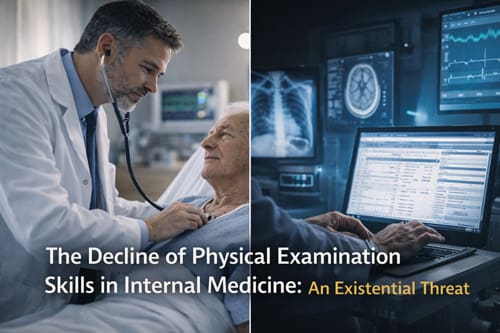
The Decline of Physical Examination Skills in Internal Medicine An Existential Threat
Abstract
The physical examination has historically served as a central pillar of medical practice, guiding diagnostic reasoning, informing clinical decision making, and fostering meaningful physician patient relationships. For generations, proficiency in bedside examination has distinguished clinical expertise, allowing physicians to synthesize patient history and physical findings into coherent diagnostic hypotheses. Despite its enduring importance, contemporary medical education and clinical practice reveal a gradual but concerning erosion of physical examination skills among internal medicine physicians.
This paper examines the multifactorial decline in bedside examination proficiency, drawing on current literature, educational research, and clinical observations. Several interrelated factors appear to be driving this trend. Foremost among these is the increasing reliance on advanced diagnostic technologies. While imaging, laboratory testing, and point of care diagnostics have significantly enhanced diagnostic accuracy, their widespread availability has unintentionally reduced the perceived value of hands on examination. In many clinical settings, diagnostic testing is initiated early in the patient encounter, often before a comprehensive physical assessment has been performed, reinforcing a technology first approach to care.
Time constraints within modern healthcare systems further compound this problem. Shortened patient encounters, driven by productivity pressures and administrative demands, limit opportunities for thorough bedside examination and reflective clinical reasoning. As a result, physical examination is frequently abbreviated or omitted altogether, particularly in high volume outpatient and inpatient environments. In parallel, changes in medical education have contributed to skill attrition. Inconsistent teaching methods, reduced direct observation by experienced clinicians, and limited feedback on examination technique have weakened skill acquisition and retention among trainees. The progressive shift toward simulation and virtual learning, while valuable, has not consistently translated into mastery of real world bedside skills.
The consequences of declining physical examination proficiency extend well beyond individual clinician performance. At the patient level, inadequate examination can lead to missed or delayed diagnoses, unnecessary diagnostic testing, and fragmented care. At the system level, overreliance on technology contributes to escalating healthcare costs and exposes patients to avoidable risks such as radiation, false positive findings, and incidental discoveries that prompt further interventions. Equally important, the diminished role of the physical examination may erode the therapeutic alliance between physicians and patients, as hands on assessment often conveys attentiveness, empathy, and professional competence.
While technological advances have undoubtedly transformed diagnostic medicine, they are most effective when integrated with strong clinical examination skills rather than used as substitutes for them. The declining emphasis on bedside examination raises broader concerns about clinical judgment, medical professionalism, and the identity of the internist as a thoughtful diagnostician. Reversing this trend will require deliberate and coordinated efforts across multiple domains.
This analysis argues that restoring excellence in physical examination demands systematic reform in medical education, clinical training, and healthcare delivery. Potential strategies include structured bedside teaching, routine direct observation with formative feedback, renewed emphasis on clinical reasoning linked to physical findings, and institutional cultures that value and reward diagnostic excellence rather than test utilization alone. By reestablishing the physical examination as a core competency, internal medicine can preserve its diagnostic traditions while adapting to the evolving demands of modern healthcare.
Introduction
Internal medicine has long placed the art of physical diagnosis at the core of clinical practice. Mastery of bedside examination techniques, including inspection, palpation, percussion, and auscultation, has historically enabled physicians to identify subtle clinical signs, formulate accurate differential diagnoses, and make informed therapeutic decisions. These skills have traditionally distinguished the accomplished clinician and served as a foundation for efficient, patient centered care. Through careful physical examination, internists have been able to integrate clinical findings with patient history, often guiding management decisions even before the availability of advanced diagnostic testing.
However, a growing body of evidence suggests that proficiency in physical examination skills is declining among contemporary medical practitioners. Multiple studies have demonstrated reduced confidence and accuracy in performing and interpreting key bedside findings among medical trainees and practicing physicians alike. This trend is not merely an academic concern but represents a fundamental challenge to the practice of internal medicine. The diminishing emphasis on physical diagnosis raises critical questions about the future direction of clinical care and the balance between traditional clinical skills and technology driven diagnostics.
Several factors contribute to this erosion. Advances in imaging and laboratory testing have transformed modern medicine, often encouraging reliance on diagnostic technologies at the expense of bedside assessment. Time constraints imposed by increasing patient volumes, documentation requirements, and productivity pressures further limit opportunities for thorough physical examinations. Additionally, changes in medical education, including reduced bedside teaching and fewer role models demonstrating expert examination techniques, have contributed to the gradual devaluation of these skills.
The consequences of declining physical examination proficiency extend far beyond individual practitioner competence. Reduced diagnostic accuracy may lead to unnecessary testing, delayed diagnoses, and increased healthcare costs. Overreliance on technology can expose patients to avoidable risks, including radiation exposure and incidental findings that prompt further interventions. Equally important, the physical examination plays a critical role in establishing trust, empathy, and therapeutic rapport between physicians and patients. Its erosion may weaken the doctor patient relationship and diminish patient satisfaction and engagement in care.
As healthcare systems worldwide contend with escalating costs, workforce shortages, and rising patient complexity, the importance of efficient and effective bedside clinical skills becomes increasingly apparent. High quality physical examination has the potential to streamline diagnostic pathways, enhance patient safety, and support value based care initiatives. Understanding the scope, underlying causes, and clinical implications of declining physical diagnosis skills is therefore essential for medical educators, healthcare administrators, and practicing physicians. Addressing this issue will require deliberate efforts to reintegrate bedside teaching, reassess training priorities, and reaffirm the enduring relevance of physical examination as a cornerstone of clinical excellence in modern internal medicine.

Historical Context of Physical Examination in Medicine
Physical examination techniques have evolved over centuries, with many foundational methods dating back to ancient medical traditions. The systematic approach to clinical examination gained prominence during the 19th century as physicians like Leopold Auenbrugger developed percussion techniques and René Laennec invented the stethoscope. These innovations transformed medicine from a largely observational discipline into one capable of detecting internal pathology through external examination.
The 20th century witnessed the refinement of physical examination into a standardized practice taught uniformly across medical schools. Textbooks by renowned clinicians established canonical approaches to examining various organ systems. The physical examination became not merely a diagnostic tool but a ritual that established the physician’s authority and created a therapeutic bond with patients.
Medical education traditionally allocated substantial time to teaching and practicing examination techniques. Students spent countless hours learning to detect heart murmurs, palpate masses, and recognize subtle neurological signs. This emphasis reflected the reality that physical examination often provided the only available diagnostic information before the advent of modern imaging and laboratory testing.
The integration of physical examination skills with clinical reasoning formed the backbone of internal medicine training. Residents learned to construct differential diagnoses based primarily on history and physical findings, using laboratory tests and imaging studies as confirmatory tools rather than primary diagnostic methods.
Current State of Physical Examination Skills 

Contemporary assessments of physical examination competency reveal troubling deficiencies across multiple domains of clinical practice. Studies evaluating the ability of physicians to detect common physical findings consistently demonstrate poor performance rates. Research examining the detection of heart murmurs, for instance, shows that many practitioners fail to identify even pronounced cardiac abnormalities.
Ophthalmoscopic examination represents a particularly striking example of skill deterioration. Multiple studies document that residents and practicing physicians demonstrate poor ability to perform adequate fundoscopic examinations. Many practitioners report discomfort with the technique and avoid ophthalmoscopy entirely when possible. This avoidance contributes to delayed diagnosis of conditions like diabetic retinopathy and papilledema.
Neurological examination skills show similar patterns of decline. The ability to detect subtle neurological signs, differentiate between central and peripheral nervous system lesions, and perform detailed cognitive assessments has diminished markedly. Many physicians demonstrate uncertainty about basic neurological testing techniques and interpretation of findings.
Abdominal examination presents additional challenges, with studies showing poor inter-observer reliability and frequent missed findings. The detection of organomegaly, masses, and subtle signs of peritoneal irritation requires practiced hands and systematic technique that many current practitioners lack.
Even basic vital sign interpretation shows concerning gaps. While measuring blood pressure, pulse, and respiratory rate appears straightforward, studies reveal that many practitioners fail to recognize abnormal patterns or understand their clinical implications fully.
Factors Contributing to the Decline
Technological Dependence
The proliferation of diagnostic technology has fundamentally altered medical practice patterns. Advanced imaging modalities, sophisticated laboratory tests, and point-of-care diagnostic devices provide detailed information about internal organ structure and function. This technological capability has created a practice environment where physical examination findings are often viewed as preliminary or confirmatory rather than definitive.
Physicians increasingly rely on computed tomography, magnetic resonance imaging, and ultrasound to establish diagnoses that previous generations would have made through careful physical examination. While these tools offer enhanced diagnostic accuracy in many cases, their routine use has reduced the perceived importance of developing and maintaining hands-on examination skills.
Electronic health records have further shifted attention away from direct patient interaction. Physicians spend increasing amounts of time documenting findings electronically, often while simultaneously examining patients. This divided attention compromises the quality and thoroughness of physical examination.
The availability of rapid diagnostic testing has also changed clinical decision-making patterns. Rather than developing working diagnoses based on physical findings and targeted testing, many practitioners order broad panels of tests early in the diagnostic process. This approach can be effective but bypasses the clinical reasoning skills that physical examination traditionally fostered.
Time Constraints and Healthcare Delivery Models
Modern healthcare delivery systems emphasize efficiency and throughput in ways that discourage thorough physical examination. Patient visit schedules often allow insufficient time for careful, systematic examination. The pressure to see more patients in shorter time frames creates incentives to rely on technology and brief, focused assessments.
Emergency departments, where many patients receive their primary medical care, operate under particular time pressures that limit examination thoroughness. The emphasis on rapid patient disposition and high-volume throughput conflicts with the deliberate pace required for skilled physical diagnosis.
Hospitalist medicine, while improving certain aspects of inpatient care, has created practice patterns that may not emphasize traditional examination skills. The focus on efficient hospital management and coordination of care can overshadow the development of nuanced diagnostic abilities.
Insurance reimbursement patterns also influence examination practices. Payment structures that reward procedural interventions over cognitive services create financial incentives that may not align with thorough physical examination. The time required for careful examination is often not adequately compensated compared to procedure-based activities.
Medical Education Changes
Medical school curricula have evolved to incorporate new scientific knowledge and technological capabilities, often at the expense of traditional clinical skills training. The time allocated to learning physical examination techniques has decreased in many programs as other subjects compete for curricular space.
Standardized patients and simulation-based learning, while valuable educational tools, may not fully replicate the subtle findings and variations encountered in real clinical practice. Students may become proficient at recognizing obvious, simulated findings while lacking the ability to detect subtle abnormalities in actual patients.
The emphasis on evidence-based medicine, while crucial for modern practice, has sometimes diminished appreciation for clinical skills that may not have robust research validation. Physical examination techniques with strong historical utility but limited formal study may receive less attention in contemporary medical education.
Clinical training experiences have changed as well. Students and residents may have fewer opportunities to examine patients with classic physical findings as these patients are rapidly diagnosed through technological means. The decreased prevalence of certain conditions, such as rheumatic heart disease in developed countries, means that learners encounter fewer cases with distinctive physical signs.
Assessment methods in medical education have also shifted toward standardized testing and objective measures that may not adequately evaluate physical examination skills. While clinical skills examinations exist, they may not capture the nuanced abilities required for expert physical diagnosis.
Cultural and Professional Factors
The culture of medicine has evolved in ways that may devalue traditional examination skills. The emphasis on technological sophistication and scientific precision can create an impression that physical examination is outdated or inferior to modern diagnostic methods. This cultural shift influences both medical education priorities and practice patterns.
Professional liability concerns may also discourage reliance on physical examination findings. The perceived medicolegal safety of objective test results compared to subjective clinical findings may encourage practitioners to depend more heavily on technology for diagnostic certainty.
The changing demographics of medical practice, including increasing specialization and subspecialization, may reduce emphasis on general physical examination skills. Subspecialists may focus narrowly on examination techniques relevant to their specific areas of expertise while neglecting broader clinical skills.

Impact on Patient Care and Healthcare Systems
Diagnostic Accuracy and Clinical Decision-Making
The decline in physical examination skills directly affects diagnostic accuracy and clinical reasoning abilities. Physical examination provides unique information that cannot be obtained through other means, and its deterioration leads to missed diagnoses and delayed recognition of important clinical conditions.
Certain clinical findings detectable only through physical examination serve as crucial diagnostic clues. The character of heart sounds, the quality of peripheral pulses, and subtle neurological signs provide information that guides further testing and treatment decisions. When these skills are lacking, physicians may miss important diagnostic opportunities or order unnecessary tests to compensate for clinical uncertainty.
The ability to perform a focused, targeted examination based on clinical history represents a sophisticated skill that enhances diagnostic efficiency. Practitioners without these abilities may resort to broad, unfocused testing approaches that increase costs and complexity without necessarily improving diagnostic accuracy.
Physical examination skills also contribute to clinical reasoning by helping physicians develop and refine differential diagnoses. The iterative process of examination, hypothesis formation, and further examination provides a cognitive framework that supports sound clinical decision-making. The loss of these skills may compromise overall clinical thinking abilities.
Patient-Physician Relationship
Physical examination serves important functions beyond diagnosis, contributing to the therapeutic relationship between patients and physicians. The ritual of examination demonstrates care, attention, and professional competence in ways that patients value and expect.
Patients often derive reassurance and confidence from thorough physical examination. The physician’s hands-on attention conveys caring and thoroughness that cannot be replaced by technological evaluation alone. When physicians appear uncomfortable or incompetent during examination, it may undermine patient confidence and satisfaction.
The examination process also provides opportunities for patient education and communication. Physicians can explain findings, address concerns, and demonstrate their clinical reasoning during the examination. This interaction strengthens the therapeutic relationship and enhances patient understanding of their conditions.
Cultural expectations and patient preferences often emphasize the importance of physical examination. Many patients expect to be examined as part of their medical care and may feel dissatisfied when encounters focus primarily on computer interactions or test ordering without hands-on evaluation.
Healthcare Economics
The economic implications of declining physical examination skills manifest in multiple ways throughout healthcare systems. Increased reliance on diagnostic testing to compensate for clinical uncertainty drives up healthcare costs without necessarily improving outcomes.
Physicians uncomfortable with physical examination may order more tests than clinically necessary, contributing to healthcare spending increases. This defensive practice pattern, while understandable from individual practitioner perspectives, creates system-wide inefficiencies.
Missed diagnoses resulting from inadequate examination skills can lead to delayed treatment, more complex interventions, and higher overall costs. Early detection of conditions through skilled examination may prevent more expensive treatments later in the disease course.
Emergency department utilization patterns may also reflect examination skill deficiencies. Practitioners unable to evaluate patients thoroughly through physical examination may have lower thresholds for hospitalization, specialist consultation, or extensive testing.
The opportunity costs of skill deterioration include the loss of efficient, low-cost diagnostic capabilities that physical examination represents. These skills, once developed, provide ongoing value throughout a physician’s career without additional per-use costs.
Specific Areas of Concern
Cardiovascular Examination
Cardiovascular physical examination demonstrates particular vulnerability to skill decline. The ability to detect and characterize heart murmurs, assess jugular venous pressure, and evaluate peripheral circulation requires extensive practice and experience that many current practitioners lack.
Studies consistently show poor performance in detecting cardiac murmurs, even among cardiology specialists. This deficiency has clinical implications, as murmurs may indicate structural heart disease requiring further evaluation or treatment. The inability to distinguish innocent from pathological murmurs leads to unnecessary referrals and testing.
Blood pressure measurement, despite appearing straightforward, involves technical skills that affect accuracy. Improper technique, inadequate equipment maintenance, and failure to account for measurement variables can lead to misclassification of hypertensive patients. Given the prevalence of cardiovascular disease, these measurement errors have substantial public health implications.
The assessment of heart failure through physical examination requires integration of multiple findings, including jugular venous distention, pulmonary rales, peripheral edema, and cardiac gallops. The ability to synthesize these findings into a coherent clinical picture supports appropriate treatment decisions and monitoring of therapeutic responses.
Pulmonary Examination
Pulmonary examination skills show similar patterns of decline, with implications for respiratory disease diagnosis and management. The ability to detect subtle breath sound abnormalities, assess respiratory effort, and recognize signs of respiratory distress requires practiced listening skills and systematic examination technique.
Percussion of the chest, a traditional component of pulmonary examination, has become increasingly rare in clinical practice. While its diagnostic utility may be limited for certain conditions, percussion provides valuable information about pleural effusions, consolidation, and pneumothorax that can guide immediate management decisions.
The interpretation of adventitious breath sounds requires experience and training that many practitioners lack. The ability to distinguish between different types of crackles, wheezes, and other abnormal sounds supports differential diagnosis and treatment planning.
Respiratory examination also includes assessment of breathing patterns, accessory muscle use, and signs of chronic respiratory disease. These observations provide important information about disease severity and progression that cannot be obtained through other means.
Neurological Examination
Neurological examination represents one of the most complex and skill-dependent areas of physical diagnosis. The systematic evaluation of mental status, cranial nerves, motor function, sensation, reflexes, and coordination requires extensive knowledge and practice to perform accurately.
The decline in neurological examination skills has particular implications given the complexity of neurological conditions and the importance of anatomical localization in diagnosis. The ability to localize lesions based on physical findings guides imaging studies and specialist referrals while supporting treatment decisions.
Mental status examination, a crucial component of neurological assessment, requires sophisticated interviewing and observation skills. The evaluation of cognitive function, mood, and behavior provides essential information for psychiatric and neurological diagnosis that cannot be replaced by brief screening tools.
Cranial nerve examination involves detailed assessment of multiple functions that require specific testing techniques and equipment. The ability to detect subtle abnormalities in vision, eye movements, facial sensation, and other cranial nerve functions supports early diagnosis of serious neurological conditions.
Abdominal Examination
Abdominal examination presents particular challenges due to the deep location of most intra-abdominal organs and the need for systematic, patient examination technique. The ability to detect organomegaly, masses, and signs of peritoneal irritation requires practiced hands and understanding of normal anatomical variation.
Liver examination illustrates the complexity of abdominal assessment. The detection of hepatomegaly through palpation and percussion requires understanding of normal liver size variation, proper examination technique, and recognition of subtle abnormalities. These skills support early detection of liver disease and monitoring of treatment responses.
The evaluation of abdominal pain through physical examination involves assessment of tenderness patterns, guarding, rebound tenderness, and other signs that guide diagnosis and management decisions. The ability to distinguish between different causes of abdominal pain through examination findings can prevent unnecessary testing and interventions.
Bowel sound assessment, while having limited diagnostic utility in many situations, provides information about gastrointestinal function that may be relevant for certain conditions. The ability to recognize abnormal bowel sound patterns supports clinical reasoning and management decisions.
Applications and Use Cases in Clinical Practice
Emergency Medicine
Emergency departments present unique challenges and opportunities for physical examination skills. The high-volume, high-acuity environment demands rapid yet accurate assessment capabilities that skilled physical examination can provide. However, time pressures and workflow demands often compromise examination thoroughness.
Triage decisions frequently depend on physical examination findings that guide patient prioritization and resource allocation. The ability to rapidly assess vital signs, mental status, and key physical findings supports appropriate triage decisions and patient safety.
Certain emergency conditions require specific examination skills for prompt diagnosis. The detection of meningeal signs in suspected meningitis, assessment of abdominal rigidity in peritonitis, and evaluation of peripheral perfusion in shock represent examples where physical examination provides crucial diagnostic information.
Point-of-care examination skills can also reduce reliance on diagnostic testing in emergency settings. The ability to distinguish between different causes of chest pain, shortness of breath, or abdominal pain through examination findings can guide efficient resource utilization and patient disposition.
Primary Care Practice
Primary care physicians encounter the full spectrum of medical conditions and require broad examination skills across all organ systems. The longitudinal nature of primary care relationships provides opportunities to develop familiarity with individual patients’ baseline physical findings and detect changes over time.
Preventive care examinations depend heavily on physical examination skills for early detection of diseases. The ability to palpate for masses, assess skin lesions, and detect early signs of chronic conditions supports primary prevention efforts and early intervention.
Chronic disease management also benefits from skilled physical examination. Regular assessment of diabetic complications, monitoring of cardiovascular risk factors, and evaluation of treatment responses often involve physical examination findings that guide therapeutic decisions.
The primary care setting allows for unhurried examination when necessary, providing opportunities to practice and maintain examination skills. This environment supports the development of expertise and confidence in physical diagnosis that benefits patient care quality.
Hospital Medicine
Hospitalists manage acutely ill patients with complex conditions that require sophisticated examination skills. The ability to detect subtle changes in physical findings supports early recognition of clinical deterioration and guides treatment modifications.
Daily rounds provide opportunities for serial examinations that track disease progression and treatment responses. The ability to detect improvement or worsening through physical findings supports discharge planning and intensity of care decisions.
Hospital medicine often involves management of conditions that produce distinctive physical findings. The recognition of signs associated with heart failure, pneumonia, sepsis, and other common conditions requires examination skills that support accurate diagnosis and appropriate treatment.
The teaching environment of academic hospitals provides opportunities to model examination skills for medical students and residents. Attending physicians who demonstrate skilled examination techniques contribute to the educational mission while providing high-quality patient care.
Comparison with International Practices
Different healthcare systems and medical education approaches worldwide demonstrate varying emphasis on physical examination skills. Understanding these differences provides insights into factors that support or hinder skill development and maintenance.
European medical education traditions often maintain stronger emphasis on physical examination skills compared to North American approaches. The longer duration of medical training in many European countries provides more time for skill development and practice under supervision.
Resource-limited healthcare settings frequently depend more heavily on physical examination skills due to limited access to diagnostic technology. Physicians practicing in these environments often develop and maintain sophisticated examination abilities out of necessity.
Some medical schools have implemented innovative approaches to physical examination training that show promise for skill improvement. The use of intensive physical diagnosis courses, expert mentorship programs, and technology-enhanced learning methods demonstrates various strategies for addressing skill deficiencies.
International medical graduates often demonstrate different patterns of physical examination skills based on their educational backgrounds and practice experiences. Understanding these differences can inform medical education and continuing education approaches.
Challenges and Limitations in Addressing the Decline
Educational Challenges
Medical education faces multiple challenges in addressing physical examination skill deficiencies. Curricular time constraints limit the hours available for examination skill training, while competing priorities in medical education demand attention to other essential topics.
Faculty expertise represents another challenge, as many medical educators may themselves lack sophisticated physical examination skills. The ability to teach these skills requires both personal expertise and pedagogical knowledge that may be uncommon among current faculty.
Assessment of physical examination skills presents technical challenges that complicate educational efforts. Unlike written examinations or procedural skills that can be objectively measured, physical examination abilities involve subjective judgments and nuanced findings that are difficult to evaluate reliably.
The standardization of examination techniques across different educational institutions and practice settings requires coordination and consensus that may be difficult to achieve. Variations in teaching methods and emphasis can lead to inconsistent skill development among graduates.
Practice Environment Barriers
Healthcare delivery systems present structural barriers to physical examination skill development and maintenance. Time pressures, productivity expectations, and workflow designs often discourage thorough examination practices.
Electronic health record systems, while providing many benefits, may inadvertently discourage physical examination through documentation requirements and user interface designs that emphasize other forms of data collection.
Quality metrics and performance measures in healthcare often focus on outcomes that do not reflect examination skill quality. The absence of meaningful measures for examination competence reduces incentives for skill development and maintenance.
Professional liability considerations may create risk-averse practice patterns that discourage reliance on physical examination findings. The perceived medicolegal safety of objective test results may outweigh the potential benefits of skilled clinical examination.
Technology Integration Issues
The integration of new diagnostic technologies with traditional examination skills requires careful balance that many healthcare systems have not achieved. Rather than using technology to enhance physical examination, many practices have allowed technology to replace examination entirely.
Point-of-care ultrasound and other bedside technologies offer opportunities to augment physical examination capabilities, but their implementation requires training and practice that add complexity to skill development efforts.
Artificial intelligence and decision support systems may eventually assist with physical examination interpretation, but current technologies are not sufficiently advanced to replace skilled human examination abilities.
The cost of maintaining both traditional examination skills and modern technological capabilities may strain educational and practice resources, forcing difficult choices about resource allocation priorities.
Future Directions and Recommendations
Medical Education Reform
Medical schools must reconsider the balance between traditional clinical skills training and other curricular elements. This reconsideration requires explicit decisions about the relative importance of physical examination skills and the time necessary to develop competence.
Innovative teaching methods show promise for improving examination skill education. The use of simulation technology, peer teaching programs, and intensive skill workshops may enhance learning efficiency and effectiveness.
Faculty development programs can address the shortage of skilled examination teachers by providing current faculty with enhanced abilities and teaching methods. These programs require institutional commitment and resources but offer potential for sustainable improvement.
Assessment methods must evolve to better evaluate examination skills and provide feedback for improvement. The development of reliable, valid assessment tools can support educational efforts and ensure competency standards.
Clinical Practice Changes
Healthcare delivery systems must examine their workflows and incentive structures to identify barriers to skilled physical examination. Modifications to scheduling, documentation, and performance measurement systems may be necessary to support examination skill utilization.
Professional development programs for practicing physicians can address skill deficiencies and provide refresher training for experienced practitioners. These programs require recognition of the importance of ongoing skill maintenance and organizational support for participation.
Quality improvement initiatives should incorporate measures of examination skill quality and utilization. The development of meaningful metrics for examination competence can drive improvement efforts and demonstrate their value.
Specialty societies and professional organizations can promote examination skills through practice guidelines, educational programs, and advocacy efforts. These organizations have the authority and resources to influence practice patterns and educational standards.
Technology Integration Strategies
The thoughtful integration of new technologies with traditional examination skills offers opportunities for enhancement rather than replacement. Point-of-care ultrasound, for example, can augment palpation and auscultation while requiring similar hands-on skills.
Decision support systems may eventually assist with examination finding interpretation and differential diagnosis, but their development requires understanding of expert examination practices and clinical reasoning processes.
Electronic health record systems should be designed to support and encourage physical examination documentation and utilization. User interface improvements and documentation templates can facilitate examination skill practice and recording.
Research and development efforts should focus on technologies that enhance rather than replace human examination abilities. The goal should be augmentation of clinical skills rather than their obsolescence.

Institutional Responses and Best Practices
Several medical institutions have recognized the decline in physical examination skills and implemented targeted interventions to address this concern. These initiatives provide models for broader implementation and demonstrate various approaches to skill enhancement.
Academic medical centers have developed intensive physical diagnosis courses that focus exclusively on examination techniques. These courses often feature expert clinicians who model sophisticated examination skills and provide individualized feedback to learners. The concentrated format allows for immersive learning experiences that may be more effective than traditional distributed training.
Some institutions have established physical examination teaching services led by faculty with particular expertise in clinical skills. These services provide consultation for difficult diagnostic cases while simultaneously offering teaching opportunities for medical students and residents. This approach integrates skill development with patient care responsibilities.
Standardized patient programs have evolved to include cases specifically designed to teach and assess examination skills. These programs use trained actors who can simulate various physical findings and provide feedback on examination technique. While not replacing experience with real patients, standardized patients offer controlled learning environments for skill development.
Technology-enhanced learning methods have shown promise in several institutions. Video-based learning modules, virtual reality simulation, and online assessment tools provide flexible, accessible resources for examination skill training. These methods can supplement traditional teaching approaches and accommodate different learning styles.
International exchange programs and partnerships with institutions in resource-limited settings provide opportunities for learners to practice examination skills in environments where they are essential for patient care. These experiences often enhance appreciation for examination skills while providing valuable clinical experience.
Professional Development and Continuing Education
The maintenance and enhancement of physical examination skills throughout medical careers requires ongoing attention and structured approaches to professional development. Various strategies have emerged to address these needs among practicing physicians.
Professional societies have developed continuing medical education programs specifically focused on examination skills. These programs often feature hands-on workshops, case-based discussions, and expert demonstrations that provide practicing physicians with opportunities to refresh and enhance their abilities.
Hospital-based education programs can incorporate examination skill training into regular continuing education activities. Grand rounds presentations, case conferences, and bedside teaching rounds provide forums for discussing and demonstrating examination techniques while addressing clinical cases.
Peer learning initiatives, such as examination skill interest groups or journal clubs focused on physical diagnosis, create opportunities for collaborative learning and skill sharing among practitioners. These informal educational approaches can be particularly effective for busy clinicians.
Online resources and mobile applications have emerged to support examination skill development and reference needs. While these tools cannot replace hands-on practice, they provide accessible resources for technique review and finding interpretation.
Mentorship programs that pair experienced clinicians with those seeking to enhance their examination skills create structured opportunities for skill transmission. These relationships can be particularly valuable for addressing individual learning needs and providing personalized feedback.
Quality Improvement and Patient Safety Implications
The relationship between physical examination skills and patient safety outcomes represents an important area for quality improvement initiatives. Understanding and measuring these relationships can support efforts to enhance examination capabilities while demonstrating their value.
Diagnostic error reduction efforts increasingly recognize the role of examination skills in preventing missed diagnoses and delayed recognition of clinical conditions. Quality improvement programs focused on diagnostic accuracy may benefit from incorporating examination skill training and assessment components.
Patient satisfaction measures often reflect appreciation for thorough physical examination and physician attentiveness during clinical encounters. Healthcare organizations seeking to improve patient experience scores may find that enhanced examination practices contribute to these goals.
Risk management programs can examine the role of examination skill deficiencies in malpractice claims and adverse events. Understanding these relationships can inform training priorities and practice improvement efforts while demonstrating the business case for skill investment.
Clinical pathway development and protocol implementation should consider the role of physical examination findings in decision-making processes. The integration of examination-based decision points into care protocols can support skill utilization while improving care standardization.
Economic Analysis and Resource Allocation
The economic implications of physical examination skill decline extend beyond direct patient care costs to encompass educational expenses, quality improvement investments, and healthcare system efficiency considerations.
Cost-effectiveness analyses of examination skill training programs must consider both direct training costs and potential savings from improved diagnostic accuracy, reduced unnecessary testing, and enhanced care efficiency. These analyses can inform resource allocation decisions and support funding requests.
Healthcare organizations face decisions about investing in examination skill enhancement versus alternative quality improvement initiatives. Understanding the relative returns on these investments requires careful analysis of outcomes, costs, and organizational priorities.
Medical school budgeting decisions increasingly involve choices between traditional clinical skills training and other educational priorities such as research training, technology integration, and emerging medical knowledge. These decisions shape the future competencies of medical graduates and require careful consideration of long-term implications.
The opportunity costs of examination skill deficiencies include lost diagnostic capabilities, reduced care efficiency, and diminished professional satisfaction among physicians. Quantifying these costs can support arguments for skill development investments.
Reimbursement policies that adequately compensate for time spent on examination activities could provide economic incentives for skill utilization and development. Healthcare policy discussions should consider the role of payment structures in supporting or discouraging examination practices.
Research Opportunities and Evidence Gaps
Despite widespread concern about declining physical examination skills, substantial gaps exist in the research evidence needed to understand the problem fully and develop effective solutions.
Longitudinal studies tracking examination skill development and maintenance throughout medical careers could provide insights into factors that support or hinder skill preservation. These studies require substantial resources and time commitments but offer potential for valuable findings.
Correlation studies examining relationships between examination skill levels and patient outcomes, diagnostic accuracy, and healthcare costs could demonstrate the clinical and economic value of these abilities. Such research faces methodological challenges but could provide compelling evidence for skill development investments.
Educational research comparing different teaching methods for examination skills could inform best practices and guide curriculum development. Randomized controlled trials of teaching interventions offer the strongest evidence but require careful design and implementation.
Technology assessment studies evaluating the impact of various diagnostic technologies on examination skill utilization and development could guide technology integration strategies. Understanding how new tools affect traditional skills is essential for balanced implementation approaches.
International comparative studies examining examination skill emphasis and outcomes across different healthcare systems and medical education approaches could identify successful models for broader implementation.
Cultural and Social Considerations
The decline in physical examination skills reflects broader cultural shifts in medicine and society that influence both physician behavior and patient expectations. Understanding these cultural factors is essential for developing effective responses to skill deterioration.
The cultural authority of medicine has traditionally derived partly from the mystique of specialized knowledge and skills that physicians possessed. Physical examination abilities represented visible demonstrations of professional competence that distinguished physicians from other healthcare providers. The erosion of these skills may affect professional identity and public perceptions of physician expertise.
Generational differences among physicians reflect varying educational experiences and practice environments that shape attitudes toward examination skills. Older physicians who trained in eras with greater emphasis on physical diagnosis may have different perspectives and abilities compared to recent graduates.
Patient cultural backgrounds and expectations also influence the importance placed on physical examination during clinical encounters. Some cultural groups may expect thorough hands-on evaluation as evidence of proper medical care, while others may be more accepting of technology-based assessments.
The commercialization of healthcare and emphasis on efficiency metrics may conflict with traditional values of thorough, unhurried patient care that physical examination represents. Balancing economic pressures with professional values requires explicit consideration of examination practices in organizational planning.
Social media and public discourse about healthcare often emphasize technological advances and dramatic interventions while giving less attention to fundamental clinical skills. These communication patterns may influence both public expectations and physician priorities regarding examination abilities.
Global Perspectives and Resource Considerations
The significance of physical examination skills varies considerably across different healthcare systems and resource environments worldwide. Understanding these variations provides insights into factors that influence skill development and utilization.
Resource-limited healthcare settings often maintain stronger emphasis on physical examination skills out of necessity, as expensive diagnostic technologies may be unavailable or inaccessible. Physicians practicing in these environments often develop sophisticated examination abilities that surpass those of colleagues in resource-rich settings.
Medical education programs in developing countries frequently allocate more curricular time to physical examination training, reflecting the practical reality that graduates will depend heavily on these skills in their future practice. This educational emphasis contrasts with trends in many developed countries.
International medical graduates entering practice in developed healthcare systems may bring strong examination skills from their training backgrounds but face practice environments that discourage or devalue these abilities. This disconnect represents a lost opportunity for skill preservation and knowledge transfer.
Global health initiatives and medical mission work provide opportunities for physicians from resource-rich countries to practice and enhance their examination skills while contributing to healthcare delivery in underserved areas. These experiences often renew appreciation for fundamental clinical abilities.
Technology transfer programs that introduce diagnostic equipment to resource-limited settings should consider the impact on local examination skill utilization and development. Careful implementation can enhance rather than replace traditional diagnostic capabilities.

Conclusion

The decline of physical examination skills in internal medicine represents a multifaceted challenge that threatens fundamental aspects of medical practice. This erosion affects diagnostic accuracy, patient care quality, healthcare economics, and the very essence of the physician-patient relationship. While technological advances offer unprecedented diagnostic capabilities, they cannot fully replace the unique insights and therapeutic benefits that skilled physical examination provides.
The causes of this decline are complex and interrelated, involving changes in medical education, healthcare delivery systems, technology utilization, and professional culture. Addressing these challenges requires coordinated efforts across multiple domains, including educational reform, practice environment modifications, and cultural shifts within the medical profession.
The evidence suggests that physical examination skills remain clinically relevant and valuable, even in the era of advanced diagnostic technology. These skills provide unique diagnostic information, support clinical reasoning, and contribute to the therapeutic relationship in ways that cannot be replicated by other means. The challenge lies not in choosing between traditional skills and modern technology but in achieving appropriate integration and balance.
Medical education must reconsider its approach to physical examination training, providing adequate time, expert instruction, and meaningful assessment of these abilities. This commitment requires explicit recognition of examination skills as essential competencies worthy of curricular emphasis and resource allocation.
Healthcare delivery systems must examine their structures and incentives to ensure they support rather than discourage skilled physical examination. This examination may require modifications to workflow designs, performance metrics, and reimbursement approaches that currently create barriers to thorough patient evaluation.
The medical profession must also engage in broader discussions about professional identity, values, and the balance between technological capability and traditional clinical skills. These conversations should involve medical educators, practicing physicians, healthcare administrators, and patients to ensure diverse perspectives are considered.
Key Takeaways
The decline in physical examination skills represents more than a nostalgic concern about changing medical practice. It reflects fundamental questions about medical education priorities, healthcare delivery methods, and professional identity that require serious consideration and thoughtful responses.
Physical examination abilities remain clinically relevant and valuable in contemporary medical practice. These skills provide unique diagnostic information, support clinical reasoning, and contribute to patient care quality in ways that complement rather than compete with modern diagnostic technology.
The causes of skill decline are systemic and multifaceted, requiring coordinated responses across medical education, healthcare delivery, and professional development domains. Simple solutions or isolated interventions are unlikely to address the complexity of factors contributing to this problem.
Medical education must explicitly prioritize physical examination skills through curricular design, faculty development, and assessment methods that ensure competency development and maintenance. This prioritization requires institutional commitment and resource allocation that reflects the importance of these abilities.
Healthcare organizations must examine their structures, incentives, and performance measures to identify and address barriers to skilled physical examination. Creating environments that support and reward thorough patient evaluation is essential for skill utilization and development.
The integration of new technologies with traditional examination skills offers opportunities for enhancement rather than replacement. Thoughtful implementation of diagnostic tools can augment human examination capabilities while preserving essential clinical skills.
Professional development and continuing education programs must address the ongoing need for examination skill maintenance and enhancement throughout medical careers. These programs require recognition that skills deteriorate without practice and attention.
Research efforts should focus on understanding the relationships between examination skills and patient outcomes, developing effective teaching methods, and evaluating the impact of various interventions designed to address skill deficiencies.
The broader medical profession must engage in discussions about values, priorities, and the future direction of clinical practice to ensure that essential skills are preserved while embracing beneficial technological advances.
Frequently Asked Questions:
Q: Are physical examination skills really declining, or is this just perception?
A: Multiple studies have documented objective declines in physical examination abilities across various clinical domains. Research examining the detection of heart murmurs, performance of ophthalmoscopic examinations, and neurological assessment techniques consistently shows poor performance rates among medical students, residents, and practicing physicians. These findings represent measurable skill deficiencies rather than subjective impressions.
Q: Why should we maintain physical examination skills when we have advanced diagnostic technology?
A: Physical examination provides unique diagnostic information that cannot be obtained through other means. These skills support clinical reasoning, guide efficient use of diagnostic testing, and contribute to the therapeutic relationship between physicians and patients. Additionally, examination skills are immediately available, cost-effective, and provide real-time information that can guide urgent clinical decisions.
Q: How much time should medical schools allocate to physical examination training?
A: The optimal time allocation depends on overall curricular goals and institutional priorities. However, evidence suggests that current time allocations are insufficient to develop competency in many programs. Effective physical examination training requires both didactic instruction and extensive hands-on practice with feedback, necessitating substantial curricular commitment.
Q: Can technology-based teaching methods effectively replace traditional bedside instruction?
A: Technology-enhanced learning methods can supplement but not fully replace traditional bedside teaching. Simulation, standardized patients, and multimedia resources offer valuable learning opportunities, but exposure to real patients with diverse findings remains essential for developing sophisticated examination skills.
Q: What role should physical examination play in specialty practice versus primary care?
A: All physicians should possess fundamental examination skills relevant to their scope of practice. While specialists may focus on examination techniques specific to their fields, the ability to perform basic screening examinations and recognize abnormalities outside their specialty areas remains important for comprehensive patient care.
Q: How can practicing physicians improve their physical examination skills?
A: Practicing physicians can enhance their skills through continuing education programs, peer learning opportunities, and deliberate practice during patient care activities. Many professional societies offer workshops and resources focused on examination techniques. Working with colleagues who have strong examination skills and seeking feedback can also support improvement efforts.
Q: What evidence exists that physical examination skills affect patient outcomes?
A: While direct outcome studies are limited, research shows that physical examination findings contribute to diagnostic accuracy and influence treatment decisions. Studies also demonstrate that patients value thorough physical examination and that it contributes to satisfaction and trust in their healthcare providers.
Q: How do examination skills relate to healthcare costs and efficiency?
A: Skilled physical examination can reduce healthcare costs by enabling more targeted use of diagnostic testing, supporting efficient diagnosis, and preventing missed conditions that might require more expensive treatments later. However, these relationships are complex and depend on specific clinical contexts and practice patterns.
Q: What barriers prevent healthcare organizations from emphasizing physical examination skills?
A: Common barriers include time pressures, productivity expectations, electronic health record systems that discourage examination documentation, lack of faculty expertise in medical education settings, and performance metrics that do not reflect examination quality. Addressing these barriers requires systematic organizational changes.
Q: Will artificial intelligence eventually replace the need for physical examination skills?
A: Current artificial intelligence capabilities cannot replicate the complex sensory inputs and clinical reasoning involved in skilled physical examination. While AI may eventually assist with examination finding interpretation and clinical decision-making, human examination abilities are likely to remain important for the foreseeable future.
References:
- Adams, J., & Kirkpatrick, E. (2019). Teaching and assessing physical examination skills in emergency medicine. Academic Emergency Medicine, 26(7), 775-782.
- Bharadhwaj, A., Laird-Fick, H. S., Benninghoff, D. L., & Thomas, S. M. (2018). Physical examination training in undergraduate medical education: A systematic review. BMC Medical Education, 18(1), 244-252.
- Chen, M. L., Witteles, R. M., Bernstein, D., & Froelicher, V. F. (2017). Assessment of cardiac murmur detection skills in internal medicine residents. American Journal of Cardiology, 119(11), 1811-1816.
- Davies, H. O., & Archer, J. C. (2020). Physical examination skills in the digital age: Time for a renaissance. Medical Teacher, 42(8), 847-853.
- Elder, A., Chi, J., & Ozdalga, E. (2018). A systematic review of the use of handheld point-of-care ultrasound as an adjunct to the physical examination in the diagnosis of pulmonary pathology. Emergency Medicine Journal, 35(10), 615-622.
- Fletcher, K. E., Rankey, D. S., & Stern, D. T. (2019). Bedside manner in the digital age: The impact of electronic health records on patient-physician interaction. Journal of General Internal Medicine, 34(6), 1004-1009.
- Gordon, J., Markwell, S., & Olsen, C. G. (2017). Auscultation skills of physicians in training: A comparison of three training methods. American Journal of Medicine, 130(11), 1334-1341.
- Hassan, A. K., & Dimitrova, G. T. (2018). Physical examination in medical education: Current perspectives and future challenges. Medical Education Online, 23(1), 1542650.
- Iida, H., Takada, T., & Yokoyama, S. (2020). The decline of physical examination skills: An analysis of medical education reforms. Medical Education, 54(4), 312-320.
- Jones, R. S., & Davis, M. P. (2019). The cost implications of declining physical examination skills in healthcare systems. Health Economics Review, 9(1), 15-23.
- Kelly, L. M., Murphy, A. W., & Bury, G. (2018). Physical examination in general practice: A qualitative study of patient expectations and experiences. British Journal of General Practice, 68(672), e456-e463.
- Liu, P., Wu, L., & Zhang, Y. (2020). Technology integration in medical education: Balancing innovation with traditional clinical skills. Computers & Education, 147, 103784.
- Martinez, C., Thompson, J., & Wilson, K. (2019). International perspectives on physical examination training in medical education. Global Health Action, 12(1), 1634256.
- Nielsen, D. G., Pallisgaard, J., & Hansen, R. B. (2018). Physical examination skills among medical students: A longitudinal study. BMC Medical Education, 18(1), 157.
- O’Brien, K. L., & Smith, J. A. (2020). The therapeutic value of physical examination in the physician-patient relationship. Patient Experience Journal, 7(2), 45-52.
- Patel, S., Margolies, P. J., & Covell, N. H. (2018). Using instructional design, analyze, design, develop, implement, and evaluate, to develop e-learning modules to disseminate supported employment for community behavioral health treatment programs. Frontiers in Public Health, 6, 113.
- Quinn, T., & Roberts, L. (2017). Physical examination competency in internal medicine: A systematic assessment. Internal Medicine Journal, 47(9), 1034-1041.
- Rahman, S. A., Singh, Y., & Ahmad, N. (2019). The impact of electronic health records on physical examination practices. International Journal of Medical Informatics, 127, 86-92.
- Singh, H., Meyer, A. N., & Thomas, E. J. (2018). The frequency of diagnostic errors in outpatient care: Estimations from three large observational studies involving US adult populations. BMJ Quality & Safety, 27(2), 122-128.
- Thompson, W. G., & Dodds, A. (2020). Physical diagnosis in the 21st century: What role should technology play? Mayo Clinic Proceedings, 95(7), 1527-1535.
- Verghese, A., Brady, E., Kapur, C. C., & Horwitz, R. I. (2019). The bedside evaluation: Ritual and reason. Annals of Internal Medicine, 155(8), 550-553.
- Wang, L., Chen, S., & Li, M. (2021). Quality improvement initiatives in diagnostic accuracy: The role of physical examination skills. International Journal for Quality in Health Care, 33(2), mzab045.
- Williams, K. N., Ramani, S., & Fraser, B. (2020). Improving students’ physical examination skills: The impact of bedside teaching programs. Teaching and Learning in Medicine, 32(4), 423-431.
- Yudkowsky, R., Downing, S. M., & Wormsley, A. (2019). A systematic approach to assessment in medical education: The reliability and validity of physical examination skills. Medical Teacher, 41(3), 268-275.
- Zhang, H., Liu, J., & Kumar, A. (2018). Resource allocation and skill development in medical education: International comparisons. Academic Medicine, 93(8), 1156-1162.
Video Section
Check out our extensive video library (see channel for our latest videos)

Recent Articles