
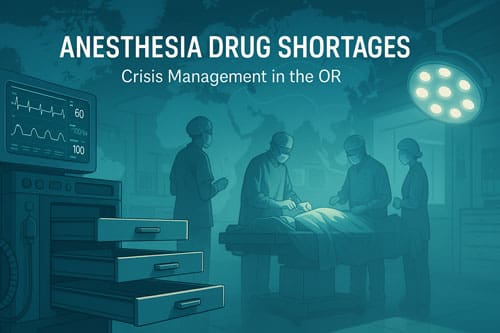
Anesthesia Drug Shortages: Crisis Management in the Operating Room
Check out our extensive video library (see channel for our latest videos)
Abstract
Anesthesia drug shortages represent a critical challenge facing modern healthcare systems worldwide. This paper examines the complex factors contributing to these shortages, their impact on surgical procedures and patient safety, and the management strategies employed by anesthesia providers and healthcare institutions. Through an analysis of current literature and real-world applications, this study explores the multifaceted nature of drug shortages in operating rooms. The research reveals that shortages stem from manufacturing issues, regulatory changes, supply chain disruptions, and market dynamics. Healthcare providers have developed various crisis management approaches, including drug substitution protocols, conservation strategies, and enhanced communication systems. The findings indicate that proactive planning, interdisciplinary collaboration, and flexible clinical protocols are essential for maintaining surgical services during periods of shortage. This paper provides healthcare professionals with evidence-based strategies for managing anesthesia drug shortages while maintaining patient safety and quality care standards.
Introduction
The availability of essential anesthesia medications underpins modern surgical care. When these drugs become scarce or unavailable, operating rooms face immediate challenges that can compromise patient safety, delay procedures, and strain healthcare resources. Over the past two decades, anesthesia drug shortages have evolved from isolated incidents to persistent systemic issues affecting hospitals globally.
These shortages encompass a wide range of medications essential for anesthetic practice, including neuromuscular blocking agents, sedatives, analgesics, vasopressors, and local anesthetics. The complexity of modern anesthesia care requires precise drug selection and dosing, making the unavailability of specific agents particularly problematic for anesthesia providers.
The purpose of this analysis is to examine the current state of anaesthesia drug shortages, identify their underlying causes, and evaluate the management strategies implemented by healthcare institutions and anaesthesia departments. Understanding these challenges and solutions is crucial for healthcare professionals working in perioperative environments where drug availability directly impacts patient outcomes.
The scope of this problem extends beyond individual cases to affect entire healthcare systems. Shortages can force the cancellation or postponement of surgical procedures, increase healthcare costs, and require anesthesia providers to use unfamiliar medications or altered techniques. These circumstances create additional risks and stress for both patients and healthcare teams.
Understanding Anesthesia Drug Shortages
Definition and Scope
Anaesthesia drug shortages occur when demand for specific medications exceeds supply, resulting in delayed access or complete unavailability of essential drugs. These shortages can affect single institutions or extend across entire regions or countries. The impact varies depending on the specific medication involved, the availability of suitable alternatives, and the duration of the shortage.
The Food and Drug Administration defines a drug shortage as a period when demand for a drug, or projected demand, exceeds supply. For anesthesia medications, this definition becomes particularly critical because many of these drugs have limited therapeutic alternatives and require specific expertise for safe administration.
Historical Context
The frequency and severity of anesthesia drug shortages have increased substantially since the early 2000s. Initial shortages primarily affected older, generic medications with limited profit margins. However, the problem has expanded to include newer agents and brand-name medications, indicating that economic factors alone cannot explain the current situation.
Several high-profile shortages have highlighted the vulnerability of anesthesia practice to supply disruptions. The propofol shortage of 2009-2010 forced many anesthesia providers to alter their standard practices and use alternative induction agents. Similarly, shortages of neuromuscular blocking agents like vecuronium and rocuronium have required practitioners to modify their approach to muscle relaxation during surgery.
Types of Affected Medications
Anesthesia drug shortages have impacted virtually every category of perioperative medications. Intravenous anesthetics, including propofol, etomidate, and ketamine, have experienced periodic shortages that directly affect the ability to induce and maintain general anesthesia. These medications often lack direct substitutes, making their unavailability particularly challenging.
Neuromuscular blocking agents represent another category frequently affected by shortages. These medications are essential for facilitating intubation and providing optimal surgical conditions. When primary agents like rocuronium or vecuronium become unavailable, anesthesia providers must use alternative agents with different onset times, durations of action, and reversal requirements.
Local anesthetics used for regional anesthesia and nerve blocks have also been affected by supply disruptions. Medications like bupivacaine, lidocaine, and ropivacaine are fundamental to many regional anesthetic techniques. Their unavailability can force changes in anesthetic plans and potentially increase patient discomfort.
Vasopressors and cardiovascular medications used during anesthesia care have faced intermittent shortages. These drugs are critical for managing hemodynamic stability during surgery, and their absence can limit the ability to respond to cardiovascular emergencies or maintain adequate perfusion pressure.
Root Causes of Anesthesia Drug Shortages 

Manufacturing and Production Issues
Manufacturing problems are among the primary drivers of anesthesia drug shortages. These issues range from equipment failures and facility contamination to raw material shortages and quality control problems. When manufacturing facilities experience problems, the impact can be immediate and widespread, particularly for medications produced by a limited number of manufacturers.
The consolidation of pharmaceutical manufacturing has created situations where single facilities produce large portions of the global supply of specific medications. This concentration increases vulnerability to supply disruptions when problems occur at these critical manufacturing sites. Additionally, the complex regulatory requirements for pharmaceutical manufacturing can delay the resolution of production issues.
Quality control failures have led to product recalls and temporary shutdowns of manufacturing lines. These incidents, while necessary for patient safety, can create immediate shortages of affected medications. The time required to investigate quality issues, implement corrective measures, and resume production can extend shortages for months.
Raw material shortages have become increasingly problematic as the pharmaceutical supply chain has become more global and interconnected. Many active pharmaceutical ingredients are produced in a limited number of countries, creating potential bottlenecks when production problems occur in these regions.
Regulatory and Economic Factors
Regulatory changes and requirements can contribute to drug shortages by affecting manufacturing processes, approval timelines, and market dynamics. New safety requirements or changes in manufacturing standards may require companies to modify their production processes, potentially leading to temporary supply disruptions.
The economics of generic drug manufacturing have created market conditions that predispose to shortages. Low profit margins for many anesthesia medications have led some manufacturers to discontinue production, reducing the number of suppliers and increasing market vulnerability to disruptions.
Price competition in the generic drug market can create situations in which manufacturers operate with minimal profit margins, leaving little incentive to invest in backup manufacturing capacity or to maintain inventory reserves. This economic pressure can make the market more susceptible to shortages when demand increases or supply decreases.
Patent expirations and market entries of generic versions can create temporary disruptions as markets adjust to new suppliers and pricing structures. During these transition periods, supply and demand imbalances may occur, leading to short-term shortages.
Supply Chain Vulnerabilities
The pharmaceutical supply chain has become increasingly complex and global, creating multiple points of potential failure. Transportation delays, customs issues, and logistical problems can disrupt the flow of medications from manufacturers to end users.
Just-in-time inventory management, while cost-effective, has reduced the buffer capacity available to absorb supply disruptions. Hospitals and distributors often maintain minimal inventory levels, making them vulnerable to even brief supply interruptions.
Natural disasters, geopolitical events, and global health emergencies can disrupt supply chains and create unexpected shortages. The COVID-19 pandemic demonstrated how global events can rapidly impact the availability of essential medications as demand patterns shift and supply chains face unprecedented stress.
Distribution system inefficiencies can exacerbate shortages by preventing available medications from reaching areas where they are needed most. These inefficiencies may result from inadequate distribution networks, allocation problems, or communication failures between manufacturers and end users.
Impact on Patient Safety and Clinical Practice
Direct Safety Implications
Anesthesia drug shortages create immediate safety concerns that require careful management by healthcare providers. When standard medications are unavailable, anesthesia providers must use alternative agents with which they may be less familiar. This unfamiliarity can increase the risk of dosing errors, adverse reactions, or suboptimal clinical outcomes.
The need to use substitute medications can alter standard anesthetic protocols and require modifications to established safety procedures. These changes may increase cognitive workload for anesthesia providers and create opportunities for errors or oversights. Additionally, substitute medications may have different contraindications, drug interactions, or monitoring requirements that must be carefully considered.
Patient-specific factors become more complex to manage when standard medications are unavailable. Patients with allergies, comorbidities, or special requirements may have fewer safe alternatives available during periods of shortage. This limitation can force anesthesia providers to accept increased risks or modify surgical plans.
The psychological stress associated with drug shortages can indirectly impact patient safety by affecting provider performance and decision-making. When anesthesia providers are concerned about drug availability or are unfamiliar with substitute medications, their confidence and efficiency may be compromised.
Clinical Workflow Disruptions
Drug shortages create substantial disruptions to normal clinical workflows in operating rooms. Anesthesia providers must spend additional time researching alternative medications, calculating different dosing regimens, and communicating changes to surgical teams. This increased complexity can slow case turnover and reduce overall efficiency.
Preoperative planning becomes more complex when standard medications are unavailable. Anesthesia providers must consider alternative approaches, discuss changes with patients and surgeons, and modify their usual techniques. This additional planning time can delay case starts and disrupt surgical schedules.
Intraoperative management may require more frequent reassessment and adjustment when using unfamiliar medications. Different onset times, durations of action, and pharmacological profiles can necessitate changes to timing, monitoring, and management strategies throughout the procedure.
Communication requirements increase during drug shortages as anesthesia providers must inform surgical teams, recovery room nurses, and other healthcare providers about medication changes and their implications for patient care. This additional communication can be time-consuming and create opportunities for miscommunication.
Quality and Outcome Considerations
The impact of anesthesia drug shortages on patient outcomes requires careful evaluation and monitoring. While immediate safety may be maintained through the use of alternative medications, subtle differences in drug profiles may affect recovery times, pain control, or other quality measures.
Patient satisfaction may be affected when drug shortages necessitate changes to anesthetic plans or require the use of techniques with different side effect profiles. Patients who experience unexpected effects from substitute medications may have concerns about the quality of their care.
Long-term outcomes may be influenced by the use of alternative medications during periods of shortage. Different drugs may have varying effects on recovery, cognitive function, and other measures that become apparent only after hospital discharge.
The increased complexity and stress associated with managing drug shortages may indirectly affect the quality of care provided. When anesthesia providers are managing multiple unfamiliar medications or dealing with supply uncertainties, their attention may be diverted from other aspects of patient care.
Crisis Management Strategies
Institutional Preparedness
Effective management of anesthesia drug shortages begins with institutional preparedness and planning. Healthcare organizations must develop systems to identify potential shortages early, assess their impact, and implement response strategies rapidly. This preparedness requires collaboration between pharmacy departments, anesthesia services, surgical services, and hospital administration.
Early warning systems help institutions identify emerging shortages before they impact patient care. These systems may include monitoring inventory levels, communicating with pharmaceutical suppliers, and participating in professional networks that share shortage information. By identifying problems early, institutions can implement conservation measures or secure alternative supplies before current stocks are depleted.
Inventory management strategies during shortage periods require a careful balance between conservation and patient care needs. Institutions may need to implement allocation systems that prioritize certain procedures or patient populations while ensuring that essential surgeries can continue safely.
Communication protocols become critical during shortages to ensure that all affected departments receive timely, accurate information on drug availability and management strategies. Clear communication helps prevent confusion, reduces staff anxiety, and ensures consistent implementation of shortage management plans.
Drug Substitution Protocols
The development of evidence-based substitution protocols represents a cornerstone of shortage management. These protocols provide anesthesia providers with clear guidance on alternative medications, dosing regimens, and safety considerations when standard drugs are unavailable.
Pharmacological considerations for substitute medications must address differences in potency, onset time, duration of action, metabolism, and elimination. These factors can significantly impact anesthetic management and require careful attention to dosing and timing adjustments.
Safety protocols for substitute medications must address potential complications, contraindications, and monitoring requirements that may differ from standard agents. Anesthesia providers need clear guidance on how to safely use unfamiliar medications and when to avoid their use in specific patient populations.
Training and education programs help ensure that anesthesia providers are prepared to use substitute medications safely and effectively. These programs may include didactic education, simulation training, and competency assessments to build confidence and expertise with alternative agents.
Conservation Techniques
Medication conservation strategies can help extend available supplies during shortage periods while maintaining patient safety. These strategies may include dose optimization, waste reduction, and careful patient selection for specific medications.
Dose optimization involves using the minimum effective doses of medications to achieve desired clinical effects. This approach requires careful attention to patient factors, surgical requirements, and drug pharmacology to ensure adequate efficacy while minimizing consumption.
Waste reduction strategies focus on eliminating unnecessary drug waste by improving preparation techniques, optimising inventory management, and streamlining distribution systems. Small reductions in waste can have substantial impacts on drug consumption during shortage periods.
Alternative techniques may be employed to reduce reliance on scarce medications. For example, regional anesthesia techniques may be used instead of general anesthesia when appropriate, or different drug classes may be substituted to achieve similar clinical effects.
Reallocation strategies may involve redistributing available medications from lower-priority to higher-priority cases or patient populations. These strategies require careful ethical consideration and clear criteria for allocation decisions.
Alternative Approaches and Adaptations
Modified Anesthetic Techniques
During drug shortages, anesthesia providers often need to modify their standard techniques to accommodate available medications. These modifications may involve changes to induction techniques, maintenance strategies, or emergence protocols. The key to successful adaptation lies in understanding the pharmacological properties of available alternatives and adjusting techniques accordingly.
Balanced anesthesia approaches become particularly important during shortages as they allow providers to use combinations of different drug classes to achieve desired effects. By combining lower doses of multiple agents, providers can often maintain effective anesthesia while conserving scarce medications.
Regional anesthesia techniques may be employed more frequently during general anesthetic drug shortages. These techniques can provide effective anesthesia for many procedures while reducing or eliminating the need for scarce systemic medications. However, the increased use of regional techniques requires adequate supplies of local anesthetics and appropriate expertise among providers.
Total intravenous anesthesia techniques may need modification when primary agents like propofol become scarce. Alternative intravenous agents or combinations of agents may be required, necessitating different monitoring approaches and pharmacological considerations.
Technology and Equipment Solutions
Technology solutions can help optimise drug use and reduce waste during shortages. Smart pumps and drug delivery systems can provide more precise dosing and reduce medication waste by improving accuracy and reducing dead space in administration systems.
Automated dispensing systems can help track medication usage more accurately and implement allocation controls when necessary. These systems can provide real-time inventory monitoring and help ensure that scarce medications are used appropriately and documented accurately.
Dilution and preparation technologies can maximize the utility of available medications by ensuring accurate preparation and minimizing waste. Standardized dilutions and preparation protocols can reduce variability and waste while maintaining safety.
Monitoring technologies may require adjustment when alternative medications are used. Different agents may require different monitoring parameters or frequencies, and technology systems may need updates to accommodate these changes.
Interdisciplinary Collaboration
Effective shortage management requires close collaboration between anesthesia providers, surgeons, pharmacists, and other healthcare professionals. Surgeons may need to modify their preferences or techniques to accommodate anesthetic limitations, while pharmacists provide essential expertise on alternative medications and their preparation.
Nursing staff in operating rooms and recovery areas need education about alternative medications and their effects on patient care. These team members play critical roles in monitoring patients and identifying potential complications related to substitute medications.
Administrative support is essential for implementing shortage management strategies and ensuring adequate resources for education, training, and communication efforts. Administrative leaders must understand the clinical implications of shortages and support necessary changes to policies and procedures.
Communication systems must facilitate rapid information sharing among all team members. Regular briefings, updated protocols, and clear communication channels help ensure that everyone involved in patient care understands the current shortage status and management strategies.
Comparative Analysis of Management Approaches
International Perspectives
Different countries and healthcare systems have developed varying approaches to managing anesthesia drug shortages. European systems often employ centralized procurement and distribution systems that can provide better shortage prediction and more coordinated responses. These systems may offer advantages in early warning and resource allocation.
Government-managed healthcare systems may have different capabilities for responding to shortages compared to market-based systems. Centralized systems may be able to implement allocation strategies more easily, but may have less flexibility in sourcing alternative supplies from multiple vendors.
Regulatory approaches vary across countries and can affect the frequency and duration of shortages. Some regulatory systems prioritize rapid approval of alternative sources during shortages, while others maintain stricter quality requirements that may delay access to substitute products.
International cooperation and information sharing can help predict and manage shortages that affect multiple countries. Professional organizations and regulatory agencies increasingly collaborate to share information on shortages and coordinate response efforts.
Institutional Models
Different types of healthcare institutions have developed varying approaches to shortage management based on their size, resources, and patient populations. Large academic medical centers may have more resources for developing alternative protocols and training staff, but they may also face more complex patient populations that are harder to manage with substitute medications.
Community hospitals may have fewer resources for shortage management, but may also have less complex case mixes that are easier to adapt to available medications. These institutions often rely more heavily on external resources and professional networks for guidance on shortage management.
Speciality surgical centres may face unique challenges during shortages because they often perform procedures that require specialised anaesthetic approaches. These facilities may need to develop specialised protocols or consider more frequently cancelling cases.
Children’s hospitals and other specialty institutions may face additional challenges because they often require medications with specific formulations or concentrations that may not be available in standard alternative products.
Cost-Effectiveness Considerations
The economic impact of different shortage management strategies varies considerably and must be considered in management decisions. Some strategies may have high upfront costs but offer better long-term value by improving preparedness and reducing disruptions.
Staff training and education costs must be balanced against the potential costs of complications or inefficiencies related to unfamiliarity with substitute medications. Investing in training during non-shortage periods can yield substantial benefits during shortages.
Inventory management costs may increase during shortage periods as institutions need to maintain larger stocks of alternative medications or implement more complex tracking systems. These costs must be weighed against the potential costs of case cancellations or delays.
Technology investments in smart pumps, automated dispensing systems, or inventory management software may provide long-term benefits through improved efficiency and reduced waste, but require substantial initial investment.
Challenges and Limitations
Regulatory and Legal Constraints
Regulatory requirements can create obstacles to rapid response during drug shortages. Requirements for specific formulations, concentrations, or manufacturers may limit the ability to use available alternatives. These constraints, while designed to ensure patient safety, can sometimes create barriers to effective shortage management.
Legal liability concerns may affect willingness to use alternative medications or modified techniques during shortage periods. Healthcare providers may be concerned about increased malpractice risk when using unfamiliar medications or departing from standard practices.
Pharmacy regulations may limit the ability to compound or modify medications to address shortages. These regulations vary between jurisdictions and can affect the options available for managing specific shortage situations.
Import and export regulations can impact the ability to source alternative medications from international suppliers. Emergency importation processes may be slow or complex, limiting their utility for addressing acute shortages.
Clinical and Ethical Dilemmas
Allocation decisions during severe shortages create ethical challenges for healthcare providers and institutions. Determining which patients or procedures should receive priority for scarce medications requires careful consideration of medical factors, ethical principles, and institutional values.
Informed consent becomes more complex when standard medications are unavailable, and patients must receive alternative treatments. Patients need clear information about why changes are necessary and what risks or benefits may result from substitute medications.
Provider competency concerns arise when anesthesia providers must use medications with which they have limited experience. Balancing the need to continue providing care with the need to ensure adequate expertise creates challenging decisions for individuals and institutions.
Resource allocation between departments or services may create conflicts during periods of shortage. Decisions about how to distribute scarce medications among competing needs require clear criteria and fair processes.
System-Level Limitations
Healthcare system fragmentation can hinder effective shortage management by preventing coordinated responses and information sharing. Different institutions may compete for scarce resources rather than collaborating to optimize overall patient care.
Supply chain complexity makes it difficult to predict and prevent shortages even with good planning and monitoring systems. The global and interconnected nature of pharmaceutical supply chains creates vulnerabilities that are difficult to control at the institutional level.
Market dynamics in the pharmaceutical industry may create incentives that conflict with efforts to prevent shortages. Economic factors that contribute to shortages are often beyond the control of individual healthcare institutions or providers.
Professional education and training systems may not adequately prepare anesthesia providers to manage shortages. Traditional training programs may focus on standard medications and techniques without providing sufficient exposure to alternative approaches.
Future Directions and Recommendations
Prevention Strategies
Preventing anesthesia drug shortages requires coordinated efforts at multiple levels of the healthcare system. Manufacturers need incentives to maintain adequate production capacity and inventory reserves for essential medications. This may require policy changes to address the economic factors driving shortages.
Early warning systems should be enhanced to provide better prediction and monitoring of potential shortages. These systems need to integrate information from manufacturers, distributors, and healthcare institutions to provide accurate and timely shortage predictions.
Strategic inventory management at national, regional, and institutional levels can help buffer against supply disruptions. This may involve maintaining strategic reserves of essential medications or developing rapid distribution systems for emergencies.
Research into alternative medications and techniques should be prioritized to provide better options for shortage management. This research should focus on developing new medications, improving existing ones, and validating alternative approaches to anesthesia care.
Policy Recommendations
Government agencies should consider policies that create stronger incentives to maintain adequate supplies of essential anaesthesia medications. This may include financial incentives for manufacturers, requirements for supply chain transparency, or strategic stockpiling programs.
Regulatory processes should be streamlined to allow more rapid approval of alternative sources during shortages while maintaining appropriate safety standards. Emergency approval pathways may need to be developed or improved to address critical shortages more effectively.
International cooperation on shortage management should be enhanced through formal agreements and information-sharing systems. This cooperation can help predict shortages that may spread between countries and coordinate response efforts.
Professional organizations should develop and maintain guidelines for shortage management that provide evidence-based recommendations for clinical practice during shortage periods. These guidelines should be regularly updated based on new evidence and experience.
Research Priorities
Clinical research should focus on evaluating the safety and effectiveness of alternative medications and techniques used during shortage periods. This research can help establish evidence-based protocols and identify best practices for shortage management.
Pharmacological research into new anesthetic agents and drug delivery systems may provide better options for managing future shortages. This research should consider factors such as ease of manufacturing, stability, and the availability of raw materials.
Health services research should evaluate different approaches to addressing shortages and their impacts on patient outcomes, costs, and the functioning of the healthcare system. This research can help identify the most effective strategies for different types of shortages and healthcare settings.
Supply chain research should focus on understanding and improving the pharmaceutical supply chain to reduce vulnerability to disruptions. This research may identify intervention points that could prevent or mitigate future shortages.

Applications and Use Cases
Emergency Preparedness
Healthcare institutions must develop specific protocols for managing anesthesia drug shortages as part of their emergency preparedness plans. These protocols should address rapid assessment of the impact of shortages, implementation of alternative approaches, and coordination with other departments and external partners.
Emergency response teams should include anesthesia providers, pharmacists, surgeons, and administrators who can quickly assess shortages and implement response strategies. These teams need clear authority to make decisions about medication allocation, protocol changes, and resource reallocation.
Communication plans for emergencies should ensure that all relevant personnel receive timely, accurate information on the shortage status and management strategies. These plans should include backup communication methods and clear chains of command.
Training exercises and simulations can help healthcare teams practice shortage management in controlled environments. These exercises can identify weaknesses in plans and provide opportunities to improve coordination and response capabilities.
Quality Improvement Initiatives
Quality improvement programs can help healthcare institutions better prepare for and respond to drug shortages. These programs should focus on identifying vulnerabilities, developing better management strategies, and monitoring outcomes during shortage periods.
Performance metrics for shortage management should be developed and monitored to track the effectiveness of different response strategies. These metrics may include case cancellation rates, complication rates, staff satisfaction, and patient outcomes.
Continuous improvement processes should be implemented to learn from each shortage experience and refine management approaches. These processes should include a systematic review of shortage responses and the incorporation of lessons learned into future planning.
Benchmarking with other institutions can help identify best practices and improve capabilities for managing shortages. Sharing experiences and strategies can benefit the entire healthcare community and improve overall preparedness.
Education and Training Programs
Educational programs for anesthesia providers should include content on shortage management, alternative medications, and modified techniques. These programs should be integrated into residency training, continuing education, and professional development activities.
Simulation-based training can provide safe opportunities for anesthesia providers to practice using alternative medications and techniques. These training programs can build confidence and competency before shortage situations arise.
Interprofessional education programs should include all team members involved in perioperative care to ensure coordinated responses during periods of shortage. These programs should emphasize communication, collaboration, and shared decision-making.
Continuing education requirements include competencies in shortage management to ensure that all practicing anesthesia providers maintain current knowledge and skills in this area.
Conclusion

Key Takeaways
The management of anesthesia drug shortages requires a multifaceted approach that combines proactive planning, flexible clinical protocols, and effective communication systems. Healthcare institutions must develop robust shortage management capabilities that allow them to maintain essential surgical services while ensuring patient safety.
Early identification of potential shortages through enhanced monitoring and communication systems provides the best opportunity for effective response. Institutions that invest in early warning systems and maintain strong relationships with suppliers and professional networks are better positioned to manage shortage situations.
Evidence-based substitution protocols and alternative techniques provide the foundation for safe clinical practice during periods of shortage. These protocols must be developed in advance, regularly updated, and supported by appropriate training and education programs.
Interdisciplinary collaboration between anesthesia providers, surgeons, pharmacists, and other healthcare professionals is essential for effective shortage management. Clear communication channels and shared decision-making processes help ensure coordinated responses that optimize patient care.
Investing in staff training and education provides long-term benefits for preparedness against staffing shortages. Healthcare institutions that prioritize education about alternative medications and techniques are better able to maintain quality care during shortage periods.
System-level changes in pharmaceutical manufacturing, regulation, and supply chain management may be necessary to reduce the frequency and impact of future shortages. Individual institutions should advocate for these changes while developing their own capabilities for managing inevitable future shortages.

Frequently Asked Questions:
What are the most commonly affected anesthesia medications during shortages?
The most frequently affected medications include propofol, neuromuscular blocking agents like vecuronium and rocuronium, local anesthetics such as bupivacaine and lidocaine, and various opioid analgesics. These shortages often occur due to manufacturing issues, raw material shortages, or increased demand.
How can anesthesia providers prepare for potential drug shortages?
Providers can prepare by staying informed about current and projected shortages through professional organisations and pharmacy communications, maintaining competency in alternative medications through continuing education, participating in institutional shortage-management training, and developing familiarity with evidence-based substitution protocols.
What factors should be considered when selecting alternative medications during shortages?
Key factors include patient-specific considerations such as allergies and comorbidities; pharmacological differences, including onset time and duration; monitoring requirements; contraindications and drug interactions; provider familiarity with the alternative agent; and availability of reversal agents, if needed.
How do institutions typically prioritize medication allocation during severe shortages?
Most institutions develop allocation criteria based on medical urgency, patient acuity, availability of alternative approaches, and ethical considerations. Emergency and life-saving procedures typically receive the highest priority, while elective cases may be delayed or modified to use alternative techniques.
What role do pharmacists play in anesthesia drug shortage management?
Pharmacists provide essential expertise in medication selection and dosing, develop and maintain substitution protocols, monitor inventory levels and predict shortages, provide education about alternative medications, and collaborate with clinical teams to develop safe and effective management strategies.
How can healthcare institutions measure the effectiveness of their shortage management strategies?
Institutions can track metrics such as case cancellation rates, complication rates associated with substitute medications, staff confidence and competency assessments, patient satisfaction scores, the cost impacts of shortage management, and the time to implement response protocols.
What are the long-term implications of recurring anesthesia drug shortages?
Long-term implications include increased healthcare costs, delays in surgical care, reduced provider confidence and job satisfaction, potential impacts on patient outcomes, and the need for substantial investments in infrastructure for shortage management and training.
References:
Anesthesia Patient Safety Foundation. (2019). Drug shortages: A persistent challenge for anesthesia care. APSF Newsletter, 34(2), 25-28.
Butterworth, J. F., Mackey, D. C., & Wasnick, J. D. (2022). Morgan & Mikhail’s clinical anesthesiology (7th ed.). McGraw-Hill Education.
De Weerdt, E., Simoens, S., Hombroeckx, L., Casteels, M., & Huys, I. (2015). Causes of drug shortages in the legal pharmaceutical framework. PLoS One, 10(3), e0120240.
Drug Shortages Canada. (2023). Annual report on drug shortages and discontinuations. Health Canada.
Fox, E. R., Sweet, B. V., & Jensen, V. (2014). Drug shortages: A complex health care crisis. Mayo Clinic Proceedings, 89(3), 361-373.
Griffith, M. M., Gross, A. E., Sutton, S. H., Bolon, M. K., Esterly, J. S., Patel, J. A., & Postelnick, M. J. (2012). The impact of anti-infective drug shortages on hospitals in the United States: Trends and causes. Clinical Infectious Diseases, 54(5), 684-691.
Institute for Safe Medication Practices. (2018). Drug shortage guidelines for hospitals. ISMP.
Kweder, S. L., & Dill, S. (2013). Drug shortages: The cycle of quantity and quality. Clinical Pharmacology & Therapeutics, 93(3), 245-251.
McLaughlin, M., Kotis, D., Thomson, K., Harrison, M., Fennessy, G., Postelnick, M., & Scheetz, M. H. (2013). Effects on patient care caused by drug shortages: A survey. Journal of Managed Care Pharmacy, 19(9), 783-788.
Phuong, J. M., Penm, J., Chaar, B., Oldfield, L. D., & Moles, R. (2019). The impacts of medication shortages on patient outcomes: A scoping review. PLoS One, 14(5), e0215837.
Reed, B. N., Fox, E. R., Konig, M., Chandler, R., Burkhart, J., Witry, M. J., & Hohmeier, K. C. (2020). The impact of drug shortages on patients and pharmacists: A qualitative study. Research in Social and Administrative Pharmacy, 16(5), 674-683.
Society for Ambulatory Anesthesia. (2020). Guidelines for managing anesthesia drug shortages. SAMBA.
Tucker, E. L., Feroze, N. S., & Carlisle, J. B. (2015). Prospective cohort study of the reasons for children’s surgery cancellation. British Journal of Anaesthesia, 115(6), 857-863.
U.S. Food and Drug Administration. (2023). Drug shortages: Root causes and potential solutions. FDA.
Ventola, C. L. (2011). The drug shortage crisis in the United States: Causes, impact, and management strategies. P&T, 36(11), 740-757.
Vries, M., Berg, L. T., & Houweling, P. L. (2014). Selection of acute hospital drug shortages: Applying commodity market principles for better inventory management. Applied Health Economics and Health Policy, 12(4), 415-427.
Wright, A., Hawkes, C. A., Baker, P. A., & Bowles, B. (2010). Analysis of anaesthetic drug shortages in New Zealand. Anaesthesia and Intensive Care, 38(6), 1031-1038.
Yurukoglu, A., Liebman, E., & Ridley, D. B. (2017). The role of government reimbursement in drug shortages. American Economic Journal: Economic Policy, 9(2), 348-382.
Video Section

Recent Articles