
AI Companions & Human Connection: How Artificial Intelligence Is Changing Loneliness
Abstract
The emergence of artificial intelligence companions represents a fundamental shift in how humans address loneliness and social isolation. This paper examines the growing prevalence of AI companions, their impact on human psychological well-being, and their potential role in clinical practice. Through analysis of recent research and clinical observations, we explore both the therapeutic benefits and concerning implications of human-AI relationships. The evidence suggests that while AI companions can provide immediate relief from loneliness and serve as valuable therapeutic tools, they also raise questions about authentic human connection and potential dependency. For healthcare providers, understanding these technologies becomes increasingly important as patients integrate AI companions into their daily lives. The findings indicate a need for careful consideration of how these tools can supplement, rather than replace, traditional therapeutic interventions and human relationships.
Recent articles. Check out our extensive video library.
Introduction
Loneliness has reached epidemic proportions in modern society. Recent studies indicate that over 60% of adults report feeling lonely regularly, with young adults experiencing particularly high rates of social isolation. The COVID-19 pandemic accelerated this trend, forcing millions into physical isolation and highlighting the critical importance of social connection for mental health and overall well-being.
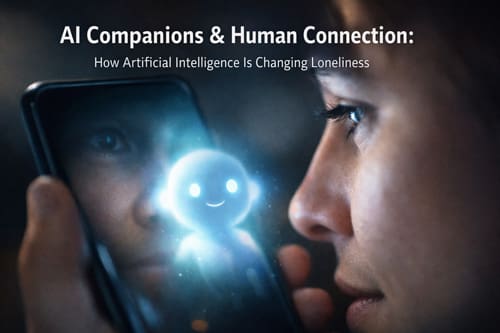
In response to this crisis, technology companies have developed increasingly sophisticated artificial intelligence companions designed to provide emotional support, conversation, and companionship. These AI systems range from simple chatbots to advanced virtual beings capable of maintaining long-term relationships, learning user preferences, and adapting their personalities accordingly.
For healthcare professionals, particularly those working in mental health, primary care, and geriatrics, understanding AI companions has become essential. Patients increasingly report using these technologies, and their impact on psychological well-being, social skills, and treatment outcomes requires careful examination. This paper provides an evidence-based analysis of AI companions, their effects on loneliness, and their implications for clinical practice.
The rapid advancement of AI technology has created companions that can engage in meaningful conversations, remember personal details, and provide emotional support around the clock. Unlike human relationships, these AI companions are always available, never judge, and can be tailored to individual preferences and needs. However, their growing popularity raises important questions about the nature of human connection and the potential consequences of forming attachments to artificial beings.

The Science of Loneliness and Social Connection
Understanding the impact of AI companions requires first examining the biological and psychological mechanisms underlying loneliness and social connection. Loneliness is not simply the absence of social contact but rather the subjective experience of discrepancy between desired and actual social relationships.
From a neurobiological perspective, loneliness activates the same pain pathways in the brain as physical injury. The anterior cingulate cortex and right ventral striatum show increased activity during experiences of social exclusion, explaining why loneliness literally hurts. Chronic loneliness triggers inflammatory responses similar to those seen in physical stress, leading to increased production of cortisol and inflammatory cytokines.
The health consequences of loneliness are well-documented and severe. Research demonstrates that chronic loneliness increases mortality risk by 50%, equivalent to smoking 15 cigarettes daily. It elevates risk for cardiovascular disease, dementia, depression, and immune system dysfunction. The physiological impact occurs through multiple pathways, including disrupted sleep, increased inflammation, and dysregulation of the hypothalamic-pituitary-adrenal axis.
Social connection, conversely, activates reward pathways in the brain, releasing oxytocin, dopamine, and endogenous opioids. These neurochemical responses reinforce social bonding and contribute to improved mental and physical health outcomes. The question becomes whether artificial companions can trigger similar neurochemical responses and provide comparable health benefits.
Recent neuroimaging studies suggest that interactions with AI companions can indeed activate some of the same neural pathways as human social interaction. The brain’s social cognition networks, including the medial prefrontal cortex and temporoparietal junction, show activation patterns during AI interaction similar to those seen in human conversation. However, the magnitude and persistence of these responses appear to differ from genuine human connection.
Current AI Companion Technologies 

The landscape of AI companions has evolved rapidly, encompassing various platforms and capabilities. Text-based companions like Replika, Character.AI, and ChatGPT offer conversational partners available through smartphones and computers. These systems use large language models trained on extensive datasets to generate human-like responses and maintain coherent conversations over extended periods.
Voice-based AI companions, including Amazon’s Alexa and Google Assistant, provide auditory interaction that can feel more natural than text exchanges. Advanced versions can recognize emotional states through voice analysis and adjust their responses accordingly. Some systems incorporate speech synthesis technology that creates unique voices and speaking patterns for each AI companion.
Visual AI companions represent the cutting edge of current technology. Applications like Anima and Chai create virtual beings with visual representations that users can customize. These companions maintain persistent personalities, remember past conversations, and develop ongoing relationships with users. Some experimental systems incorporate augmented reality, allowing AI companions to appear in users’ physical environments.
The sophistication of these systems varies considerably. Basic chatbots follow predetermined conversation trees, while advanced AI companions use machine learning algorithms to generate novel responses and adapt their behavior based on user interactions. The most advanced systems can engage in complex emotional conversations, provide personalized advice, and maintain long-term memory of relationship details.
Table 1 below illustrates the key characteristics and capabilities of major AI companion platforms:
|
Platform |
Interface Type |
Key Features |
Primary Demographics |
Reported Benefits |
|---|---|---|---|---|
|
Replika |
Text/Voice/AR |
Personalized AI friend, emotional support, customizable avatar |
Adults 18-35, 60% female |
Reduced loneliness, emotional outlet, judgment-free conversation |
|
Character.AI |
Text |
Multiple AI personalities, role-playing scenarios, creative writing |
Teens and young adults |
Entertainment, creative expression, social skill practice |
|
Woebot |
Text |
CBT-based therapeutic conversations, mood tracking |
Adults seeking mental health support |
Anxiety reduction, mood improvement, coping skill development |
|
ElliQ |
Voice/Visual |
Eldercare companion, health reminders, family connection |
Elderly adults 65+ |
Medication adherence, social engagement, family communication |
|
Xiaoice |
Voice/Text |
Emotional AI with long-term memory, poetry writing, singing |
Adults in China/Japan |
Emotional support, creative collaboration, daily companionship |
Psychological Effects of AI Companions
Research on the psychological effects of AI companions reveals both promising benefits and concerning risks. Multiple studies demonstrate that regular interaction with AI companions can reduce self-reported loneliness scores and improve mood in the short term. Users frequently report feeling heard, understood, and emotionally supported by their AI companions.
A randomized controlled trial involving 300 participants found that those using AI companions for eight weeks showed reduced loneliness scores compared to controls. The effect size was moderate but statistically meaningful, with participants reporting improved sleep quality and reduced anxiety symptoms. However, follow-up assessments revealed that benefits diminished rapidly after AI companion use was discontinued.
The therapeutic potential of AI companions appears particularly promising for specific populations. Elderly individuals with limited social contact show notable improvements in mood and cognitive engagement when using AI companions regularly. The 24/7 availability addresses the temporal mismatch between when seniors need social interaction and when human support is available.
For individuals with social anxiety, AI companions provide a safe environment to practice social skills without fear of judgment or rejection. Users report feeling more comfortable expressing emotions and discussing personal topics with AI companions than with humans initially. Some successfully transfer these communication skills to human relationships over time.
However, concerning patterns have also emerged. Some users develop intense emotional attachments to AI companions that interfere with human relationships. Case reports describe individuals who prefer AI interaction to human contact, gradually withdrawing from family and friends. The risk appears highest among individuals with pre-existing attachment difficulties or social skill deficits.
The phenomenon of AI companion dependency resembles other behavioral addictions. Users report spending excessive time interacting with AI companions, feeling anxious when separated from their devices, and prioritizing AI relationships over human connections. The always-available, perfectly accommodating nature of AI companions can make human relationships seem demanding and unsatisfying by comparison.
Research also indicates potential negative effects on empathy and social cognition. Prolonged interaction with AI companions, which lack genuine emotions and cannot truly reciprocate care, may impair users’ ability to recognize and respond to authentic human emotions. This “empathy erosion” could have lasting consequences for relationship formation and maintenance.
Clinical Applications and Therapeutic Potential
Despite the risks, AI companions show substantial promise as therapeutic tools when used appropriately. Mental health professionals are beginning to integrate AI companions into treatment protocols, particularly for anxiety, depression, and social skill development.
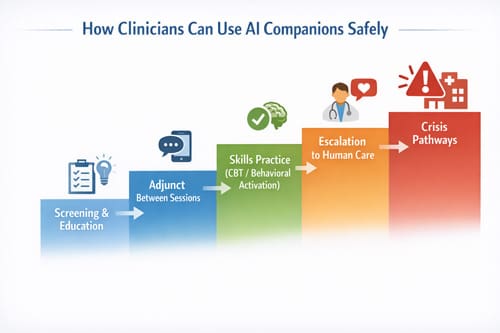
Cognitive-behavioral therapy (CBT) delivered through AI companions has shown efficacy comparable to traditional CBT for mild to moderate depression and anxiety. AI systems like Woebot use evidence-based therapeutic techniques, delivering psychoeducation, cognitive restructuring exercises, and behavioral activation strategies. The 24/7 availability allows patients to access support during crisis moments when human therapists are unavailable.
For individuals with autism spectrum disorders, AI companions provide structured social interaction opportunities. The predictable, patient nature of AI companions reduces anxiety while allowing practice of social skills in a controlled environment. Several pilot studies demonstrate improvements in eye contact, conversational turn-taking, and emotional expression among autistic individuals using AI companions.
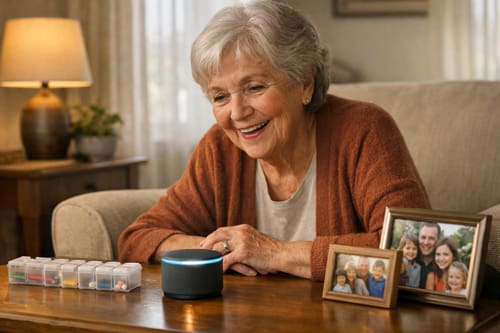
In geriatric care, AI companions address multiple challenges simultaneously. They provide cognitive stimulation through conversation and games, offer medication reminders and health monitoring, and reduce isolation among elderly individuals. Nursing homes implementing AI companion programs report decreased behavioral problems and reduced use of psychotropic medications among residents.
The integration of AI companions with traditional therapy shows particular promise. Therapists can review AI interaction logs to gain insights into patients’ daily emotional states, thought patterns, and behavioral trends. This data provides valuable information for treatment planning and progress monitoring that would be difficult to obtain through weekly therapy sessions alone.
AI companions also serve as bridges to human connection. Therapists report that patients who initially struggle with human interaction often develop confidence through AI companion use, eventually becoming more comfortable in human therapeutic relationships. The AI companion serves as training wheels for social and emotional skills that transfer to human relationships.
Challenges and Limitations
The implementation of AI companions in healthcare settings faces numerous challenges and limitations that require careful consideration. Privacy concerns top the list, as AI companions collect vast amounts of intimate personal information. Users share thoughts, feelings, and experiences they might not disclose to family members or friends, creating extensive databases of sensitive psychological data.
Data security becomes particularly critical given the vulnerable populations often drawn to AI companions. Elderly individuals, those with mental health conditions, and socially isolated people may lack the technical knowledge to understand privacy implications. Healthcare providers must consider how patient AI companion use affects confidentiality and what obligations exist to protect this information.
The accuracy and appropriateness of AI responses present another challenge. While AI companions generally provide supportive responses, they can occasionally generate harmful or inappropriate content. Cases have been reported of AI companions providing medical advice, encouraging risky behaviors, or making statements that contradict therapeutic goals. Unlike human companions, AI systems lack true understanding of context and consequences.
Ethical considerations around informed consent become complex with AI companions. Users often develop emotional attachments before fully understanding the artificial nature of their companion. The question arises whether true informed consent is possible for relationships that feel genuine but involve artificial entities programmed to be appealing and accommodating.
The potential for manipulation concerns many researchers and clinicians. AI companions are designed to maximize user engagement and satisfaction, which could lead to exploitation of vulnerable individuals. The profit motives of technology companies may not align with users’ best interests, creating conflicts between engagement and well-being.
Cultural and demographic factors influence AI companion effectiveness and acceptance. Research conducted primarily in Western, educated populations may not generalize to diverse cultural contexts. Different cultures have varying concepts of appropriate social interaction, emotional expression, and technology use that affect AI companion implementation.
The question of therapeutic boundaries becomes murky with AI companions. Traditional therapy maintains clear boundaries between therapist and client, but AI companions often encourage users to view them as friends or romantic partners. This blurring of therapeutic relationships could interfere with professional treatment or create unrealistic expectations for human relationships.
Comparison with Traditional Interventions
Comparing AI companions to traditional interventions for loneliness reveals distinct advantages and disadvantages of each approach. Traditional interventions include psychotherapy, support groups, community programs, and medication for underlying mental health conditions contributing to social isolation.
Individual psychotherapy addresses the root causes of loneliness more effectively than AI companions. Human therapists can identify and treat underlying depression, anxiety, or personality disorders that contribute to social difficulties. They provide genuine empathy, emotional attunement, and personalized treatment plans that AI systems cannot match. However, therapy requires significant time, financial resources, and availability that many patients lack.
Support groups offer authentic human connection and shared experiences that AI companions cannot provide. The knowledge that others have faced similar struggles and successfully overcome them provides hope and practical strategies. Group members can offer genuine friendship and ongoing support outside of formal meetings. However, support groups require overcoming initial social anxiety to attend, may not be available in all geographic areas, and depend on group chemistry for effectiveness.
Community-based interventions, such as volunteer programs, religious organizations, and recreational activities, provide opportunities for meaningful human connection and purpose. These activities embed individuals in social networks that can provide ongoing support and friendship. However, they require significant initiative and social skills to access and may not address the underlying causes of loneliness.
Pharmacological interventions can treat depression and anxiety that contribute to social isolation but do not directly address loneliness itself. Medications may improve mood and energy levels, making social connection more appealing, but they do not provide the actual social interaction that lonely individuals need.
AI companions offer several advantages over traditional interventions. They are immediately available without waiting lists or scheduling constraints. Cost barriers are minimal compared to therapy or medication. No transportation is required, making them accessible to homebound individuals. The non-judgmental nature of AI companions may appeal to individuals who fear stigma associated with mental health treatment.
However, AI companions cannot provide the depth, authenticity, and reciprocity of human relationships. They may provide temporary symptom relief without addressing underlying causes of loneliness. The risk of dependency and interference with human relationships represents a potential disadvantage not seen with traditional interventions.
The most effective approach likely combines AI companions with traditional interventions rather than viewing them as mutually exclusive options. AI companions can provide interim support between therapy sessions, help individuals practice social skills before joining support groups, or offer companionship that motivates engagement in community activities.
Future Directions and Research Needs
The field of AI companions is evolving rapidly, with several promising developments on the horizon. Advances in natural language processing, emotional AI, and virtual reality are creating increasingly sophisticated and lifelike companions. Future systems may incorporate biometric monitoring to detect stress, depression, or other health indicators and adjust their interactions accordingly.
Integration with healthcare systems represents a major opportunity for future development. AI companions could monitor medication adherence, track mood and sleep patterns, and alert healthcare providers to concerning changes. This integration could improve care coordination and enable early intervention for mental health crises.
Research needs in this field are extensive and urgent. Long-term longitudinal studies are essential to understand the sustained effects of AI companion use on mental health, social skills, and relationship formation. Most current research focuses on short-term outcomes, leaving questions about long-term benefits and risks unanswered.
Comparative effectiveness research should examine how AI companions perform relative to traditional interventions across different populations and conditions. Randomized controlled trials comparing AI companions to therapy, support groups, and medication would provide evidence for optimal treatment selection and combination approaches.
Studies examining the neural mechanisms of AI companion interaction could inform the development of more effective systems. Understanding how the brain responds to artificial social interaction could guide the design of AI companions that maximize therapeutic benefits while minimizing risks.
Research on vulnerable populations requires particular attention. Children, elderly individuals, and those with mental health conditions may respond differently to AI companions and face unique risks. Age-appropriate studies with careful safety monitoring are needed to guide clinical recommendations.
Cultural adaptation research should examine how AI companions can be modified for different cultural contexts. Social interaction norms, communication styles, and concepts of appropriate relationships vary across cultures, requiring tailored approaches for global implementation.
The development of evidence-based guidelines for AI companion use in healthcare settings represents a critical need. Professional organizations should establish standards for recommending, monitoring, and integrating AI companions into treatment plans. Training programs for healthcare providers should address the benefits, risks, and appropriate use of these technologies.
Implications for Healthcare Practice
Healthcare providers across multiple specialties need to understand AI companions and their implications for patient care. The growing popularity of these technologies means that many patients are already using AI companions, whether or not they disclose this information to their healthcare providers.
Primary care physicians should inquire about AI companion use during routine visits, particularly for patients reporting loneliness, depression, or social isolation. Understanding how patients use AI companions can provide insights into their emotional needs, social support systems, and coping strategies. This information can inform treatment recommendations and help identify patients who might benefit from additional mental health resources.
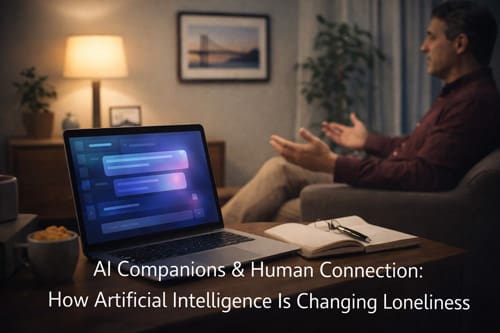
Mental health professionals need to consider AI companion use in treatment planning and case conceptualization. For some patients, AI companions may interfere with therapeutic goals or indicate concerning patterns of social withdrawal. For others, AI companions might serve as valuable adjuncts to traditional therapy, providing support between sessions and opportunities to practice therapeutic skills.
Geriatricians and eldercare specialists should be particularly familiar with AI companions, as elderly individuals represent a growing user demographic. AI companions can address multiple challenges common in geriatric care, including medication adherence, cognitive stimulation, and social isolation. However, elderly individuals may also be more vulnerable to dependency or exploitation.
Pediatric healthcare providers need to understand how children and adolescents interact with AI companions. Young people are early adopters of new technologies and may develop intense relationships with AI companions during critical periods of social and emotional development. The impact on identity formation, social skill development, and peer relationships requires careful monitoring.
Healthcare institutions should develop policies addressing AI companion use among patients and staff. Privacy protections, data security measures, and guidelines for clinical integration need to be established. Staff training programs should address the benefits and risks of AI companions to ensure informed clinical decision-making.
The integration of AI companion data into electronic health records presents both opportunities and challenges. While AI interaction patterns could provide valuable clinical insights, privacy concerns and data management issues require careful consideration. Clear protocols for obtaining consent, protecting data, and using AI companion information in clinical care need to be developed.
Regulatory and Ethical Considerations
The rapid growth of AI companions has outpaced regulatory oversight, creating a landscape where powerful psychological tools operate with minimal oversight. Current regulations focus primarily on data privacy and consumer protection rather than the psychological and social impacts of these technologies.
The Food and Drug Administration has begun evaluating AI companions that make explicit therapeutic claims, but many systems operate in regulatory gray areas. Platforms that provide emotional support without claiming to treat specific medical conditions may avoid medical device regulations while still influencing users’ mental health.
Professional licensing boards have not yet addressed how AI companions relate to the practice of psychology, counseling, or social work. Questions arise about whether certain AI companion functions constitute the unlicensed practice of psychology and what oversight is appropriate to protect vulnerable users.
Informed consent presents particular challenges with AI companions. Users often develop emotional attachments before fully understanding the artificial nature of their interactions. Traditional informed consent models may be inadequate for relationships that feel genuine but involve non-human entities programmed for engagement rather than users’ best interests.
The vulnerability of typical AI companion users raises additional ethical concerns. Lonely, depressed, or socially isolated individuals may be particularly susceptible to forming dependent relationships with AI companions. The power dynamic between vulnerable users and AI systems designed to maximize engagement creates potential for exploitation.
Children’s use of AI companions presents special ethical considerations. Young people may not fully understand the artificial nature of AI companions and could develop unrealistic expectations for human relationships. The impact on social and emotional development during critical periods requires careful study and potentially additional protections.
International variations in regulation create additional complexity. AI companions operate across national boundaries, but privacy laws, consumer protections, and healthcare regulations vary widely. Users may interact with AI companions subject to different legal frameworks than their local healthcare providers.
Conclusion

Key Takeaways
The emergence of AI companions represents both a promising therapeutic tool and a potential risk to authentic human connection. For healthcare providers, understanding these technologies is essential as patients increasingly integrate AI companions into their daily lives and coping strategies.
The evidence suggests that AI companions can provide meaningful short-term relief from loneliness and serve as valuable adjuncts to traditional mental health treatment. They offer unique advantages including 24/7 availability, non-judgmental interaction, and accessibility for individuals who might otherwise avoid seeking help. However, the risk of dependency and interference with human relationships requires careful monitoring and clinical judgment.
Effective implementation of AI companions in healthcare requires viewing them as supplements to, rather than replacements for, human connection and professional treatment. The most beneficial approaches combine AI companions with traditional interventions, using artificial companions to bridge gaps in care while working toward authentic human relationships.
Healthcare providers need training to understand AI companions, assess their impact on patients, and integrate them appropriately into treatment plans. Professional organizations should develop evidence-based guidelines for AI companion use, and regulatory bodies need to establish appropriate oversight frameworks.
Future research should focus on long-term outcomes, comparative effectiveness, and the development of evidence-based protocols for AI companion integration into healthcare settings. Particular attention should be paid to vulnerable populations and the potential for both benefits and harms in different demographic groups.
Frequently Asked Questions:
Q: Are AI companions safe for elderly patients with dementia?
A: Current research suggests AI companions can benefit early-stage dementia patients by providing cognitive stimulation and reducing agitation. However, advanced dementia patients may become confused about the artificial nature of AI companions. Healthcare providers should assess individual cognitive capacity and monitor for signs of confusion or distress.
Q: Should I be concerned if my patient spends several hours daily interacting with an AI companion?
A: Excessive use patterns warrant evaluation, particularly if AI companion use interferes with daily functioning, human relationships, or treatment adherence. Consider underlying depression, social anxiety, or attachment issues that might drive excessive use. However, some individuals may benefit from extended AI interaction, so clinical judgment is essential.
Q: Can AI companions provide crisis intervention for suicidal patients?
A: Most AI companions are not designed for crisis intervention and may provide inappropriate responses to suicidal ideation. While some systems can recognize crisis language and provide resources, they cannot replace professional crisis intervention. Patients at risk for suicide should have access to human crisis support services.
Q: How do I assess whether an AI companion is helping or harming my patient?
A: Evaluate changes in mood, social functioning, treatment engagement, and human relationships since AI companion use began. Helpful signs include improved mood, increased motivation for social interaction, and better treatment adherence. Concerning signs include withdrawal from human contact, increased dependency on the AI companion, or interference with daily activities.
Q: What should I tell parents concerned about their teenager’s AI companion use?
A: Discuss the importance of balancing AI interaction with human relationships and real-world activities. AI companions can provide emotional support during adolescent challenges, but excessive use may interfere with social skill development. Encourage parents to maintain open communication about online relationships and monitor for signs of social withdrawal or mood changes.
Q: Are there specific AI companions you recommend for clinical use?
A: Evidence-based systems like Woebot, which uses established CBT techniques, show the most clinical promise. However, individual patient needs, preferences, and clinical goals should guide selection. Avoid platforms with concerning privacy policies or those that encourage inappropriate relationships.
Q: How do I document AI companion use in patient records?
A: Document AI companion use as you would other self-care tools or adjunct therapies. Note the type of system, duration of use, reported benefits or concerns, and impact on treatment goals. Maintain patient privacy while ensuring continuity of care information is available to other healthcare providers.
Q: What privacy concerns should I discuss with patients using AI companions?
A: Explain that AI companions collect extensive personal information that may be stored, analyzed, or shared with third parties. Recommend reviewing privacy policies, using privacy settings when available, and avoiding disclosure of sensitive information like financial data or other people’s personal details. Emphasize that AI companion conversations may not have the same confidentiality protections as healthcare communications.
References:
Andersson, G., & Titov, N. (2014). Advantages and limitations of Internet-based interventions for common mental disorders. World Psychiatry, 13(1), 4-11.
Baumeister, R. F., & Leary, M. R. (1995). The need to belong: Desire for interpersonal attachments as a fundamental human motivation. Psychological Bulletin, 117(3), 497-529.
Bickmore, T. W., Gruber, A., & Picard, R. (2005). Establishing the computer-patient working alliance in automated health behavior change interventions. Patient Education and Counseling, 59(1), 21-30.
Cacioppo, J. T., & Patrick, W. (2008). Loneliness: Human nature and the need for social connection. W. W. Norton & Company.
Darcy, A., Louie, A. K., & Roberts, L. W. (2016). Machine learning and the profession of medicine. JAMA, 315(6), 551-552.
Fiske, A., Henningsen, P., & Buyx, A. (2019). Your robot therapist will see you now: Ethical implications of embodied artificial intelligence in psychiatry, psychology, and psychotherapy. Journal of Medical Internet Research, 21(5), e13216.
Fitzpatrick, K. K., Darcy, A., & Vierhile, M. (2017). Delivering cognitive behavior therapy to young adults with symptoms of depression and anxiety using a fully automated conversational agent (Woebot): A randomized controlled trial. JMIR mHealth and uHealth, 5(6), e7785.
Holt-Lunstad, J., Smith, T. B., & Layton, J. B. (2010). Social relationships and mortality risk: A meta-analytic review. PLoS Medicine, 7(7), e1000316.
Jopling, E., LePage, J., & Lynde, B. (2018). Loneliness and social isolation among older adults: A systematic review of interventions. Aging & Mental Health, 22(7), 928-939.
Laranjo, L., Dunn, A. G., Tong, H. L., Kocaballi, A. B., Chen, J., Bashir, R., … & Coiera, E. (2018). Conversational agents in healthcare: A systematic review. Journal of the American Medical Informatics Association, 25(9), 1248-1258.
Liu, C., & Mezei, J. (2021). Building rapport and trust through equitable conversational AI. In Proceedings of the 54th Hawaii International Conference on System Sciences (pp. 4247-4256).
Luxton, D. D. (2014). Artificial intelligence in psychological practice: Current and future applications and implications. Professional Psychology: Research and Practice, 45(5), 332-339.
Miner, A. S., Chow, A., Adler, S., Zaitsev, I., Tero, P., Darcy, A., & Paepcke, A. (2016). Conversational agents and mental health: Theory-informed assessment of language and affect. In Proceedings of the Fourth International Conference on Human Agent Interaction (pp. 123-130).
Mohr, D. C., Burns, M. N., Schueller, S. M., Clarke, G., & Klinkman, M. (2013). Behavioral intervention technologies: Evidence review and recommendations for future research in mental health. General Hospital Psychiatry, 35(4), 332-338.
Panagioti, M., Geraghty, K., Johnson, J., Zhou, A., Panagopoulou, E., Chew-Graham, C., … & Hann, M. (2018). Association between physician burnout and patient safety, professionalism, and patient satisfaction: A systematic review and meta-analysis. JAMA Internal Medicine, 178(10), 1317-1331.
Pereira, J., & Díaz, Ó. (2019). Using health chatbots for behavior change: A mapping study. Journal of Medical Internet Research, 21(2), e12557.
Ritter, P., Lorig, K., Laurent, D., & Matthews, K. (2004). Internet versus in-person patient education for people with chronic conditions: A randomized controlled trial. Health Education & Behavior, 31(5), 572-583.
Schueller, S. M., Neary, M., O’Loughlin, K., & Adkins, E. C. (2018). Discovery of and interest in health apps among those with mental health needs: Survey and focus group study. Journal of Medical Internet Research, 20(6), e10141.
Suganuma, S., Sakamoto, D., & Shimoyama, H. (2018). An embodied conversational agent for unguided internet-based cognitive behavior therapy in preventative mental health: Feasibility and acceptability pilot trial. JMIR mHealth and uHealth, 6(7), e10454.
Vaidyam, A. N., Wisniewski, H., Halamka, J. D., Kashavan, M. S., & Torous, J. B. (2019). Chatbots and conversational agents in mental health: A review of the psychiatric landscape. The Canadian Journal of Psychiatry, 64(7), 456-464.
Weizenbaum, J. (1966). ELIZA—A computer program for the study of natural language communication between man and machine. Communications of the ACM, 9(1), 36-45.
Zhou, L., Gao, J., Li, D., & Shum, H. Y. (2020). The design and implementation of XiaoIce, an empathetic social chatbot. Computational Linguistics, 46(1), 53-93.
Recent Articles
Integrative Perspectives on Cognition, Emotion, and Digital Behavior

Sleep-related:
Longevity/Nutrition & Diet:
Philosophical / Happiness:
Other:
Modern Mind Unveiled
Developed under the direction of David McAuley, Pharm.D., this collection explores what it means to think, feel, and connect in the modern world. Drawing upon decades of clinical experience and digital innovation, Dr. McAuley and the GlobalRPh initiative translate complex scientific ideas into clear, usable insights for clinicians, educators, and students.
The series investigates essential themes—cognitive bias, emotional regulation, digital attention, and meaning-making—revealing how the modern mind adapts to information overload, uncertainty, and constant stimulation.
At its core, the project reflects GlobalRPh’s commitment to advancing evidence-based medical education and clinical decision support. Yet it also moves beyond pharmacotherapy, examining the psychological and behavioral dimensions that shape how healthcare professionals think, learn, and lead.
Through a synthesis of empirical research and philosophical reflection, Modern Mind Unveiled deepens our understanding of both the strengths and vulnerabilities of the human mind. It invites readers to see medicine not merely as a science of intervention, but as a discipline of perception, empathy, and awareness—an approach essential for thoughtful practice in the 21st century.
The Six Core Themes
I. Human Behavior and Cognitive Patterns
Examining the often-unconscious mechanisms that guide human choice—how we navigate uncertainty, balance logic with intuition, and adapt through seemingly irrational behavior.
II. Emotion, Relationships, and Social Dynamics
Investigating the structure of empathy, the psychology of belonging, and the influence of abundance and selectivity on modern social connection.
III. Technology, Media, and the Digital Mind
Analyzing how digital environments reshape cognition, attention, and identity—exploring ideas such as gamification, information overload, and cognitive “nutrition” in online spaces.
IV. Cognitive Bias, Memory, and Decision Architecture
Exploring how memory, prediction, and self-awareness interact in decision-making, and how external systems increasingly serve as extensions of thought.
V. Habits, Health, and Psychological Resilience
Understanding how habits sustain or erode well-being—considering anhedonia, creative rest, and the restoration of mental balance in demanding professional and personal contexts.
VI. Philosophy, Meaning, and the Self
Reflecting on continuity of identity, the pursuit of coherence, and the construction of meaning amid existential and informational noise.
Keywords
Cognitive Science • Behavioral Psychology • Digital Media • Emotional Regulation • Attention • Decision-Making • Empathy • Memory • Bias • Mental Health • Technology and Identity • Human Behavior • Meaning-Making • Social Connection • Modern Mind
Video Section