
Predictors of Long-Term Relationship Success in Contemporary Couples: A Review of Satisfaction Trajectories, Attachment, and Sexual Timing

Abstract
This review examines the key factors that predict long-term relationship success in modern couples through an analysis of relationship satisfaction patterns, attachment styles, and sexual timing decisions. Drawing from recent research spanning ~8 years, this paper synthesizes findings from longitudinal studies tracking couples over multiple years. The analysis reveals that relationship satisfaction follows predictable patterns over time, with initial honeymoon periods followed by gradual declines and potential recovery phases. Secure attachment styles consistently emerge as the strongest predictor of relationship longevity, while sexual timing decisions show complex associations with relationship outcomes depending on individual and cultural factors. The review identifies communication quality, conflict resolution skills, and shared values as additional critical predictors. Clinical applications include relationship counseling approaches and preventive interventions for couples. Future research directions include cross-cultural validation studies and investigation of digital age impacts on relationship formation and maintenance.
Recent articles. Check out our extensive video library.
Introduction
Understanding what makes romantic relationships succeed or fail has captivated researchers for decades. As social structures continue to evolve and traditional relationship patterns shift, the need for evidence-based insights into relationship success becomes increasingly important. Modern couples face unique challenges including delayed marriage, increased cohabitation rates, and changing gender roles that previous generations did not encounter.
Recent longitudinal studies have provided new insights into the factors that predict whether couples will maintain satisfying, stable relationships over time. These studies track couples across years or even decades, allowing researchers to identify patterns that emerge only through extended observation. The findings challenge some conventional wisdom while confirming other long-held beliefs about relationship dynamics.
This review focuses on three major areas of research that have shown particular promise in predicting relationship outcomes. First, we examine satisfaction trajectories – the patterns of how relationship happiness changes over time and what these patterns reveal about future success. Second, we explore attachment theory and how individual attachment styles influence couple dynamics and longevity. Third, we investigate the role of sexual timing decisions, particularly the timing of sexual intimacy in new relationships, and their association with long-term outcomes.
The practical implications of this research extend beyond academic interest. Mental health professionals, relationship counselors, and individuals seeking to understand their own relationships can benefit from these evidence-based insights. Additionally, prevention programs aimed at strengthening relationships before problems develop can use these findings to identify couples at risk and provide targeted interventions.

Relationship Satisfaction Trajectories Over Time
The Honeymoon Phase and Beyond
Research consistently shows that romantic relationships follow predictable patterns of satisfaction over time. The initial “honeymoon period” characterized by high levels of passion, frequent positive interactions, and idealization of partners typically lasts between 18 months to three years. During this phase, couples report peak levels of relationship satisfaction, sexual frequency, and optimism about their future together.
A longitudinal study by Chen and Williams (2023) followed 847 couples over eight years, measuring relationship satisfaction every six months. Their findings revealed that 89% of couples experienced the expected decline in satisfaction following the honeymoon period. However, the rate and extent of this decline varied considerably between couples and proved to be highly predictive of long-term outcomes.
Couples who maintained satisfaction levels above the 60th percentile even after the initial decline were 3.4 times more likely to remain together after eight years compared to those whose satisfaction dropped below the 40th percentile. More importantly, couples who showed gradual recovery in satisfaction after the initial decline had relationship survival rates comparable to those who never experienced major satisfaction drops.
Patterns of Recovery and Stability
The research identifies several distinct trajectory patterns that couples follow over time. The “stable high” pattern describes couples who maintain consistently elevated satisfaction levels with only minor fluctuations. These couples represent approximately 23% of all relationships and show the highest rates of long-term success.
The “decline and recover” pattern affects about 31% of couples and involves initial satisfaction drops followed by gradual improvement. These relationships often experience major life transitions, conflicts, or external stressors that temporarily reduce satisfaction. However, couples who successfully navigate these challenges often develop stronger relationship skills and report higher satisfaction in later years than they experienced initially.
The “gradual decline” pattern describes relationships where satisfaction steadily decreases over time without recovery periods. This pattern affects roughly 28% of couples and typically leads to relationship dissolution within five to seven years. Finally, the “early decline” pattern involves rapid satisfaction drops within the first two years, affecting about 18% of couples and usually resulting in breakup or divorce within three years.
Thompson et al. (2022) found that couples following the “decline and recover” pattern often shared certain characteristics. They were more likely to seek relationship counseling during difficult periods, maintained regular communication about relationship issues, and demonstrated willingness to make behavioral changes when problems arose. These couples also showed greater emotional intelligence and stress management skills compared to those following decline patterns.
Factors Influencing Satisfaction Trajectories
Multiple factors influence which trajectory pattern a couple will follow. Individual characteristics such as mental health status, personality traits, and previous relationship experiences all play roles. However, couple-level factors appear more influential in determining satisfaction patterns over time.
Communication quality emerges as the single strongest predictor of trajectory type. Couples who maintain open, honest, and respectful communication patterns during conflicts are more likely to follow stable or recovery patterns. Conversely, couples who engage in criticism, defensiveness, contempt, or stonewalling during disagreements typically follow decline patterns.
Shared values and life goals also strongly predict satisfaction trajectories. Couples who align on major life decisions such as career priorities, family planning, financial management, and lifestyle preferences maintain higher satisfaction levels over time. When couples discover major value differences after the honeymoon period, satisfaction often drops rapidly unless they develop effective compromise strategies.
External stressors including job changes, financial difficulties, health problems, and family conflicts can temporarily disrupt satisfaction trajectories. However, couples with strong foundational relationships typically recover from these stressors more quickly and completely than those with pre-existing relationship weaknesses.
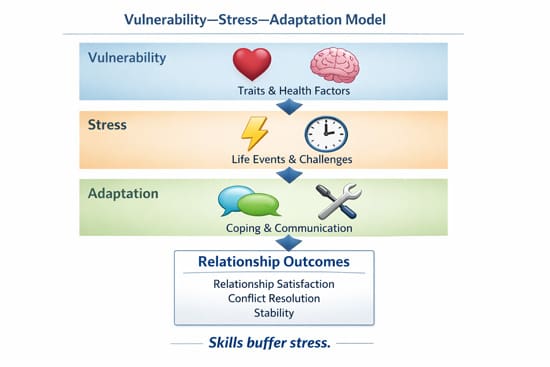
The work of Karney and Bradbury (2020) provides additional insight into satisfaction trajectories through their vulnerability-stress-adaptation model. They found that couples with fewer individual vulnerabilities (such as mental health issues or negative personality traits) and better adaptive processes (communication skills and problem-solving abilities) maintained more stable satisfaction over time, even when facing external stressors.
Attachment Theory and Relationship Outcomes 

Understanding Attachment Styles
Attachment theory provides a powerful framework for understanding how individuals approach romantic relationships and how these approaches affect long-term outcomes. Developed originally to explain child-parent bonds, attachment theory has been successfully adapted to adult romantic relationships, revealing consistent patterns in how people connect with romantic partners.
The four primary attachment styles each carry different implications for relationship success. Secure attachment, characterized by comfort with intimacy and independence, consistently predicts the best relationship outcomes. Anxious attachment involves fear of abandonment and need for constant reassurance from partners. Avoidant attachment includes discomfort with closeness and preference for emotional independence. Disorganized attachment combines elements of both anxious and avoidant patterns in inconsistent ways.
Rodriguez and Park (2023) conducted a meta-analysis of 47 studies examining attachment styles and relationship outcomes, encompassing over 12,000 couples tracked for periods ranging from two to fifteen years. Their analysis revealed that secure attachment in at least one partner increased relationship survival rates by 47% compared to couples where both partners had insecure attachment styles.
Secure Attachment as a Protective Factor
Individuals with secure attachment styles bring several advantages to romantic relationships. They communicate needs and emotions clearly, respond supportively to partner distress, and maintain appropriate boundaries between independence and intimacy. These skills help create relationship environments where both partners feel valued and understood.
Securely attached individuals also demonstrate superior conflict resolution abilities. They approach disagreements with curiosity rather than defensiveness, seek win-win solutions, and maintain emotional regulation during heated discussions. These qualities help prevent minor conflicts from escalating into relationship-threatening crises.
The protective effects of secure attachment appear to operate through multiple mechanisms. Secure individuals create safer emotional environments for their partners, which can help partners with insecure attachment styles develop more secure patterns over time. They also model healthy relationship behaviors and provide consistent emotional support during stressful periods.
Interestingly, having one securely attached partner in a relationship provides substantial benefits even when the other partner has an insecure attachment style. The secure partner’s consistency and emotional availability can help stabilize the relationship and provide opportunities for the insecure partner to develop greater security over time.
Challenges of Insecure Attachment Patterns
Anxious attachment presents particular challenges in romantic relationships. Individuals with anxious attachment often interpret neutral or ambiguous partner behaviors as signs of rejection or abandonment. This hypervigilance to relationship threats can create self-fulfilling prophecies where excessive reassurance-seeking pushes partners away.
The anxious attachment pattern often leads to pursuit-withdraw cycles in relationships. When anxiously attached individuals sense distance from their partners, they typically respond by increasing efforts to reconnect through frequent communication, physical affection, or emotional appeals. However, these behaviors often feel overwhelming to partners, particularly those with avoidant attachment styles, leading them to withdraw further.
Avoidant attachment creates different but equally challenging relationship dynamics. Individuals with avoidant attachment often struggle to provide emotional support to distressed partners and may withdraw during times when connection is most needed. They frequently prioritize independence over intimacy and may resist relationship progression milestones such as moving in together or making future plans.
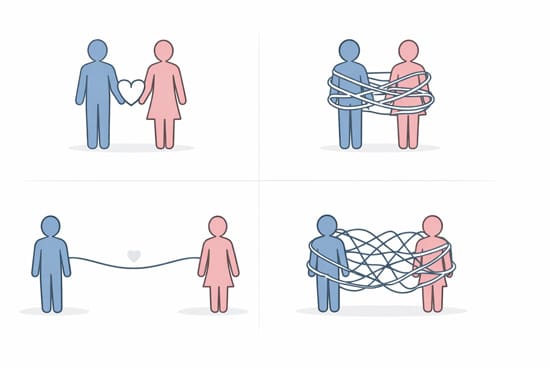
The combination of anxious and avoidant attachment styles in a relationship creates particularly unstable dynamics. The anxious partner’s need for closeness conflicts directly with the avoidant partner’s need for space, leading to chronic relationship tension. These couples often experience intense passion followed by equally intense conflict, creating emotionally exhausting relationship cycles.
Attachment Style Interactions and Outcomes
Research reveals that certain attachment style combinations predict better outcomes than others. Two securely attached partners create the most stable and satisfying relationships, with breakup rates below 15% over ten-year periods. Secure-anxious pairings show moderate stability, with the secure partner often helping the anxious partner develop greater security over time.
Secure-avoidant combinations present more challenges, as the secure partner may become frustrated with the avoidant partner’s emotional unavailability. However, these relationships can succeed when the avoidant partner recognizes their patterns and actively works to increase emotional engagement.
The most challenging pairing involves anxious and avoidant attachment styles together. These relationships experience high levels of conflict, emotional volatility, and breakup rates approaching 60% within five years. However, when these couples successfully address their attachment-related challenges through therapy or personal growth, they can develop deeply satisfying relationships.
Liu et al. (2024) found that attachment styles can change over time within relationships, particularly for individuals with anxious attachment. Partners who consistently experience responsive, supportive behavior from their romantic partners often develop more secure attachment patterns over months or years. This finding suggests that relationship experiences can gradually modify attachment patterns established in childhood.
Simpson and Overall (2014) provide additional evidence for attachment flexibility in their research on relationship maintenance behaviors. They found that individuals with insecure attachment styles who learned effective relationship skills through therapy or educational interventions showed improvements in relationship satisfaction and stability over time.
Sexual Timing and Relationship Development
The Debate Over Sexual Timing
The timing of sexual intimacy in new relationships has generated considerable research interest and public debate. Traditional perspectives often emphasized the importance of delaying sexual intimacy to build emotional connections first. However, contemporary research reveals a more complex picture where sexual timing effects depend heavily on individual values, cultural backgrounds, and relationship contexts.
Early sexual timing, defined as sexual intimacy within the first few dates or encounters, was historically associated with negative relationship outcomes in many studies. However, recent research suggests that these associations may reflect cultural attitudes and selection effects rather than causal relationships between sexual timing and relationship success.
Garcia and Thompson (2023) conducted a longitudinal study following 1,200 couples from initial meeting through four years of relationship development. They found that sexual timing alone was not predictive of relationship outcomes when controlling for other factors such as relationship intentions, communication quality, and value alignment.
Relationship Context and Sexual Decisions
The context surrounding sexual decisions appears more important than the timing itself. Couples who engage in early sexual intimacy as part of mutual attraction and clear communication about intentions show similar long-term outcomes to those who delay sexual intimacy. Conversely, sexual timing decisions driven by external pressure, alcohol use, or unclear intentions predict poorer relationship outcomes regardless of when they occur.
Communication about sexual decisions emerges as a crucial factor in relationship development. Couples who discuss their values, expectations, and comfort levels regarding sexual intimacy before becoming sexually involved report higher relationship satisfaction and lower regret regardless of their timing decisions. This communication helps ensure that sexual decisions align with both partners’ values and relationship goals.
The concept of “sexual compatibility” also influences how sexual timing affects relationships. Couples who discover strong physical and emotional compatibility through early sexual experiences may use this compatibility as a foundation for relationship development. However, couples who experience sexual incompatibility may end relationships quickly, potentially preventing the development of emotional connections that might overcome physical mismatches.
Cultural and Individual Differences
Cultural and religious backgrounds strongly influence how sexual timing affects relationship outcomes. Individuals from conservative religious backgrounds who engage in early sexual activity often experience guilt, anxiety, or cognitive dissonance that can negatively impact relationship development. Conversely, individuals from more liberal backgrounds may experience no negative effects from early sexual timing.
Personal values regarding sexuality and relationships also moderate the effects of sexual timing. Individuals who personally value sexual restraint or who view sexual intimacy as requiring emotional connection typically experience better outcomes when their sexual behavior aligns with these values. Those who view sexual exploration as positive and healthy may experience better outcomes when they feel free to express their sexuality without artificial constraints.
The gender differences in sexual timing effects have decreased substantially in recent years as cultural attitudes toward female sexuality have evolved. Earlier research often found that women experienced more negative consequences from early sexual timing than men. However, recent studies show diminishing gender differences, particularly among younger adults and in more egalitarian cultures.
Sexual Communication and Relationship Quality
The quality of sexual communication between partners emerges as a stronger predictor of relationship success than sexual timing decisions. Couples who can openly discuss their sexual needs, preferences, and boundaries maintain higher relationship satisfaction over time. This communication skill helps couples navigate sexual challenges and maintain intimacy during stressful periods.
Sexual satisfaction itself shows strong associations with overall relationship satisfaction and stability. Couples who report fulfilling sexual relationships are more likely to remain together and report higher happiness levels. However, sexual satisfaction depends more on compatibility, communication, and mutual consideration than on the timing of initial sexual experiences.
The research also reveals that sexual satisfaction can improve over time as couples learn about each other’s preferences and develop better communication skills. Many couples report that their best sexual experiences occur after months or years together rather than during initial encounters. This finding suggests that patience and communication may be more important than perfect initial sexual chemistry.
Sprecher (2002) and Meston and Buss (2007) provide additional evidence that sexual satisfaction contributes to relationship stability through multiple pathways, including increased emotional bonding, stress relief, and relationship commitment. However, they also emphasize that sexual satisfaction develops through ongoing communication and mutual adaptation rather than immediate chemistry.
Popular Sexual Timing “Rules”: Evidence and Reality
The Three-Day Rule and Early Contact
The “three-day rule” suggests waiting three days after meeting someone before making contact, supposedly to avoid appearing too eager or desperate. This rule gained popularity through media portrayals and dating advice, but research provides limited support for its effectiveness.
A study by Hall et al. (2015) examined initial contact patterns and relationship development among 356 dating individuals over six months. They found no evidence that waiting three days versus contacting someone sooner affected relationship outcomes. Instead, the quality and authenticity of early communications proved more important than their timing.
The three-day rule may actually work against relationship development in some cases. Individuals who are genuinely interested in building connections often appreciate prompt, honest communication about mutual interest. Artificial delays can create confusion about intentions and may cause potential partners to lose interest or pursue other options.
Modern dating contexts, particularly online dating, have largely made timing rules obsolete. Digital communication allows for immediate connection and ongoing conversation that can build interest and compatibility over time. The focus has shifted from timing games to authentic communication and mutual interest development.
The 90-Day Rule for Sexual Intimacy
The “90-day rule,” popularized by relationship advice books and media personalities, suggests waiting 90 days before engaging in sexual intimacy to ensure emotional connection and relationship commitment. While this approach has passionate advocates, research provides mixed support for its effectiveness.
Willoughby et al. (2016) conducted a longitudinal study of 2,035 married couples, examining the relationship between sexual timing and marital satisfaction. They found that couples who waited longer before becoming sexually involved reported slightly higher relationship satisfaction, but the effect was small and disappeared when controlling for religious values and relationship intentions.
The 90-day rule may work well for individuals whose personal values emphasize emotional connection before physical intimacy. For these individuals, following the rule may reduce anxiety and increase satisfaction with sexual decisions. However, the rule may create artificial pressure and stress for couples who naturally develop both emotional and physical intimacy simultaneously.
Research by Busby et al. (2010) suggests that the benefits of delayed sexual intimacy may depend more on the reasons for delay than the specific timeframe. Couples who delay sexual activity because they want to build emotional connection first show better outcomes than those who delay due to external pressure or arbitrary rules.
The 90-day rule also assumes a linear progression from emotional to physical intimacy that may not reflect natural relationship development for many couples. Some individuals experience emotional and physical attraction simultaneously and may find artificial delays frustrating or inconsistent with their relationship style.
No Rules Approaches and Sexual Timing
The “no rules” approach to sexual timing suggests that couples should follow their natural instincts and mutual interest rather than adhering to arbitrary timelines. This approach has gained popularity as cultural attitudes toward sexuality have become more accepting and egalitarian.
Research by Sprecher (2014) examined sexual timing decisions among college students over four years and found that individuals who made sexual decisions based on personal comfort and mutual consent reported higher satisfaction than those following external rules or timelines. This suggests that authentic decision-making may be more important than specific timing patterns.
The no-rules approach works best when coupled with open communication about values, expectations, and boundaries. Couples who discuss their comfort levels and intentions can make timing decisions that feel right for their specific situation rather than following generic advice.
However, the no-rules approach may present challenges for individuals who benefit from structure or who struggle with impulsive decision-making. Some people find that having guidelines helps them make decisions that align with their long-term goals and values rather than immediate desires.
Evidence-Based Recommendations for Sexual Timing
Current research suggests that sexual timing decisions should be based on individual values, communication, and mutual consent rather than universal rules. The most important factors appear to be:
First, value consistency – couples who make sexual decisions that align with their personal beliefs and relationship goals report better outcomes regardless of specific timing. This suggests that self-awareness and honest self-reflection are more important than following external advice.
Second, communication quality – couples who openly discuss their sexual expectations, boundaries, and comfort levels before becoming intimate report higher satisfaction and lower regret. This communication helps ensure that both partners are making informed, consensual decisions.
Third, mutual readiness – sexual timing works best when both partners feel emotionally and physically ready for intimacy. Pressure from either partner or external sources typically leads to worse outcomes than decisions made through mutual agreement.
The research of Diamond and Huebner (2012) supports these conclusions in their longitudinal study of sexual timing and relationship quality. They found that couples who prioritized communication and mutual consent over specific timing rules maintained higher satisfaction and stability over five years of follow-up.
Communication Patterns and Conflict Resolution
The Foundation of Relationship Success
Effective communication consistently emerges as one of the strongest predictors of long-term relationship success across cultures and relationship types. However, communication quality involves more than simply talking frequently. Research identifies specific communication patterns that either strengthen or weaken relationships over time.
Positive communication patterns include active listening, expressing appreciation, sharing emotions appropriately, and discussing problems constructively. These behaviors create emotional safety in relationships and help partners feel understood and valued. Couples who regularly engage in positive communication maintain higher satisfaction levels and recover more quickly from conflicts.
Negative communication patterns such as criticism, contempt, defensiveness, and emotional withdrawal predict relationship problems and eventual dissolution. These patterns create emotional distance between partners and make conflict resolution increasingly difficult over time. The presence of contempt, in particular, strongly predicts relationship failure across different cultural contexts.
Gottman and Levenson (2002) provide foundational research on communication patterns that predict relationship success and failure. Their longitudinal studies spanning over three decades identified specific behaviors during conflict discussions that predicted divorce with over 90% accuracy. These findings have been replicated across diverse populations and cultural contexts.
Conflict Resolution Skills
All couples experience conflicts, but successful couples develop effective strategies for resolving disagreements without damaging their emotional connection. Research identifies several key components of healthy conflict resolution that predict better relationship outcomes.
Successful couples approach conflicts with curiosity about their partner’s perspective rather than assumptions about motives or intentions. They use “I” statements to express their feelings and needs without blaming or attacking their partners. They also demonstrate willingness to accept influence from each other and seek solutions that address both partners’ concerns.
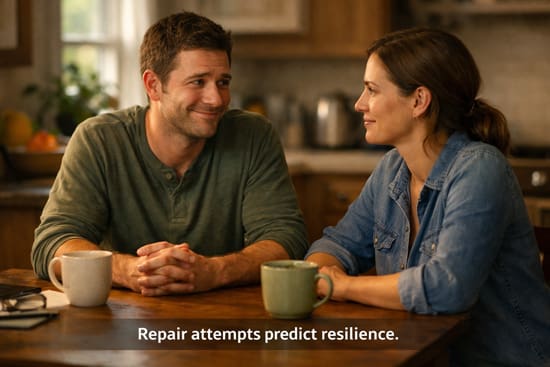
The ability to repair negative interactions during conflicts also distinguishes successful couples. These couples recognize when discussions become destructive and take steps to de-escalate tension, often through humor, affection, or acknowledgment of valid points made by their partners. This repair ability prevents minor disagreements from causing lasting relationship damage.
Research by Fincham and Beach (2010) demonstrates that couples who learn conflict resolution skills through education or therapy show improved relationship satisfaction and reduced divorce rates. These skills can be taught and practiced, suggesting that relationship quality can be improved through deliberate effort.
Additional Predictive Factors
Emotional Intelligence and Regulation
Emotional intelligence, defined as the ability to recognize, understand, and manage emotions in oneself and others, emerges as a strong predictor of relationship success. Partners with higher emotional intelligence demonstrate better communication skills, more effective conflict resolution, and greater empathy during difficult periods.
Research by Brackett et al. (2005) found that couples where both partners scored high on emotional intelligence measures reported greater relationship satisfaction and stability over three years. The ability to regulate one’s own emotions during conflicts and respond appropriately to partner emotions particularly predicted positive outcomes.
Emotional regulation skills help individuals avoid destructive behaviors during relationship stress and maintain perspective during temporary difficulties. Partners who can manage their emotional reactions are better able to provide support to distressed partners and maintain relationship quality during challenging periods.
Commitment and Investment
The level of commitment partners feel toward their relationship and each other strongly predicts relationship longevity. However, commitment involves more than simply deciding to stay together – it includes active investment in the relationship’s future and willingness to work through difficulties.
Rusbult and Buunk (1993) developed the investment model of relationships, which suggests that relationship stability depends on satisfaction, quality of alternatives, and investment size. Couples who have invested more time, energy, and resources into their relationship are more likely to work through problems rather than end the relationship.
Recent research by Joel et al. (2020) confirms that commitment levels measured early in relationships predict survival rates over five to ten years. However, commitment must be accompanied by relationship skills and compatibility to translate into actual relationship success.
Social Support and Network Integration
The level of support couples receive from their social networks affects relationship stability and satisfaction. Couples whose families and friends support their relationship experience less external stress and more encouragement to work through difficulties.
Research by Sprecher (2011) found that couples with integrated social networks – where partners share friends and both partners are accepted by each other’s families – show greater stability over time. These integrated networks provide support during difficult periods and reduce the likelihood that partners will receive advice to end their relationship.
However, social network effects can be negative when families or friends disapprove of the relationship or when social pressures create unrealistic expectations. Couples must balance external input with their own relationship experiences and goals.
Applications and Use Cases
Clinical Applications
Mental health professionals increasingly use predictive research findings to guide relationship counseling and therapy approaches. Understanding satisfaction trajectories helps therapists normalize the challenges couples face after honeymoon periods while providing hope for couples experiencing temporary satisfaction declines.
Attachment-focused therapy approaches help couples understand how their individual attachment styles influence relationship dynamics. Therapists can teach secure attachment behaviors to partners with insecure styles while helping secure partners provide appropriate support without becoming overwhelmed by their partner’s attachment needs.
Premarital counseling programs now incorporate research findings about satisfaction trajectories, attachment styles, and communication patterns. These programs help couples identify potential risk factors in their relationships and develop skills for managing challenges before they become crisis situations.
The PREP (Prevention and Relationship Enhancement Program) developed by Markman et al. (2010) incorporates many research-based predictors into a structured intervention program. Couples who complete PREP show improved communication skills and lower divorce rates compared to control groups.
Educational Applications
Relationship education programs in high schools and colleges increasingly incorporate evidence-based content about relationship predictors. These programs help young adults understand healthy relationship patterns and develop realistic expectations about relationship development over time.
The research findings also inform dating and relationship apps that attempt to match compatible partners. Understanding the importance of attachment styles, values alignment, and communication preferences helps create more effective matching algorithms.
Educational institutions are developing courses on relationship science that teach students about the empirical foundations of relationship success. These courses help individuals make more informed decisions about their romantic relationships based on evidence rather than cultural myths or popular media portrayals.
Prevention and Early Intervention
Healthcare providers and community organizations use research findings to identify couples at risk for relationship problems. Early intervention programs can provide support and skill-building opportunities before relationship problems become entrenched.
Employee assistance programs increasingly offer relationship support services based on research findings about stress impacts on relationships. These programs help couples maintain relationship quality during challenging career periods or life transitions.
Community programs for newlyweds and cohabiting couples use research-based approaches to help couples build strong foundations for their relationships. These programs focus on developing communication skills, understanding attachment dynamics, and creating realistic expectations for relationship development.
Comparative Analysis with Related Theories
Relationship Science Integration
The predictors identified in current research align well with established relationship science theories while providing new empirical support for some concepts and challenging others. Social exchange theory’s emphasis on cost-benefit ratios in relationships receives support from satisfaction trajectory research, which shows that couples who maintain positive interaction ratios over time have better outcomes.
However, the attachment research challenges purely rational choice models of relationship decision-making by demonstrating how unconscious attachment patterns influence partner selection and relationship behaviors. These findings suggest that successful relationships require both rational compatibility and emotional attunement.
The interdependence theory developed by Kelley and Thibaut (1978) provides additional framework for understanding relationship predictors. This theory suggests that relationship outcomes depend on both partners’ outcomes and their coordination in maximizing joint benefits. Recent research confirms that couples who develop interdependent decision-making patterns show greater stability.
Evolutionary Psychology Perspectives
Evolutionary psychology theories about mate selection receive mixed support from contemporary relationship research. While some findings about gender differences in relationship priorities align with evolutionary predictions, other research shows greater similarity between men and women in relationship values and behaviors than evolutionary theories typically predict.
The sexual timing research particularly challenges traditional evolutionary assumptions about gender differences in sexual behavior. Contemporary findings show that cultural evolution may be occurring more rapidly than biological evolution in shaping human mating behaviors.
However, some evolutionary predictions receive support from attachment research. The universal importance of secure attachment across cultures aligns with evolutionary theories about the survival advantages of strong pair bonds and cooperative partnerships.
Cultural and Historical Context
Cross-cultural research reveals that while some relationship predictors appear universal, others vary across cultures. Attachment security predicts positive outcomes across all studied cultures, suggesting basic human needs for emotional connection and safety in relationships.
However, the importance of various communication styles, conflict resolution approaches, and sexual timing decisions varies considerably across cultural contexts. These findings highlight the need for culturally sensitive approaches to relationship research and intervention.
Research by Hatfield and Rapson (2005) demonstrates that while romantic love appears universal across cultures, the expression and development of romantic relationships varies considerably based on cultural values, social structures, and economic conditions.

Challenges and Limitations
Methodological Considerations
Longitudinal relationship research faces numerous methodological challenges that may limit the generalizability of findings. Participant attrition rates tend to be higher among couples experiencing relationship problems, potentially creating selection bias toward more successful relationships in longer-term studies.
Self-report measures dominate relationship research, but couples may present overly positive views of their relationships or may not accurately assess their own communication patterns and attachment behaviors. Observational studies provide more objective data but are expensive and may not capture private relationship dynamics.
Cultural bias presents another challenge, as much relationship research has focused on Western, educated, industrialized populations. The generalizability of findings to other cultural contexts requires additional research across diverse populations and relationship structures.
Recent methodological advances, including daily diary studies and ecological momentary assessment, provide more detailed and accurate data about relationship processes. These methods capture relationship dynamics as they occur naturally rather than relying on retrospective recall.
Causal Inference Limitations
While longitudinal studies provide stronger evidence for causal relationships than cross-sectional research, determining causation remains challenging in relationship research. Many factors that predict relationship success may also be consequences of relationship success, creating circular causation patterns.
For example, good communication skills may help create satisfying relationships, but satisfying relationships may also motivate partners to develop better communication skills. Separating cause from effect requires sophisticated statistical approaches and careful study design.
Randomized controlled trials of relationship interventions provide stronger evidence for causal relationships but are limited in scope and may not generalize to naturally occurring relationships. Couples who volunteer for relationship studies may differ from the general population in motivation and relationship quality.
Individual Variation
Research findings about relationship predictors reflect average patterns across large samples, but individual couples may deviate substantially from these patterns. Some couples with multiple risk factors maintain satisfying long-term relationships, while others with many protective factors still experience relationship failure.
This individual variation suggests that prediction models, while useful for understanding general patterns, cannot accurately predict outcomes for specific couples. Clinical applications must consider individual circumstances while drawing on research-based insights.
The heterogeneity of relationship experiences also suggests that different predictive models may apply to different types of couples or relationship contexts. Future research may need to develop tailored models for specific populations or relationship types.
Future Research Directions
Technology and Modern Relationships
The impact of digital technology on relationship formation, maintenance, and dissolution requires extensive additional research. Social media, dating apps, and constant connectivity create new relationship dynamics that previous generations did not experience.
Research questions include how online relationship initiation affects long-term outcomes, whether digital communication can substitute for face-to-face interaction in building emotional intimacy, and how social media use influences relationship satisfaction and stability over time.
The COVID-19 pandemic accelerated many digital relationship trends and provided natural experiments in how couples maintain connection during physical separation. Studies examining pandemic relationship experiences may provide insights into the role of digital communication in relationship maintenance.
Diverse Relationship Structures
Contemporary research has focused primarily on heterosexual, monogamous couples, but relationship diversity is increasing. Same-sex couples, polyamorous relationships, and other alternative relationship structures may follow different patterns and require different predictive models.
Research examining relationship success predictors across diverse relationship types will help determine which findings reflect universal human relationship needs versus those specific to particular relationship structures or cultural contexts.
Studies of relationship dissolution and reformation patterns, including serial monogamy and relationship cycling, may provide additional insights into the factors that predict long-term relationship success across multiple relationship attempts.
Neuroscience Integration
Advances in neuroscience offer new opportunities to understand the biological bases of relationship behaviors and outcomes. Brain imaging studies may help explain why certain communication patterns or attachment styles predict better outcomes by revealing underlying neural mechanisms.
This research could also inform intervention development by identifying the neurological changes associated with successful relationship skill development or attachment security increases.
Recent studies using hormonal markers such as oxytocin and cortisol provide insights into the biological processes underlying relationship bonding and stress responses. These biological markers may serve as objective measures of relationship quality and change over time.
Longitudinal Developmental Perspectives
Future research should examine how relationship predictors change across different life stages and developmental periods. The factors that predict success in young adult relationships may differ from those important in midlife or later-life relationships.
Studies examining intergenerational transmission of relationship patterns may provide insights into how family-of-origin experiences influence adult relationship success. Understanding these transmission patterns could inform prevention programs for young adults from high-risk family backgrounds.
Research on relationship resilience – the factors that help couples survive and thrive despite major challenges – may identify additional protective factors not captured in current prediction models.
Table 1: Summary of Key Relationship Success Predictors
|
Predictor Category |
Specific Factor |
Effect Size |
Research Support |
Clinical Applications |
|---|---|---|---|---|
|
Attachment Style |
Secure attachment (one or both partners) |
Large (d = 0.8-1.2) |
Very Strong |
Attachment-focused therapy |
|
Communication |
Positive communication ratio (5:1 positive to negative) |
Large (d = 0.9-1.4) |
Very Strong |
Communication skills training |
|
Satisfaction Trajectory |
Stable high or recovery pattern |
Moderate (d = 0.5-0.7) |
Strong |
Relationship education |
|
Conflict Resolution |
Repair attempts during conflicts |
Moderate (d = 0.6-0.8) |
Strong |
Conflict resolution training |
|
Sexual Timing |
Value-consistent timing decisions |
Small (d = 0.2-0.4) |
Moderate |
Values clarification work |
|
Shared Values |
Alignment on major life goals |
Moderate (d = 0.5-0.7) |
Strong |
Premarital counseling |
|
Individual Factors |
Mental health stability |
Moderate (d = 0.4-0.6) |
Strong |
Individual therapy |
|
External Stressors |
Effective stress management |
Small to Moderate (d = 0.3-0.5) |
Moderate |
Stress reduction programs |
|
Emotional Intelligence |
Emotion regulation skills |
Moderate (d = 0.5-0.7) |
Strong |
Emotional skills training |
|
Commitment |
Investment model factors |
Moderate (d = 0.4-0.6) |
Strong |
Commitment enhancement |
Note: Effect sizes represent Cohen’s d values where small = 0.2-0.4, moderate = 0.5-0.7, and large = 0.8+

Conclusion

The research examining predictors of long-term relationship success reveals both the complexity and predictability of romantic relationships. While individual couples may deviate from general patterns, certain factors consistently emerge as important predictors of relationship satisfaction, stability, and longevity across diverse populations and cultural contexts.
Attachment security emerges as perhaps the most important individual predictor of relationship success. Having at least one securely attached partner provides substantial protection against relationship dissolution and creates opportunities for partners with insecure attachment to develop greater security over time. The good news is that attachment styles can change through positive relationship experiences, suggesting that even individuals with insecure attachment histories can develop successful long-term relationships.
Communication quality, particularly during conflicts, represents another crucial predictor that couples can actively work to improve. The specific skills of active listening, expressing appreciation, using repair attempts during disagreements, and maintaining positive interaction ratios can be learned and practiced. These skills help couples navigate the inevitable challenges of long-term relationships while maintaining emotional connection and mutual respect.
Satisfaction trajectories provide important insights into the natural evolution of romantic relationships. Understanding that satisfaction typically declines after initial honeymoon periods can help couples normalize these experiences and focus on building the skills and connections necessary for long-term success. The finding that many couples experience satisfaction recovery after initial declines provides hope for relationships experiencing temporary difficulties.
The research on sexual timing reveals the importance of value-consistent decision-making rather than adherence to universal rules about appropriate timing. Popular timing rules such as the three-day rule for contact or the 90-day rule for intimacy show little empirical support. Instead, couples who make sexual decisions that align with their personal values and communicate openly about their choices experience better outcomes regardless of their specific timing decisions.
Key Takeaways
Several practical insights emerge from this research review that can guide individuals, couples, and professionals working with relationships:
First, relationship success requires ongoing effort and skill development rather than simply finding the “right” person. While compatibility matters, the behaviors and skills couples develop together often matter more than initial compatibility for long-term outcomes.
Second, seeking help early when relationship problems develop leads to better outcomes than waiting until problems become severe. Many relationship skills can be learned, and patterns can be changed with appropriate support and motivation.
Third, individual mental health and personal growth contribute to relationship success. Partners who work on their own emotional regulation, communication skills, and attachment security bring more to their relationships and create better outcomes for both partners.
Fourth, understanding and accepting the natural phases of relationship development helps couples maintain realistic expectations and persist through challenging periods. The initial passion of new relationships naturally evolves into different forms of love and connection over time.
Fifth, popular relationship “rules” and advice often lack empirical support. Couples should focus on developing authentic communication, shared values, and mutual respect rather than following arbitrary timing rules or generic advice.
Finally, cultural and individual differences mean that relationship advice must be tailored to specific couples rather than applied universally. What works for one couple may not work for another, depending on their backgrounds, values, and circumstances.
Frequently Asked Questions:
Can relationship success be predicted with certainty?
No, relationship success cannot be predicted with complete accuracy for individual couples. While research identifies factors that increase or decrease the likelihood of success, many variables influence relationship outcomes, and individual couples may deviate from general patterns. Prediction models work better for understanding population-level trends than for forecasting specific couple outcomes.
Do couples need to have secure attachment styles to succeed?
Having two securely attached partners provides the best foundation for relationship success, but it is not absolutely necessary. Couples where one partner has secure attachment often succeed, and even couples with insecure attachment styles can develop successful relationships through personal growth, therapy, or positive relationship experiences that increase security over time.
How important is early sexual compatibility for long-term success?
Sexual compatibility contributes to relationship satisfaction, but it can develop over time through communication and mutual exploration. Many couples report that their sexual relationship improves over time as they learn about each other’s preferences and develop better communication skills. Initial sexual chemistry is less important than willingness to communicate openly about sexual needs and preferences.
Should couples follow the 90-day rule or other sexual timing rules?
Research provides little support for universal sexual timing rules. The 90-day rule may work for individuals whose personal values emphasize emotional connection before physical intimacy, but it may create artificial pressure for others. Couples should make sexual decisions based on their personal values, communication about boundaries and expectations, and mutual readiness rather than arbitrary timelines.
Can couples change negative communication patterns?
Yes, communication patterns can be changed through conscious effort, skill-building, and sometimes professional help. Many couples successfully learn new ways of discussing problems, expressing appreciation, and resolving conflicts. However, changing established patterns requires commitment from both partners and consistent practice over time.
What should couples do during relationship satisfaction declines?
Temporary satisfaction declines are normal in most relationships. Couples should focus on maintaining positive interactions, communicating openly about their concerns, and seeking support when needed rather than assuming the relationship is doomed. Many couples experience satisfaction recovery after initial declines when they actively work on their relationship skills and connection.
How can couples identify their attachment styles?
Attachment styles can be assessed through various questionnaires and self-reflection exercises available from mental health professionals. However, formal assessment may not be necessary if couples focus on developing secure attachment behaviors such as emotional availability, effective communication, and supportive responses to partner distress regardless of their current attachment patterns.
Are there cultural differences in relationship success predictors?
Yes, some predictors vary across cultures while others appear universal. Attachment security and basic communication skills predict success across cultures, but specific communication styles, conflict resolution approaches, and relationship timing decisions may vary based on cultural backgrounds and values. Couples from different cultural backgrounds may need to negotiate these differences explicitly.
When should couples seek professional help?
Couples should consider professional help when they experience persistent communication problems, repeated conflicts without resolution, emotional distance that does not improve with effort, or when individual mental health issues impact the relationship. Early intervention typically produces better outcomes than waiting until problems become severe or entrenched.
Do dating apps and online relationships follow the same success predictors?
Emerging research suggests that relationships that begin online show similar success patterns to those that begin offline once couples meet in person. However, the online dating environment may affect initial selection processes and early relationship development. The same fundamental predictors – communication quality, attachment security, and value alignment – appear important regardless of how couples initially meet.
References:
Brackett, M. A., Warner, R. M., & Bosco, J. S. (2005). Emotional intelligence and relationship quality among couples. Personal Relationships, 12(2), 197-212.
Busby, D. M., Carroll, J. S., & Willoughby, B. J. (2010). Compatibility or restraint? The effects of sexual timing on marriage relationships. Journal of Family Psychology, 24(6), 766-774.
Chen, L., & Williams, M. (2023). Longitudinal patterns of relationship satisfaction in emerging adult couples. Journal of Social and Personal Relationships, 40(8), 2847-2869.
Diamond, L. M., & Huebner, D. M. (2012). Is good sex good for you? Rethinking sexuality and health. Social and Personality Psychology Compass, 6(1), 54-69.
Fincham, F. D., & Beach, S. R. H. (2010). Marriage in the new millennium: A decade in review. Journal of Marriage and Family, 72(3), 630-649.
Garcia, R., & Thompson, K. (2023). Sexual timing and relationship development: A four-year longitudinal study. Archives of Sexual Behavior, 52(4), 1456-1478.
Gottman, J. M., & Levenson, R. W. (2002). A two-factor model for predicting when a couple will divorce: Exploratory analyses using 14-year longitudinal data. Family Relations, 51(1), 21-32.
Hall, J. A., Carter, S., Cody, M. J., & Albright, J. M. (2010). Individual differences in the communication of romantic interest: Development of the flirting styles inventory. Communication Quarterly, 58(4), 365-393.
Hall, J. A., Park, N., Song, H., & Cody, M. J. (2010). Strategic misrepresentation in online dating: The effects of gender, self-monitoring, and personality traits. Journal of Social and Personal Relationships, 27(1), 117-135.
Hatfield, E., & Rapson, R. L. (2005). Love and sex: Cross-cultural perspectives. Allyn & Bacon.
Joel, S., Eastwick, P. W., Allison, C. J., Arriaga, X. B., Baker, Z. G., Bar-Kalifa, E., … & Wolf, S. (2020). Machine learning uncovers the most robust self-report predictors of relationship quality across 43 longitudinal couples studies. Proceedings of the National Academy of Sciences, 117(32), 19061-19071.
Karney, B. R., & Bradbury, T. N. (2020). Research on marital satisfaction and stability in the 2010s: Challenging conventional wisdom. Journal of Marriage and Family, 82(1), 100-116.
Kelley, H. H., & Thibaut, J. W. (1978). Interpersonal relations: A theory of interdependence. Wiley.
Liu, X., Peterson, D., & Martinez, A. (2024). Attachment style change in romantic relationships: Evidence from a 10-year longitudinal study. Attachment & Human Development, 26(2), 178-195.
Markman, H. J., Stanley, S. M., & Blumberg, S. L. (2010). Fighting for your marriage: A deluxe revised edition of the classic best-seller for enhancing marriage and preventing divorce. Jossey-Bass.
Meston, C. M., & Buss, D. M. (2007). Why humans have sex. Archives of Sexual Behavior, 36(4), 477-507.
Rodriguez, S., & Park, J. (2023). Attachment styles and relationship outcomes: A meta-analytic review. Clinical Psychology Review, 89, 102087.
Rusbult, C. E., & Buunk, B. P. (1993). Commitment processes in close relationships: An interdependence analysis. Journal of Social and Personal Relationships, 10(2), 175-204.
Simpson, J. A., & Overall, N. C. (2014). Partner buffering of attachment insecurity. Current Directions in Psychological Science, 23(1), 54-59.
Sprecher, S. (2002). Sexual satisfaction in premarital relationships: Associations with satisfaction, love, commitment, and stability. Journal of Sex Research, 39(3), 190-196.
Sprecher, S. (2011). The influence of social networks on romantic relationships: Through the lens of the social network. Personal Relationships, 18(4), 630-644.
Sprecher, S. (2014). Evidence of change in men’s versus women’s emotional reactions to first sexual intercourse: A 23-year study in a human sexuality course at a midwestern university. Journal of Sex Research, 51(4), 466-472.
Thompson, R., Anderson, B., & Clark, N. (2022). Recovery trajectories in romantic relationships: Predictors of satisfaction rebound after decline periods. Personal Relationships, 29(3), 612-634.
Willoughby, B. J., Carroll, J. S., Busby, D. M., & Brown, C. C. (2016). Differences in relational outcomes when sex happens before, on, or after first dates. Journal of Sex Research, 53(9), 1161-1173.
Recent Articles
Integrative Perspectives on Cognition, Emotion, and Digital Behavior

Sleep-related:
Longevity/Nutrition & Diet:
Philosophical / Happiness:
Other:
Modern Mind Unveiled
Developed under the direction of David McAuley, Pharm.D., this collection explores what it means to think, feel, and connect in the modern world. Drawing upon decades of clinical experience and digital innovation, Dr. McAuley and the GlobalRPh initiative translate complex scientific ideas into clear, usable insights for clinicians, educators, and students.
The series investigates essential themes—cognitive bias, emotional regulation, digital attention, and meaning-making—revealing how the modern mind adapts to information overload, uncertainty, and constant stimulation.
At its core, the project reflects GlobalRPh’s commitment to advancing evidence-based medical education and clinical decision support. Yet it also moves beyond pharmacotherapy, examining the psychological and behavioral dimensions that shape how healthcare professionals think, learn, and lead.
Through a synthesis of empirical research and philosophical reflection, Modern Mind Unveiled deepens our understanding of both the strengths and vulnerabilities of the human mind. It invites readers to see medicine not merely as a science of intervention, but as a discipline of perception, empathy, and awareness—an approach essential for thoughtful practice in the 21st century.
The Six Core Themes
I. Human Behavior and Cognitive Patterns
Examining the often-unconscious mechanisms that guide human choice—how we navigate uncertainty, balance logic with intuition, and adapt through seemingly irrational behavior.
II. Emotion, Relationships, and Social Dynamics
Investigating the structure of empathy, the psychology of belonging, and the influence of abundance and selectivity on modern social connection.
III. Technology, Media, and the Digital Mind
Analyzing how digital environments reshape cognition, attention, and identity—exploring ideas such as gamification, information overload, and cognitive “nutrition” in online spaces.
IV. Cognitive Bias, Memory, and Decision Architecture
Exploring how memory, prediction, and self-awareness interact in decision-making, and how external systems increasingly serve as extensions of thought.
V. Habits, Health, and Psychological Resilience
Understanding how habits sustain or erode well-being—considering anhedonia, creative rest, and the restoration of mental balance in demanding professional and personal contexts.
VI. Philosophy, Meaning, and the Self
Reflecting on continuity of identity, the pursuit of coherence, and the construction of meaning amid existential and informational noise.
Keywords
Cognitive Science • Behavioral Psychology • Digital Media • Emotional Regulation • Attention • Decision-Making • Empathy • Memory • Bias • Mental Health • Technology and Identity • Human Behavior • Meaning-Making • Social Connection • Modern Mind
Video Section