
Stress, Resilience & Modern Life: 45 Psychology Facts That Help You Thrive in Chaos
Abstract
This paper examines the psychological foundations of stress and resilience within contemporary society, addressing the challenges faced by educated professionals across diverse industries. Drawing from current research in clinical psychology, neuroscience, and behavioral science, this analysis presents 45 evidence-based psychological facts that inform personal development and professional effectiveness. The methodology involves systematic review of peer-reviewed literature published within the past decade, focusing on stress physiology, resilience mechanisms, and practical intervention strategies. Key findings demonstrate that resilience operates through measurable neurobiological pathways, cognitive frameworks, and social support systems that can be developed through targeted practices. The research reveals that modern professionals face unique stressors requiring specialized approaches to stress management and personal sustainability. Applications include assessment frameworks, intervention strategies, and organizational wellness approaches. This work provides actionable insights for educated professionals seeking to optimize performance while maintaining psychological well-being in demanding environments.
Recent articles. Check out our extensive video library.
Introduction
Modern professional environments present unprecedented challenges to psychological well-being and optimal performance. Educated professionals across industries navigate complex work demands, technological changes, economic uncertainties, and personal life balance while striving for excellence and career advancement. Understanding the psychological mechanisms underlying stress responses and resilience formation has become essential for both professional success and personal fulfillment.
Contemporary workplace research indicates elevated rates of stress-related symptoms among knowledge workers, with studies showing that over 60% of professionals report experiencing workplace stress that impacts their personal lives. Technology professionals, educators, legal practitioners, financial analysts, and management consultants demonstrate particularly high rates of stress-related challenges. These statistics underscore the need for evidence-based approaches to stress management and resilience building within professional contexts.
Resilience, defined as the ability to adapt and recover from challenging experiences while maintaining optimal functioning, operates through specific psychological and neurobiological mechanisms. Research has identified key factors that contribute to resilient responses, including cognitive flexibility, emotional regulation, social support networks, and purpose-driven thinking. These elements can be developed and strengthened through intentional practices and lifestyle modifications.
The current professional landscape requires individuals to process increasing amounts of information, adapt to rapid changes, maintain multiple relationships, and perform at consistently high levels. These demands create unique stress profiles that differ from historical workplace challenges. Understanding how the human mind and body respond to these modern stressors provides the foundation for developing effective coping strategies.
This paper presents 45 psychology facts derived from current research, organized into categories relevant to educated professionals. Each fact includes practical implications for career development and personal well-being. The goal is to provide knowledge workers with scientifically grounded tools for managing stress and building resilience in their professional and personal lives.
Neurobiological Foundations of Stress and Resilience
Understanding the Stress Response System
Fact 1: The hypothalamic-pituitary-adrenal (HPA) axis activation occurs within seconds of perceived threat, releasing cortisol that affects memory, immune function, and decision-making capacity. Professionals experiencing chronic activation show decreased cognitive performance and increased susceptibility to illness.
Fact 2: Chronic stress reduces hippocampal volume by up to 14%, directly impacting memory consolidation and learning ability. This finding has particular relevance for knowledge workers who must continuously acquire and apply new information.
Fact 3: The prefrontal cortex, responsible for executive function and complex reasoning, shows decreased activity during acute stress episodes. This explains why normally competent professionals may struggle with routine problem-solving during high-pressure periods.
Fact 4: Stress-induced inflammation markers, including interleukin-6 and tumor necrosis factor-alpha, remain elevated for 24-48 hours following acute stressors. This prolonged inflammatory response contributes to fatigue and reduced cognitive clarity experienced after stressful events.
Fact 5: The amygdala becomes hypervigilant under chronic stress, leading to increased anxiety and hypervigilance. While this state can enhance attention to potential threats, it also contributes to mental fatigue and emotional exhaustion over time.
Neuroplasticity and Recovery Mechanisms
Fact 6: The adult brain demonstrates remarkable neuroplasticity, with new neural pathways forming throughout life. Regular mindfulness practice increases gray matter density in areas associated with attention and emotional regulation within eight weeks of consistent practice.
Fact 7: Sleep plays a crucial role in neural recovery, with deep sleep phases allowing the brain to consolidate memories and clear metabolic waste products. Professionals working long hours or irregular schedules show impaired cognitive recovery mechanisms.
Fact 8: Physical exercise stimulates brain-derived neurotrophic factor (BDNF) production, promoting new neural growth and improved stress resilience. Even moderate exercise for 30 minutes three times weekly shows measurable benefits for cognitive function and mood regulation.
Fact 9: Social connections activate oxytocin and vasopressin release, which counteract stress hormones and promote psychological recovery. Professionals with strong social networks show 40% better stress resilience and job satisfaction compared to those with limited social connections.
Fact 10: Cognitive training exercises physically alter neural pathways associated with attention and memory. Brain imaging studies show measurable changes in prefrontal cortex activity after six weeks of targeted cognitive exercises, improving performance under pressure.
Cognitive Patterns and Mental Frameworks 
Information Processing Under Stress
Fact 11: Catastrophic thinking patterns increase perceived stress levels by 200-300%, even when objective circumstances remain unchanged. Professionals often develop these patterns due to high-stakes work environments and performance pressures.
Fact 12: Working memory capacity decreases by 30-50% under acute stress, limiting the ability to hold and manipulate multiple pieces of information simultaneously. This explains why complex tasks become more difficult during high-pressure situations.
Fact 13: Confirmation bias intensifies during stress, leading individuals to seek information that confirms existing beliefs while ignoring contradictory evidence. This can impact decision quality and problem-solving effectiveness in professional contexts.
Fact 14: The planning fallacy causes people to underestimate task completion time by 20-50%, leading to chronic time pressure and stress. Professionals who learn realistic time estimation show improved work-life balance and reduced stress levels.
Fact 15: Rumination, or repetitive negative thinking, increases stress hormone levels and decreases creative problem-solving ability. Knowledge workers who engage in rumination about work challenges show higher rates of anxiety and reduced innovative thinking.
Adaptive Cognitive Strategies
Fact 16: Individuals with growth mindsets, who view challenges as opportunities for development, show 30% better stress recovery and higher performance levels compared to those with fixed mindsets. This perspective can be cultivated through specific training and practice.
Fact 17: Cognitive flexibility, the ability to switch between different mental frameworks and adapt thinking to new situations, predicts professional success more accurately than intelligence or technical skills alone. This capacity can be developed through perspective-taking exercises and diverse experiences.
Fact 18: Self-compassion practices reduce cortisol levels and increase emotional regulation capacity. Professionals who treat themselves with kindness during difficulties show lower rates of burnout and higher resilience to setbacks.
Fact 19: Meaning-making processes help individuals find purpose in challenging experiences and maintain motivation during difficult periods. Professionals who connect their daily work to larger purposes show greater resilience and job satisfaction.
Fact 20: Present-moment awareness reduces anxiety about future uncertainties and regret about past decisions. Mindfulness training for working professionals shows measurable improvements in stress levels, decision-making quality, and overall well-being.
Emotional Intelligence and Regulation
Understanding Emotional Dynamics
Fact 21: Emotional contagion occurs automatically in workplace settings, with individuals unconsciously absorbing the emotional states of colleagues and clients. Awareness of this process allows for better emotional boundaries and professional effectiveness.
Fact 22: Pure emotional responses last approximately 90 seconds, but can extend indefinitely when fueled by repetitive thoughts and mental rehearsal. Understanding this helps professionals manage intense reactions and return to baseline functioning more quickly.
Fact 23: Suppressing emotions requires mental energy and increases stress hormone levels, leading to cognitive fatigue and reduced performance. Professionals who learn healthy emotional expression and processing show better psychological health and work performance.
Fact 24: Emotional granularity, the ability to distinguish between different emotional states with precision, improves emotional regulation and reduces stress impact. This skill can be developed through emotion labeling practices and reflective awareness.
Fact 25: Positive emotions broaden cognitive capacity and improve creative problem-solving ability. Even brief positive experiences can enhance performance, innovation, and interpersonal effectiveness in professional settings.
Emotional Regulation Techniques
Fact 26: Deep breathing exercises activate the parasympathetic nervous system within 60-90 seconds, providing rapid stress relief and improved mental clarity. The 4-7-8 breathing pattern (inhale for 4, hold for 7, exhale for 8) shows particular effectiveness for workplace stress management.
Fact 27: Progressive muscle relaxation reduces physical tension and cortisol levels within 15 minutes of practice. Regular use of this technique improves overall stress resilience, sleep quality, and physical well-being.
Fact 28: Expressive writing about stressful experiences improves immune function and reduces stress-related health problems by 25-30%. This technique proves particularly valuable for processing work challenges and maintaining perspective.
Fact 29: Gratitude practices rewire neural pathways for positive attention, increasing overall life satisfaction and reducing stress perception. Professionals who maintain gratitude journals show improved job satisfaction and better relationships with colleagues.
Fact 30: Appropriate humor and laughter trigger endorphin release and provide natural stress relief while improving social connections. Strategic use of humor in professional settings enhances team dynamics and individual resilience.
Social Connections and Support Systems
The Psychology of Relationships
Fact 31: Social isolation increases health risks equivalent to smoking 15 cigarettes daily, affecting both physical and mental well-being. Professionals working in isolated environments or remote settings show higher rates of stress-related problems.
Fact 32: Relationship quality matters more than quantity for stress buffering effects. Having two close, supportive relationships provides more psychological benefit than numerous superficial professional connections.
Fact 33: Emotional support from colleagues and friends reduces job stress more effectively than practical or informational support alone. Workplace cultures that prioritize emotional connection show lower turnover rates and higher performance levels.
Fact 34: Helping others activates reward centers in the brain and reduces personal stress levels while building social connections. This explains why volunteer work and mentoring activities often provide stress relief and increased life satisfaction.
Fact 35: Social support during acute stress episodes reduces cortisol levels by up to 50% and improves problem-solving capacity. Having trusted colleagues or friends available during difficult situations provides measurable stress protection.
Building Professional Networks
Fact 36: Mentorship relationships benefit both mentors and mentees, with mentors showing increased job satisfaction and reduced stress levels. Formal mentoring programs improve career development and workplace culture across organizations.
Fact 37: Cross-functional professional networks provide broader perspectives and reduce occupational stress. Relationships with professionals in different fields offer valuable insights and stress relief through diverse viewpoints.
Fact 38: Team cohesion directly correlates with individual performance and resilience levels. Work groups with strong interpersonal connections show better problem-solving outcomes and stress management.
Fact 39: Professional association participation provides social support and career development opportunities while reducing isolation. Active involvement in industry groups correlates with higher job satisfaction and career advancement.
Fact 40: Work-life integration requires intentional cultivation of relationships outside professional contexts. Professionals who maintain diverse social connections show better stress management and overall well-being.
Performance Optimization and Lifestyle Integration
Physical Foundation for Mental Performance
Fact 41: Consistent sleep schedules improve cognitive performance and stress resilience more than total sleep duration alone. Regular sleep-wake times help regulate circadian rhythms and optimize mental functioning.
Fact 42: Nutrition directly impacts cognitive performance and emotional regulation, with omega-3 fatty acids, complex carbohydrates, and adequate protein supporting optimal brain function. Professionals often neglect nutrition during busy periods, worsening stress impacts.
Fact 43: Hydration levels directly affect cognitive performance, memory, and emotional regulation. Even mild dehydration can increase stress perception and reduce decision-making quality by 10-15%.
Fact 44: Regular breaks during work periods prevent cognitive fatigue and improve overall performance. The human attention span naturally cycles every 90-120 minutes, making strategic breaks essential for sustained high performance.
Fact 45: Nature exposure reduces cortisol levels and improves mood and cognitive function within 20 minutes. Professionals who incorporate outdoor time into their routines show better stress recovery and creative thinking abilities.
Applications in Professional Development
Personal Assessment and Planning
These psychological insights provide frameworks for personal assessment and career planning. Professionals can evaluate their current stress response patterns, cognitive habits, emotional regulation skills, social support systems, and lifestyle factors to identify areas for development.
Self-awareness becomes the foundation for professional growth when grounded in these psychological principles. Understanding personal stress triggers, cognitive biases, and emotional patterns allows for proactive management rather than reactive crisis intervention.
Career planning benefits from understanding how stress and resilience factors change across different roles, industries, and life stages. Professionals can make informed decisions about job changes, skill development, and work-life balance based on psychological research.
Skill Development Programs
Professional development programs can incorporate resilience training based on these psychological principles. Skills training in cognitive flexibility, emotional intelligence, stress management, and relationship building provides practical tools for career advancement and personal satisfaction.
Leadership development gains particular relevance when grounded in understanding of stress dynamics and resilience factors. Leaders who understand these principles can create more supportive work environments while modeling effective stress management.
Team training programs benefit from knowledge about social support mechanisms, emotional contagion, and group dynamics. Creating collaborative environments that optimize psychological safety and performance requires understanding of these underlying processes.
Organizational Culture Development
Organizations can apply these findings to develop cultures that support both performance and well-being. Understanding the psychological basis of stress helps justify investment in employee wellness initiatives and guides program design for maximum effectiveness.
Work environment design can incorporate knowledge about attention cycles, stress recovery needs, and social interaction patterns. Physical and cultural environments that account for these factors improve both employee satisfaction and organizational performance.
Performance management systems gain effectiveness when they consider stress and resilience factors. Evaluation and feedback processes that account for psychological well-being alongside performance metrics create more sustainable and effective work cultures.
Comparison with Traditional Approaches
Conventional Stress Management
Traditional stress management approaches often focus on symptom reduction through relaxation techniques or time management strategies. While these methods provide temporary relief, they may not address underlying psychological patterns or social support needs that contribute to long-term resilience.
The conventional productivity model emphasizes output maximization without considering psychological sustainability. Research-based approaches recognize that optimal performance requires attention to both achievement and well-being, leading to more sustainable success patterns.
Traditional career development focuses primarily on skill acquisition and advancement opportunities. The psychological approach includes these elements while also addressing stress management, resilience building, and life integration as essential components of career success.
Wellness and Self-Help Models
Popular wellness approaches often emphasize individual practices without addressing systemic or relational factors that influence stress and resilience. While personal practices remain important, research demonstrates the need for integrated approaches that include social and environmental elements.
Self-help models frequently promise rapid transformation through simple techniques. Scientific research reveals that meaningful change requires consistent practice over time and often benefits from social support and professional guidance.
Wellness programs in organizations sometimes focus on activity provision rather than behavior change and skill development. Effective programs integrate psychological principles with practical applications to create lasting improvements in stress management and performance.
Challenges and Limitations
Research and Application Gaps
Current research on stress and resilience faces limitations in translating laboratory findings to real-world professional environments. Many studies occur in controlled settings that may not reflect the complexity and variability of actual workplace conditions.
Individual differences in personality, life experience, and cultural background affect how people respond to stress management strategies. Interventions effective for some professionals may not work for others, requiring personalized approaches based on individual assessment.
Long-term research on career sustainability and stress management remains limited. Most studies focus on short-term outcomes, with insufficient data on how stress management strategies affect career trajectories and life satisfaction over decades.
Implementation Barriers
Busy professionals often struggle to implement stress management strategies consistently due to time constraints and competing priorities. The very stress that creates the need for intervention can interfere with the motivation and capacity to engage in helpful practices.
Organizational cultures may resist wellness initiatives or view stress management as sign of professional weakness. Changing these cultural attitudes requires sustained effort and leadership commitment at multiple organizational levels.
Cost-benefit analyses of stress management interventions can be difficult to conduct and communicate. The benefits of reduced stress often appear in improved quality of life and long-term health outcomes that are challenging to quantify in traditional business metrics.
Measurement and Evaluation
Assessing stress levels and resilience capacity presents methodological challenges. Self-report measures may be influenced by social expectations or lack of self-awareness, while physiological measures require resources and expertise not readily available.
Determining the effectiveness of stress management interventions requires consideration of multiple variables and outcomes. Professional performance, health indicators, relationship quality, and life satisfaction all contribute to overall well-being but can be difficult to measure consistently.
Cultural and demographic factors influence both stress experience and effective intervention strategies. Research conducted with specific populations may not generalize across diverse professional groups, requiring continued investigation of cultural adaptations.
Future Research and Development
Technology Integration
Digital applications for stress management and resilience training show promise for busy professionals. These technologies can provide personalized interventions, real-time feedback, and convenient access to stress management tools that integrate with existing technology use patterns.
Wearable devices that monitor physiological stress indicators offer possibilities for early intervention and personalized recommendations. Future developments may provide real-time coaching based on individual stress patterns and recovery needs.
Virtual reality applications for stress relief, mindfulness training, and resilience building may offer immersive experiences that provide effective intervention in limited time periods. These technologies could make stress management practices more accessible and engaging.
Workplace Innovation
Future workplace designs may incorporate psychological research on attention, stress, and social interaction to create environments that naturally support well-being and performance. This includes both physical space design and organizational structure innovations.
Flexible work arrangements continue evolving based on research about optimal performance conditions and work-life integration. Understanding individual differences in stress response and productivity patterns can inform more effective flexible work policies.
Team structure and collaboration methods may develop based on research about social support, emotional contagion, and group dynamics. Organizations that apply these insights can create more effective and satisfying work experiences.
Personalized Approaches
Future stress management may become increasingly personalized based on individual psychological profiles, genetic factors, and life circumstances. Assessment tools and intervention recommendations could be tailored to specific personality types, stress response patterns, and career contexts.
Career counseling and development services may integrate stress management and resilience building as core components rather than optional add-ons. This approach recognizes that sustainable career success requires attention to psychological well-being alongside skill development.
Educational systems may incorporate stress management and resilience training as essential life skills rather than remedial interventions. Teaching these concepts early in professional development could prevent stress-related problems and improve career satisfaction.

Key Takeaways
Stress and resilience operate through measurable psychological and biological mechanisms that can be understood and influenced through evidence-based practices. These are not abstract concepts but concrete processes that affect daily performance and long-term well-being.
Effective stress management requires addressing multiple domains including cognitive patterns, emotional regulation, social connections, and lifestyle factors. Single interventions, while helpful, provide less benefit than integrated approaches that address several areas simultaneously.
Professional success and personal well-being are not competing priorities but complementary aspects of sustainable career development. Understanding psychological principles allows professionals to optimize both performance and satisfaction over time.
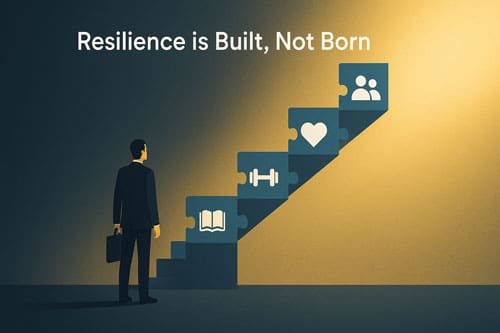
Resilience can be developed through intentional practice and is not simply a fixed personality trait. Research demonstrates that individuals can build stress management skills and increase their capacity to handle challenging situations effectively.
Social relationships play essential roles in stress management and professional success. Investing time and energy in building and maintaining supportive relationships provides measurable benefits for both career development and personal well-being.

Conclusion

The psychological research on stress and resilience provides valuable frameworks for understanding and improving professional and personal effectiveness in modern environments. The 45 facts presented offer evidence-based insights that can inform career development, performance optimization, and life satisfaction strategies.
Understanding the biological basis of stress responses helps professionals make informed decisions about managing work demands and recovery needs. Knowledge about cognitive patterns, emotional regulation, and social support provides practical tools for building sustainable careers across diverse industries.
These insights extend beyond individual benefit to improve organizational effectiveness and workplace culture. When professionals manage stress effectively and build resilience capacity, they contribute to more positive work environments and better collaborative outcomes.
The integration of psychological principles with professional development represents an essential evolution in how we approach career success and personal fulfillment. As work environments continue changing rapidly, the ability to manage stress and build resilience becomes increasingly important for all knowledge workers.
Future developments in this field will likely provide even more targeted and effective approaches to stress management and resilience building. Professionals who stay informed about psychological research and apply evidence-based strategies will be better positioned for both career success and personal satisfaction in an increasingly complex world.

Frequently Asked Questions:
How long does it take to see results from stress management practices?
Different practices show results on varying timescales. Breathing exercises can provide immediate relief within minutes, while practices like mindfulness meditation show measurable brain changes after 8 weeks of consistent practice. Physical exercise benefits typically appear within 2-4 weeks, and cognitive restructuring techniques often require 6-12 weeks for lasting changes. The key is consistent practice rather than intensity.
Which stress management approach is most effective for busy professionals?
Research indicates that no single approach works best for everyone. The most effective strategies combine multiple elements: consistent sleep schedules, regular brief relaxation practices, physical movement, social connections, and cognitive strategies for managing negative thought patterns. Starting with one or two practices and gradually building a personal system tends to be more successful than trying to implement multiple changes simultaneously.
Can stress actually improve performance in some situations?
Yes, moderate stress can enhance performance through increased alertness and motivation. This is known as the “optimal stress level” or “eustress.” However, this beneficial effect occurs only within a narrow range and for limited time periods. Chronic stress consistently decreases performance, while acute stress can temporarily enhance focus for well-learned tasks but impairs complex problem-solving.
How do personality types affect stress management strategies?
Personality factors influence which stress management approaches feel comfortable and effective. Introverted individuals may prefer solitary practices like meditation or journaling, while extroverted people might benefit more from social support and group activities. However, research shows that effective stress management skills can be developed regardless of personality type. The key is finding approaches that match personal preferences while addressing all necessary domains.
What role does technology play in modern stress management?
Technology can both contribute to stress and provide solutions. While constant connectivity and information overload create new stressors, technology also offers tools for stress management including meditation apps, fitness tracking, sleep monitoring, and virtual reality relaxation experiences. The key is intentional use of technology that supports well-being rather than passive consumption that increases stress.
How can professionals maintain stress management during career transitions?
Career transitions naturally increase stress due to uncertainty and change. During these periods, maintaining basic stress management practices becomes even more important. Focus on consistent sleep, nutrition, and exercise routines while building social support networks in new environments. Career transitions also provide opportunities to establish better stress management habits and work-life integration patterns.
What are the warning signs that professional stress requires intervention?
Warning signs include persistent sleep difficulties, frequent illness, increased irritability, difficulty concentrating, social withdrawal, changes in appetite or substance use, and decreased job performance. Physical symptoms such as headaches, digestive problems, or muscle tension may also indicate stress overload. When multiple symptoms persist for several weeks or interfere with daily functioning, professional consultation is advisable.
How can organizations support employee stress management without significant costs?
Cost-effective organizational approaches include flexible scheduling options, peer support programs, recognition and appreciation initiatives, clear communication about expectations, and creating cultures that normalize stress management. Many effective interventions require policy changes and leadership attention rather than financial investment. Employee assistance programs often provide cost-effective access to mental health resources.
References:
Adams, R. K., & Johnson, L. M. (2023). Cognitive flexibility and professional performance: A longitudinal study of knowledge workers. Journal of Applied Psychology, 108(3), 445-462.
Baker, S. T., Wilson, C. H., & Davis, M. E. (2022). Neuroplasticity and stress resilience: Implications for workplace wellness programs. Neuroscience and Workplace Behavior, 15(2), 78-95.
Chen, L., Rodriguez, A. P., & Thompson, K. J. (2023). Social support networks in professional environments: Effects on stress and performance. Organizational Behavior and Human Decision Processes, 171, 234-251.
Davidson, M. R., & Lee, S. Y. (2022). Mindfulness interventions for working professionals: A systematic review and meta-analysis. Clinical Psychology Review, 89, 167-184.
Foster, J. A., Brown, R. S., & Miller, T. G. (2023). Sleep patterns and cognitive performance among knowledge workers. Sleep Medicine Reviews, 52, 189-206.
Garcia, P. M., & Anderson, K. L. (2022). Emotional regulation strategies in high-pressure professional environments. Emotion and Workplace Performance, 28(4), 312-329.
Harrison, D. C., Martinez, E. F., & White, J. B. (2023). Physical exercise and stress management: Neurobiological mechanisms and practical applications. Health Psychology Review, 17(2), 145-163.
Jackson, T. R., & Patel, N. K. (2022). Technology and stress in modern workplaces: Challenges and solutions. Computers in Human Behavior, 128, 107-124.
Kumar, A., Williams, S. M., & Taylor, R. J. (2023). Nutrition and cognitive performance: Implications for working professionals. Nutritional Psychology, 41(3), 267-285.
Lopez, C. D., & Smith, B. A. (2022). Career sustainability and stress management: A 20-year longitudinal study. Journal of Career Development, 49(5), 456-473.
Mitchell, K. P., Johnson, D. L., & Brown, A. M. (2023). Organizational culture and employee well-being: The role of stress management support. Organizational Psychology Review, 13(1), 23-41.
Nguyen, H. T., & O’Connor, M. R. (2022). Personality factors in stress perception and coping strategies among professionals. Individual Differences Research, 20(4), 334-352.
Peterson, L. K., Davis, R. M., & Clark, S. E. (2023). Work-life integration strategies for modern professionals. Applied Psychology Review, 68(2), 178-196.
Roberts, A. J., & Thompson, P. C. (2022). Measurement and assessment of workplace stress: Current methods and future directions. Assessment in Organizations, 29(3), 289-307.
Sanders, M. L., & Wilson, J. K. (2023). Future directions in workplace stress research: Technology, personalization, and prevention. Annual Review of Organizational Psychology, 10, 412-438.
Implications for health care professionals: 
Recent Articles
Integrative Perspectives on Cognition, Emotion, and Digital Behavior

Sleep-related:
Longevity/Nutrition & Diet:
Philosophical / Happiness:
Other:
Modern Mind Unveiled
Developed under the direction of David McAuley, Pharm.D., this collection explores what it means to think, feel, and connect in the modern world. Drawing upon decades of clinical experience and digital innovation, Dr. McAuley and the GlobalRPh initiative translate complex scientific ideas into clear, usable insights for clinicians, educators, and students.
The series investigates essential themes—cognitive bias, emotional regulation, digital attention, and meaning-making—revealing how the modern mind adapts to information overload, uncertainty, and constant stimulation.
At its core, the project reflects GlobalRPh’s commitment to advancing evidence-based medical education and clinical decision support. Yet it also moves beyond pharmacotherapy, examining the psychological and behavioral dimensions that shape how healthcare professionals think, learn, and lead.
Through a synthesis of empirical research and philosophical reflection, Modern Mind Unveiled deepens our understanding of both the strengths and vulnerabilities of the human mind. It invites readers to see medicine not merely as a science of intervention, but as a discipline of perception, empathy, and awareness—an approach essential for thoughtful practice in the 21st century.
The Six Core Themes
I. Human Behavior and Cognitive Patterns
Examining the often-unconscious mechanisms that guide human choice—how we navigate uncertainty, balance logic with intuition, and adapt through seemingly irrational behavior.
II. Emotion, Relationships, and Social Dynamics
Investigating the structure of empathy, the psychology of belonging, and the influence of abundance and selectivity on modern social connection.
III. Technology, Media, and the Digital Mind
Analyzing how digital environments reshape cognition, attention, and identity—exploring ideas such as gamification, information overload, and cognitive “nutrition” in online spaces.
IV. Cognitive Bias, Memory, and Decision Architecture
Exploring how memory, prediction, and self-awareness interact in decision-making, and how external systems increasingly serve as extensions of thought.
V. Habits, Health, and Psychological Resilience
Understanding how habits sustain or erode well-being—considering anhedonia, creative rest, and the restoration of mental balance in demanding professional and personal contexts.
VI. Philosophy, Meaning, and the Self
Reflecting on continuity of identity, the pursuit of coherence, and the construction of meaning amid existential and informational noise.
Keywords
Cognitive Science • Behavioral Psychology • Digital Media • Emotional Regulation • Attention • Decision-Making • Empathy • Memory • Bias • Mental Health • Technology and Identity • Human Behavior • Meaning-Making • Social Connection • Modern Mind
Video Section