AKYNZEO (netupitant-palonosetron)
Historical source. Current clinical review is incomplete. This monograph will be updated in the future.
AKYNZEO (netupitant-palonosetron) (opens in a new tab)Original source URL: https://globalrph.com/dilution/akynzeo-netupitant-and-palonosetron/ | Retrieved 2026-11-04
Source dates, location and integrity
This historical article is separate from the reviewed claim cards. Product formulations and source dates may differ.
- Original source URL
- https://globalrph.com/dilution/akynzeo-netupitant-and-palonosetron/ (opens in a new tab)
- Source date
- Not established in the retrieved source
- Retrieved
- 2026-11-04T19:45:43.116362+00:00
- Source location
- div.post-content
- Packaged content SHA-256
- bee75996b0aa2bcba5d6b4e0ad3b2a07ff17f6ecfc928b85735b3ca3d57e5b2b
- Original response SHA-256
- 57df12ff43e4ebc5da891d559d75077c186a7a234320a32e578c4085a06fe230
- Source body SHA-256
- 146deba77fa14334922d86c60bf7374e46605272720b6cb3a4b135db413c9a19
- The historical title uses netupitant/palonosetron terminology. IV fosnetupitant/palonosetron and oral netupitant/palonosetron require separate exact-formulation reconciliation.
AKYNZEO ® (netupitant and palonosetron) |
||||||||||||||||||||||||||||||
|
||||||||||||||||||||||||||||||
Usual Diluents Return to article top |
||||||||||||||||||||||||||||||
| NS, D5W | ||||||||||||||||||||||||||||||
Standard Dilutions [Amt of drug] [Infusion vol] [Infusion rate] Return to article top |
||||||||||||||||||||||||||||||
| [235 mg fosnetupitant/0.25 mg palonosetron single-dose vial] [50 ml total volume] [30 minutes] Preparation of AKYNZEO for injection Step 5: Before administration, inspect the final diluted solution for particulate matter and discoloration. Discard the vial or bag if particulates and/or discoloration are observed. Administer over 30 minutes as an intravenous infusion. At the end of the infusion, flush the infusion line with the same carrier solution to ensure complete drug administration. Storage |
||||||||||||||||||||||||||||||
WARNINGS Return to article top |
||||||||||||||||||||||||||||||
| See warnings and precautions below.
|
||||||||||||||||||||||||||||||
DESCRIPTION OF AKYNZEO Return to article top |
||||||||||||||||||||||||||||||
| Description:
Netupitant is white to off-white crystalline powder. It is freely soluble in toluene and acetone, soluble in isopropanol and ethanol, and very slightly soluble in water. Palonosetron hydrochloride is a white to off-white crystalline powder. It is freely soluble in water, soluble in propylene glycol, and slightly soluble in ethanol and 2-propanol. AKYNZEO (235 mg fosnetupitant/0.25 mg palonosetron) for injection is a combination product of fosnetupitant, a prodrug of netupitant, which is a substance P/neurokinin 1 (NK-1) receptor antagonist, and palonosetron hydrochloride, a serotonin-3 (5-HT3) receptor antagonist. Fosnetupitant chloride hydrochloride is chemically described as 2-(3,5-bis-trifluoromethylphenyl)-N-methyl-N-[6-(4-methyl-4-O-methylene-phosphatepiperazinium-1-yl)-4-o-tolyl-pyridin-3-yl]-isobutyramide chloride hydrochloride. The empirical formula is C31H36F6N4O5P•Cl•HCl, with a molecular weight of 761.53. Fosnetupitant chloride hydrochloride is white to off-white to yellowish solid or powder. Its solubility is pH dependent: at acidic pH (pH 2), its solubility is 1.4 mg/mL; at basic pH (pH 10), its solubility is 11.5 mg/mL. AKYNZEO for injection is available for intravenous infusion, and is supplied as a sterile lyophilized powder in a single-dose vial. Each vial contains 235 mg of fosnetupitant (equivalent to 260 mg fosnetupitant chloride hydrochloride) and 0.25 mg of palonosetron (equivalent to 0.28 mg of palonosetron hydrochloride). The inactive ingredients are edetate disodium (6.4 mg), mannitol (760 mg), sodium hydroxide and/or hydrochloric acid (for pH adjustment). |
||||||||||||||||||||||||||||||
CLINICAL PHARMACOLOGY OF AKYNZEO Return to article top |
||||||||||||||||||||||||||||||
| Mechanism of Action:
Netupitant is a selective antagonist of human substance P/neurokinin 1 (NK-1) receptors. 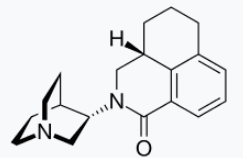 Palonosetron Palonosetron is a 5-HT3 receptor antagonist with a strong binding affinity for this receptor and little or no affinity for other receptors. Cancer chemotherapy may be associated with a high incidence of nausea and vomiting, particularly when certain agents, such as cisplatin, are used. 5-HT3 receptors are located on the nerve terminals of the vagus in the periphery and centrally in the chemoreceptor trigger zone of the area postrema. Chemotherapeutic agents produce nausea and vomiting by stimulating the release of serotonin from the enterochromaffin cells of the small intestine. Serotonin then activates 5-HT3 receptors located on vagal afferents to initiate the vomiting reflex. The development of acute emesis is known to depend on serotonin and its 5-HT3 receptors have been demonstrated to selectively stimulate the emetic response. Delayed emesis has been largely associated with the activation of tachykinin family neurokinin 1 (NK-1) receptors (broadly distributed in the central and peripheral nervous systems) by substance P. As shown in in vitro and in vivo studies, netupitant inhibits substance P mediated responses. |
||||||||||||||||||||||||||||||
INDICATIONS AND USAGE Return to article top |
||||||||||||||||||||||||||||||
| INDICATIONS AND USAGE: AKYNZEO for injection is indicated in combination with dexamethasone in adults for the prevention of acute and delayed nausea and vomiting associated with initial and repeat courses of highly emetogenic cancer chemotherapy. AKYNZEO for injection is a combination of palonosetron and fosnetupitant, a prodrug of netupitant: palonosetron prevents nausea and vomiting during the acute phase and fosnetupitant prevents nausea and vomiting during both the acute and delayed phase after cancer chemotherapy. Limitations of Use |
||||||||||||||||||||||||||||||
CONTRAINDICATIONS Return to article top |
||||||||||||||||||||||||||||||
| Contraindications:
None. |
||||||||||||||||||||||||||||||
PRECAUTIONS Return to article top |
||||||||||||||||||||||||||||||
WARNINGS AND PRECAUTIONS:
|
||||||||||||||||||||||||||||||
ADVERSE REACTIONS OF AKYNZEO Return to article top |
||||||||||||||||||||||||||||||
| ADVERSE REACTIONS:
See PACKAGE INSERT for PATIENT COUNSELING INFORMATION and Medication Guide. Drug information |
||||||||||||||||||||||||||||||
DOSAGE AND ADMINISTRATION OF AKYNZEO Return to article top |
||||||||||||||||||||||||||||||
| DOSAGE AND ADMINISTRATION:
The recommended dosages of AKYNZEO and dexamethasone in adults for the prevention of nausea and vomiting associated with administration of emetogenic chemotherapy are shown in Table 1. AKYNZEO capsules can be taken with or without food.
2.2 Preparation and Administration of AKYNZEO Intravenous Solution Preparation AKYNZEO for injection contains no antimicrobial preservatives and is intended for single use only. Preparation of AKYNZEO for injection Step 2: Aseptically prepare an infusion vial or bag filled with 30 mL of 5% Dextrose Injection, USP or 0.9% Sodium Chloride Injection, USP Step 3: Aseptically withdraw the entire volume of reconstituted solution from the AKYNZEO vial and transfer it into the infusion vial or bag containing 30 mL of 5% Dextrose Injection, USP or 0.9% Sodium Chloride Injection, USP to yield a total volume of 50 mL. Step 4: Gently invert the vial or bag till complete dissolution Step 5: Before administration, inspect the final diluted solution for particulate matter and discoloration. Discard the vial or bag if particulates and/or discoloration are observed Administration Administer over 30 minutes as an intravenous infusion. At the end of the infusion, flush the infusion line with the same carrier solution to ensure complete drug administration. Storage The total time from reconstitution to the start of the infusion should not exceed 3 hours. Store the reconstituted solution and the final diluted solution at room temperature. 2.3 Incompatibility of AKYNZEO for Injection Limited data are available on the compatibility of AKYNZEO for injection with other intravenous substances, additives or other medications, and they should not be added to the AKYNZEO solution or infused simultaneously. If the same intravenous line is used for sequential infusion of several different drugs, flush the line before and after infusion of AKYNZEO solution with 0.9% Sodium Chloride Injection, USP. |
||||||||||||||||||||||||||||||
HOW AKYNZEO IS SUPPLIED Return to article top |
||||||||||||||||||||||||||||||
| DOSAGE FORMS AND STRENGTHS:
For Injection: 235 mg fosnetupitant/0.25 mg palonosetron white to off-white lyophilized powder in single-dose vial for reconstitution. |
||||||||||||||||||||||||||||||
Storage and Stability Return to article top |
||||||||||||||||||||||||||||||
| For Injection
AKYNZEO (235 mg fosnetupitant/0.25 mg palonosetron) for injection: sterile, white to off-white lyophilized powder in single-dose vial for reconstitution. NDC # 69639-102-01: pack of one vial Storage |
||||||||||||||||||||||||||||||